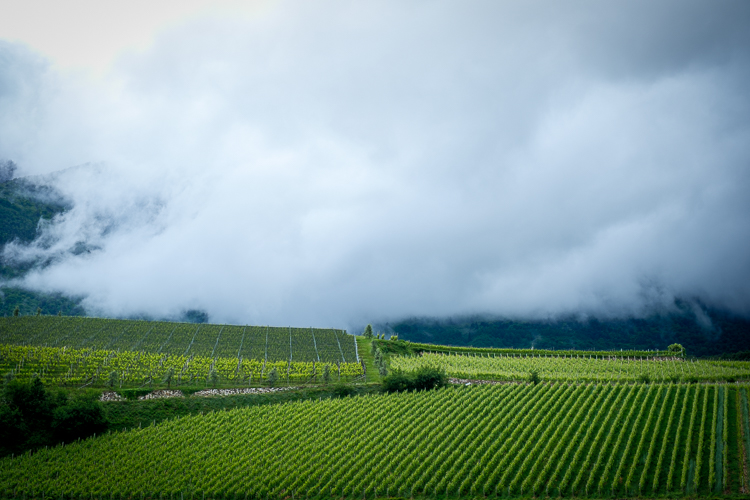
The largest wine-growing region of Südtirol was our destination on day 4. Romans lived here, and before them Etruscans. They left vines and a wine culture for us to enjoy. The mountains are close here, limiting the acreage that can be planted. Apples are the number one crop. There are just 14,000 acres planted in vines, and most of the production is in the river valleys (unlike in the Veneto, a degree further south, where the flats of the valleys produce lower-quality wine). Most of the producers are small, and belong to one of the 13 coops that produce 70 percent of the wine from Alto Adige.
Wine production in the region has moved from majority red wine to white. Riesling and other German varieties were brought to the area in the 1800s. Today, the main grapes are Pino Grigio (12%); Chardonnay (11%); Sauvignon Blanc (9%). Also: Kerner, Riesling, Pinot Noir, Schiava. Red wine grapes grow on the lowest ground. Each grape variety has its own slope and altitude requirements. Driving past vineyards and apple orchards, one sees more nets covering the crops than in other regions — insurance against the greater odds of thunderstorms in this mountainous region, and the hail produced in these storms.
Appiano is the largest village in Alto Adige, and St. Michael-Eppan — our first stop for the day — is one of four wine cooperatives in the village. We thought the business structure at St Michael-Eppan especially interesting. In the 120 years since its founding, the number of producers who belong to the coop has grown to 330, with 390 hectares of vineyards in production. St Michael-Eppan pays among the highest salaries/member incomes in the region. Eighty percent of its wines are white. Only 20 percent of its wines are exported.
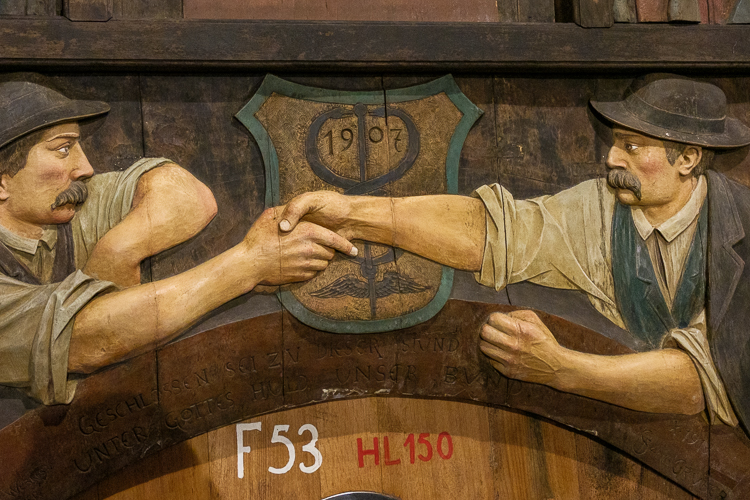
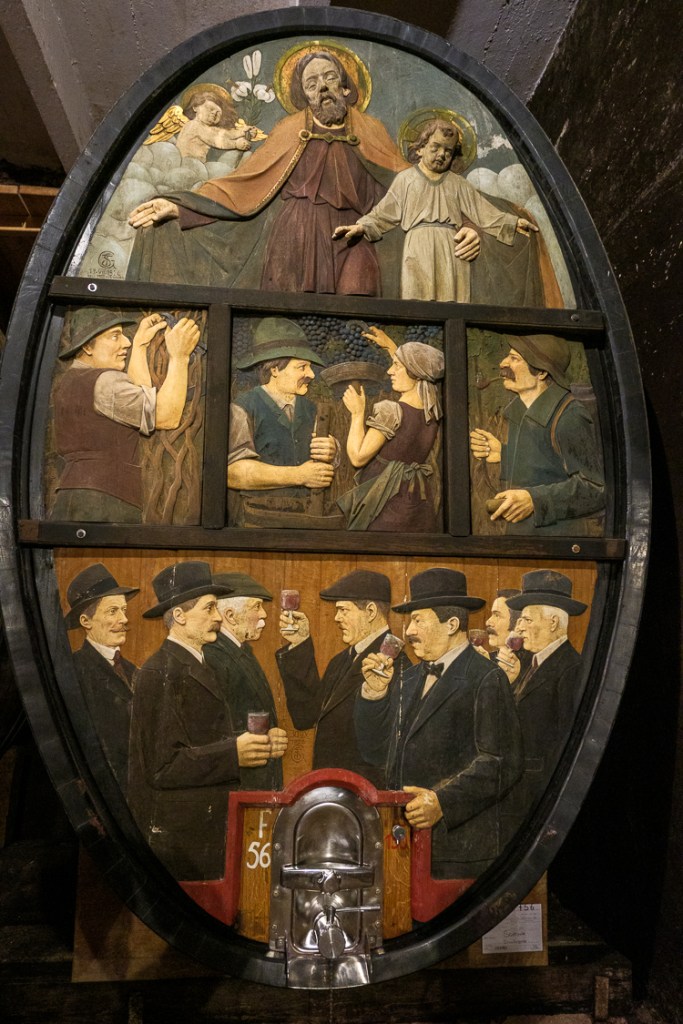
The fundamental rule is “respect for the grape” and so each vineyard is treated individually. Maturation in steel tanks and wood barrels (small and large) emphasizes a harvest’s unique assets. Such attention is devoted to the barrels, that four of them are beautifully carved with scenes going back to the cooperative’s beginnings.
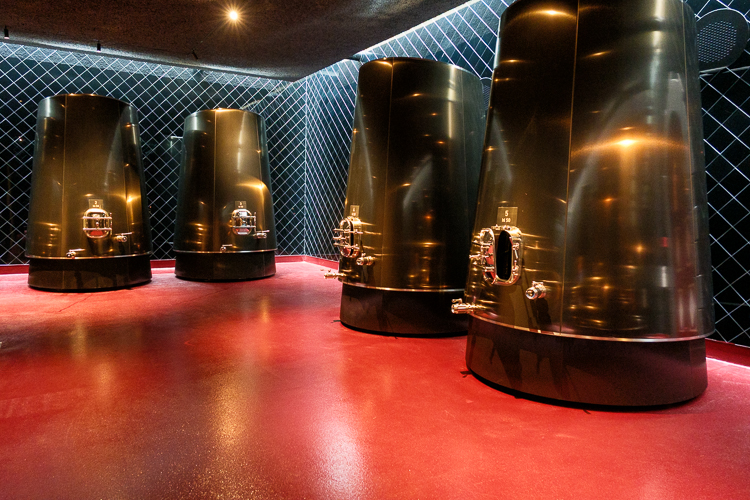
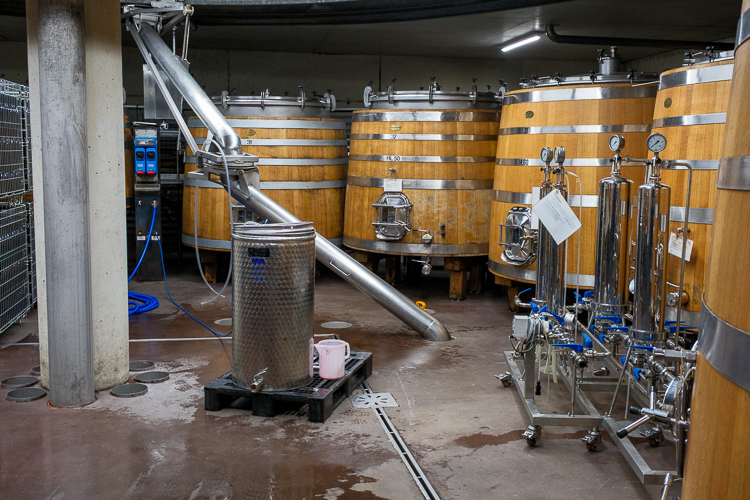
The winery boasts a gravitational wine cellar where wine moves from one container to another via gravity, without human interference and mechanical pumps. How does it work? Harvested grapes are brought into the top floor of the winery where they are dropped into the first fermentation tanks, one floor down. From those containers, the juice can run into wooden barrels or stainless tanks a floor below. Wine is drained to the lowest level for bottling. Gravitational processing results in less oxidation, better tannin control, and energy conservation.
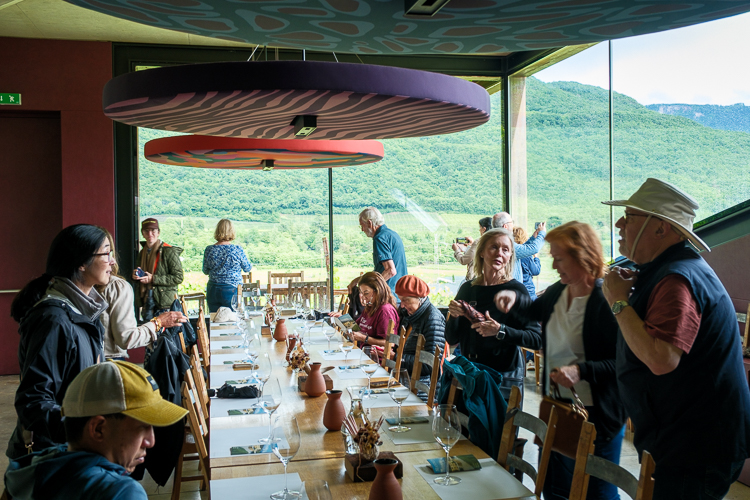
We admired the creativity of this method and tasted the results. In the interest of promoting low intervention wine production, we bought several bottles. The wines are delicious!
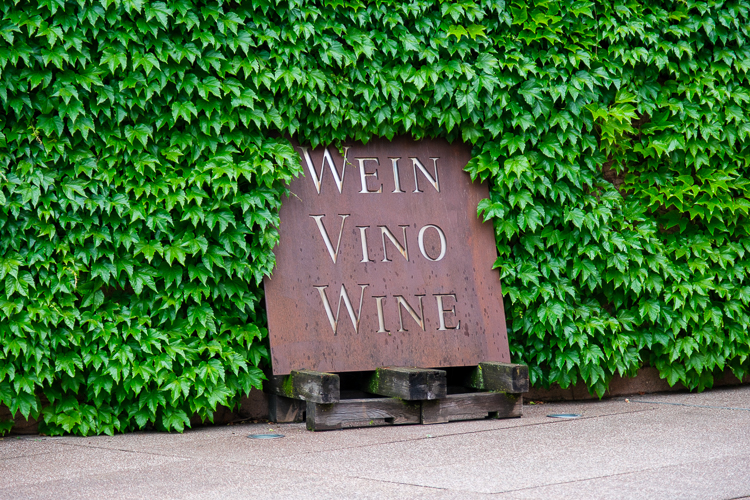
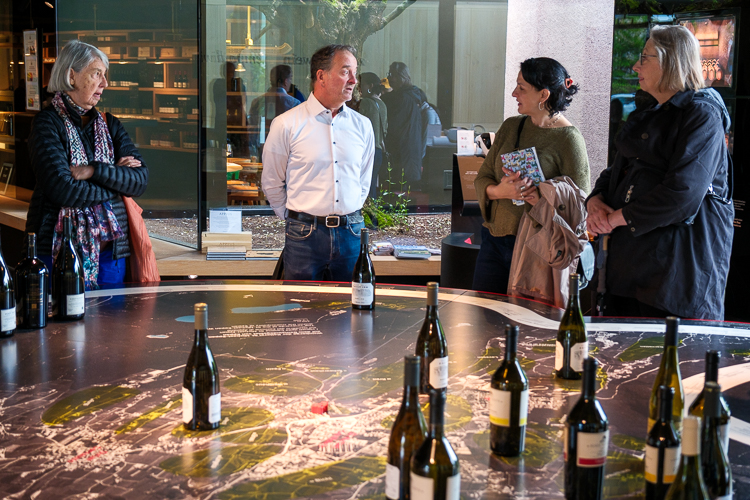
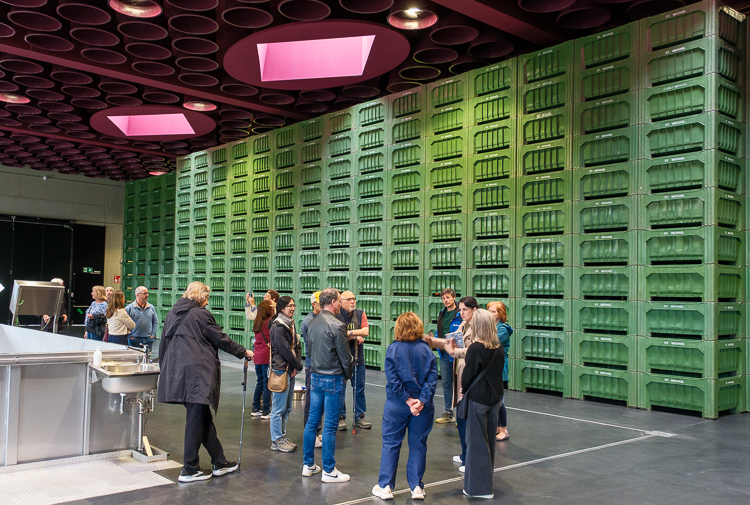
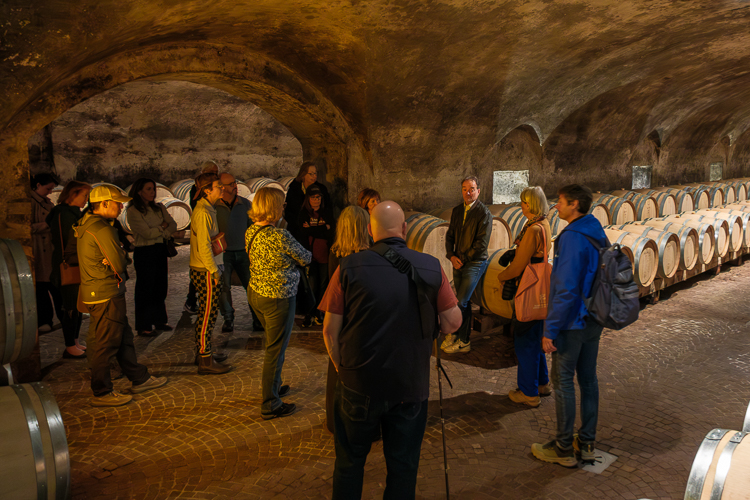
After lunch, we arrived at the Manincor Winery, situated on the beautiful slopes of Lake Caldaro, a freshwater lake and one of the warmest in the Alps. The estate’s first buildings were erected in 1608, built by Hieronymus Manincor. For his services to the Austrian Empire, the emperor raised Hieronymus to nobility and gave him the land on Lake Caldaro (in Austrian, Kaltern). His coat of arms (hand on the heart) is still visible on the winery building.
His granddaughter’s marriage in 1662 to an ancestor of the Counts Enzenberg brought the holdings into that family, where they remain today, over 300 years later. Traditionally, grapes produced on the land were sold to local cooperatives. Then, in 1991 the estate passed to an Enzenberg nephew, Count Michael, who had studied oenology and resolved to use the estate’s harvest to make his own top-quality wines.
Six years later, the first Manincor wines were produced. Six years after that, a new cellar was dug out beside and below the castle. The family then turned to the health of the soil, and switched to biodynamic (organic) wine growing, producing the first organic harvest in 2006. Three years later, all the estate wines were certified biodynamic.
The Enzenberg family is proud of its highly esteemed wine, of course, but it is equally proud of a large mulch pile, chickens rooting among the vines, bees amid the flowers gracing the vineyards, bird nesting boxes, and sheep eating and fertilizing all over the place. Interspersed among the vines is a mixture of corn, flowers, clover, and other seed-producing plants. The vigneron knows you can’t have one without the other!
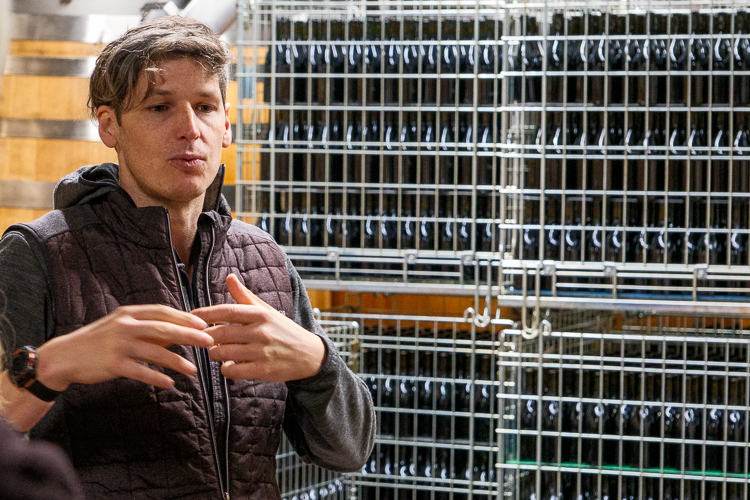
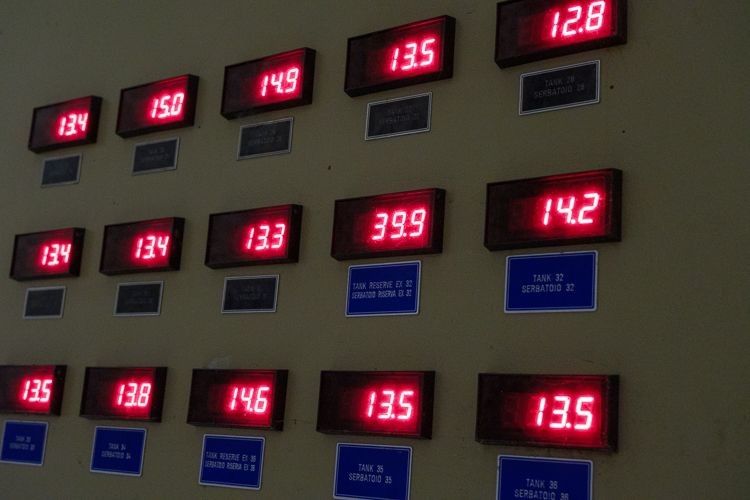
The biodynamic effort influences production techniques. A large underground cellar relies on geothermal energy for temperature equalization. The land above is used for more vines. Three levels of fermentation tanks replace hoses and pumps to a large extent. And racking and bottling work follows the cycles of the moon — resulting, the family believes, in calmer wine with greater aging potential. (We bought wine from Count Michael and will report back on the aging potential…)
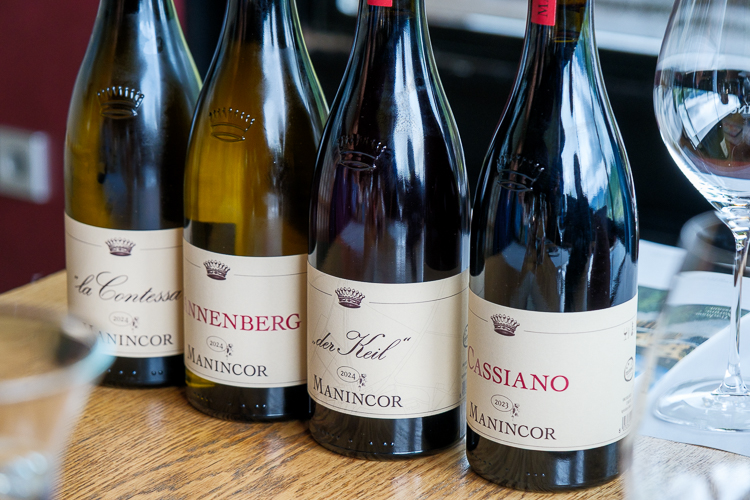
The Manincor wines are divided into three groups, representing the family symbols — heart, hand (from the family crest), and crown (for its noble roots). We purchased 4 bottles from the “crown” collection, dividing our purchases among red and white. White wines were a fresh and citrus tasting La Contessa (made from the Italian grape Arneis) and Tannenberg, described as tasting like the first day of spring. Our reds included a rich, smooth Cassiano and an herbal, light bodied der Keil (the Schiava grape is the primary one in the blend).
The wines should arrive at our house in about a month. We’ll let them rest for a few weeks and then the fun begins!


Beautiful photos.
LikeLike