Today, we headed into more mountainous terrain, to Trentino. Our first winery was Foradori.
The estate, created in 1901, was purchased by Vittorio Foradori in 1939, who passed it to his son 20 years later. The family legacy began when twenty years after Vittorio’s purchase, his grandson Roberto produced the first vintage of Foradori wine. Roberto unexpectedly died 16 years later and his daughter Elisabetta took up the work of wine production, something she had not trained to do. Her grit and intelligence resulted in outstanding vintages. It was Elisabetta who focused on reviving the Teroldego grape, a variety first thought to have come from the Savoie. Now on the 29 hectares of vineyards Teroldego is the chief grape, making 70% of production, followed by Manzoni Bianco — a cross between Riesling and Pino Blanc — Pino Grigio (10%), and Nosiola (5%). The winery produces an average of 180,000 bottles per year. In 2002, the winery converted to biodynamic (organic) production and farming.
Although still a daily presence, Elisabetta has turned over the wine business to her adult sons. Her daughter expanded the estate in a different direction, starting to grow vegetables and fruit, and manage milk cows for cheese production. (They have temporarily stopped production of cheese, but instead they age cheese for other farmers.)
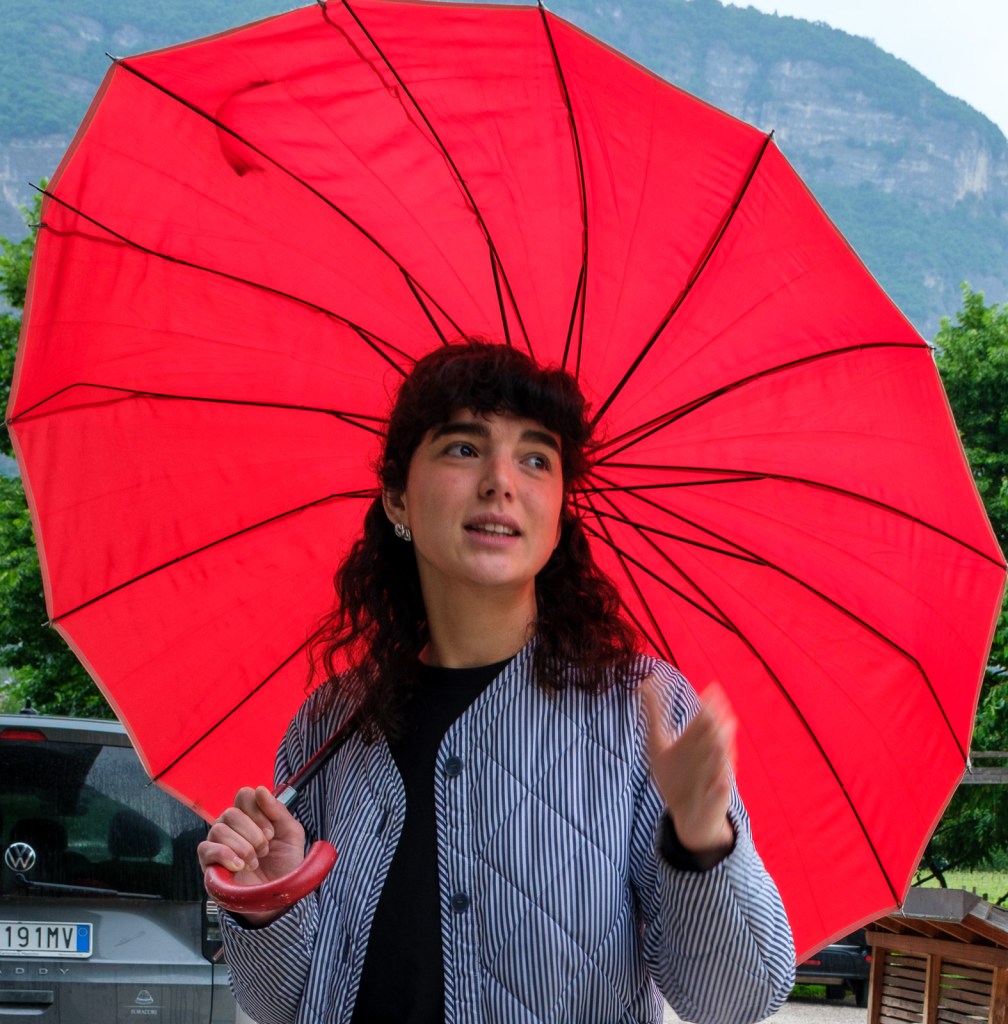
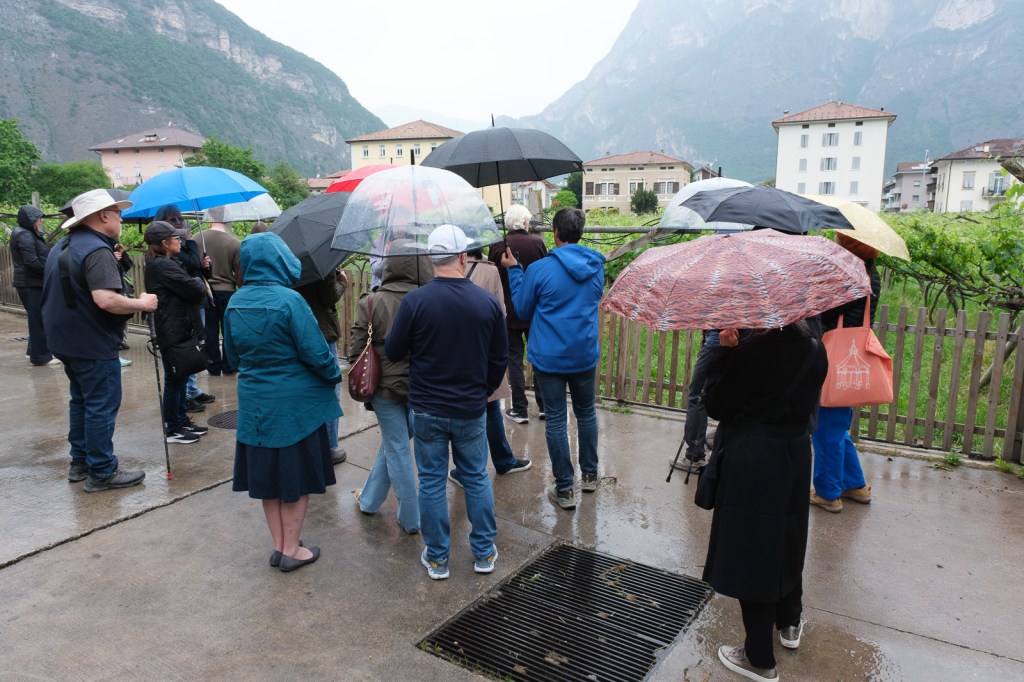
Andrea was our guide for the winery and cellar tour. We didn’t actually walk into the vineyard today, as it was raining.
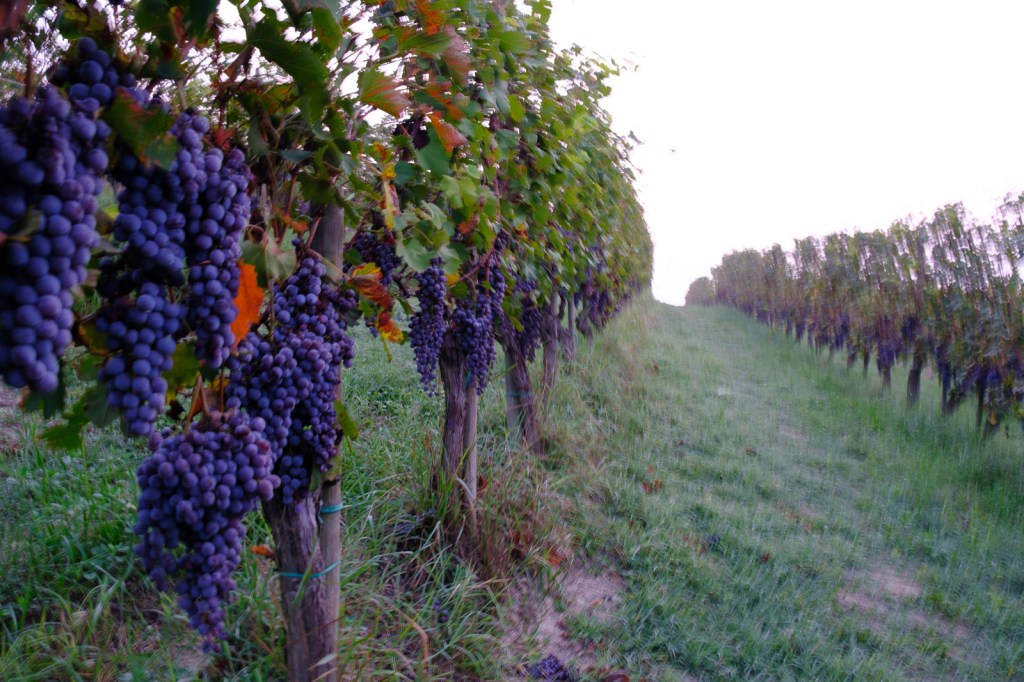
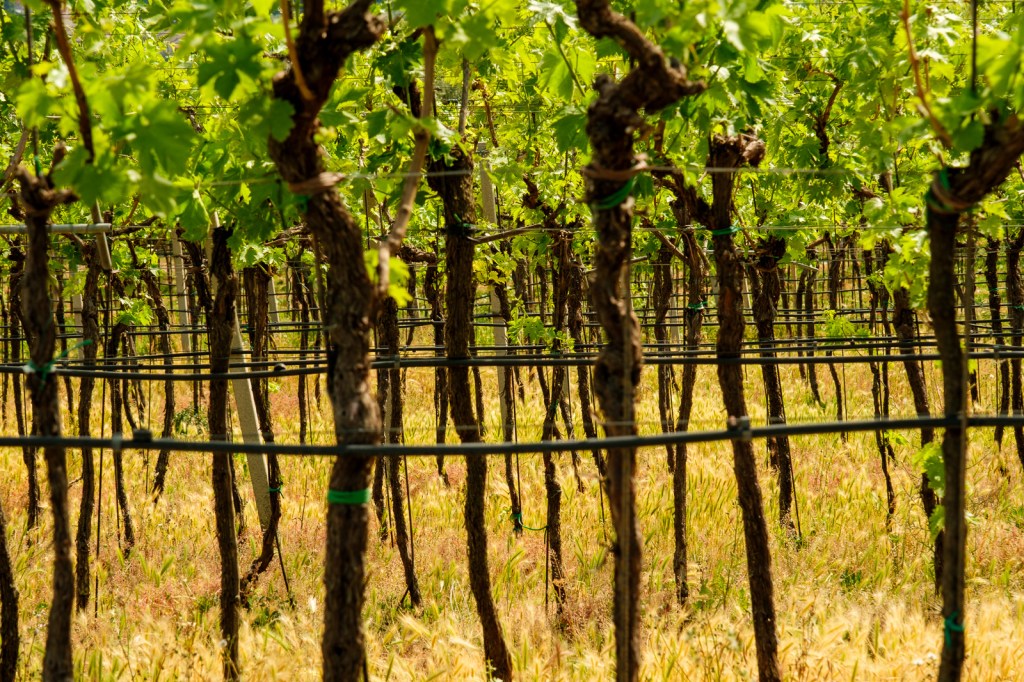
As is often the case at the wineries we visited, the vineyards and wine production is a family business. Foradori wines are now overseen by the 4th generation of the family. As is also true of many vignerons we met, learning is continuous. Everyone we met has introduced organic practices into the vineyard. Some have changed how vines are pruned and trained — in part a response to climate change. With the guyot vine training method, grapes are more exposed to the sun (but also to hail), and lower to the ground. As extreme weather has become more common, more vineyards are using the pergola method, where the leaves are above the grapes, offering some protection from the sun, and a little protection from hail. (The images below, to illustrate guyot, left, and pergola, right, are from other wineries; not from today’s visit.)
Andrea told us that in 2024, Foradori lost 30% of their grapes to extreme weather. This year, she said they were about two weeks ahead of where they should be, due to unusually warm weather.
As with Elizabetta of Foradori, some vignerons have turned their focus to growing “heritage” and local grapes. Others have gone further, eliminating cork stoppers in favor of glass, not using foil wrappers over corks, privileging less heavy bottles — all in the service of making their production more sustainable.
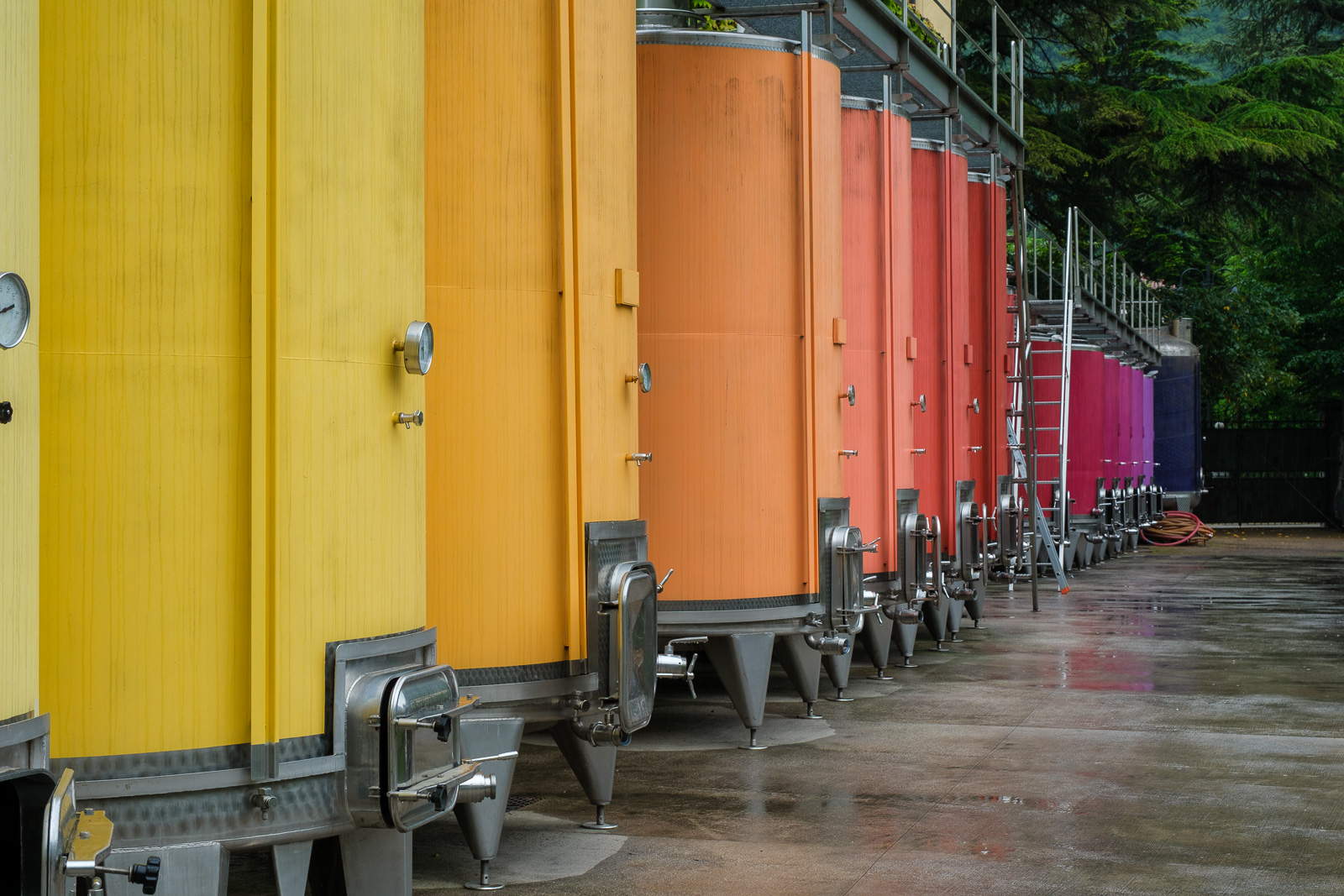
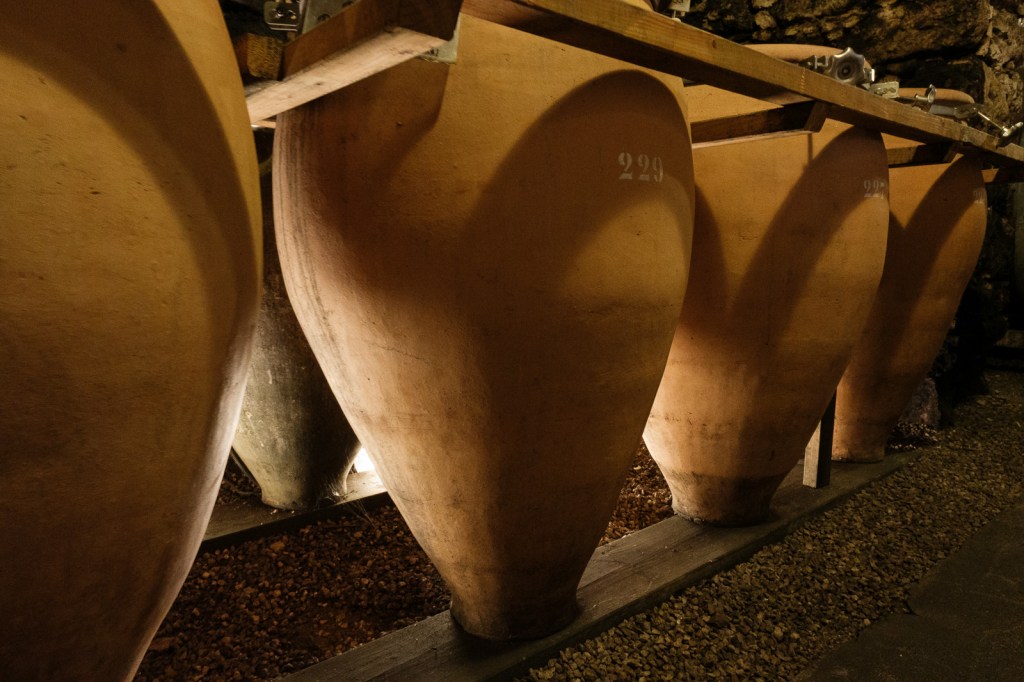
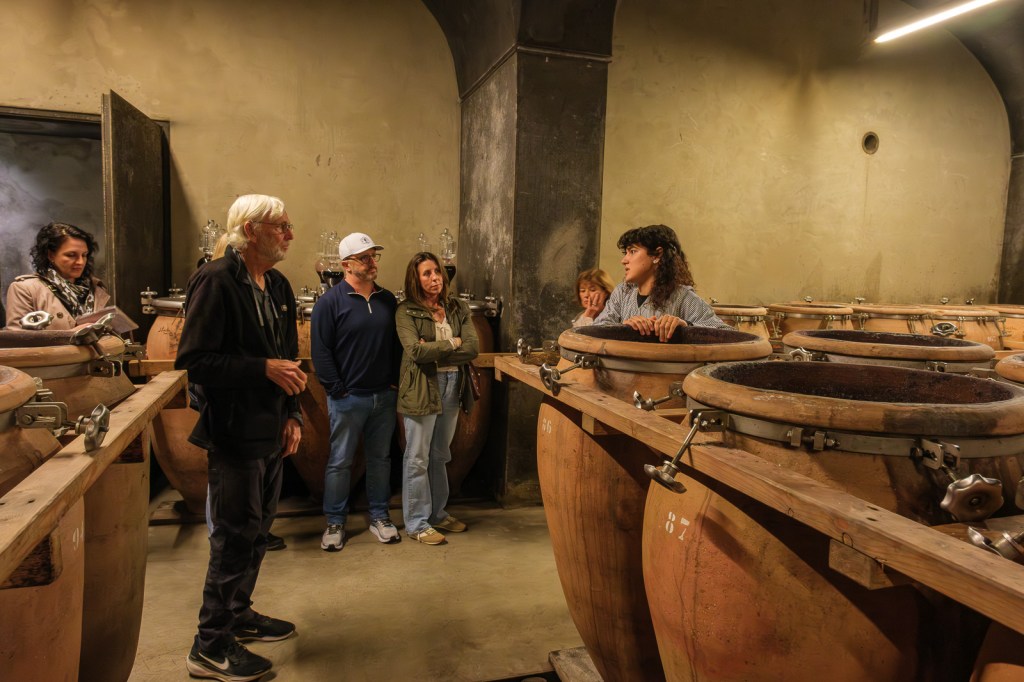
In the wine cellar, Andrea demonstrated that, in addition to aging their wine in barrels, the winery makes extensive use of amphorae — for fermentation and for aging. Because each amphora imparts a slightly different taste, the wine from several amphorae are blended in large steel tanks.
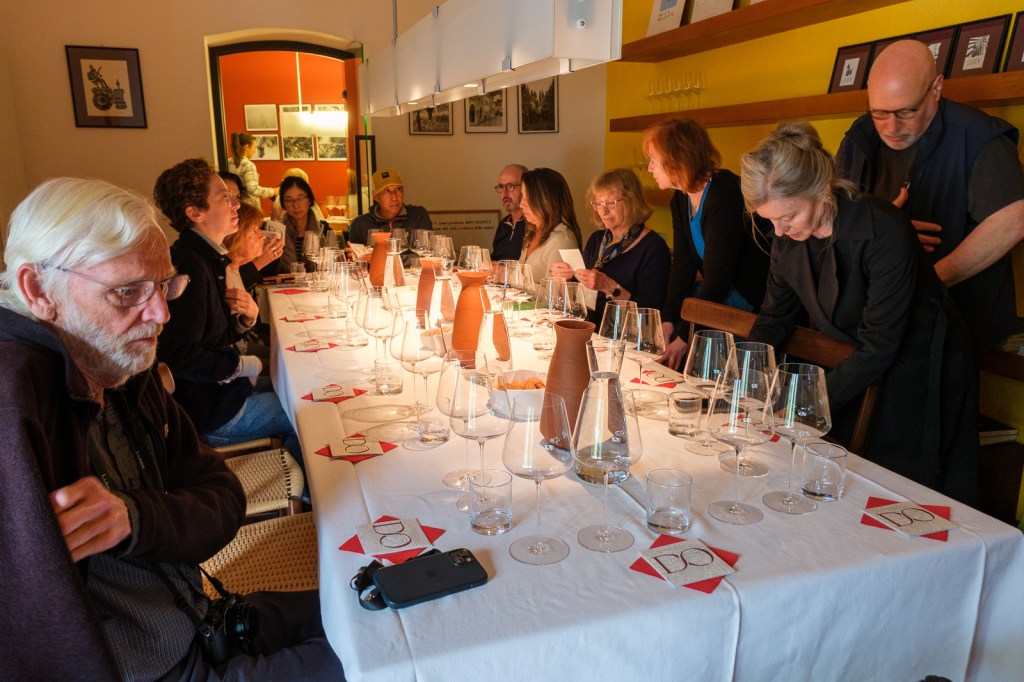
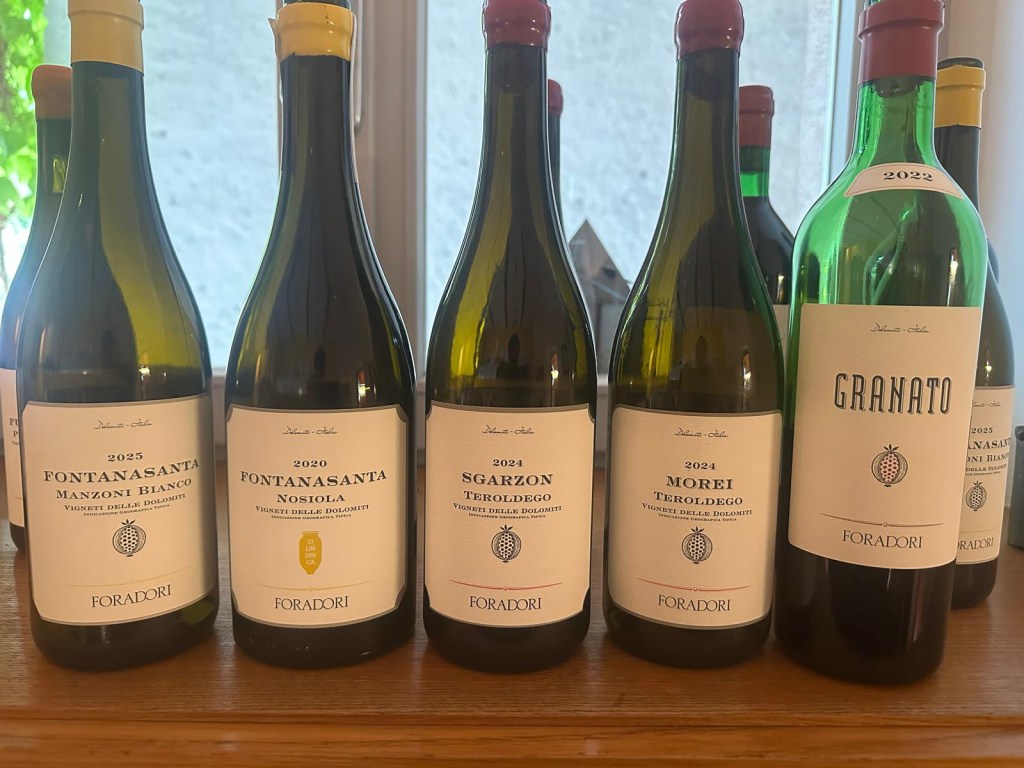
We tasted five wines here, and added five wines to our shipment.
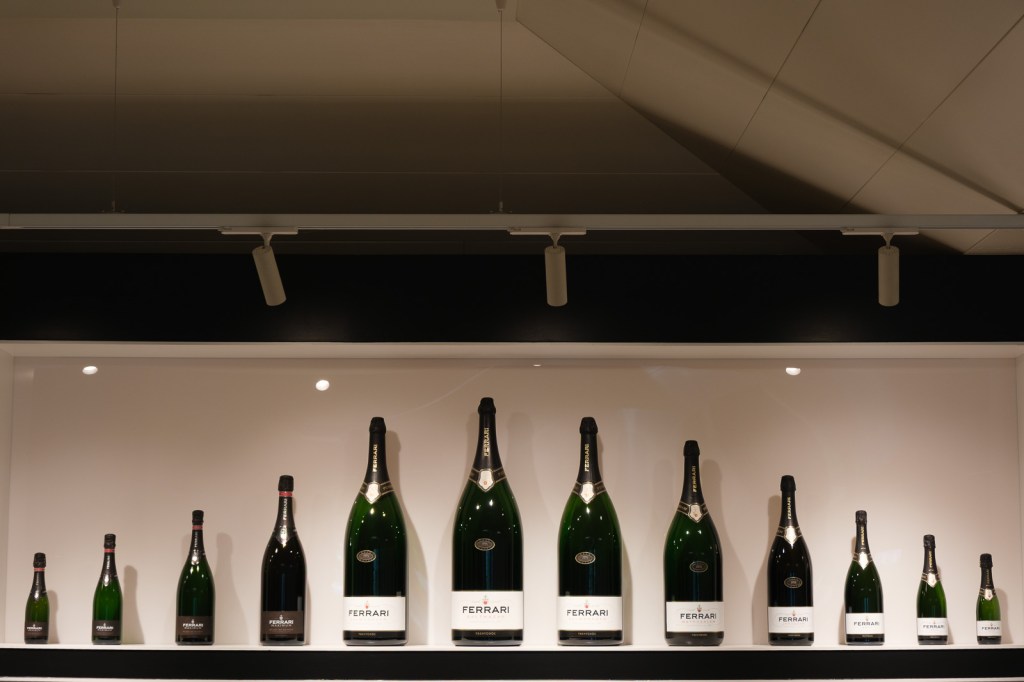
Our next visit of the day put us in a completely different winery — Ferrari — producing sparkling wines. The winery has no relationship with the car manufacturer; it is not the same family. Ferrari sparkling wines are delicious. The winery is large and beautiful, elegant, but impersonal.
Giulio Ferrari’s goal in creating his wine was to produce a sparkling (or spumante) wine capable of competing with the best French Champagne. He pioneered this style in the Alto Adige. His first Chardonnay grapes were planted in 1902. A few vintages later, in 1906, his wine won a gold medal at the International Exhibition in Milan. In 1943, during World War II, Ferrari sealed up the winery behind brick walls. He returned to the area in 1945 and opened the hiding place to discover an extraordinary wine. Until then sparkling wines were drunk young and fresh. Aging quality harvests produced a different and better wine!
Giulio was childless and chose a local wine shop owner to take over the business. The Lunelli family remains involved with the third generation now at the helm. Ferrari vineyards are considered among the best in the world.
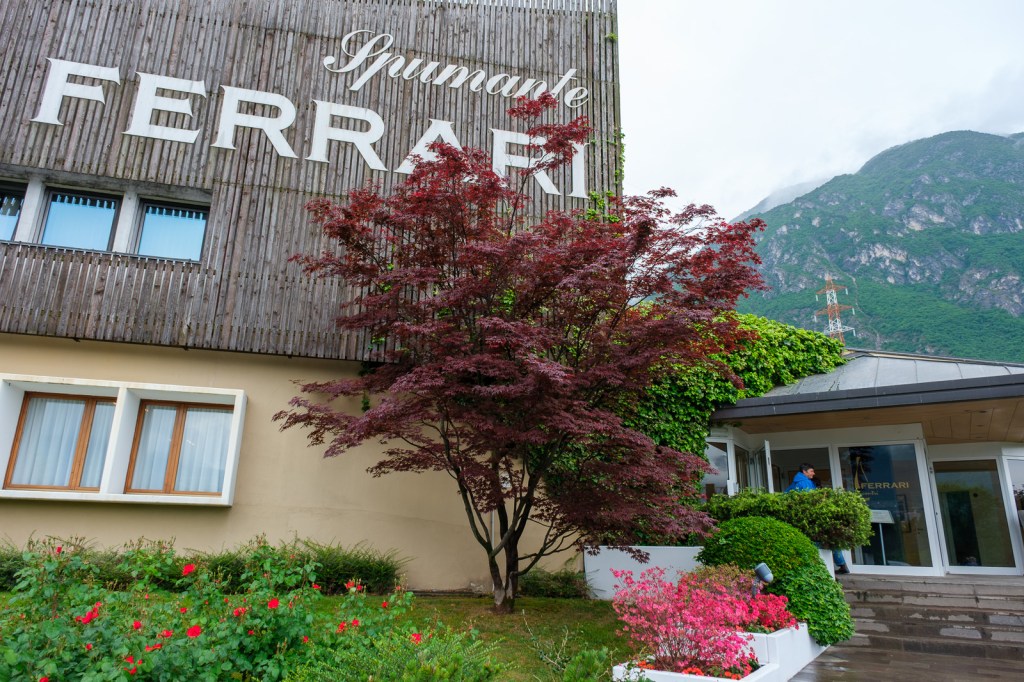
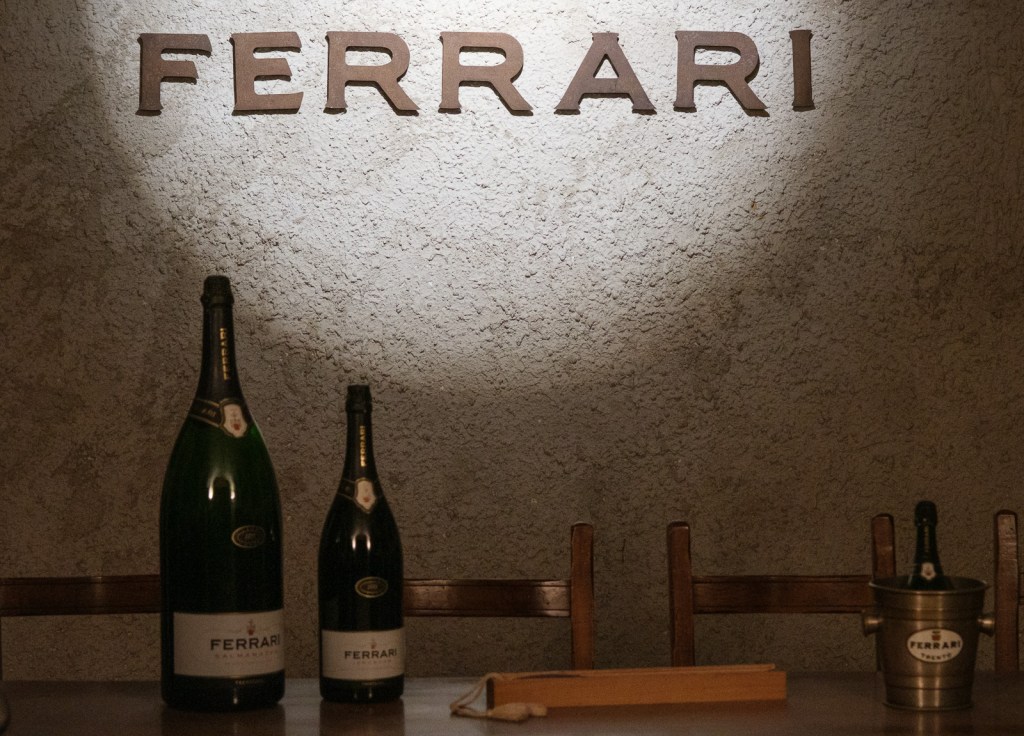
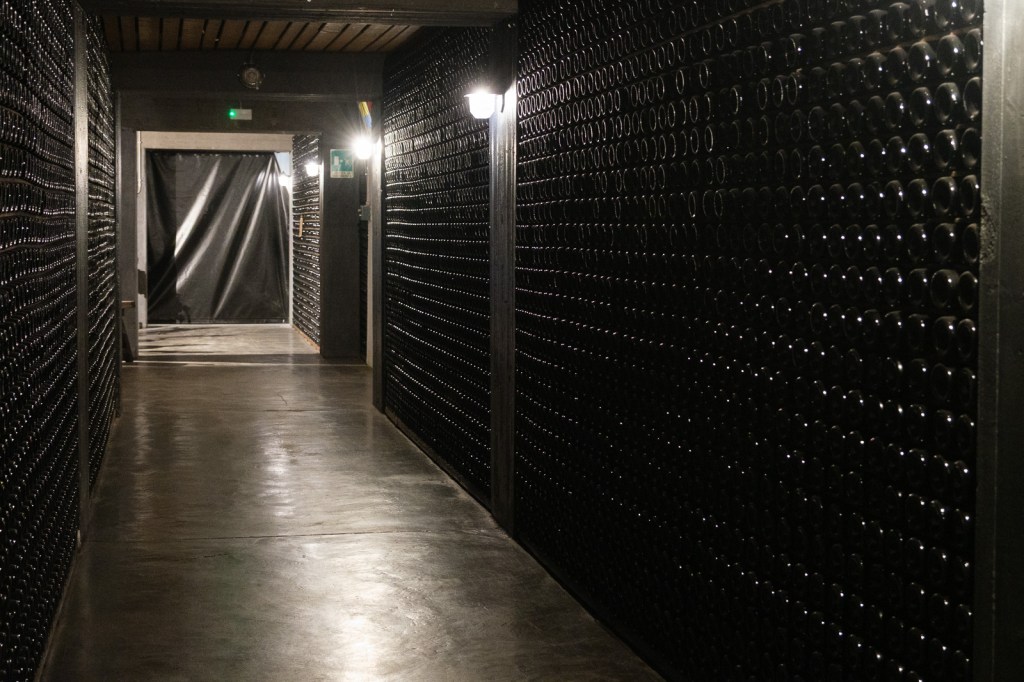
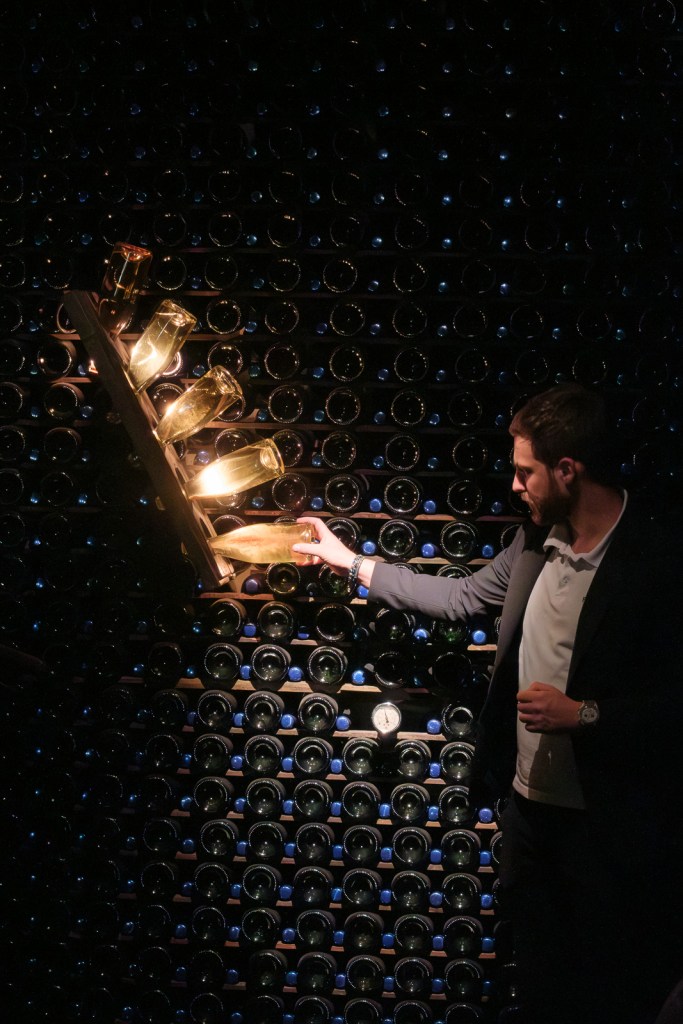
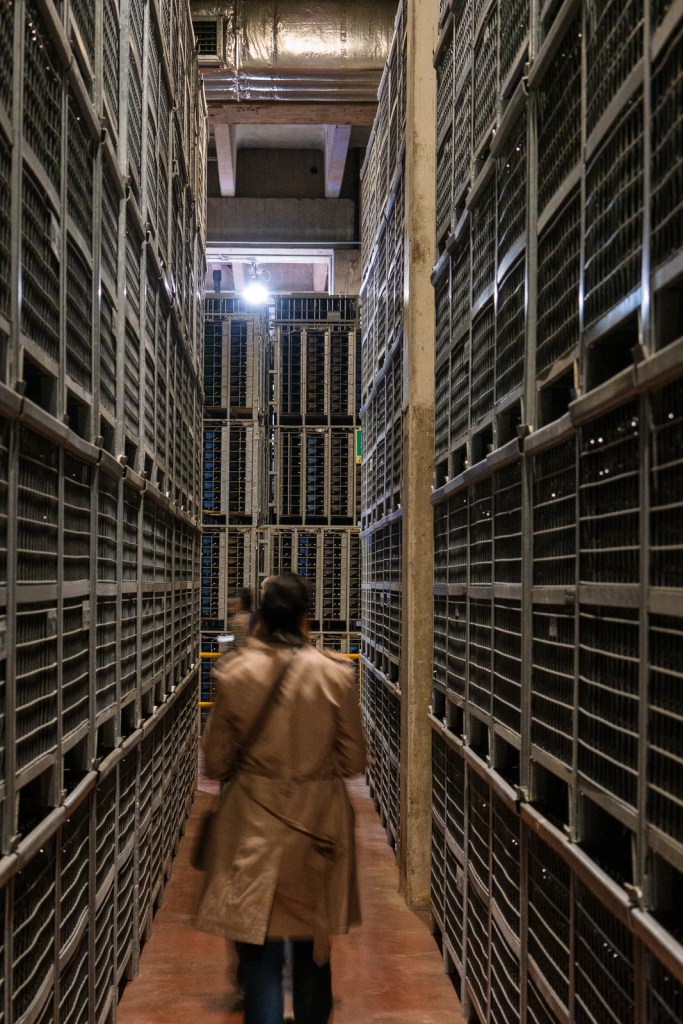
Jacomo gave us a tour of the cellars. Ferrari produces about 7 million bottles a year. The vintage wine (produced in a single year, as opposed to non-vintage blends) is turned by hand so that the yeast residue eventually moves to the neck of the bottle. A team of 3, turning 30,000 – 40,000 bottles per day, are in charge of keeping the yeast moving in the 1.2 million bottles of vintage sparkling.
We did not buy any Ferrari wine though it is delicious. The high production makes it relatively easy to find in the US.