The tour began with all of us on the bus at 9:00 a.m. Our Normal People group was 12, with two guides, Beppe and Elizabeth. Two other “normies” joined us after a couple of days bringing the workforce to 14. Our bus was comfortable and roomy — everyone could have had her own seat. Sometimes the bus couldn’t fit on the narrow streets so we walked across a plaza or around the corner to access it.
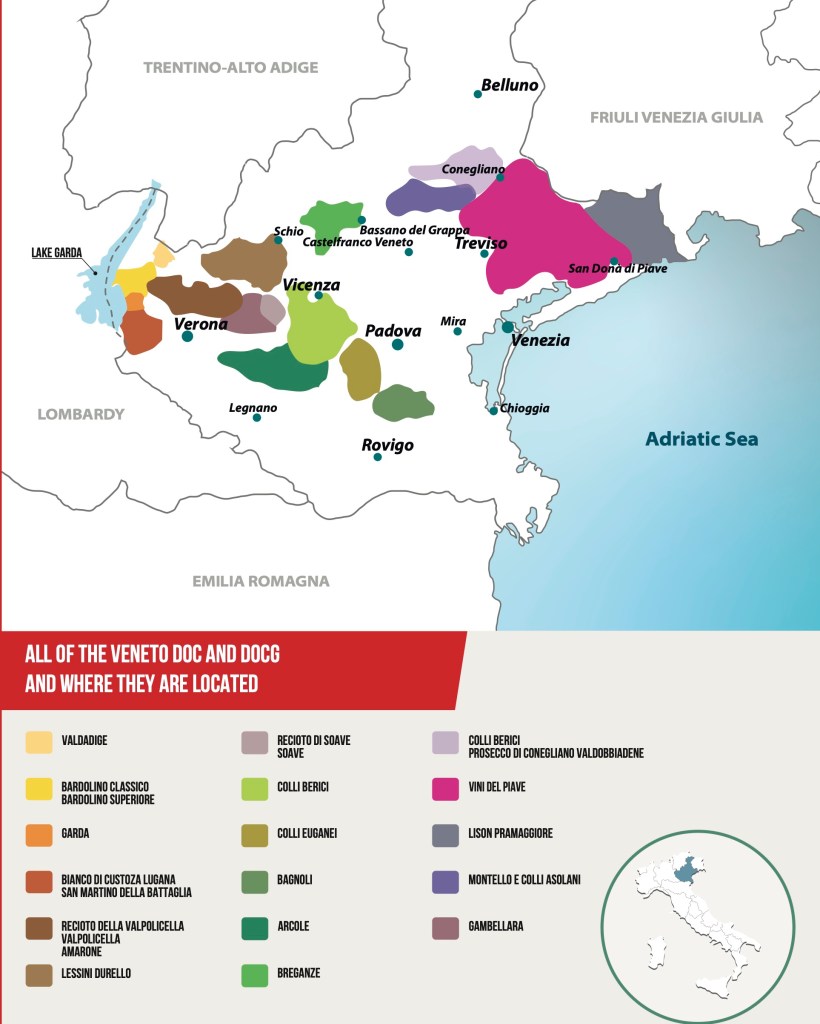
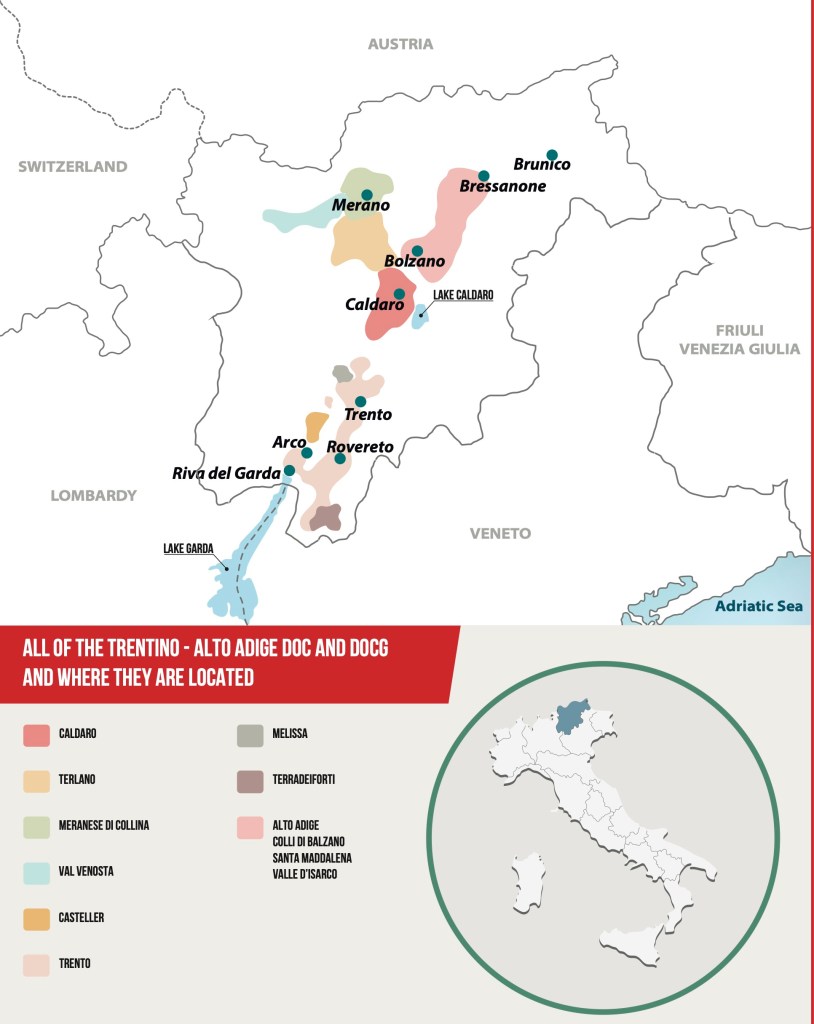
The task was simple: taste lots of wine with and without local cuisine. We started with the wines of Soave, east of Verona, and over the next several days would explore wines around Lake Garda, Trento, and Bolzano. The latter are located in the region known by Italian speakers as the Alto Adige and by German speakers as Südtirol. This area, like Alsace on the French German border moved with war, sometimes becoming part of Austria. The closer we were to Austria the more common German became as the primary language. Ditto for the food — German style cuisine overshadowed Italian in Bolzano and surrounding towns.
But that’s getting ahead…
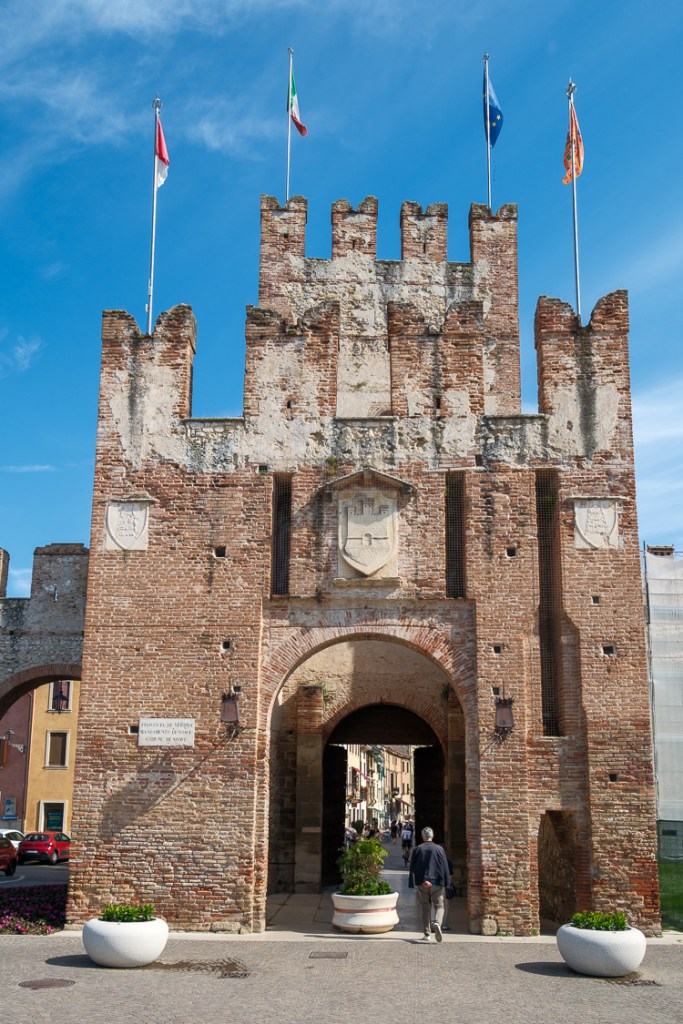
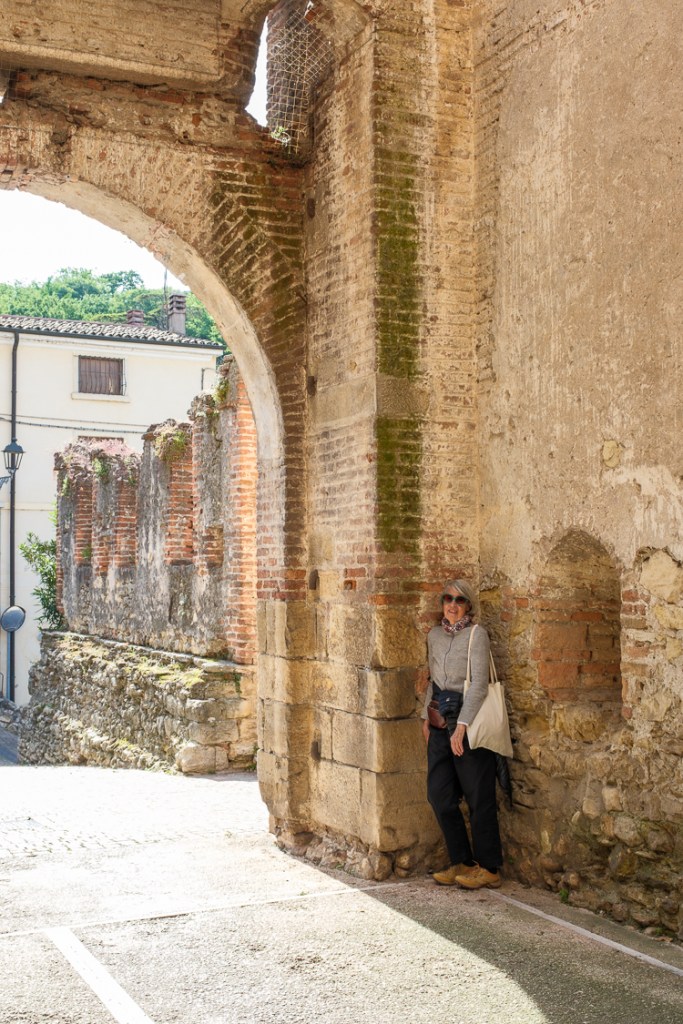
Before arriving at our first winery, we made a stop in the town of Soave, the town that has given wine in this area its name. We spent a half hour walking around this very charming small town, which was an important Roman center early in its history.
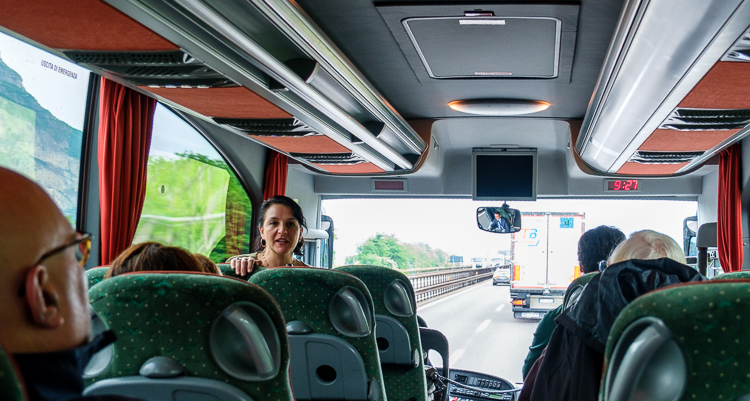
Back on the bus, Elizabeth gave us our daily briefing. Each day, as we moved through the countryside toward yet another vineyard, Elizabeth Schneider, our tour guide and founder of Wine for Normal People, would tell us about the terroir of the geographic area we were approaching. Had there been a glacier or an ancient sea here? Was the soil sandy? Volcanic? Full of clay? She gave us a rundown of the vineyard, the owners, the style of wine.
Elizabeth told us that Soave is made primarily from Garganega grapes. It is a dry white wine. Some bubbly versions are produced (Spumante) and some sweet wines (Recioto style). The region has the greatest vine density in all of Europe. By 500 AD, Soave already had a good reputation for its wine. By the 1970s, it became so popular that producers expanded production to flat and fertile land that is not good for grapes, and quality declined. It was only in 1998 that Soave gained its Denominazione di Origine Controllata (DOC) by the enforcers of wine quality standards.
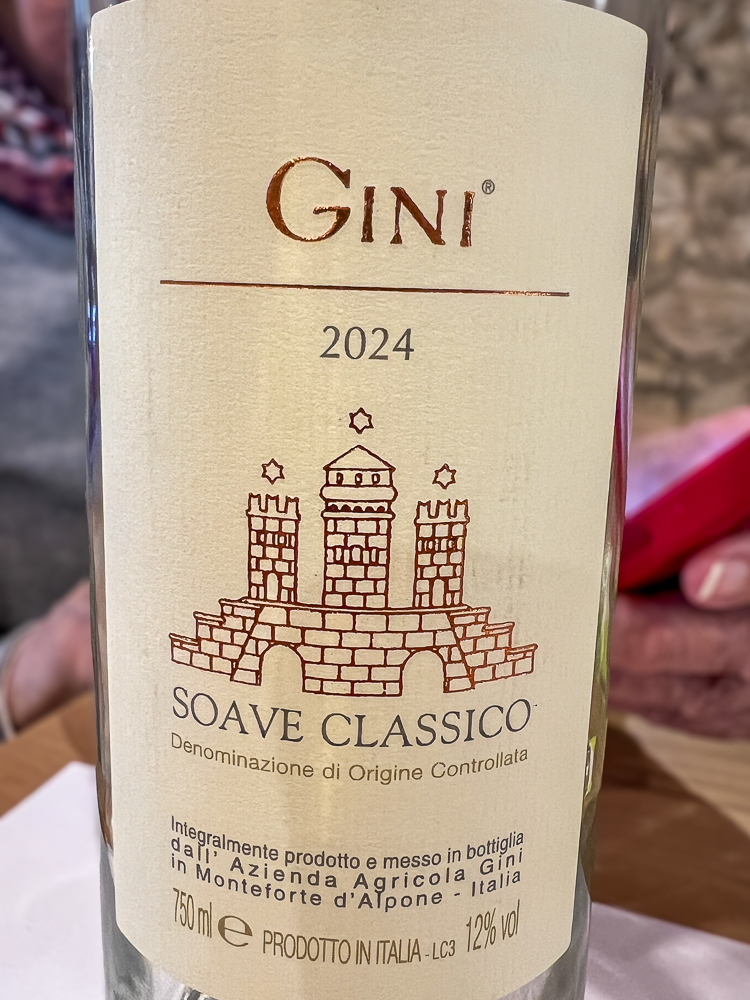
Our first winery was Gini, just outside of the town of Soave. The Gini family has been growing wine for 15 generations — since 1570. Today, two brothers run the business supported by parents, siblings and cousins. Grapes are harvested by hand and vinification has been carried out without sulfites since 1985. The average age of vines is 80 years with some over 100 years old. About one-third of the vineyard survived phylloxera — the pest that wiped out much of the grape-growing industry in Europe in the 1800s.
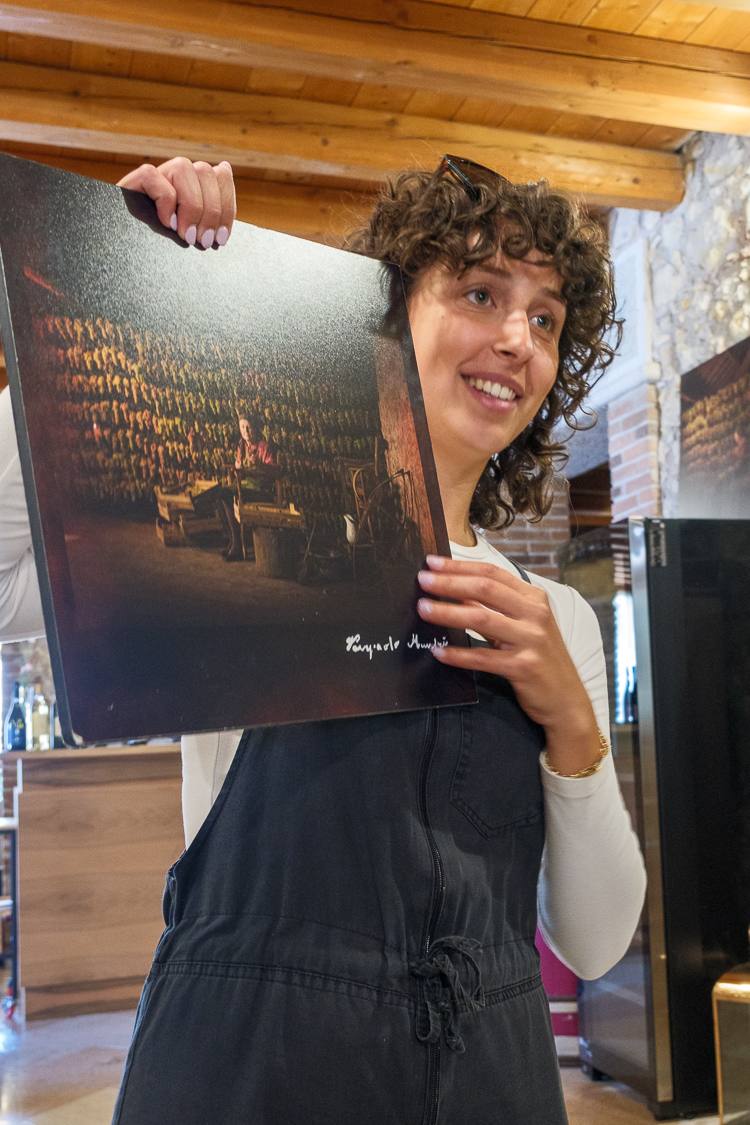
We tasted five of their wines, and loved Gini Soave, which had complex fresh taste. But in the end we bought two wines we did not taste — their Pinot, which we were told was very good and unavailable in the U.S., and a Recioto de Soave Classico, from grapes that were partially dried prior to pressing in the attic of their grandmother’s house. Really, how could we not buy grandma’s wine? (Below, Letizia Gini, our guide in the winery, holds a photo of her grandmother in the attic, in front of a wall of drying grapes.)
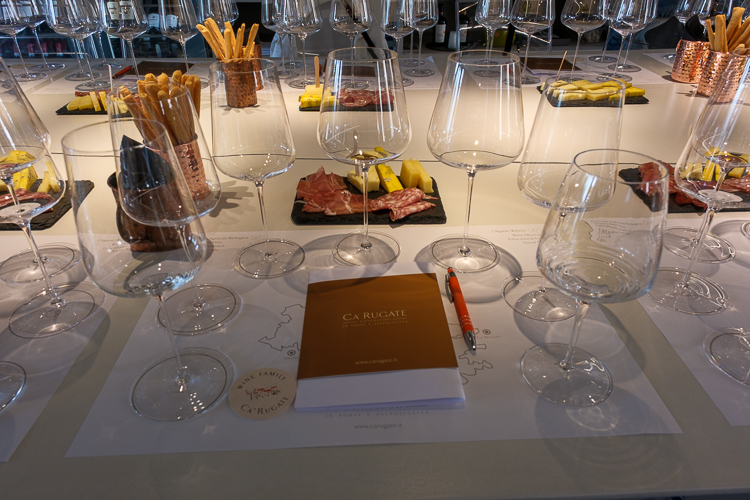
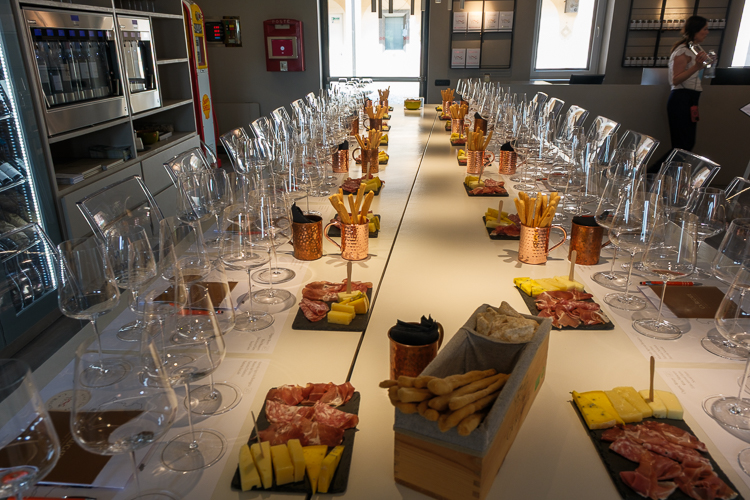
This aspect of Elizabeth’s tours is what we most enjoy: we visit mostly small wineries, run by a family whose members we meet in the vineyard and the cellar. Everything becomes personal and special. Generous snacks at most of the wineries help us remain upright as we try 3-6 kinds of wine at each stop.
Our next stop was Ca’ Rugate.
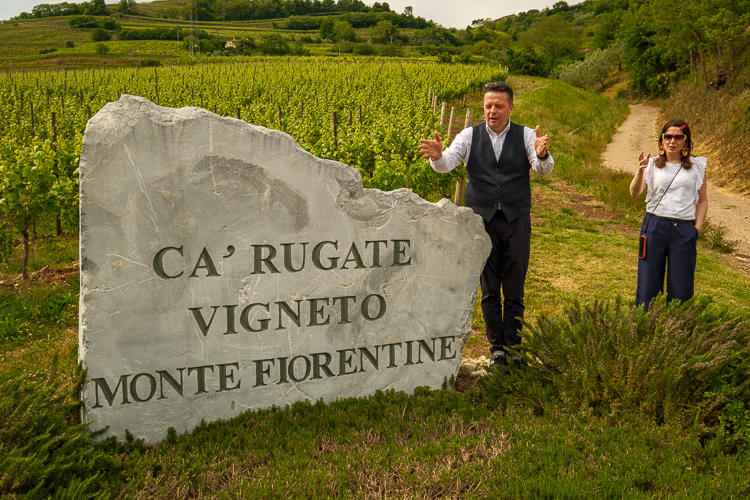
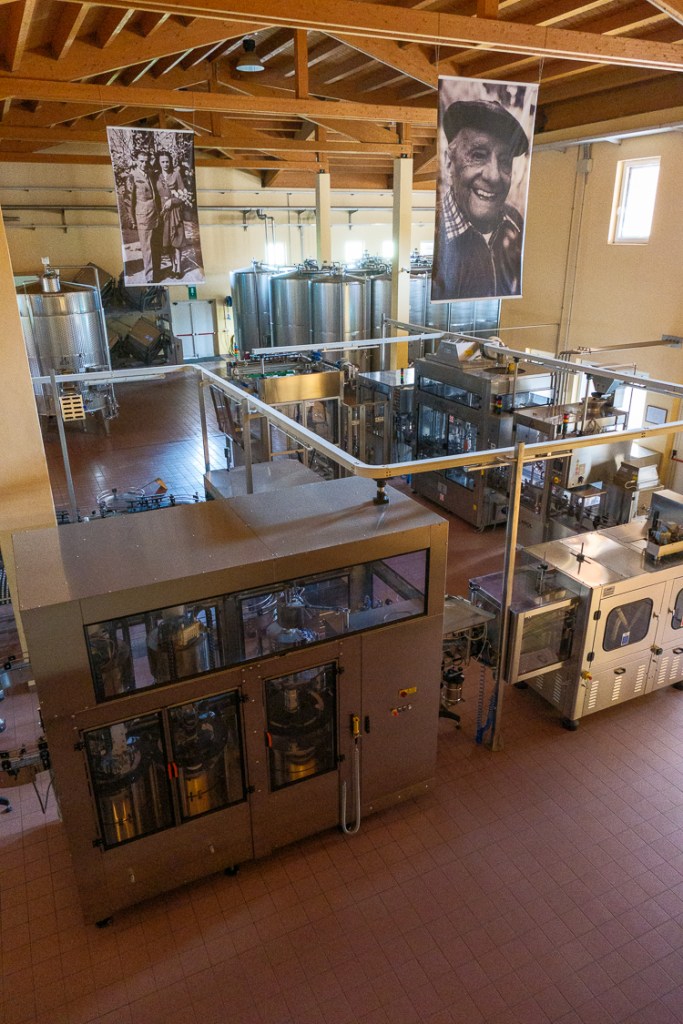
Current owner Michele Tessari is the 4th Tessari generation to run the winery. His grandfather, imprisoned in France by the Vichy was influenced by French wine-growing techniques he noted on his escape from POW camp. After the war, he returned and began growing grapes using French pruning methods, a first in his area. Upon his death, the vineyards passed to his son, and then to Michele, his grandson. (There is a sweet photo in the cellar of Michele’s grandfather, who died at age 100 shortly after the photo was taken, with Michele and his father and his son, little Michele — a quartet of vignerons.)
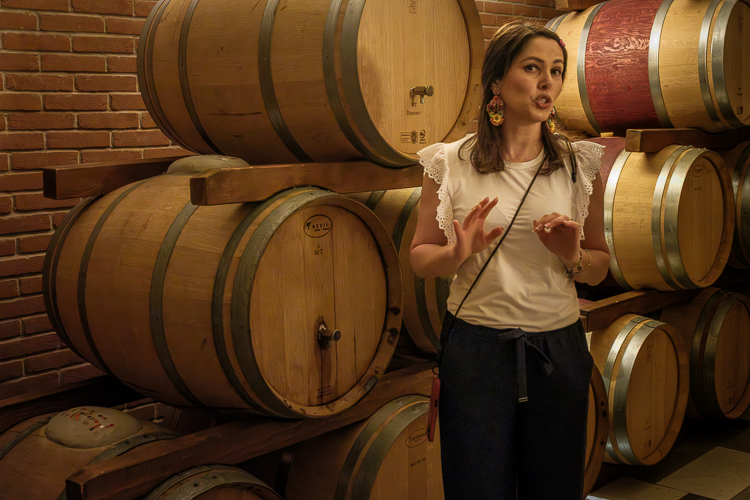
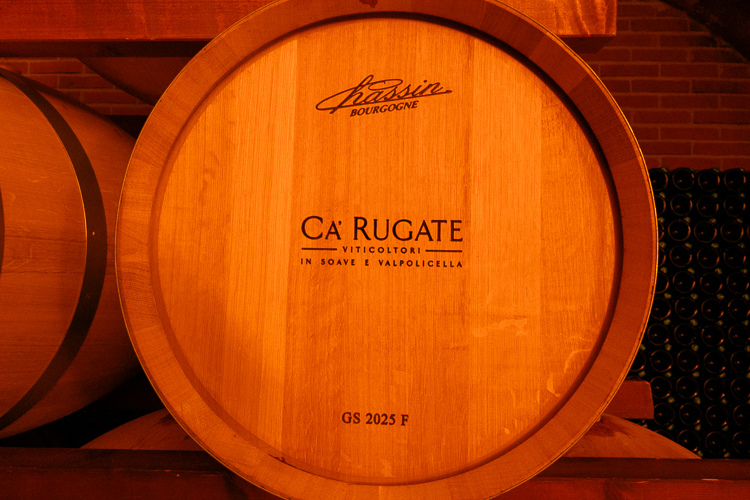
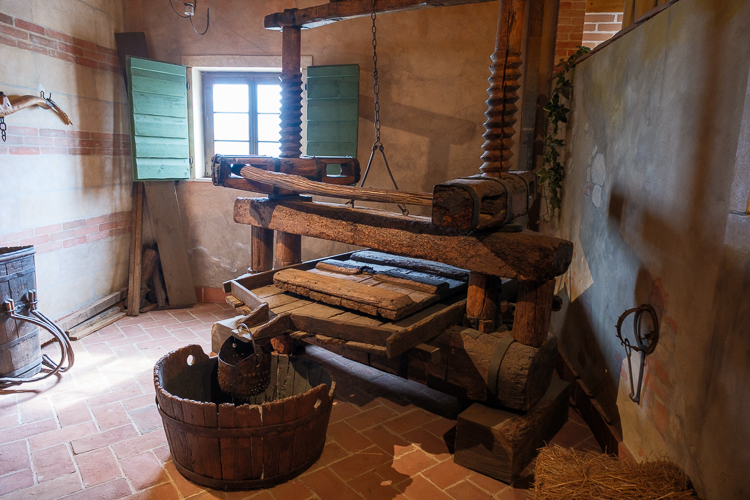
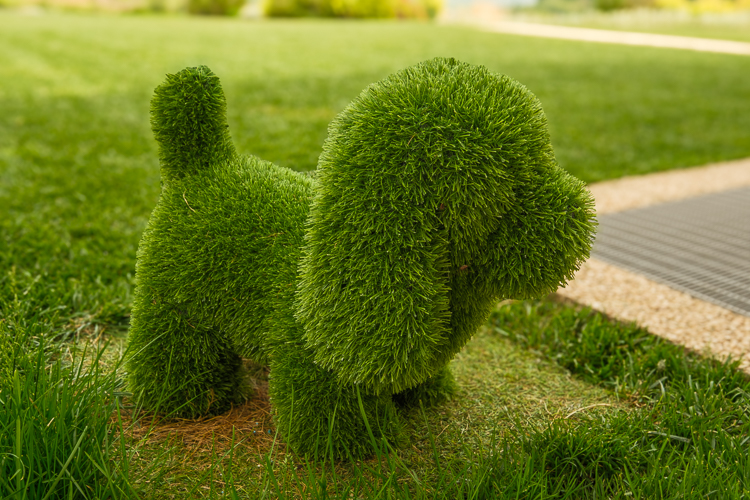
Michele and wife Samanta have added a museum about making wine over the past 100 years to the winery, and set up a little zoo for kids. There are other didactic resources for children and special needs persons to both introduce them to farming life and to the countryside. The touching, feeling, smelling garden boasts a Jeff Koons style sculpture.
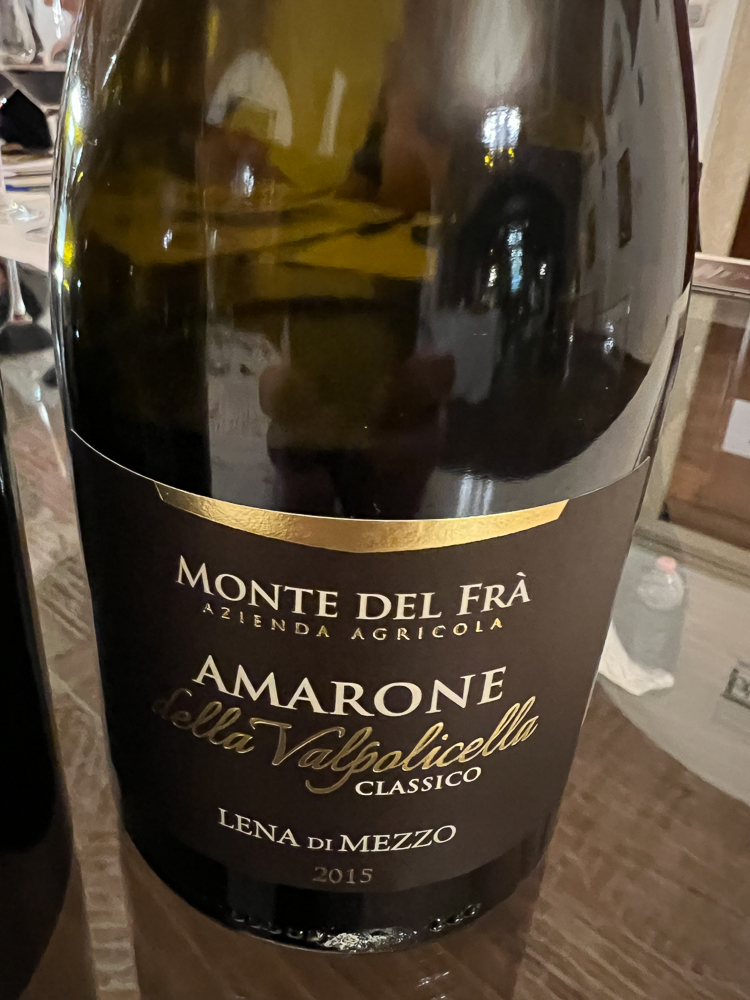
We enjoyed the wines of Valpolicella which are often a blend of Corvina, Rondinella, and Molinara grapes. The variation, Amarone de Valpolicella, has the addition of partially dried Corvina grapes, intensifying the flavor and richness of the beverage. We bought some, remembering risotto with Amarone from our meals in Verona.
Wine has been grown in the Valpolicella region since ancient times. The name Valpolicella appears first in the mid-12th century. While in the U.S., the most prominent words on the label denote the grape (or dominant grape) in the bottle — Pinot Noir, Cabernet Sauvignon — in Europe, place names are most important — Bordeaux, Sancerre, Valpolicella, Mt Etna. This is because “terroir” (dirt, climate, geologic history, and even human behavior such as how the vines are pruned) can make a difference in the taste of a particular grape.
While we began our tasting journey firmly committed to buying only wine we could carry home (6 -7 bottles), by the end of day one, that decision was abandoned. In the end we arrived in DC with a half dozen bottles, and we shipped another 2 1/2 cases. Frankly, this is not just because of the excellent wine we tasted, much of which is unavailable in the U.S., but also because we became friendly with the producers. For example, while there is nothing on the Ca’ Rugate website about the WWII experience of Michele’s grandfather, when we asked Michele about tensions in the area during the war, the story of his grandfather came out.

