
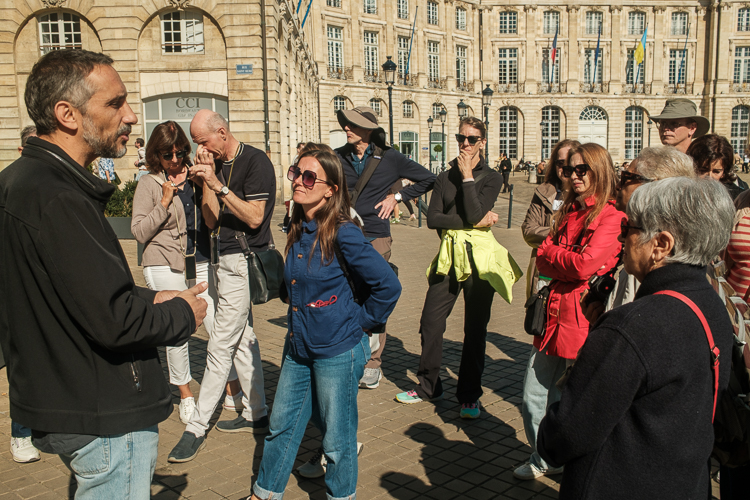
After leaving the Gascony tour, with its jam-packed itinerary, we spent a week in Bordeaux, slowing way down. All we had on our agenda for Monday was a walking tour — something we like to do to get a little background on a city we are just starting to explore.
We met on Place des Quinconces, which our guide told us was the largest square in Europe. (I find that one thing guides of walking tours have in common is superlative claims about their city. So sometimes I like to fact check. According to Wikipedia, Place des Quinconces is actually fourth in Europe, measured by area, behind squares in Warsaw, Sofia, and Caserta, Italy. Go ahead, call me a killjoy!) Our guide also made the claim that the Rue Sainte Catherine in Bordeaux is “the longest pedestrian street in Europe” (claims also made about streets in Copenhagen and Plovdiv, Bulgaria).
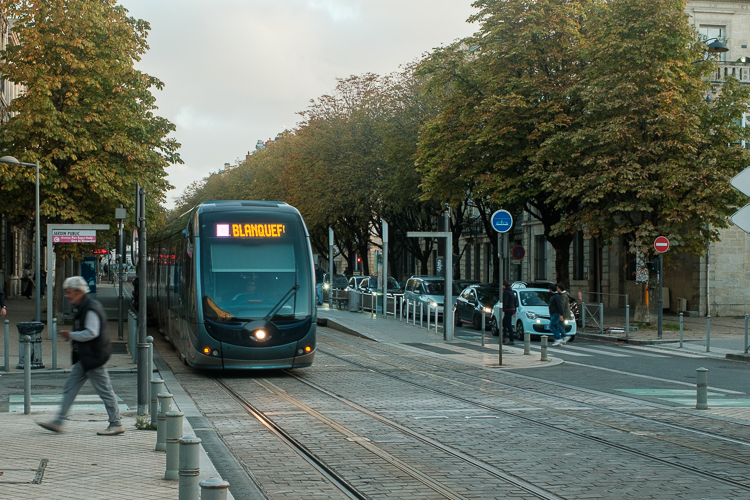
From the 12th to the 15th century, Bordeaux was ruled by the English, and it was a prosperous time. The region surrounding Bordeaux was famous for its wines. England had none. Bordeaux became rich shipping wine to England. After the French regained control, things went downhill. There were plenty of vineyards in France, thus more competition. Bordeaux’s fortunes revived in the triangular trade of the 18th Century, where goods from Europe were brought to Africa and exchanged for slaves, who were brought to Saint-Domingue, where they were traded for sugar (produced by slaves), and the sugar was imported. Other imports from the New World — coffee, cocoa, sugar, cotton and indigo — came to Europe via Bordeaux, and for a time the city was the second busiest port in Europe, next to London. But the revolution in Saint-Domingue (now Haiti) disrupted the triangular trade for Bordeaux, and thus its wealth. The city experienced another revival beginning in the 1990s, when a new mayor invested in cleaning up building facades (covered in soot), tearing down old warehouses in the port, building parks, and constructing a tram system that reduced automobile traffic in the central city.
The tram system uses an innovative power supply that does not depend on overhead lines. Instead, it relies on a third rail in between the running rails, divided into segments that switch on or off depending whether a tram is directly above.
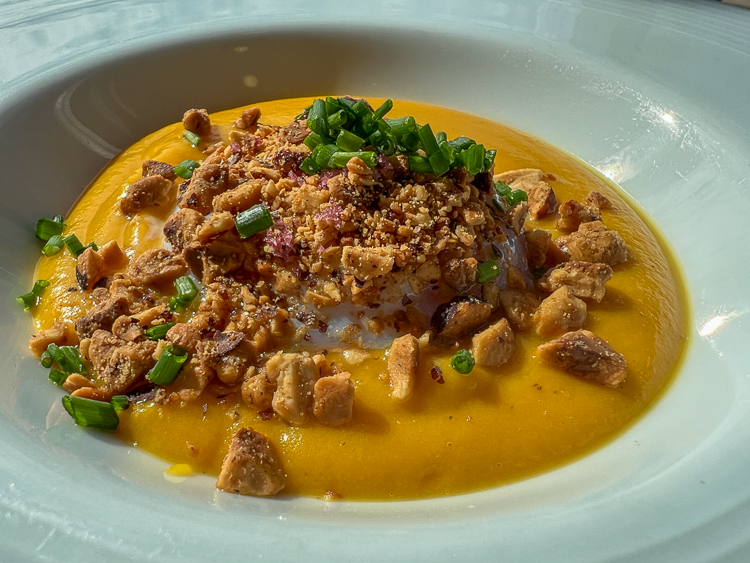
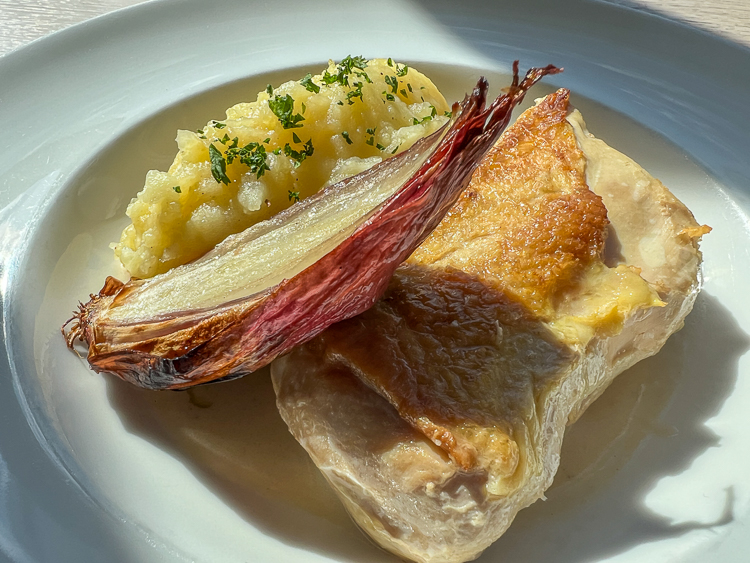
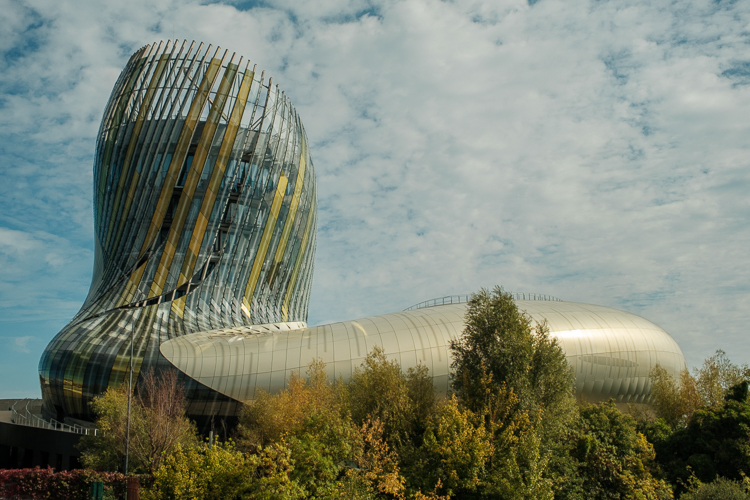
The next day we spent the afternoon in the Cité du Vin, where we started our visit one of the museum’s restaurants, Latitude 20, where we had lunch — which may have been the highlight of our visit to this museum. Butternut cream soup, with a soft-boiled egg and hazelnut crumble; chicken with mashed potatoes, gravy, and a shallot.
The museum had an interesting exhibit showing the great diversity of grape varieties around the world, and the diverse climates and soils in which vines are grown. Other parts of the museum were a little too touristy for our tastes. The architecture is worth a visit, however.
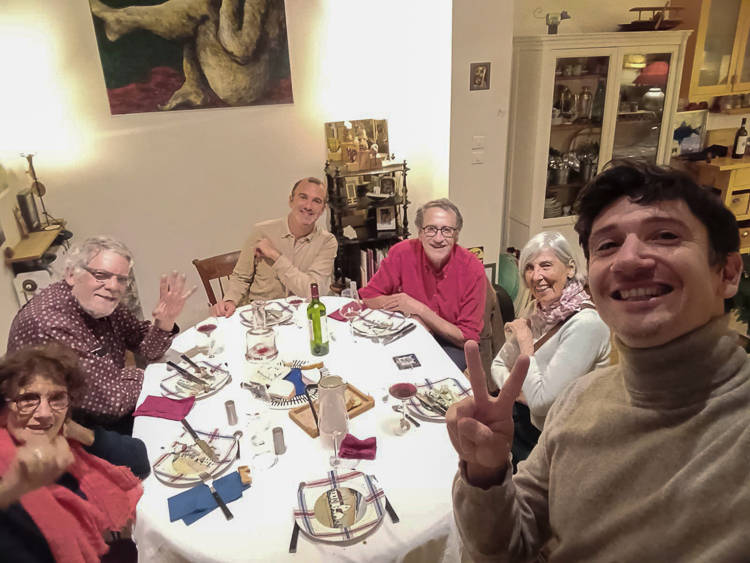
In the evening, we had dinner at the home of Txom (a Basque name), Laurence and Samuel — friends of friends of ours. Samuel’s partner, Vitorio, from Italy, joined us. He is Italian, now living in Bordeaux and works in the wine business. Txom did the cooking, and he served us … magret de canard. The duck was accompanied by potatoes sautéed in duck fat, a salad, and assorted cheeses. The meal was accompanied by wine, one bottle of which came from the vineyard of Vittorio’s family in Italy. After dessert of ice cream with caramel sauce, we were served a digestif — home-made Calvados (an apple brandy).


Continue to enjoy your postings with the photos, Maurice! Thank you.
LikeLike
Thanks Melanie!
LikeLike