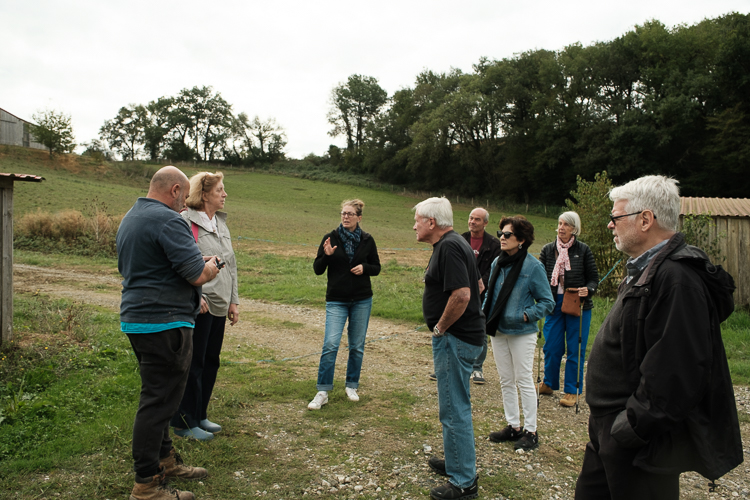
Thursday morning, our group traveled to Loubersan, where we visited
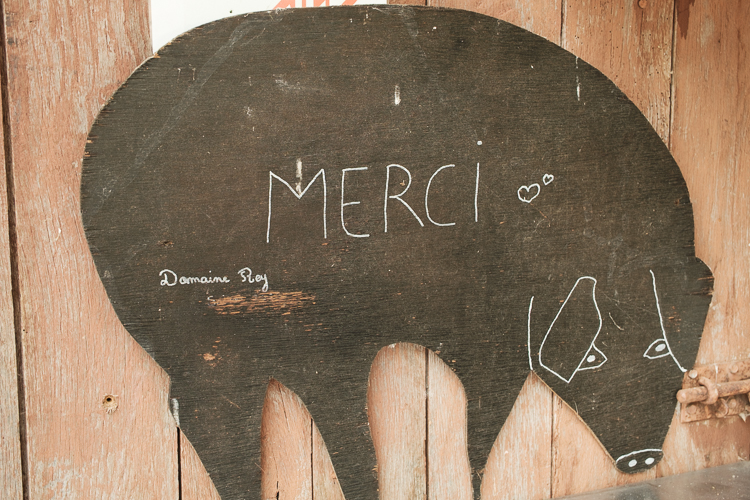
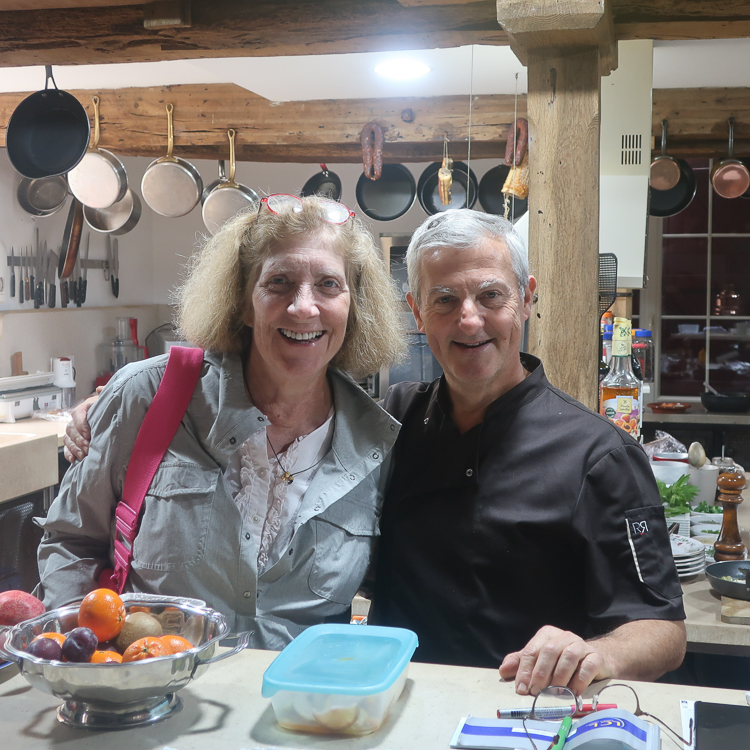
Domaine REY, a farm raising Porc Noir de Bigorre, a pig endemic to the foothills of the Pyrenees. We were taken around to see the farm’s pigs at various stages of development.
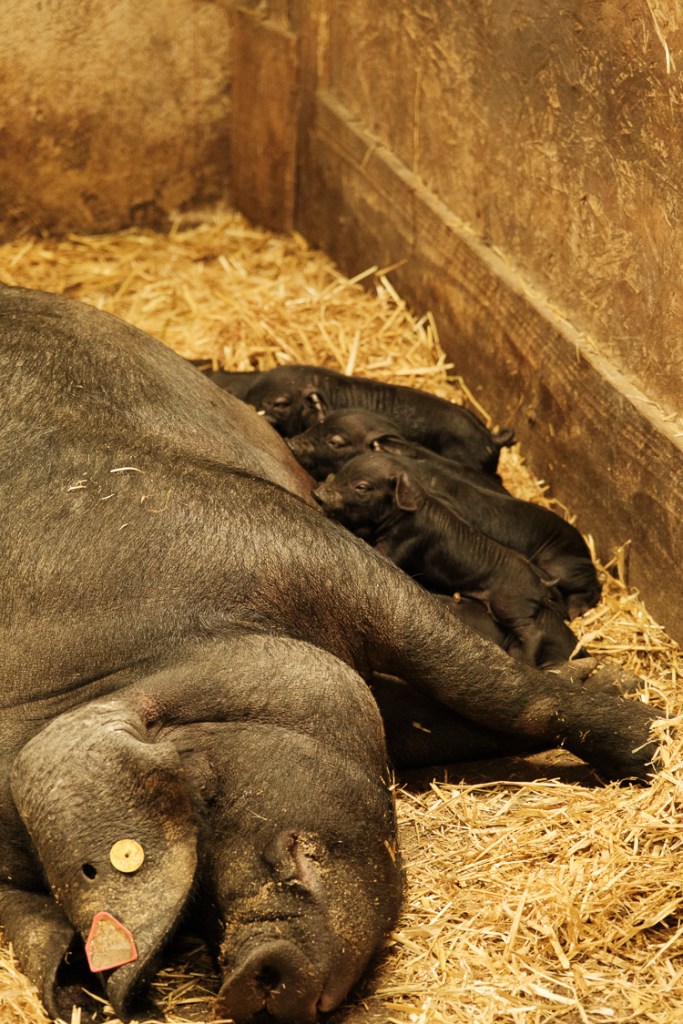


The black pig of Bigorre enjoyed its heyday in Gallo-Roman times, and in the Middle Ages. By the 1980s, it was nearly extinct. A handful of breeders, including Domaine Rey, have brought it back.

After our tour, we were given a tasting of their ham. Like the Iberian pig, from which these pigs descended, they fatten up on acorns in season. The ham is delicious, but we didn’t want to buy to take back to the U.S., given our experience in entering the country from Hungary, where we had purchased sausages, vacuum packed (like this ham), and they were confiscated by U.S. Customs.

After leaving the farm, it was time for lunch, at the Maison d’hôtes Sainte-Marie in Mirande. With our aperitif, we were served a number of tasty amuse bouches on the lovely patio. Lunch in the restaurant featured seared fois gras with peach to start. The main course was guinea hen with morels and morel sauce, with a side of sweet potato in artichoke heart, endive and fava beans. Dessert: crème brulée, chocolate mousse, orange and grapefruit sorbet, with pineapple pastry and armagnac.


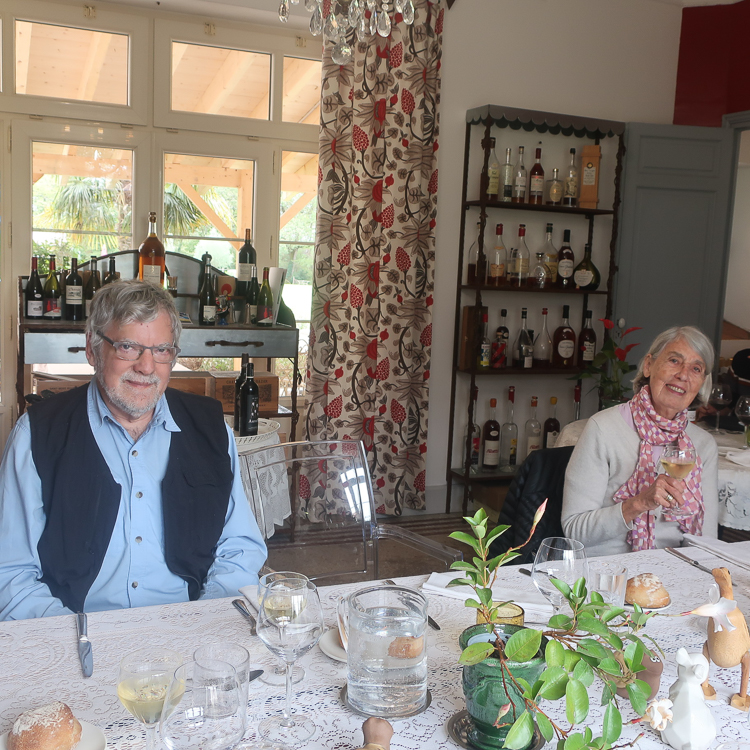
After dessert, we tasted three armagnacs, one each from the three Armagnac regions: Haut Armagnac, Ténarèze, and Bas Armagnac.
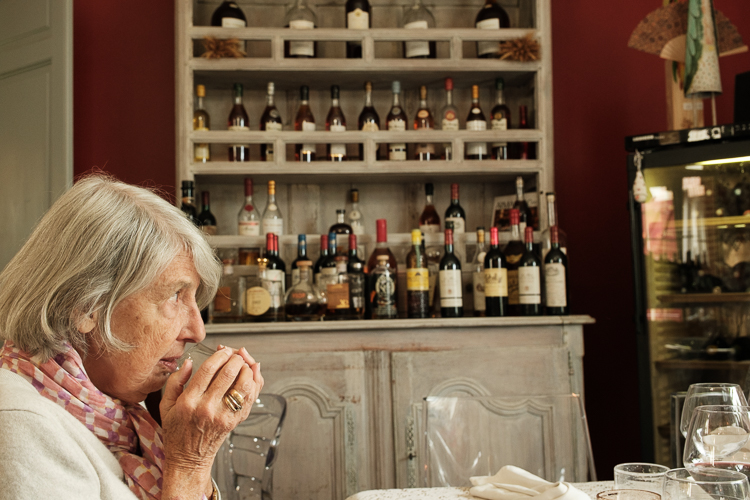
Interesting Armagnac factoid: the age of Armagnac is measured by the time it spends I the cask. Once it is bottled, it no longer ages. So, an Armagnac put in the cask in 2000, and bottled in 2004, is a four-year-old Armagnac.
Next on the agenda was a visit to L’Étuverie in the town of Cadeilhan. This company makes black garlic. The name translates as “The Steamer,” referring to the process that transforms garlic into black garlic. Garlic purchased from local producers is placed in a steamer, where temperatures are kept between 60 and 80 degrees Celsius, with a humidity of 70 to 95 percent. During this time, it becomes soft and caramelizes, giving the garlic its color and taste. After two weeks, the garlic begins a drying process taking another two to three weeks. The process originated in East Asia, where the two friends who founded L’Étuverie were introduced to it.
After tasting some samples, I decided I’m perfectly happy sticking with white garlic. But the place smelled great! All that garlic!


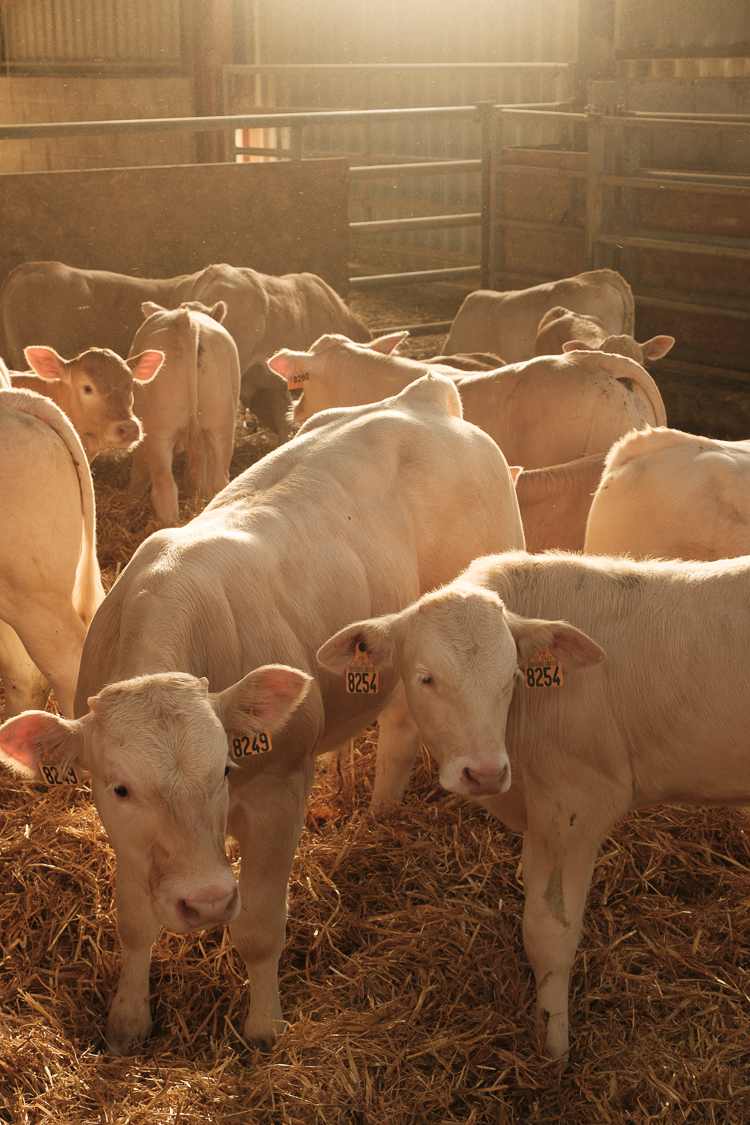
Our final stop, according to our tour agenda, was a visit to a “typical” farm. We arrived at La Païrolle, a Ferme Auberge in the town of Saint-Brès, just as the cows—Blonde d’Aquitaine, a breed native to southwestern France—were coming to the barn to provide milk for their calves.
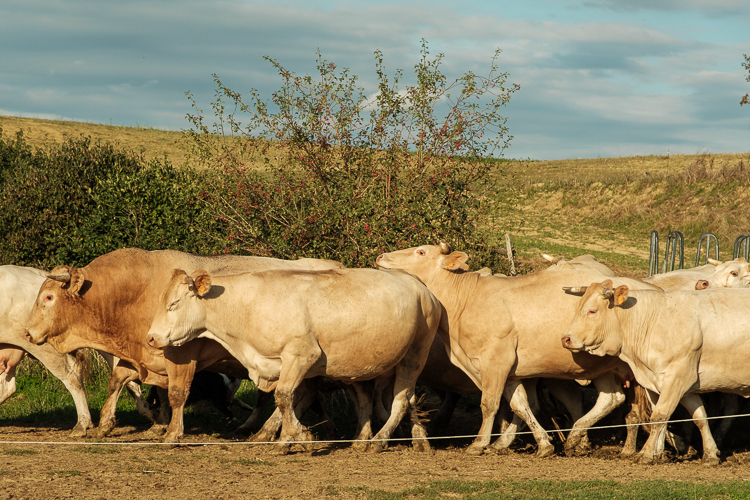
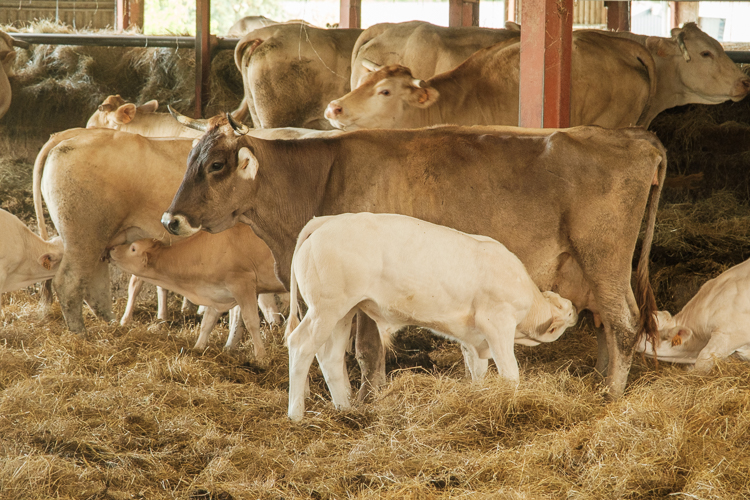
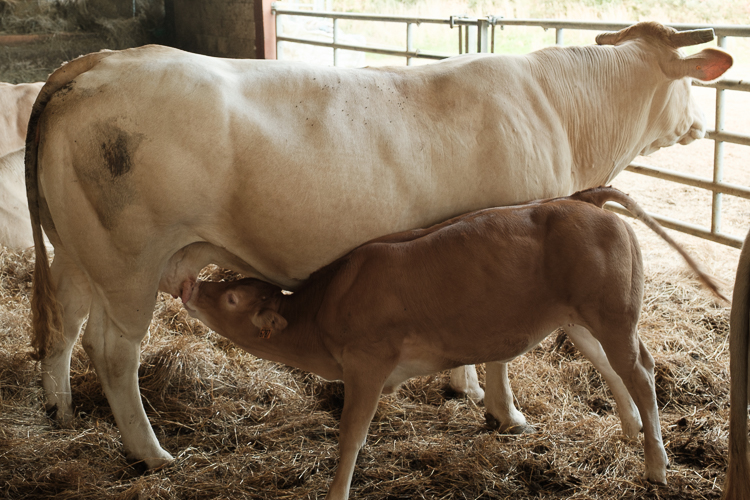
When the milking was done, the cows were separated from the calves and fed some grain before heading back into the pasture.
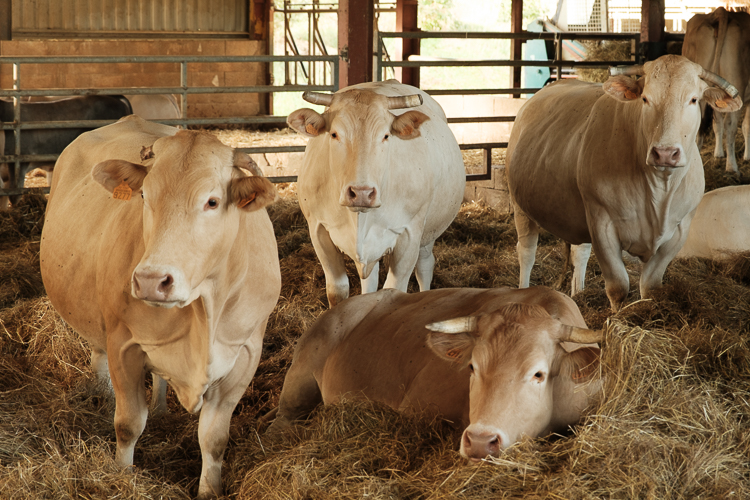

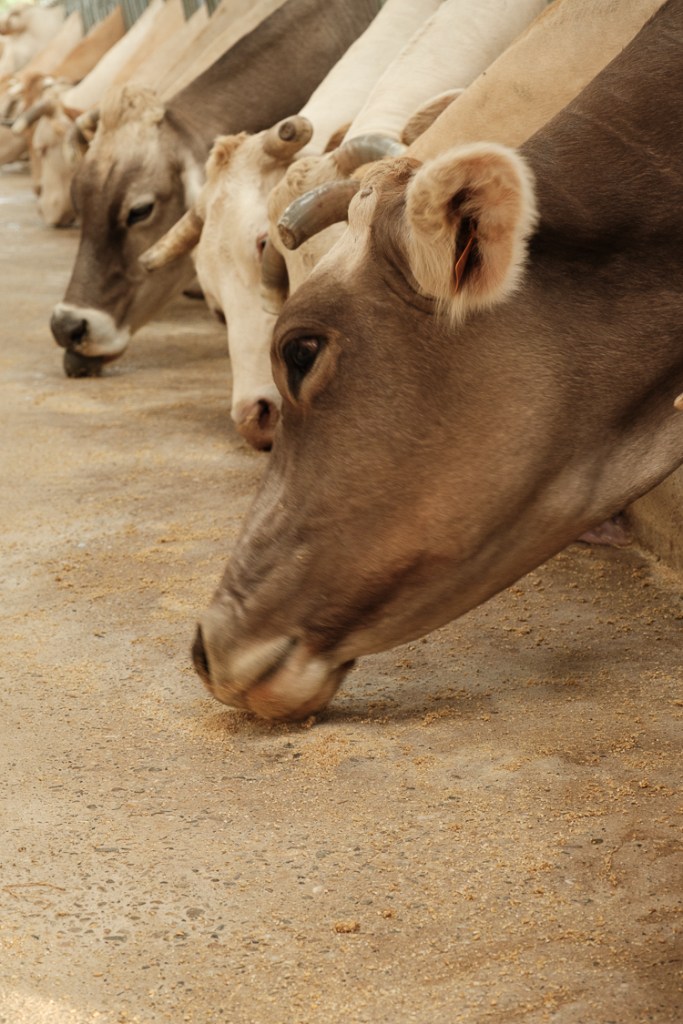

After the visit with the cows, we walked around the corner to dine at the farm’s restaurant. As you might guess, this farm specialized in veal, and that’s what was on the menu: Veal, green beans sautéd with garlic, potatoes. Another fine meal.


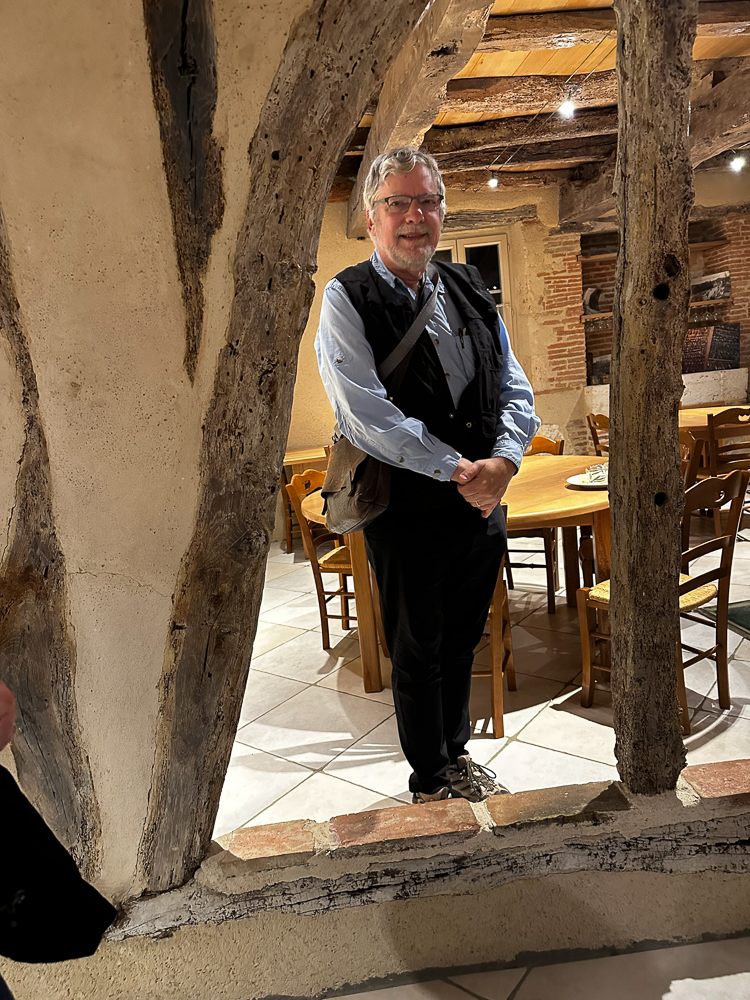
Bonus pic from the day:

 Keeping up with Pat and Maurice
Loved seeing the cute baby black pigs!
About your lunch @ Maison d’hotes Sainte-Marie – you had me at crème brulee and chocolate mousse!
And I loved learning about black garlic at L’Etuverie and your comments about the smell being the best part. Long live garlic!!!
LikeLike