
Today we started with a visit to the Château et Moulin de Herrebouc, a historic monument where Carine Fitte and Hélène Archidec run a small independent winery, Domaine de Herrebouc. The couple produce wines that are organic and biodynamic, growing 10 grape varieties that are typical of Gascony and the Southwest of France. After they took us on a brief tour of the property, we tasted some of their wines. Pat and I decided to purchase their sweet wine, Blanc Doux Vendages Manuelles, made from a blend of Gros and Petit Manseng and Sauvignon Gris and a gold medal winner in an independent winemakers competition. Carine and Hélène told us they feel very fortunate to be living in such a beautiful area, with a community that is ready to help and give advice.
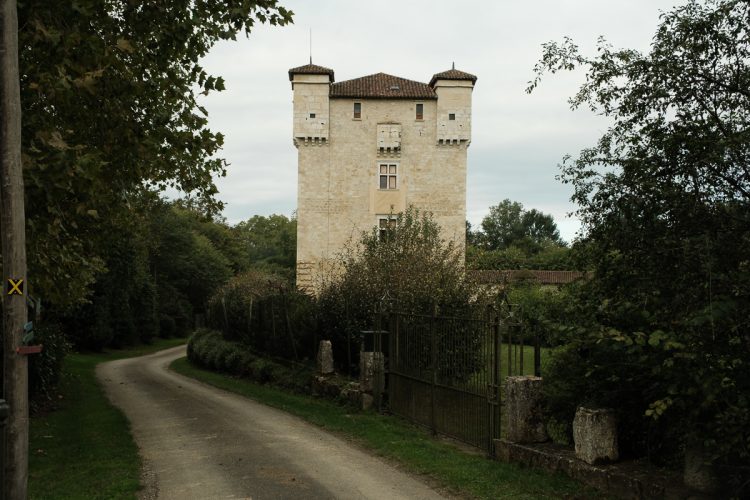

Next on our agenda was Château d’Aydie and the winery of Famille Laplace.

There, we had a tour of their wine cellar, followed by lunch and tasting of their wines.

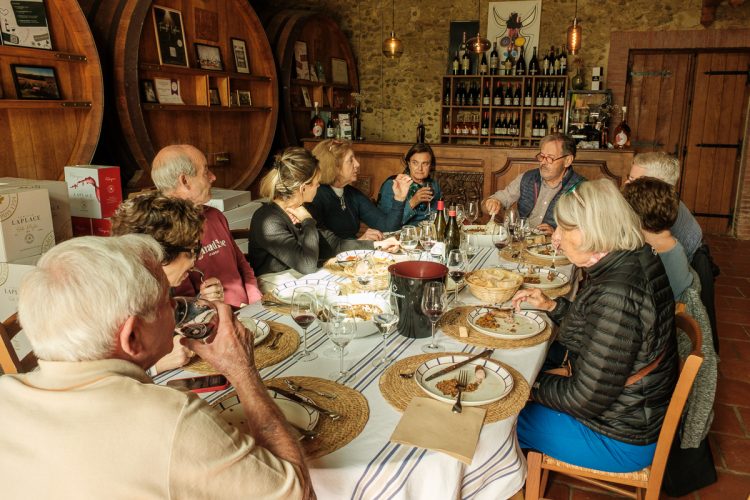
With lunch, we tasted a rosé, three whites, three reds, and three dessert wines.
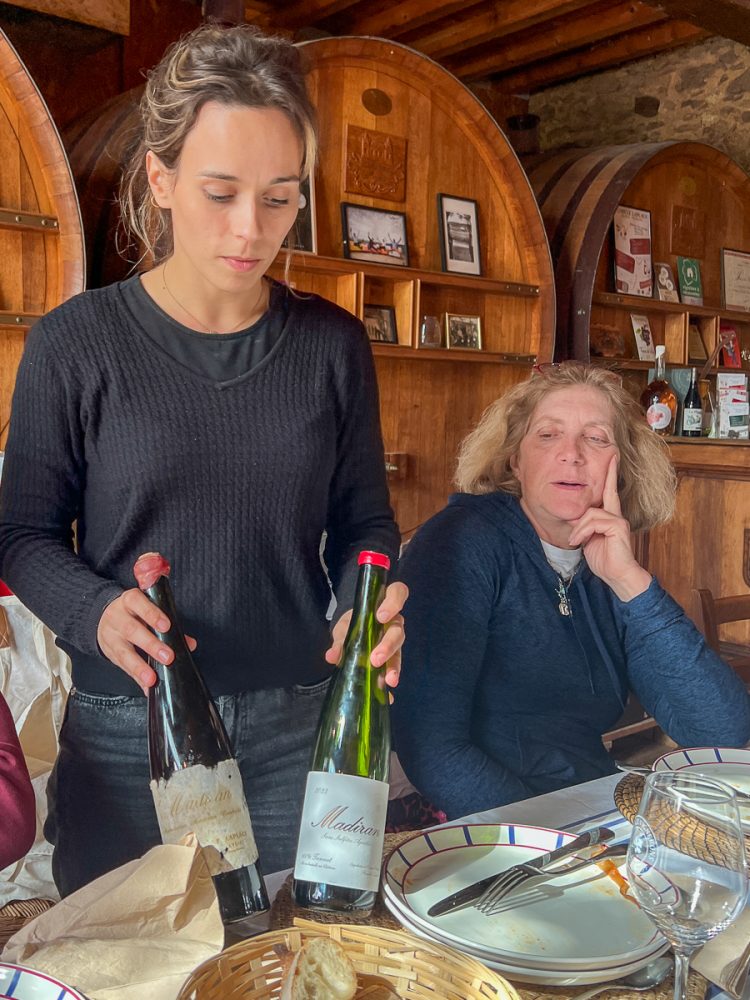
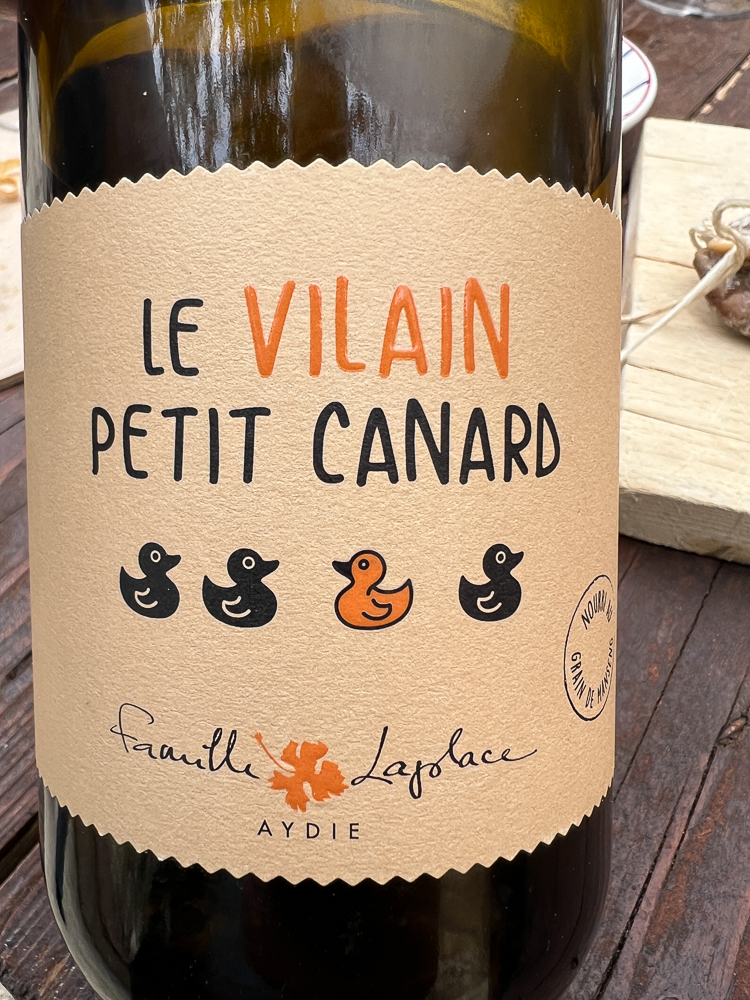
This family of winemakers goes back four generations. It was the son of the founder who began to bottle wines for sale in the early 1960s. The wines took off when André Daguin (Ariane’s father) tasted a sample and placed an order for 4,000 bottles. We heard an amusing story of some difficulty with the officials in charge of certifying AOC status of wines of the region. Some of the vineyard’s wines did not meet the taste preference of these officials, and so the winemakers were forced to accept the less prestigious label of Vin de France. They compensated by adopting clever names and labels for their wines, such as Le Vilain Petit Canard (The Ugly Duckling) or La poule aux oeufs d’or (The goose that laid the golden egg). The marketing trick has been a great success, despite the snubbing from the authorities. We purchased a bottle of the latter, along with their Vin de Liqueur, Maydie, made from Tannat grapes.

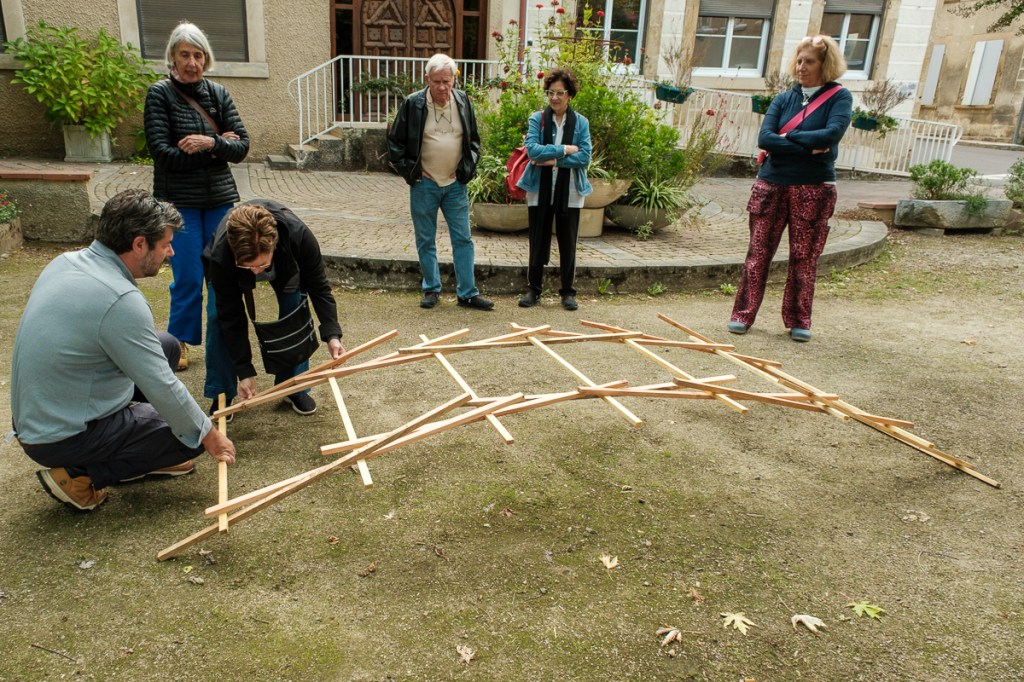
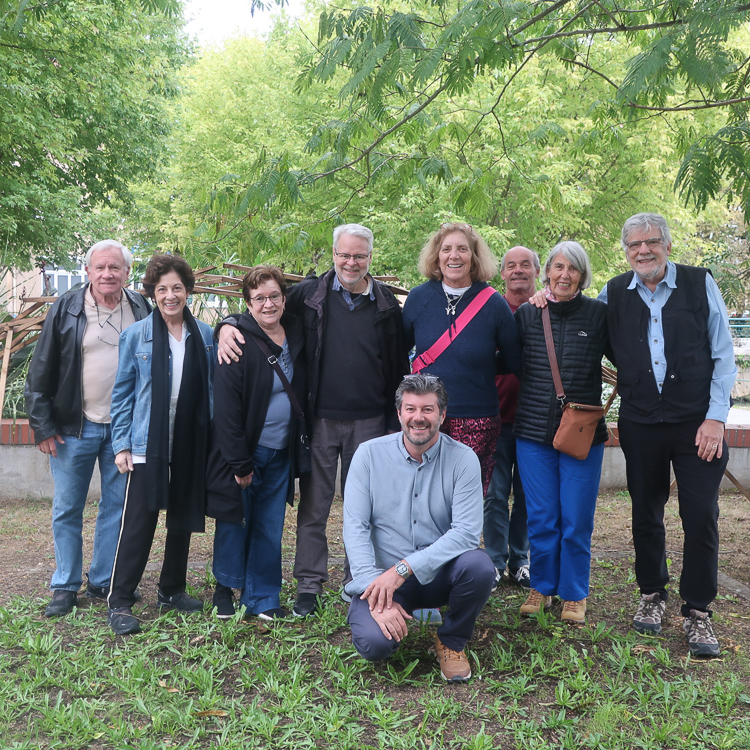
After the second winery, we visited the town of Plaisance, where we met Patrick Fitan, the mayor. In the yard of the city hall, the mayor handed us some boards and had us construct a self-supporting bridge. This engineering trick was invented by Leonardo da Vinci in the 15th century.
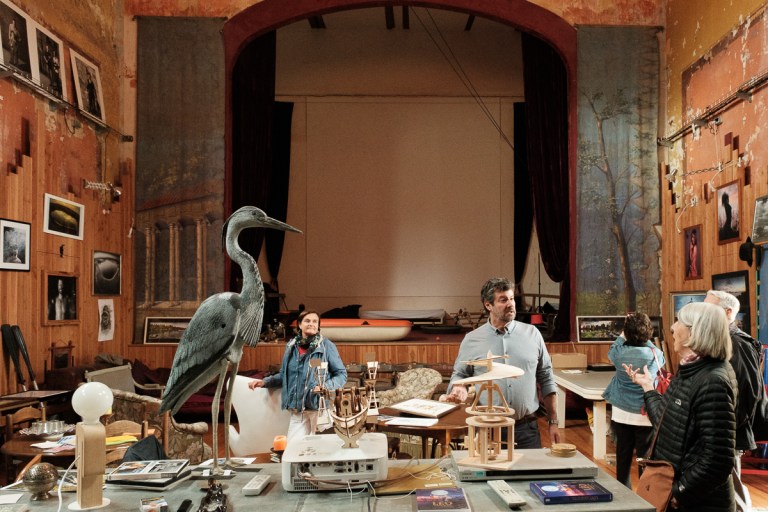
Some years ago, the mayor purchased the town’s old theater, and he took us there and chatted with us about his dream of bringing one of the giant walking robots created by the French theater company, La Machine to his small town.
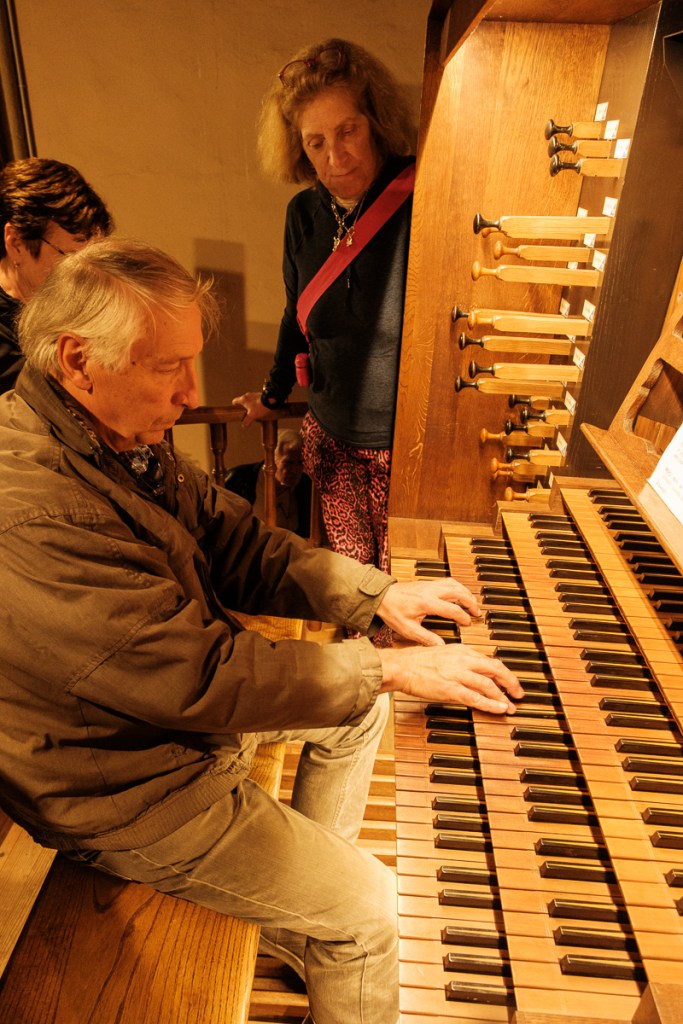
Next, we went on to the local church, Notre Dame, which has a grand organ with 43 stops, 4 keyboards, and a 32‑note pedalboard. The organist was waiting for us, and we were treated to a brief performance. Plaisance has plans for an organ museum, La Cité de l’Orgue, in a converted old mill. In this museum, visitors will be able to wander inside a massive organ, learning all about the instrument.

Our tour of Plaisance probably amounted to the most walking we had done so far on the tour, but I wouldn’t go so far as to say we were famished. Still, it was time for dinner, and the bus took us to the town of Mascaras, to Betty Beef. As you might infer from the name, this restaurant specializes in beef, from the organically-raised Charolaise breed of cows they raise locally.
With all the eating we had been doing, I wasn’t quite up for this …

… so I just had a burger. Here is our group, joined by Patrick Fitan (mayor of Plaisance) chatting with owners Betty and Philippe Villas, at the end of the table.

After we finished with dinner, we were visited by the owner of Auberge La Baquère, where we had dinner the previous night. He knew Ariane’s father, and brought us his special bottle of Armagnac for us to taste as an after-dinner drink.
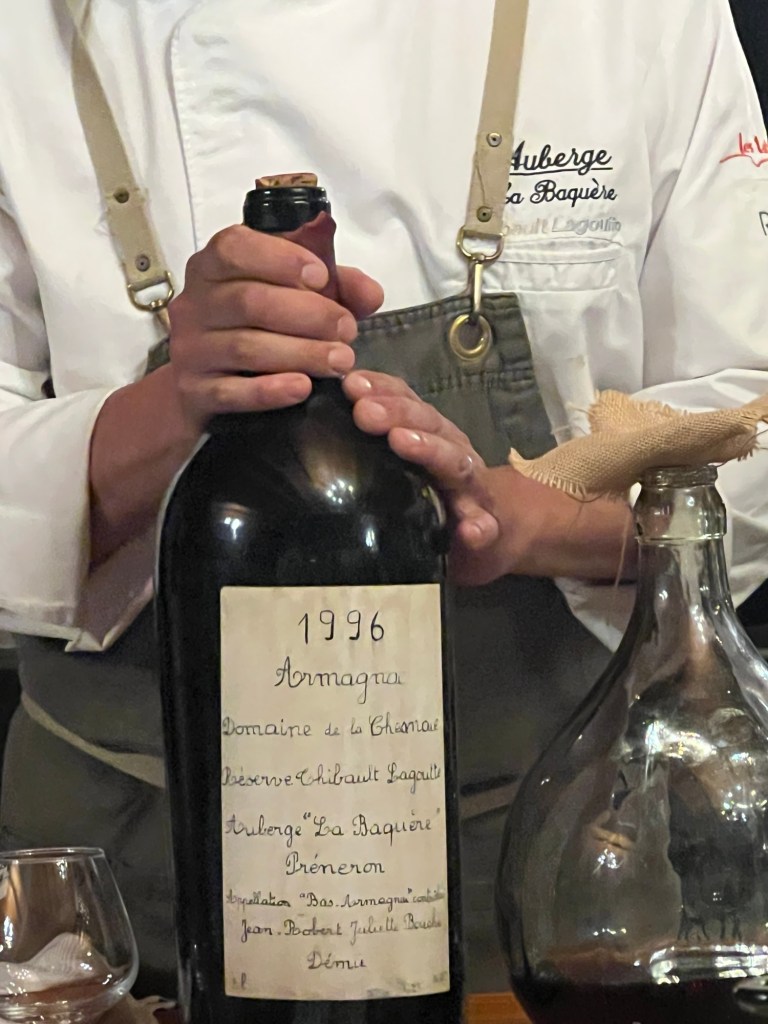
I was so glad I didn’t have to drive.


Beautiful. :Livin the Life . . .
LikeLike
I’m finally catching up with your amazing documentation of your latest trip. Your day of Winery Visits was chock full of wonderful information about the wines you tasted, the people you met, and what you saw. You said it all, Pat – so glad you didn’t have to drive home at the end of that day 💕
LikeLike