Monday, we visited the “fat market” in Samatan. On offer here are whole geese and ducks (minus the feathers), for preparation of duck breast, foie gras, confit.
Prior to 1960, there was not much interest in duck breast, which was prepared mainly as a confit—meat simmered and preserved in its own fat. It was Ariane’s father, André, who started to serve duck breast grilled, like steak. With his green peppercorn sauce, the dish was a hit, and magret de canard became one of the most popular dishes in France. There was a small plaque in the market honoring André Daguin for this bit of culinary history.
At 10:00, a whistle sounds, and customers dash in to meet the producers and stake out the best ducks.
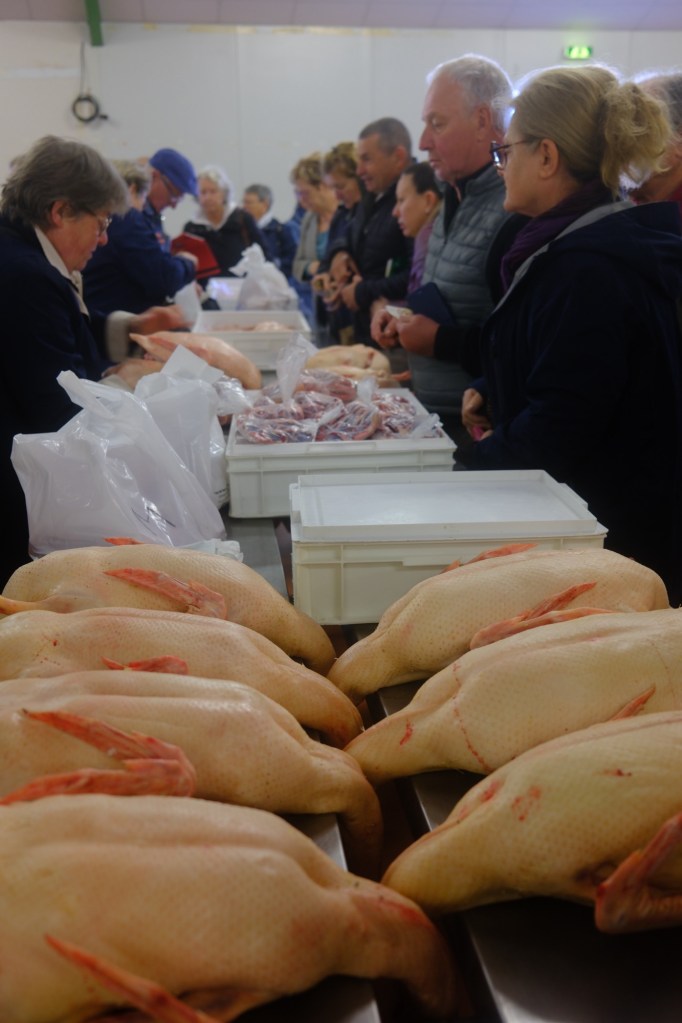
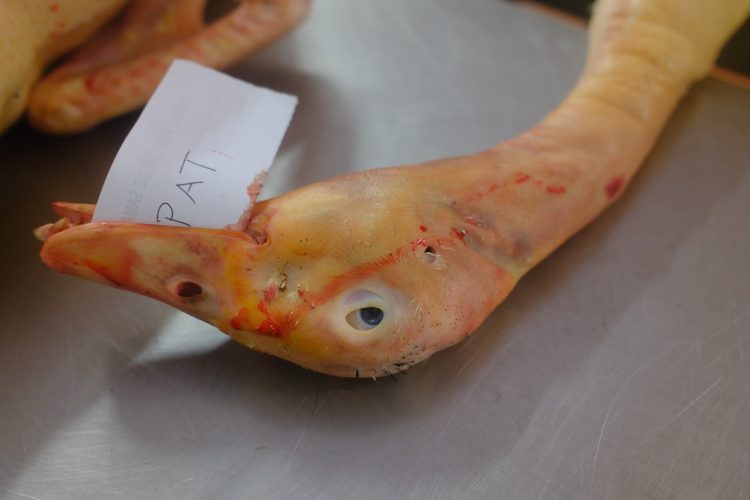
We were let in early to observe the action, but our ducks had been set aside, so we only had to compete with the other members of our small group for the best ducks. Ariane demonstrated what to look for when searching for a duck with a good liver (for foie gras).

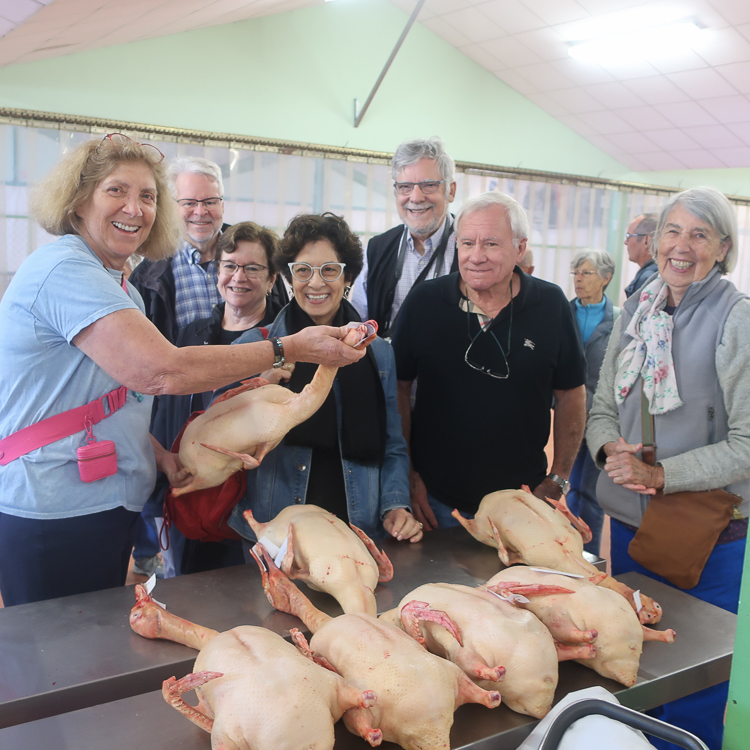
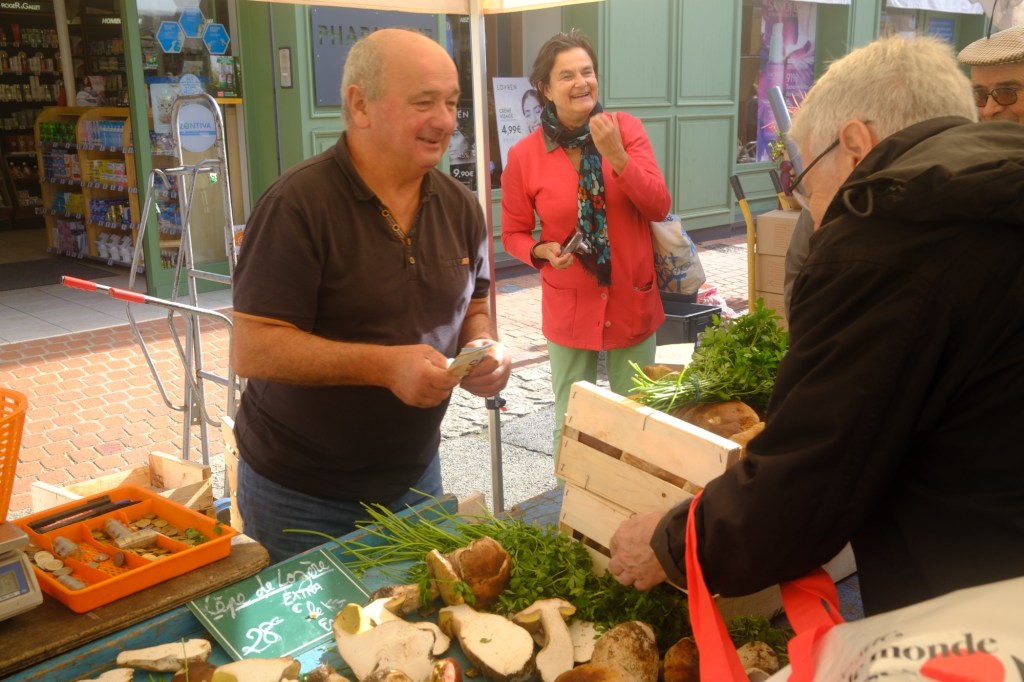
After choosing our ducks, Ariane broke us into teams to work together to prepare a meal the following day, with magret as the main course. We then went to the adjacent farmers market, where each team was given some Euros and about 20 minutes to pick out ingredients for their assigned course. I was paired with Roger, the chef, who was charged with cooking the magret. With me in tow, he scanned the market for the best ingredients to accompany the duck—potatoes, shallots, herbs, and cèpes. Lots of cèpes.


When the farmer heard our American accents, the cèpes (porcini) magically doubled in price. Fortunately, Ariane interceded and knocked the price down a bit. Still, we paid 90€ for our 8 kilos of mushrooms. (That’s about $105. Still a bargain: Roger estimated we’d pay about $800 in the U.S. for our 16 pounds.)
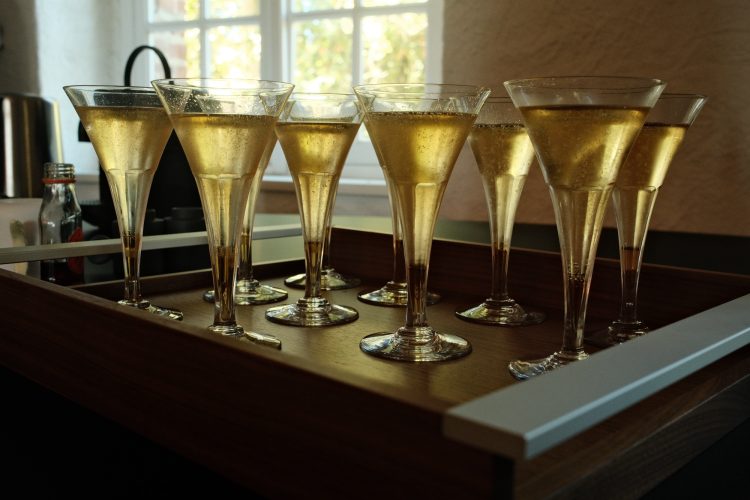
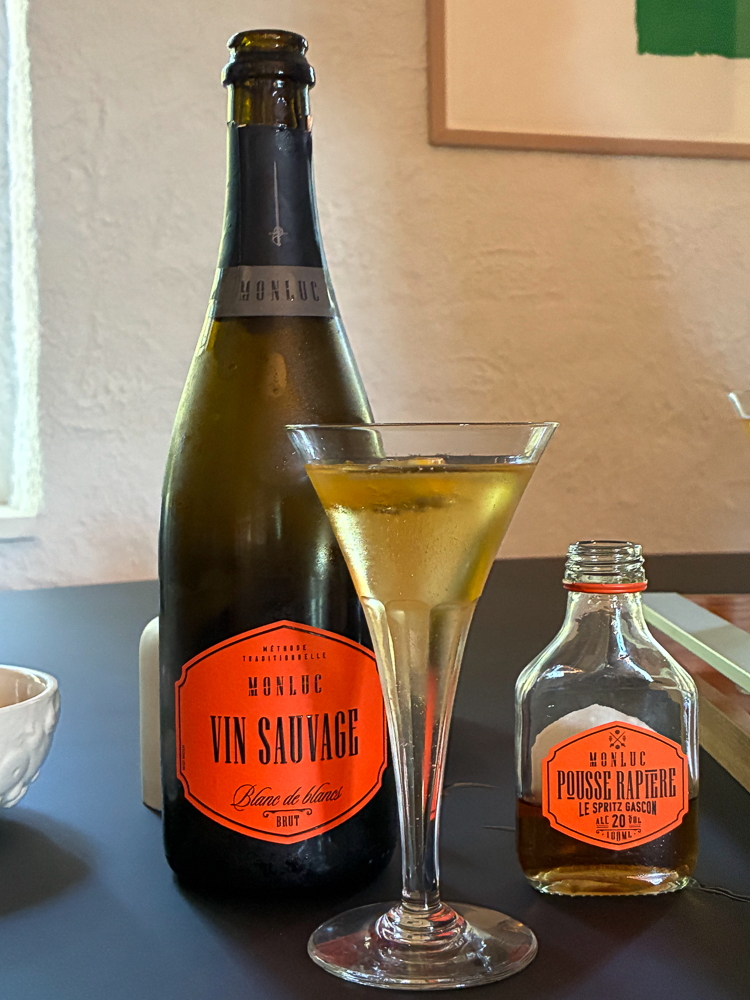
After leaving the market, we moved to the Moulin de Cazaux-Savès, where we had lunch before starting the duck workshop. Of course, before lunch there was the aperitif (floc). Happy hour starts early here.

Lunch: Salad with duck gizzards and prosciutto; something like shepherd’s pie, but with duck meat under the mashed potatoes, instead of beef; an apple tart. All very good.
After lunch, it was time to get to work.
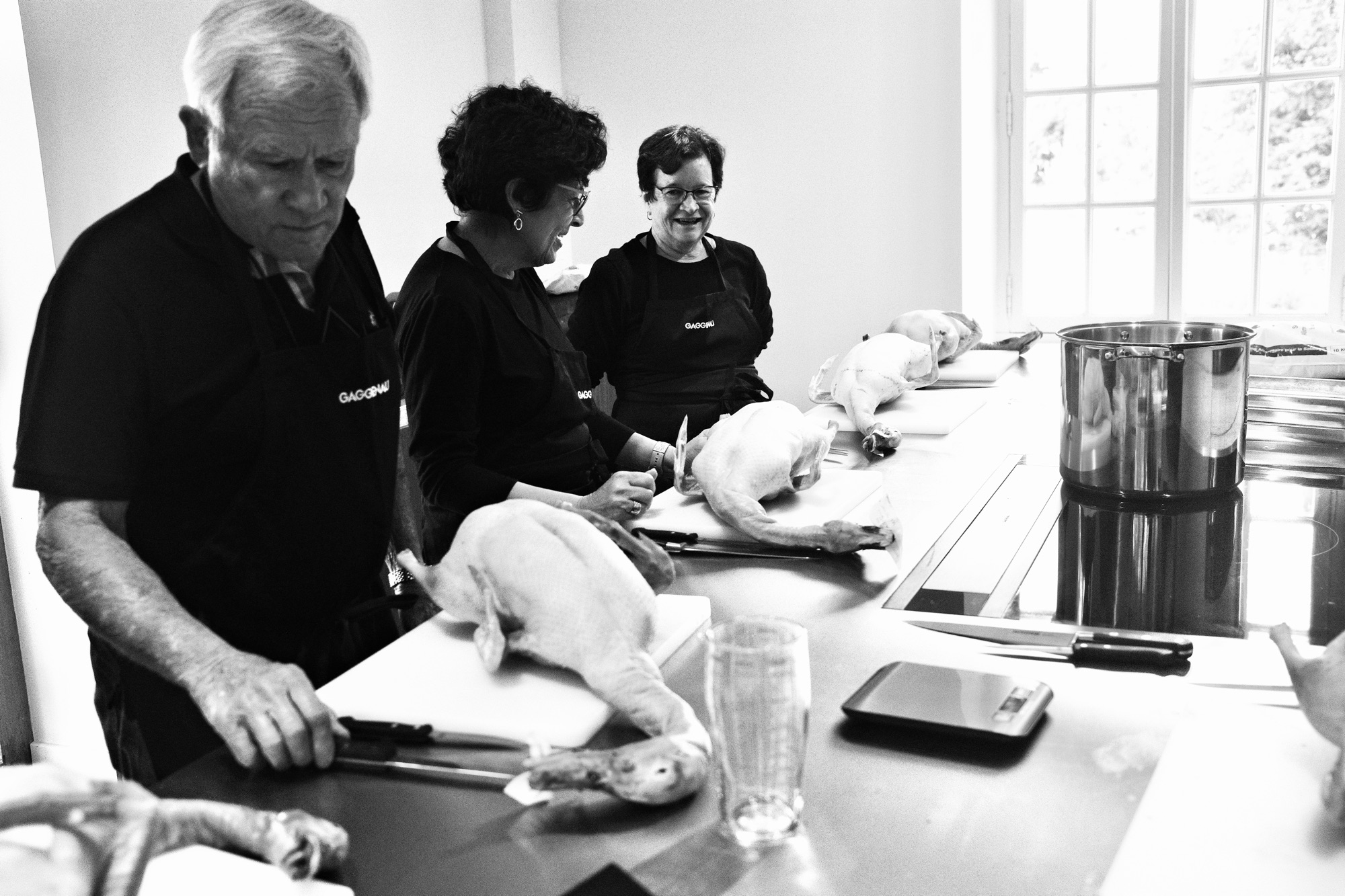
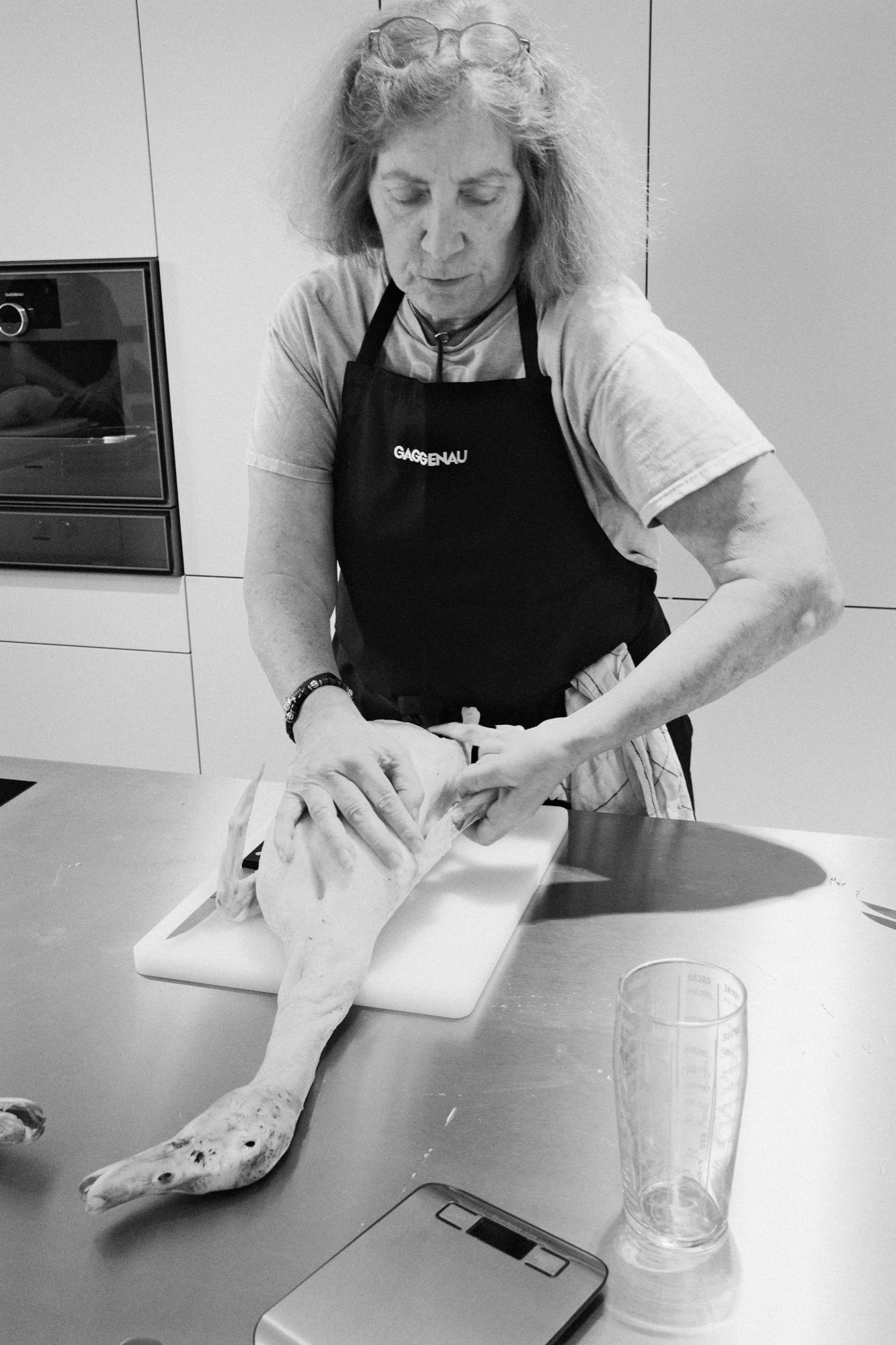
The Moulin had a brand new kitchen. We were about to make it … less brand new. We were going to process the ducks we picked out at the market.
To process a duck:
- Take a leg and scrape off the meet from one end, moving it to the other end to make a “lollipop.”
- Cut the thigh, with a good amount of the skin and fat, being careful not to pierce the membrane surrounding the liver.
- Cut off the neck and head.
- Remove the breast (the magret), again being super careful not to pierce the liver.
- Carefully remove the liver. (Prior to migration, ducks gorge themselves, and their liver and stored fat are enlarged. I never realized how big a duck liver was relative to the rest of the bird. Ducks raised for foie gras are forced fed, speeding up the natural process of engorgement.)
- Separate the carcass from the bile and intestines, which are discarded. (The carcass is saved for stock.)

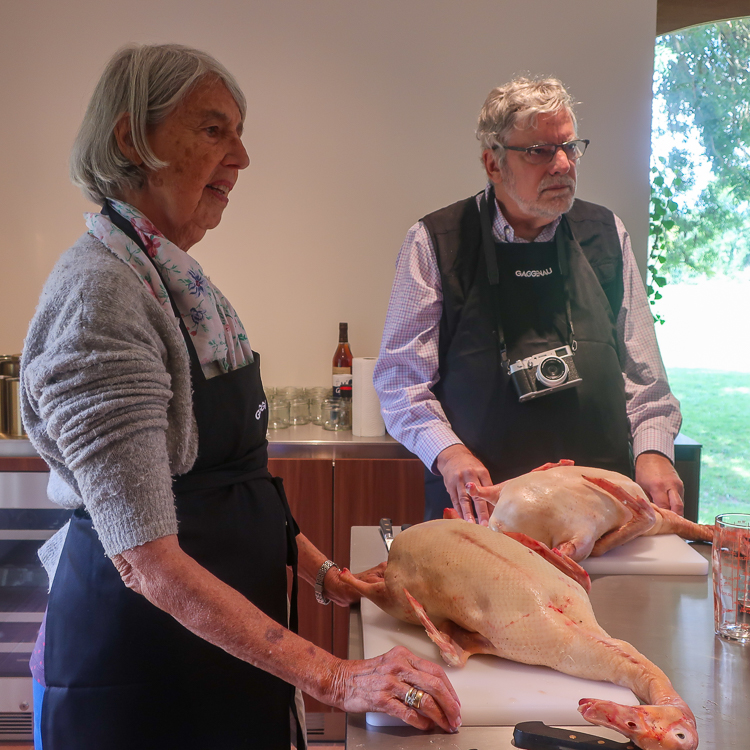


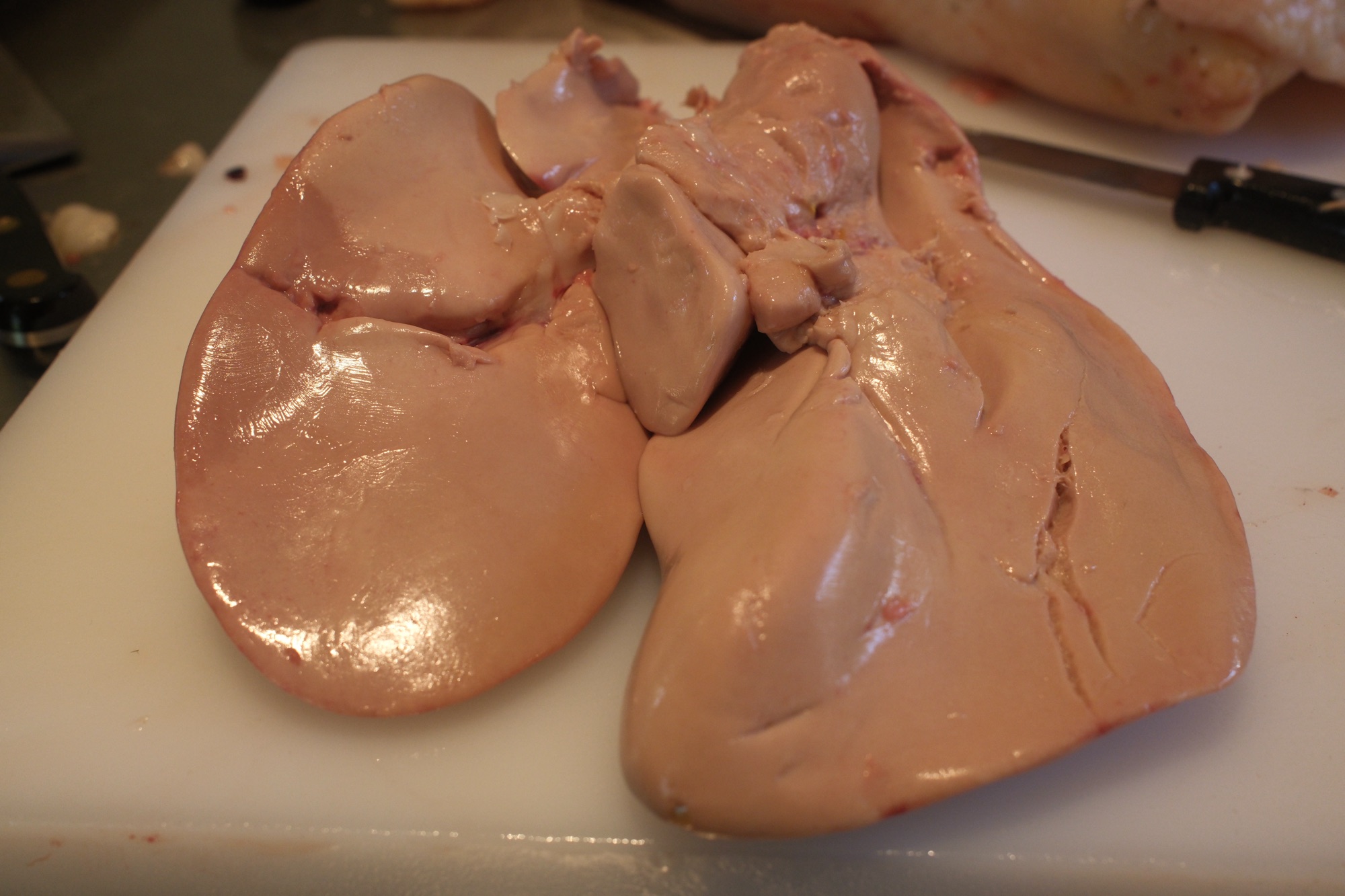

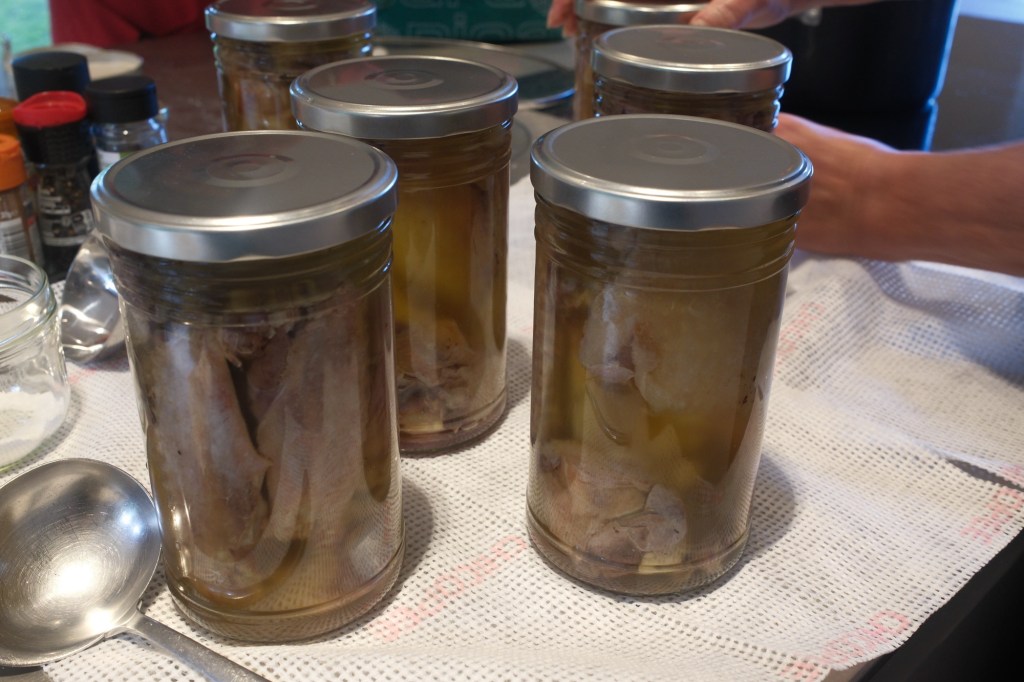
After our ducks were disassembled, we relaxed and had a drink while waiting for the duck legs to simmer in a big pot as the fat melted. The resulting confit was then put in big jars (with as much fat as would fit) to be sterilized and readied for us to take home.
With our work done, we went back to Auch for dinner at La Bodega, a Spanish tapas restaurant.
 Keeping up with Pat and Maurice
Duck Day was a fascinating read! I really liked the links you provided, Maurice – made it so easy to learn even more!
LikeLike
OMG!!! Maurice, when I was in 5th grade, I won a pet duckling hatched from our class incubator. I named him Hermie, after Herman Munster. Ever since, I cannot eat DUCK. Your ghastly adventure has triggered my PTSD!!!!!
LikeLike