The Coop
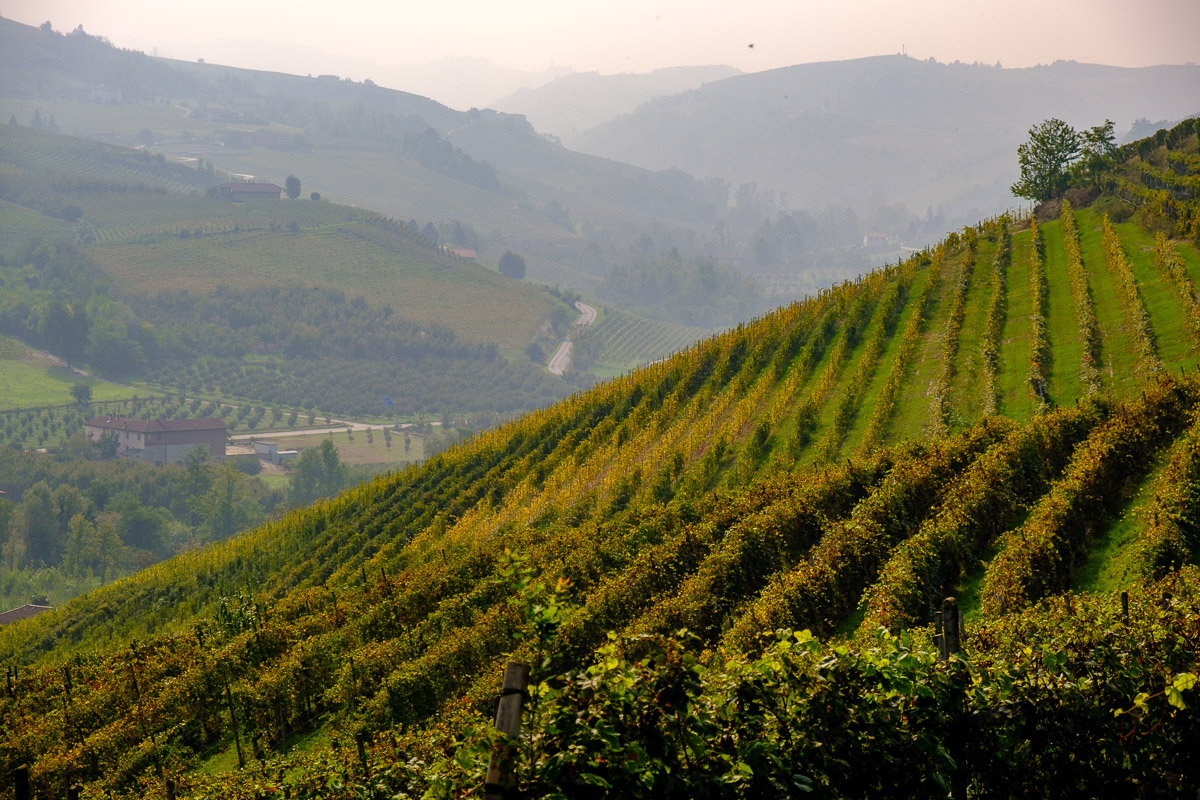
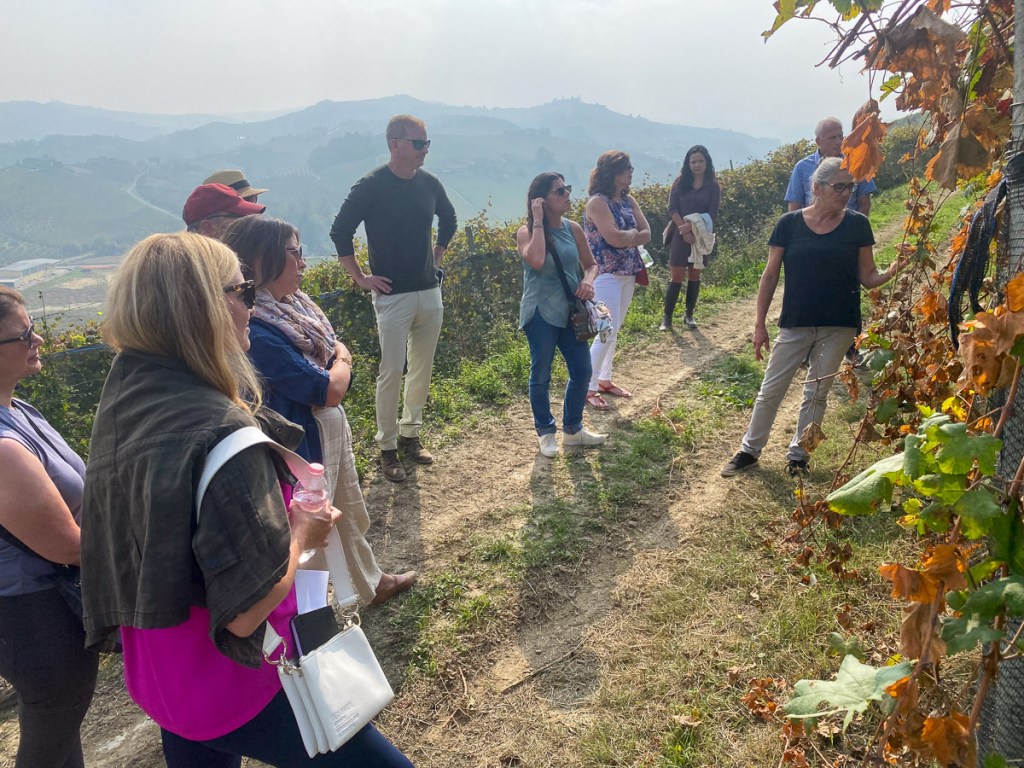
Our first winery today was the Produttori del Barbaresco, a coop winery with about 55 member farmers. Our guide brought us to a spot overlooking the Tanaro River valley and the hills beyond. Pointing to the distance, he told us that, on a clear day, we could see the Alps bordering Italy and France. It was not a clear day. The fog — more like a haze — was a constant companion on our tour, and today was no exception. The moisture comes from the soil, we were told, and condenses in fog that stays put in still air protected from prevailing winds by the Alps.
The Produttori started in 1894 when Domizio Cavazza convinced local small farmers to bring their grapes to the castle, where they could make wine together. This arrangement worked well until the 1930s, when the fascists came to power. It was restarted by the village priest in 1958, and today there are about 55 members of the coop who bring their Nebbiolo grapes to be made into Barbaresco wine.
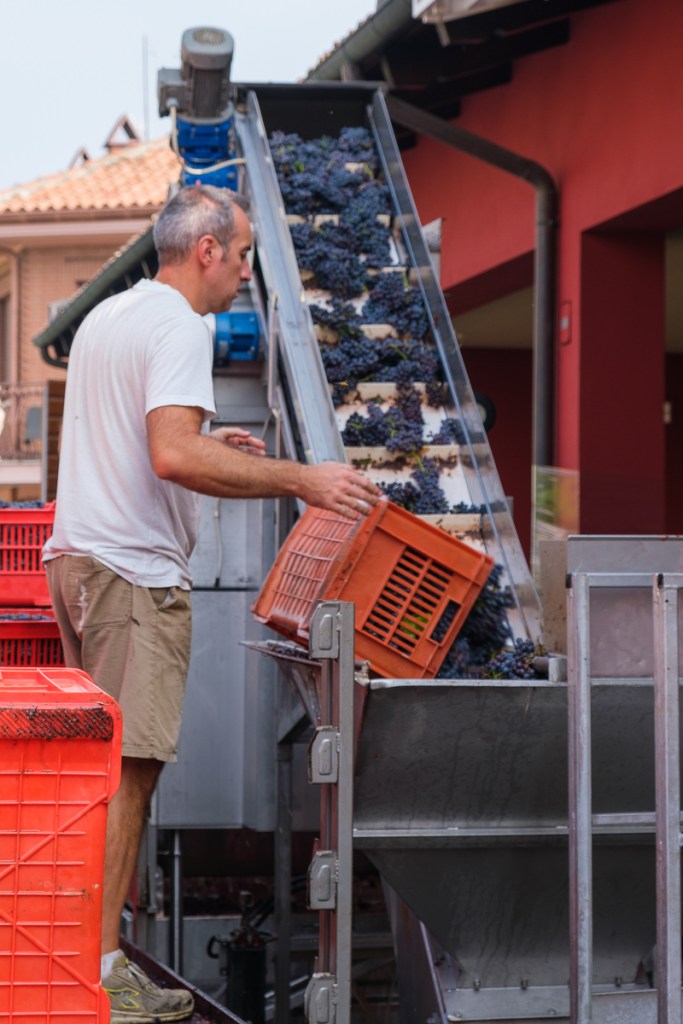
Made from the same grape as Barolo and other wines in this area, the Barbaresco D.O.C.G. (denominazione di origine controllata e garantita) has its own rules. It must be made of 100 percent Nebbiolo grapes. The grapes are grown in a particular area that includes the town of Barbaresco and three other small towns (a production area totaling about 1,700 acres). After being harvested, the grapes are fermented in stainless steel tanks for 24 to 30 days before the juice is separated from the skins. The wine is kept in steel vats until the following summer, when it is transferred to large oak casks to age for 2 to 3 years before being bottled, after which it is stored for an additional 9 to 12 months (minimum) before being released.
With all of these rules, and the amount of time the wine must be held before being sold, you can see it makes sense for the small producer members of the coop to band together. Nevertheless, as more member wineries purchase more land, more are making their own wine.
In a given year if there is a good vintage for all members, coop rules allow the individual wineries to reserve 30 percent of their grapes to bottle their own single vineyard wines. Otherwise, all grapes go to the coop for blending. In addition to the Barbarescos, the coop produces a Nebbiolo Langhe, which doesn’t need to be aged as long as the Barbarescos before it is suitable for drinking.
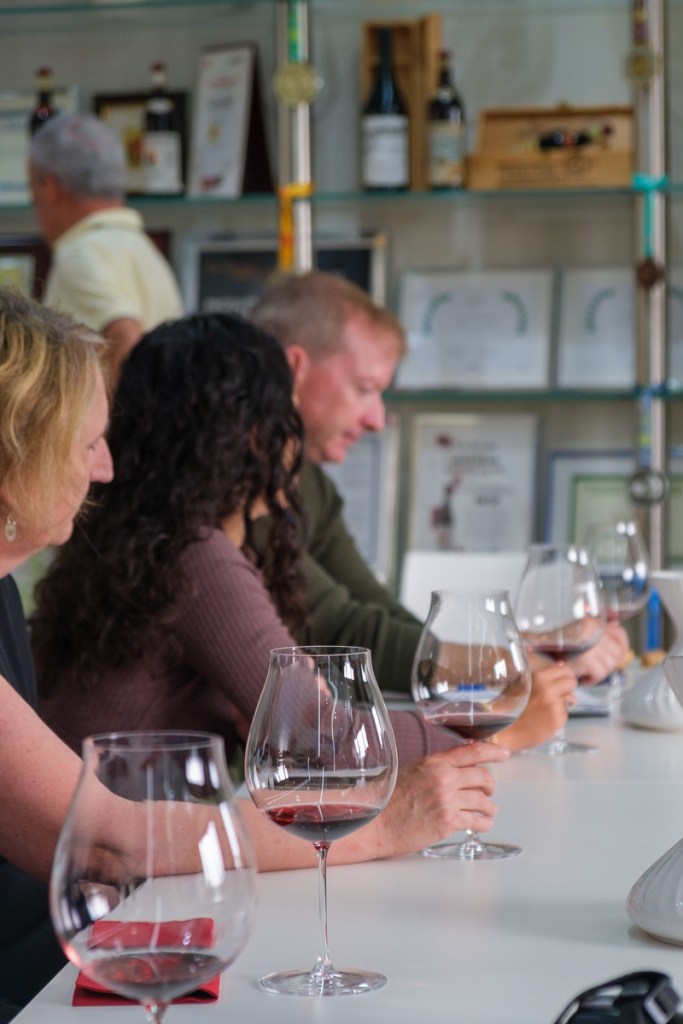
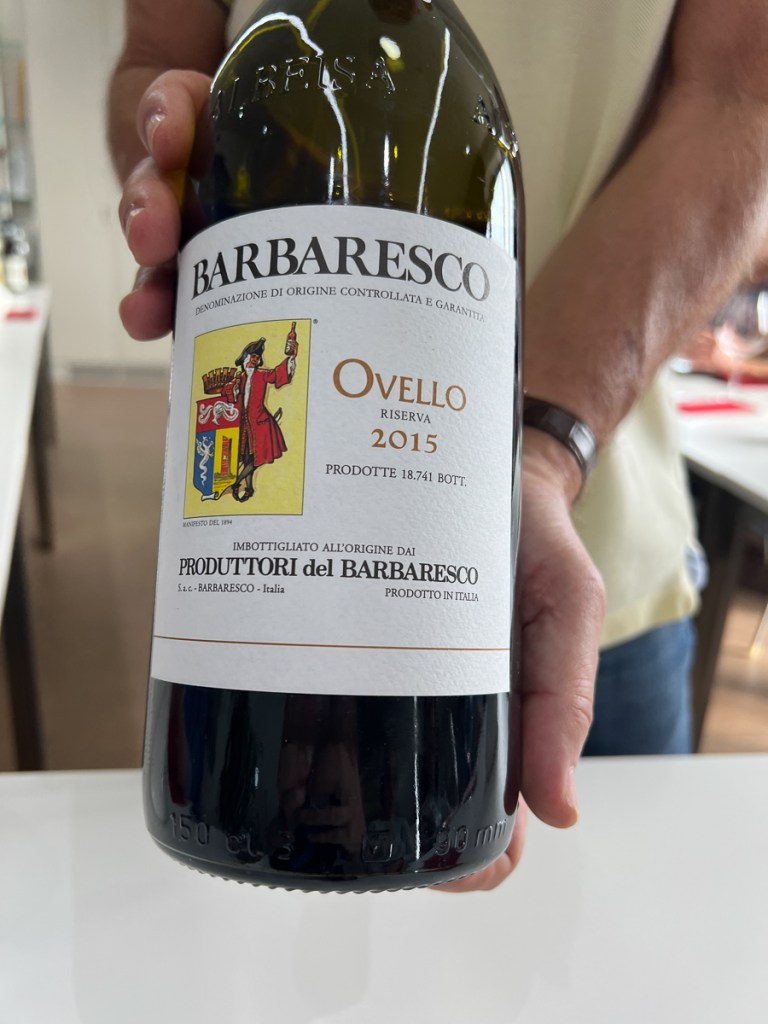
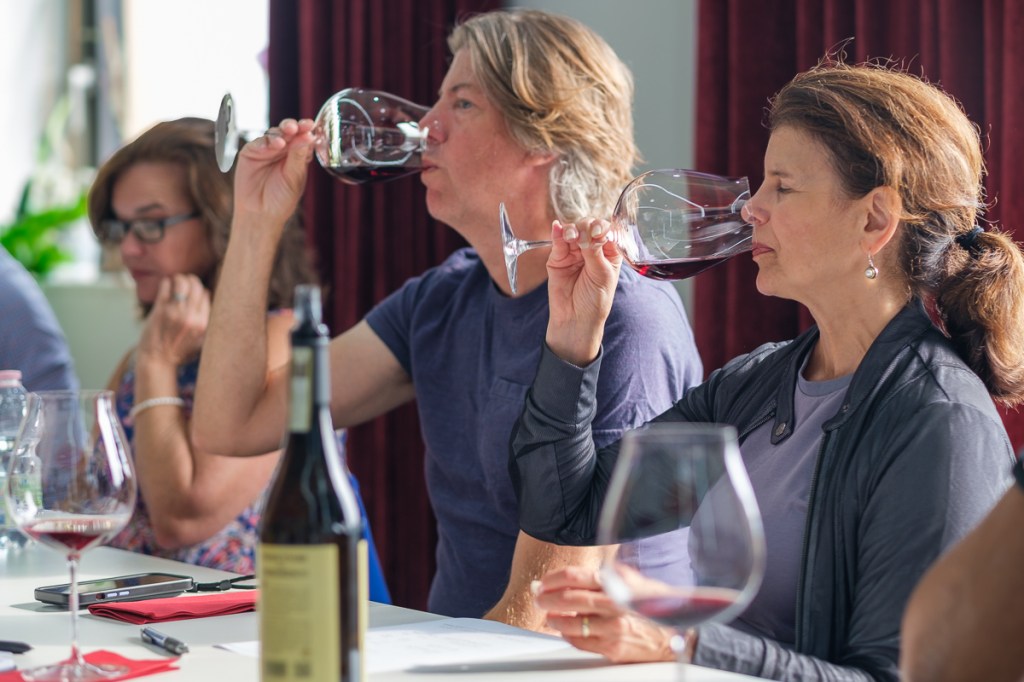
At the coop, we tasted three Barbarescos — including one single vineyard from the 2015 vintage — and one Nebbiolo Langhe. (From the coop, we added three bottles to the total we were having shipped home.)


Punset
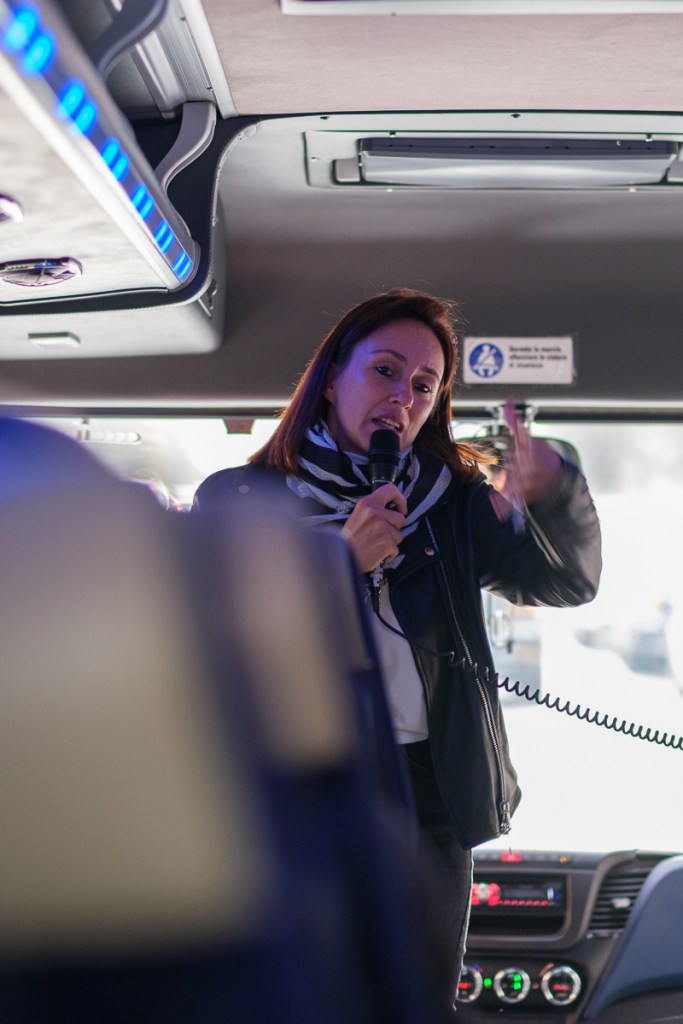
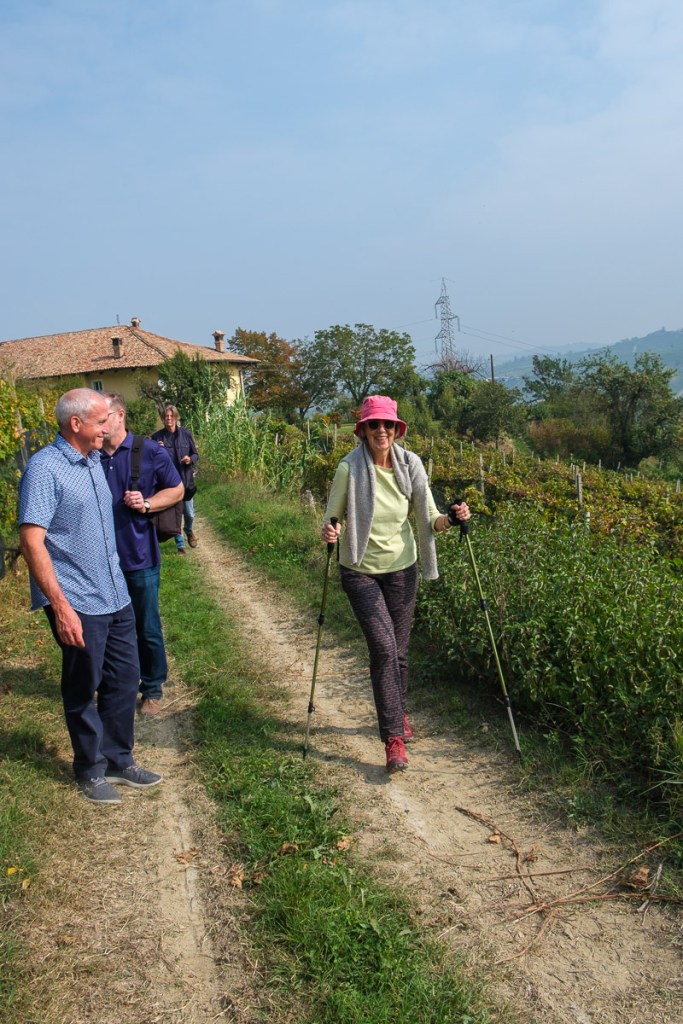
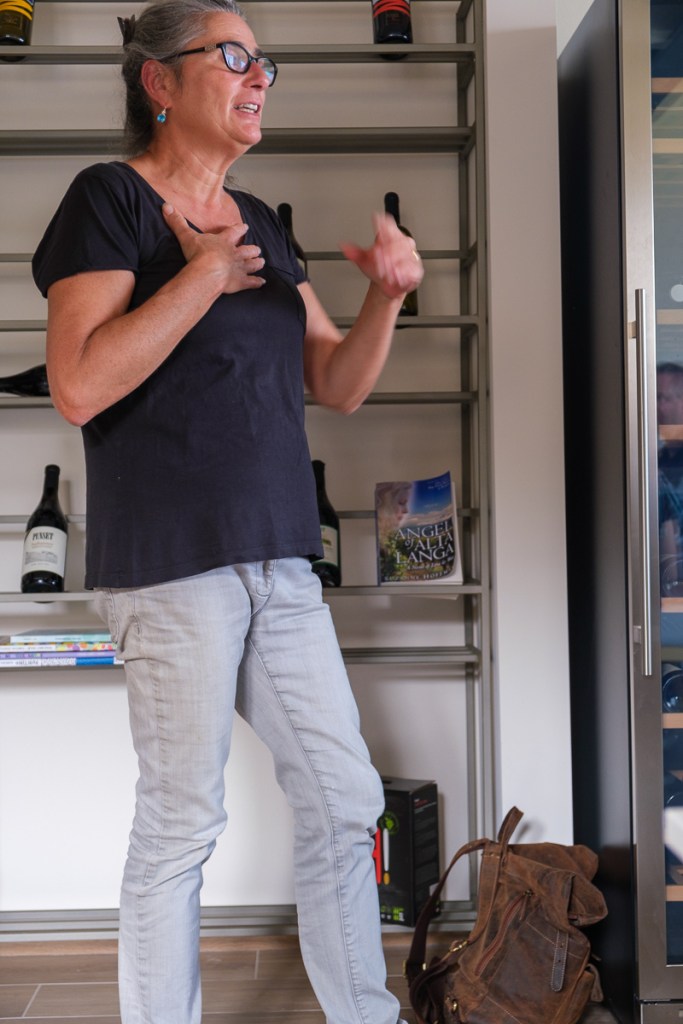
Our final winery of the tour was Punset, outside of the town of Neive. Our guide, Marina Marcarino, was in her early 20s when she took over the family business in the 1980s. She was a pioneer in organic methods, and the winery became the first organic producer in Barbaresco. She was widely mocked at the time, but now is a leader in a movement toward more sustainable practices in the Barbaresco area. More on this winery in a forthcoming post on climate change.
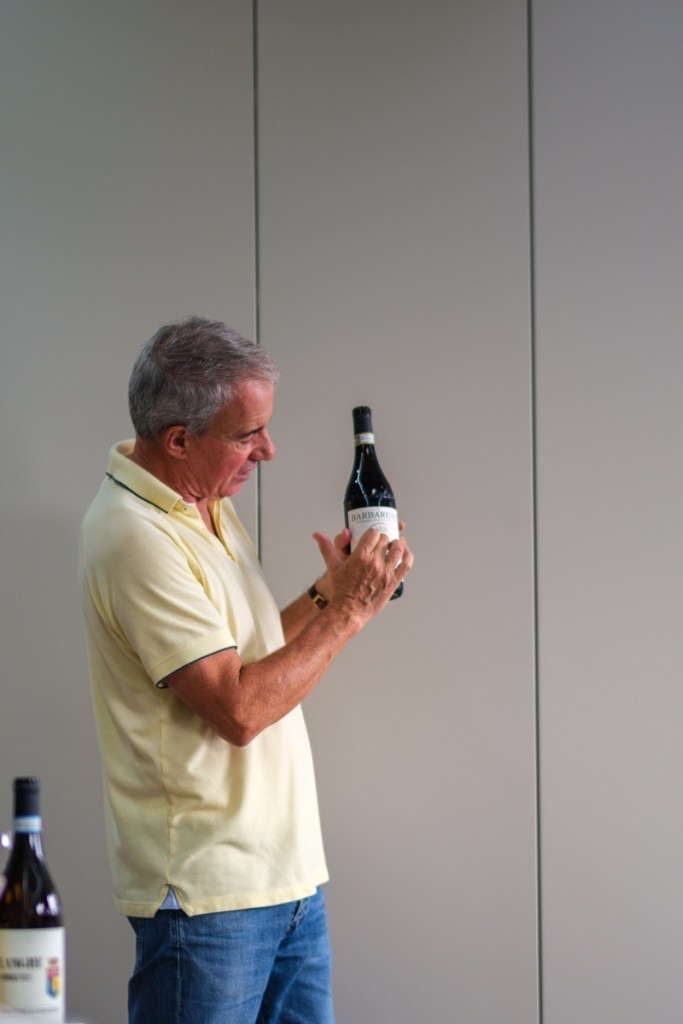
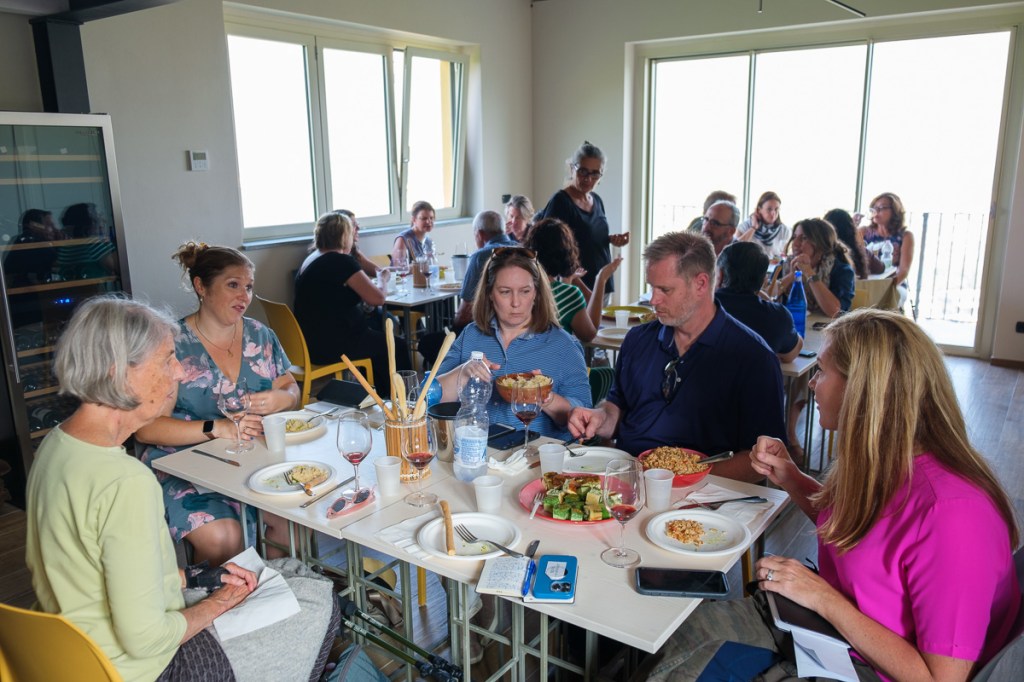
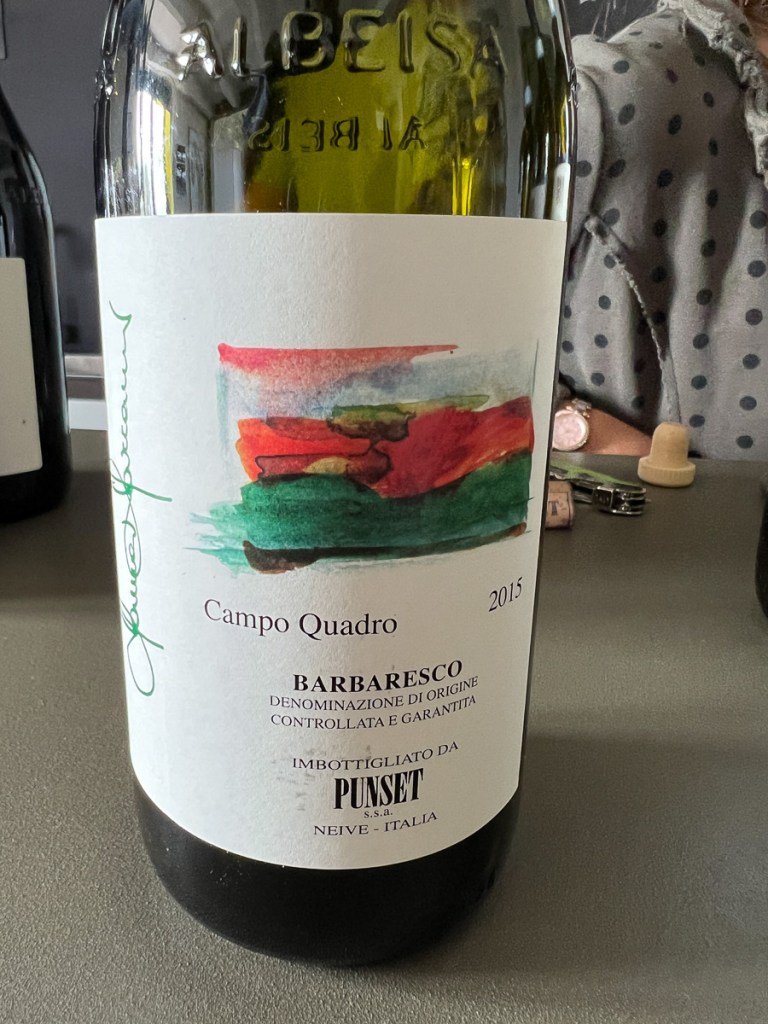
We tasted four wines here, in addition to being served a light lunch made by Maria — an Arneis, two Barbarescos (one from 2015 and one from 2016) and a sweet wine, Quintessence. We bought some of each from this charming small winery, adding another nine bottles to our eventual shipment.




 Keeping up with Pat and Maurice
Too bad about the fog but at least you didn’t have rain! Wine country provides such a lovely landscape. Interesting about the fascists, I guess they didn’t drink wine, idiots. You are really enticing me to TP for a taste of some of those wines you had shipped. That must have cost as much as your plane ticket! Did you take any photos on Thanksgiving Day at Nick’s? Sounds like a fun day. xo Helen
>
LikeLike