A note to subscribers: If you are reading this on email, note that slide shows embedded in web versions of these posts do not function, but the email extracts images from the slide show. It’s better to view these on the web.
Palermo’s Norman palace, with its chapel, was the main destination for our second day in Palermo. The palace was built for Arab rulers who reigned from the 9th to the 11th centuries. When the Normans assumed power late in the 11th century, they made the palace theirs. The Norman King Roger II commissioned the chapel in 1132, hiring craftsmen from Norman, Byzantine, and Arab communities. The royal apartments that today house the Sicilian Regional Assembly were constructed by Spanish Bourbon governors in the 1500s. Today, Sicily is allowed to operate with a greater degree of autonomy than other regions of Italy, and the Regional Assembly is the governing body. They were not in session when we visited, so the royal apartments were open to the public.
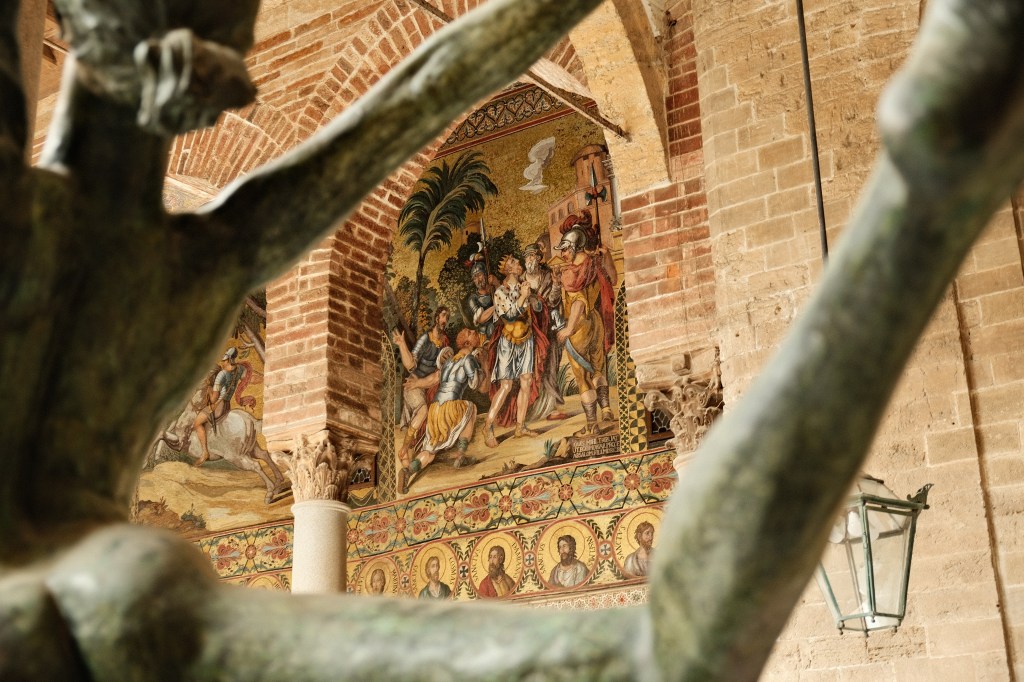
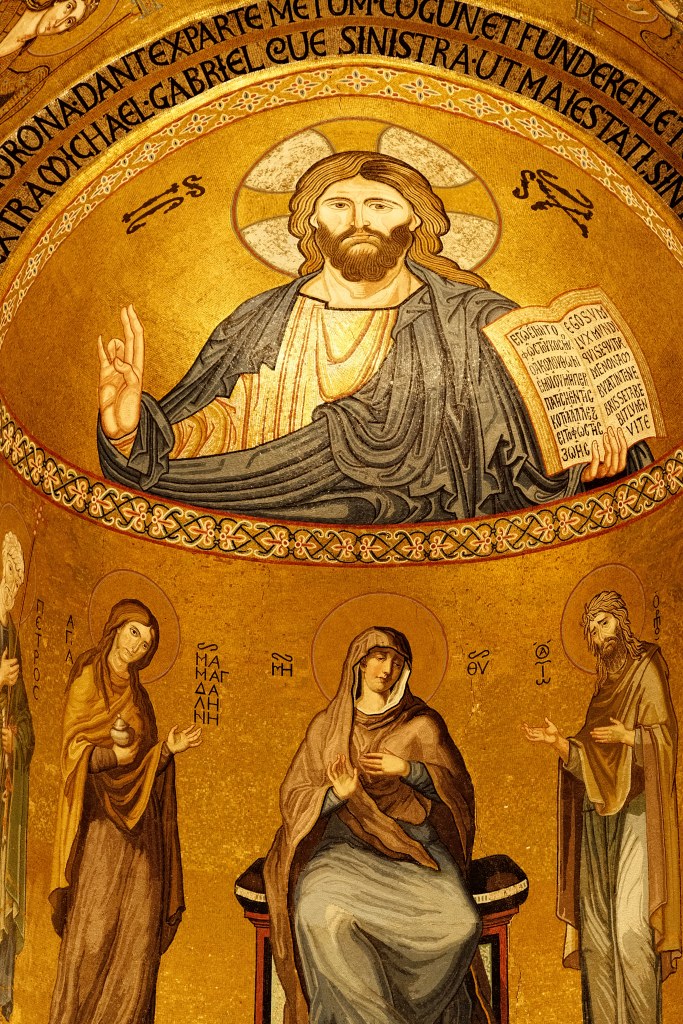
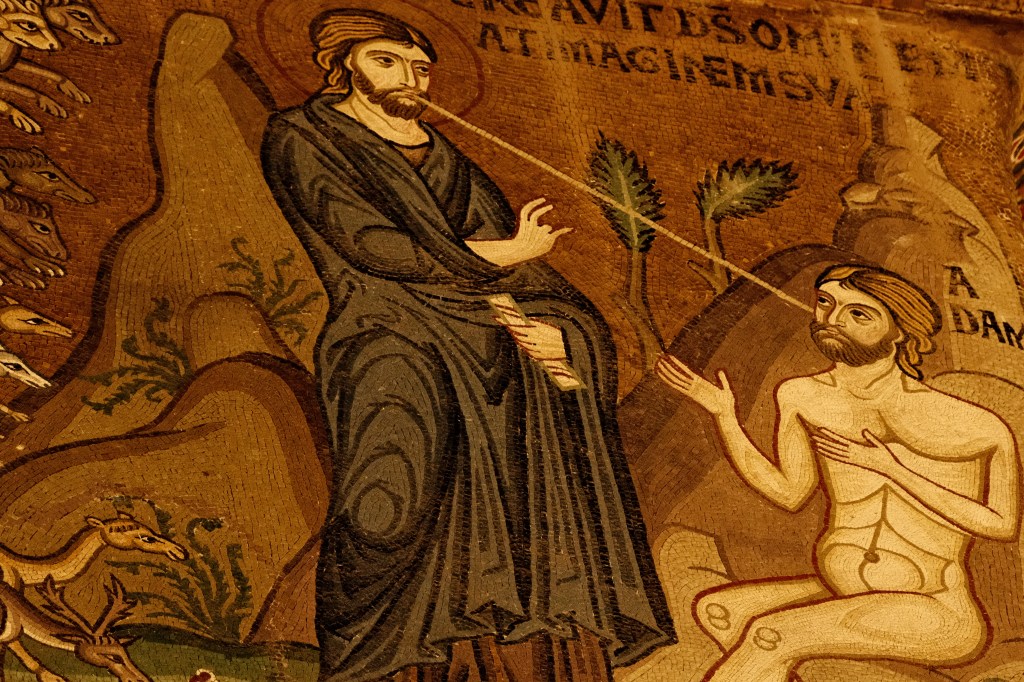
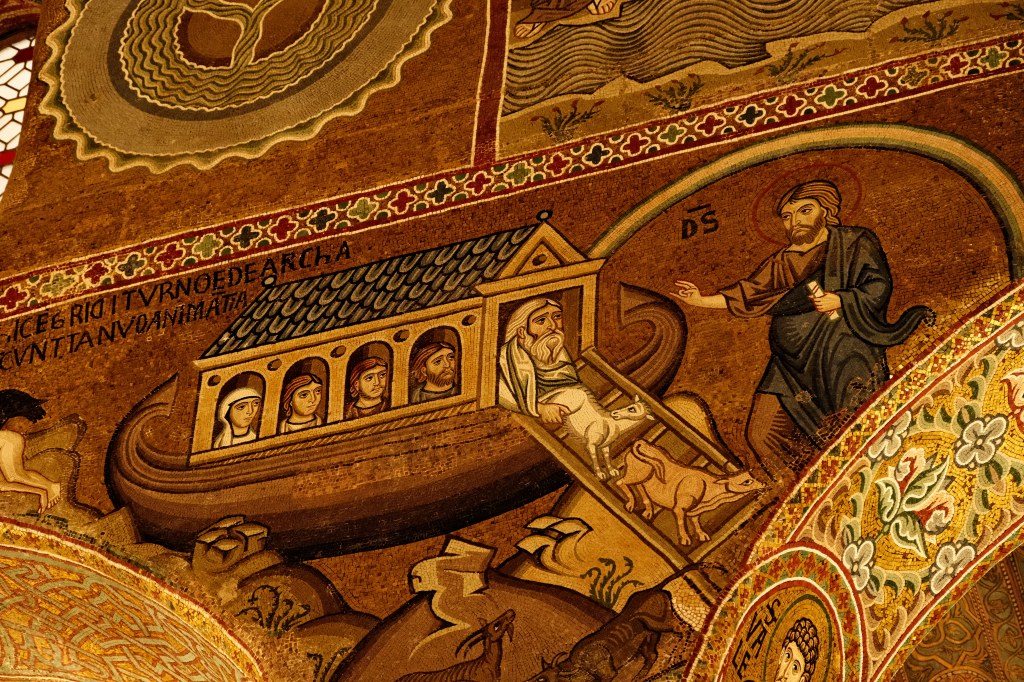
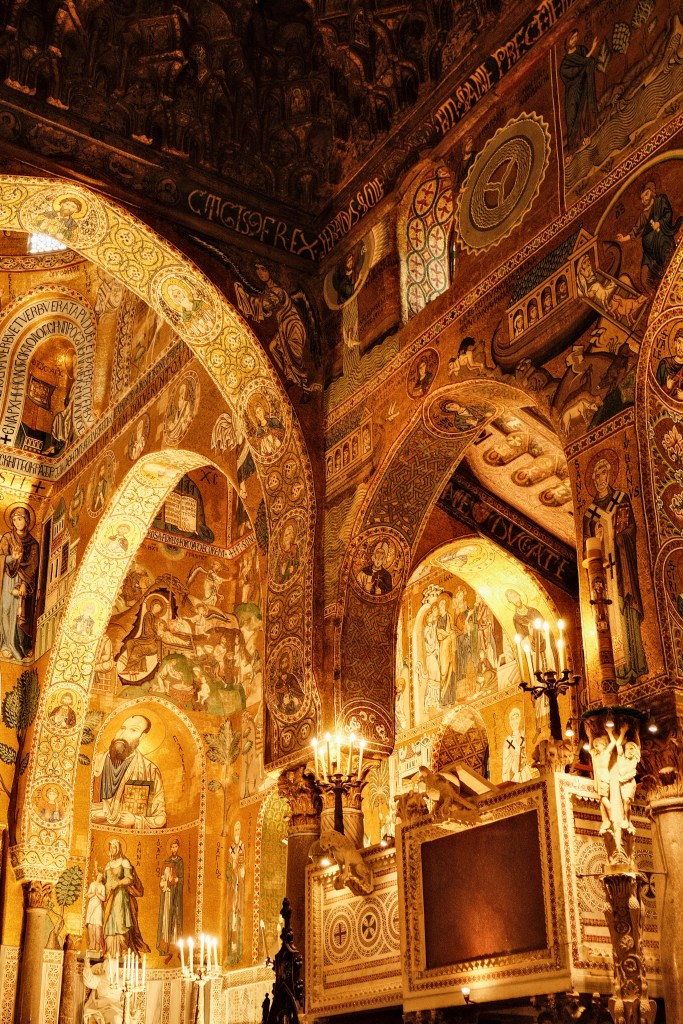
It is the chapel, with its spectacular Norman-Byzantine mosaics, that is the main attraction. The larger and more numerous mosaics in the cathedral of Monreale may be more impressive, but the setting here is more intimate; you are closer to the mosaics. The chapel is a top tourist destination for Sicily, but we were able to spend as much time as we wanted, while a number of school groups were herded through.

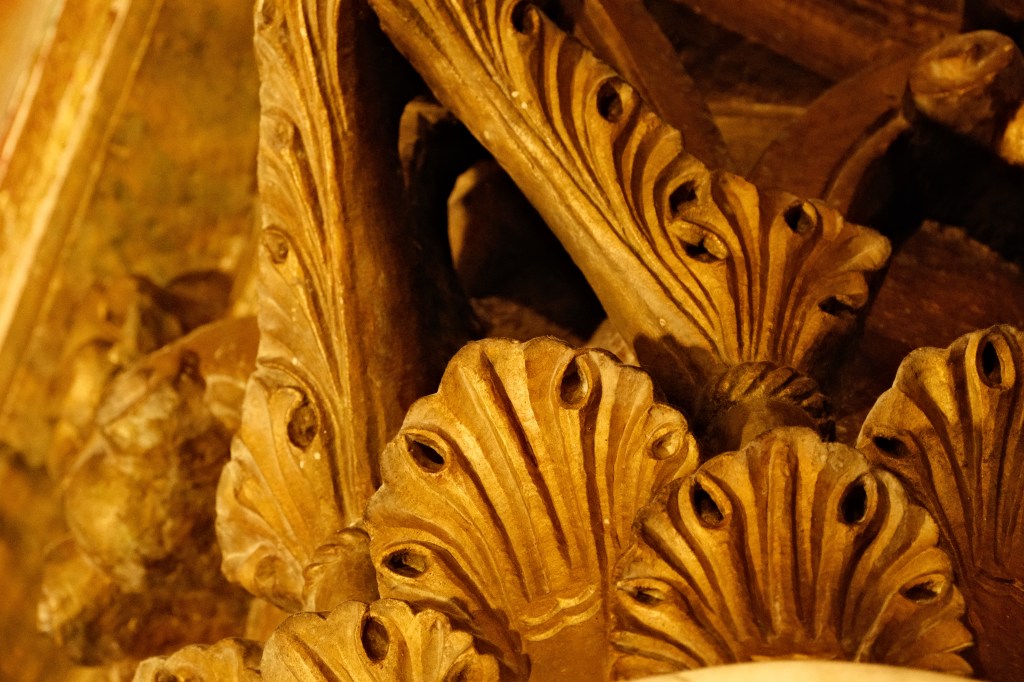

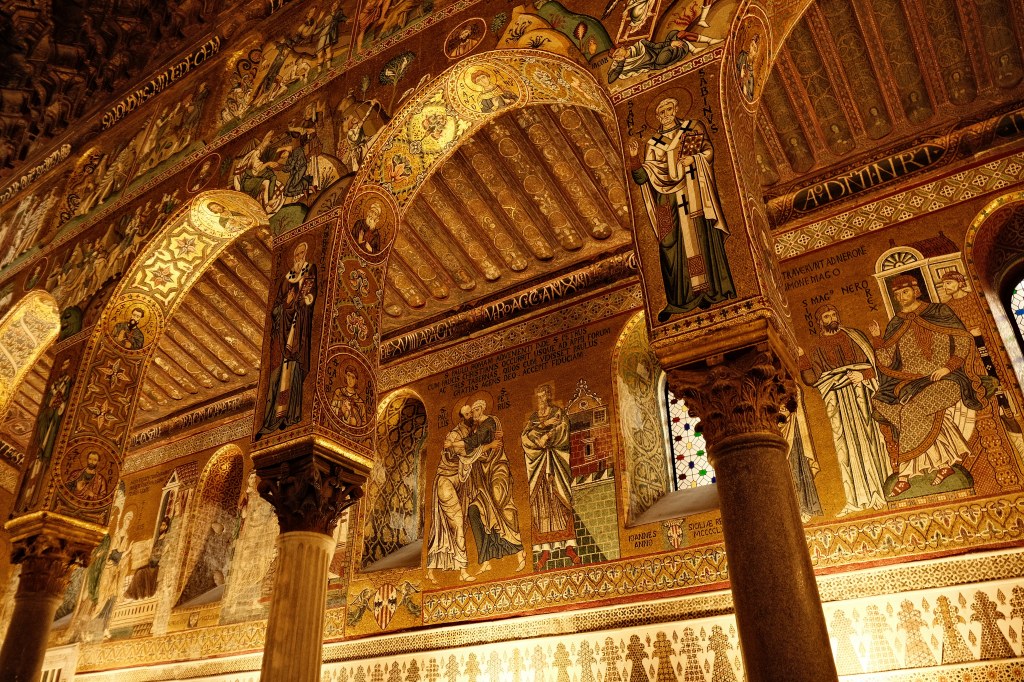


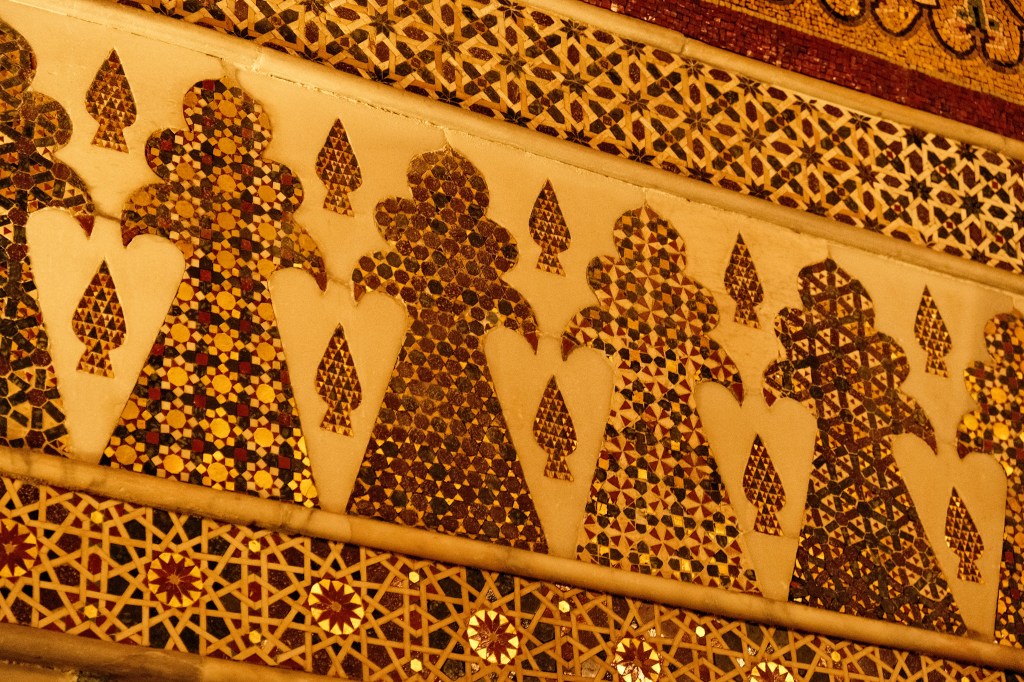
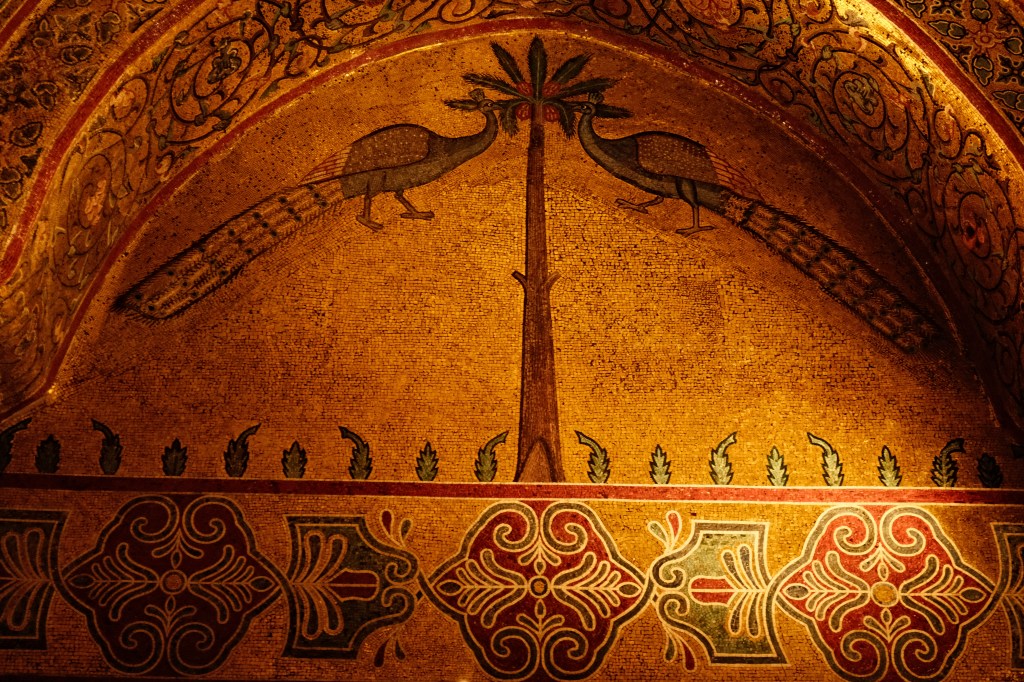

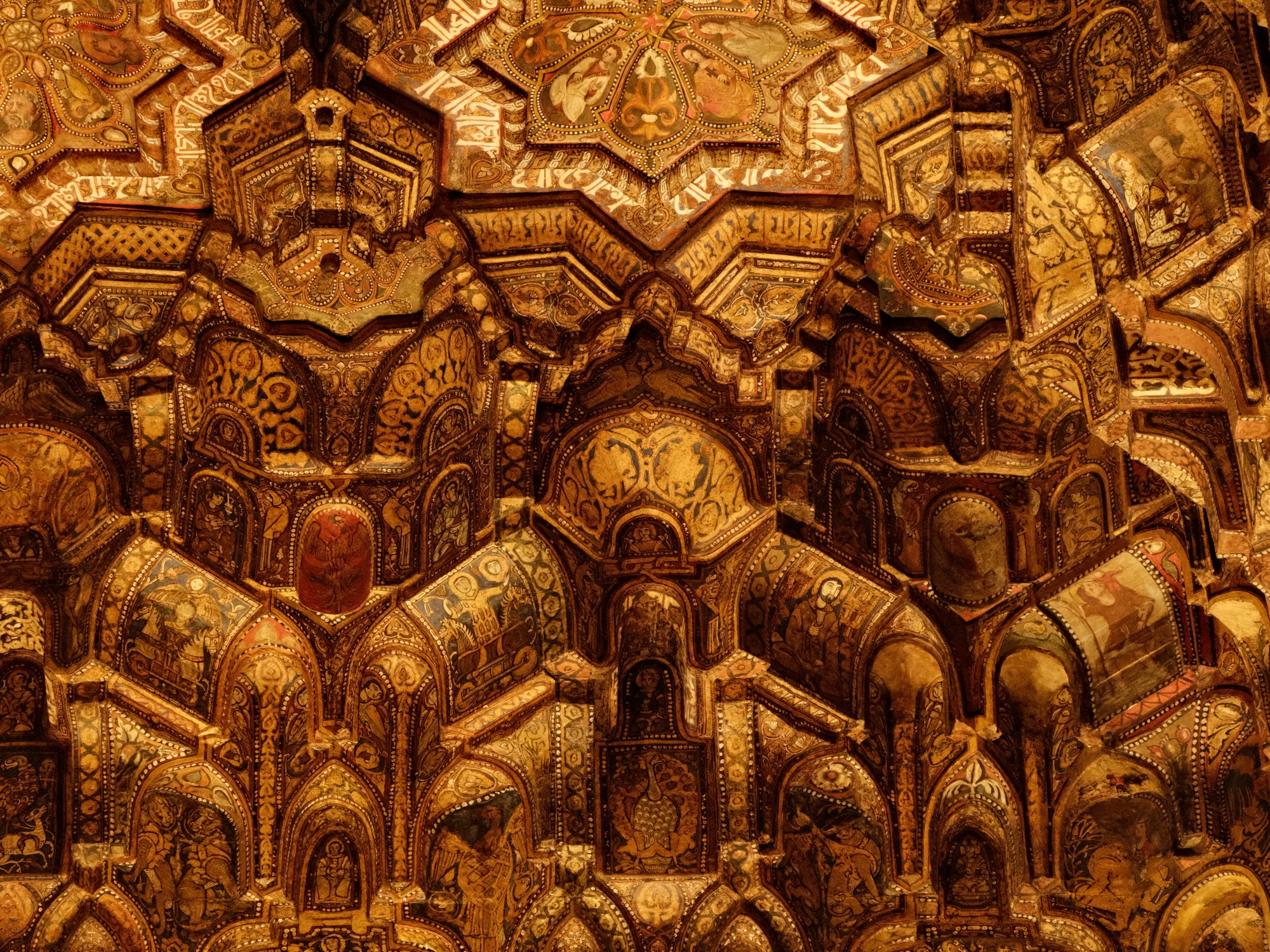
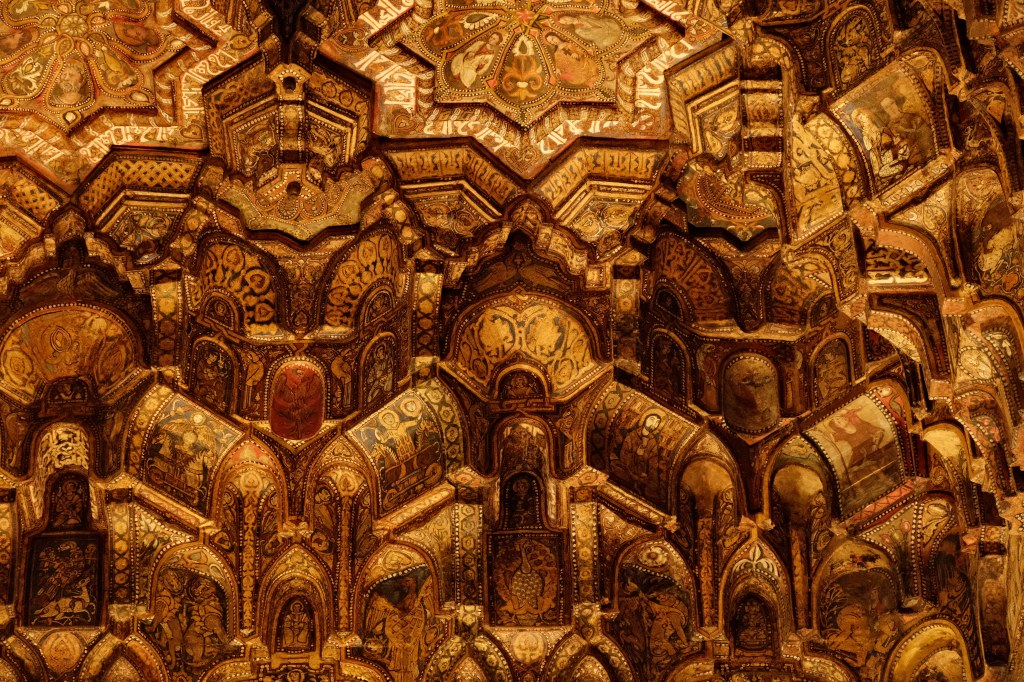
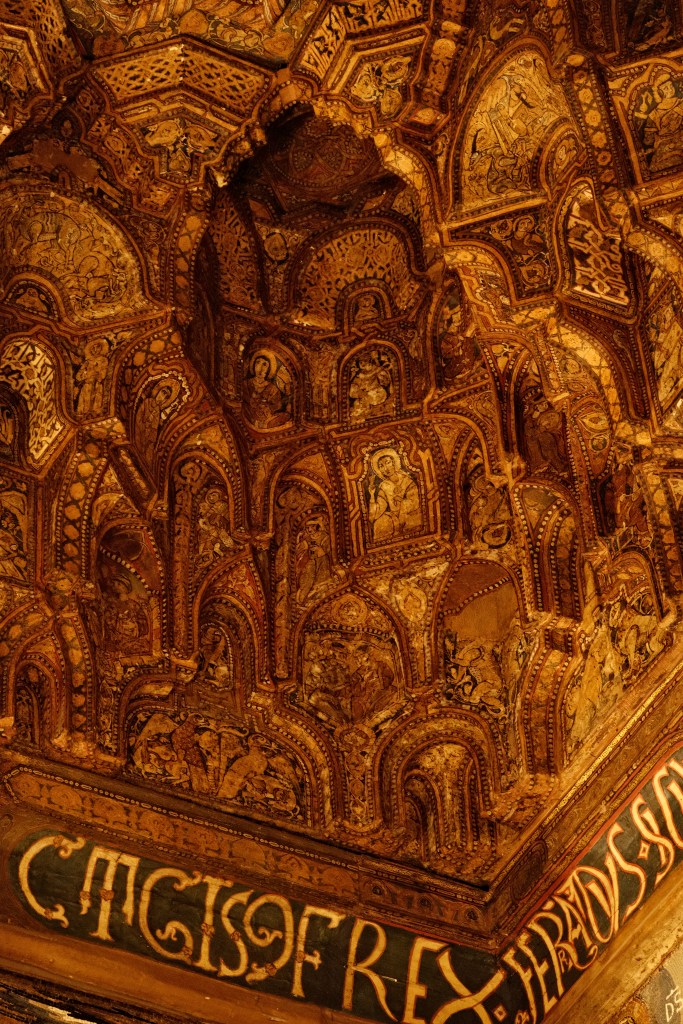
The ceiling of the chapel is covered in muqarnas, associated with traditional Islamic architecture. This chapel is the only church in Europe that was constructed with these muqarnas—normally a church with this feature has been converted from a mosque. That Islamic architecture was included in this Christian church is a testament to the Norman king’s tolerance and inclusion.
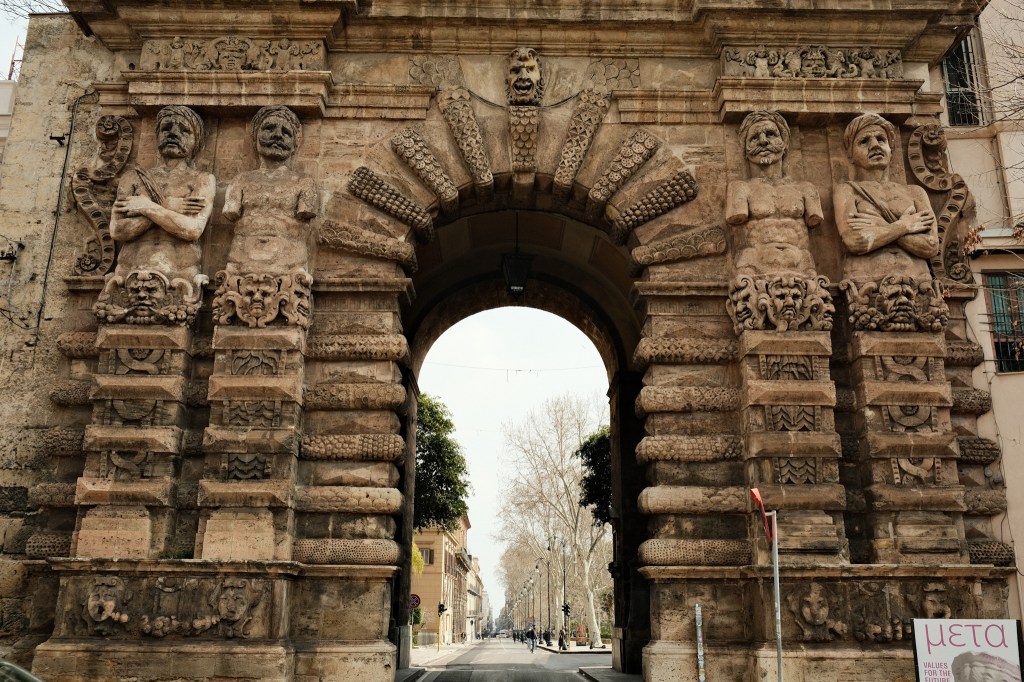
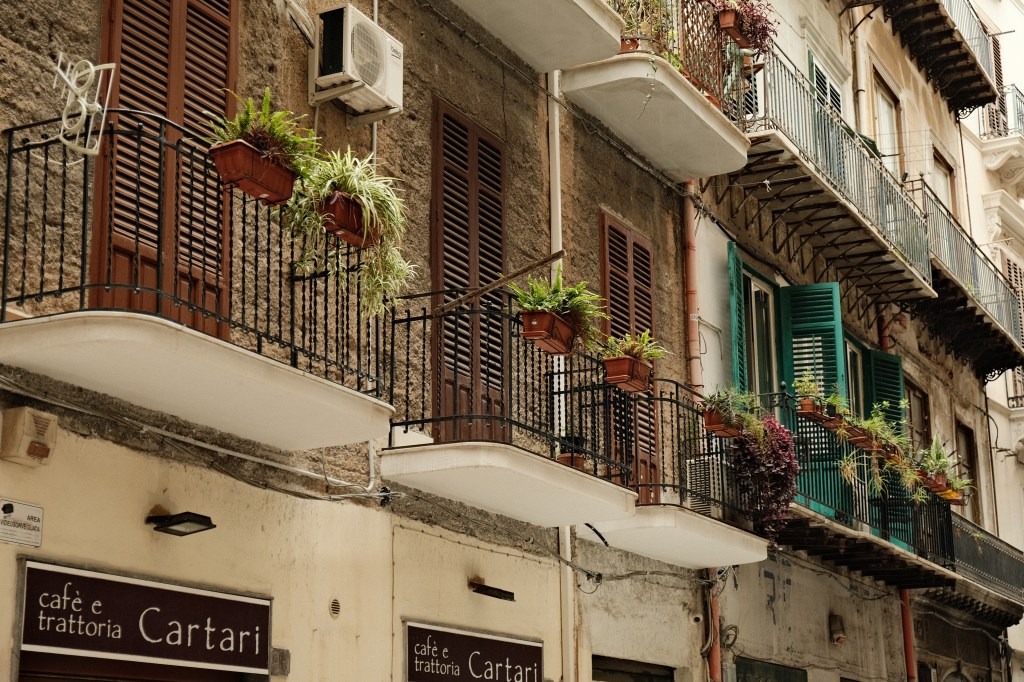
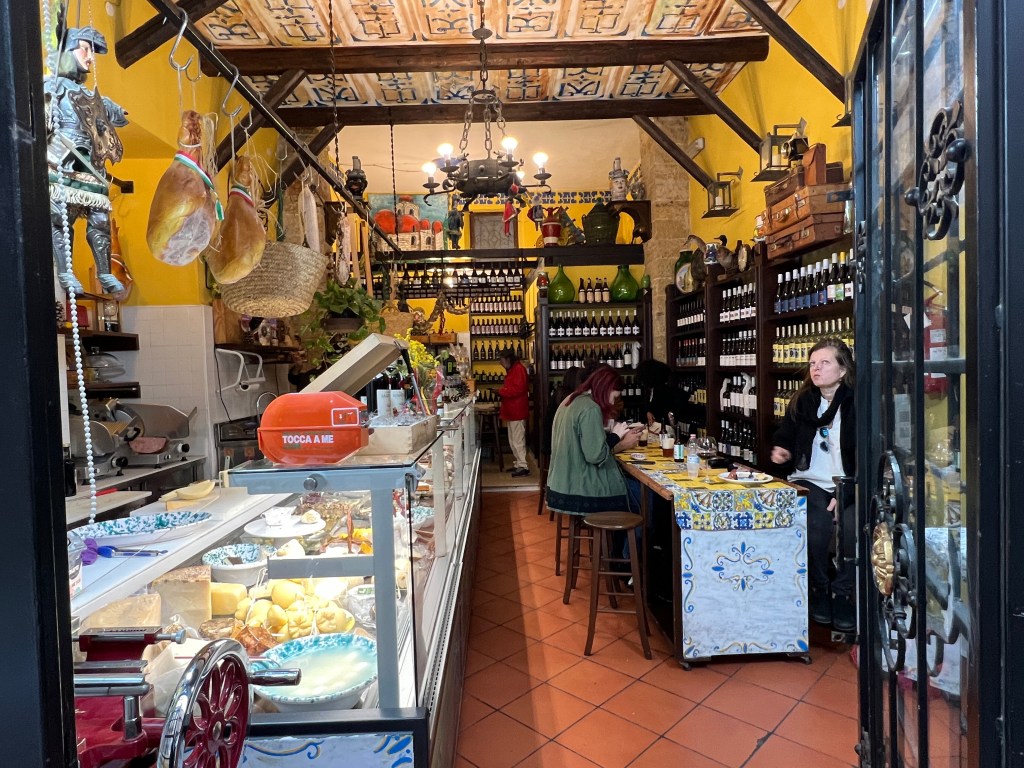
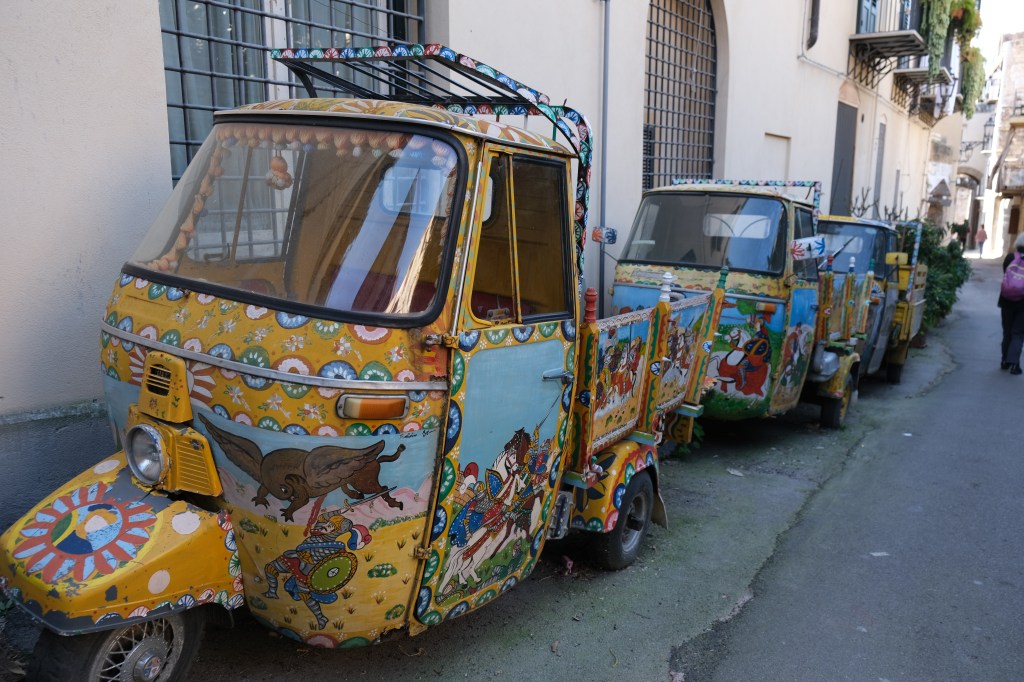
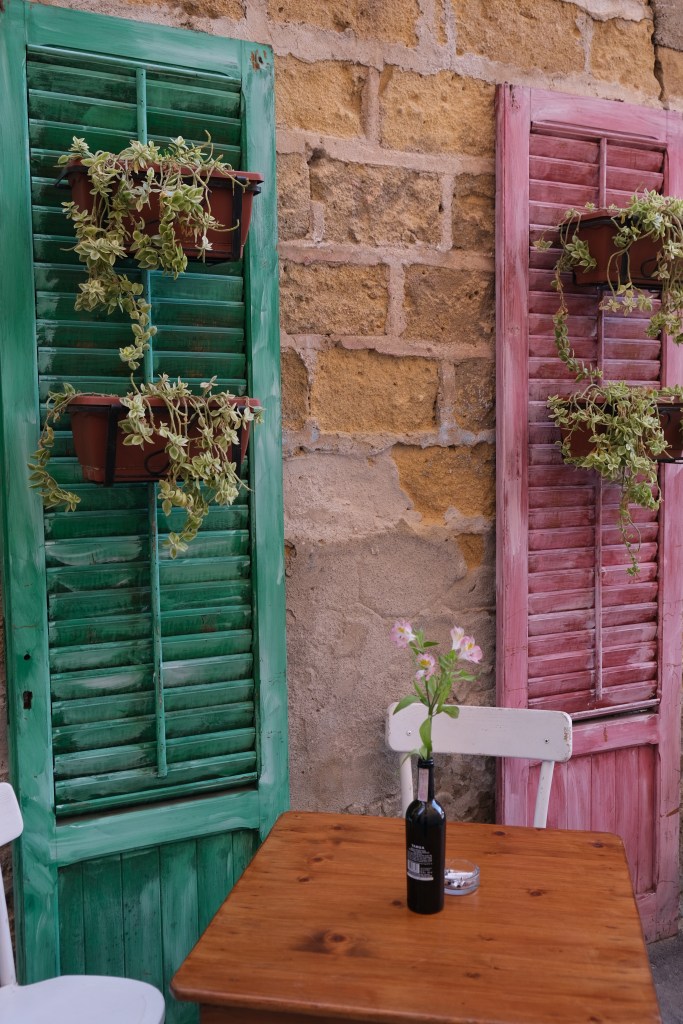
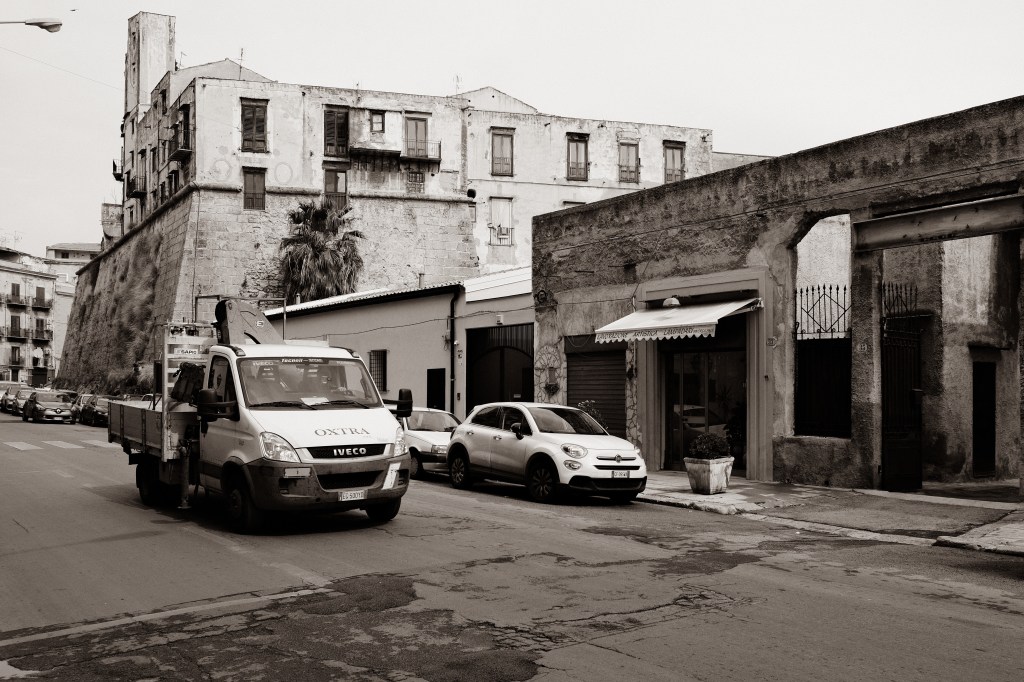
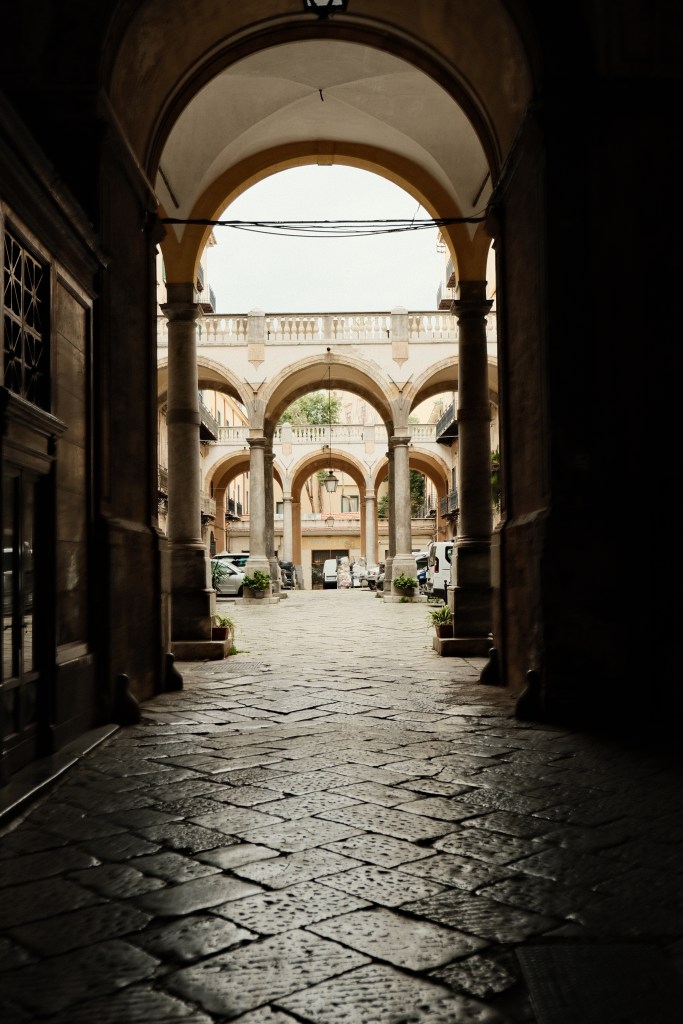
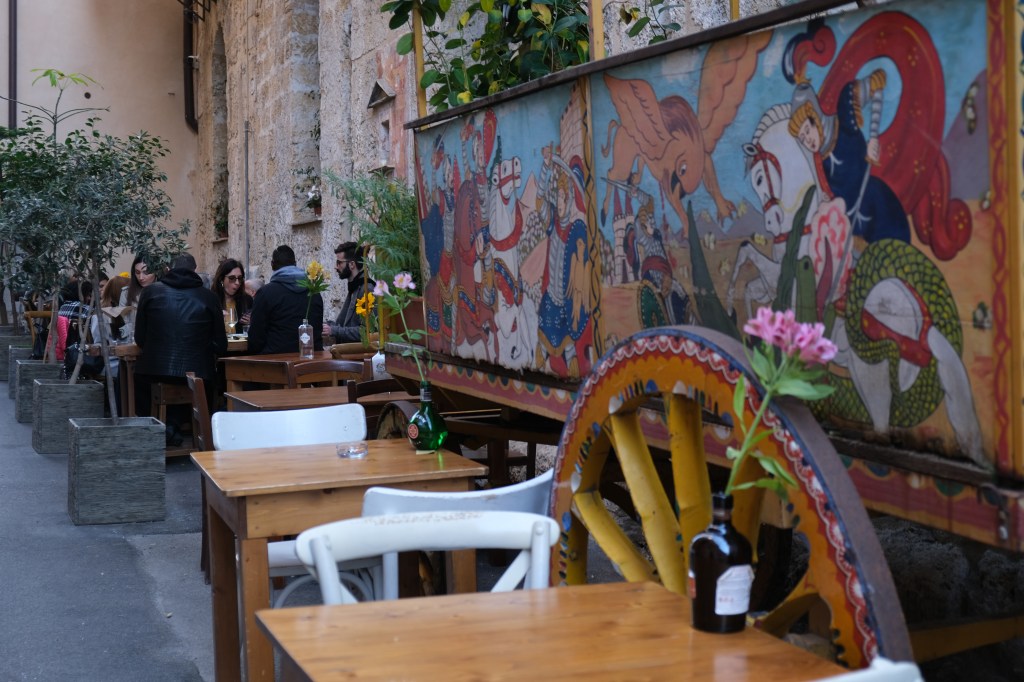
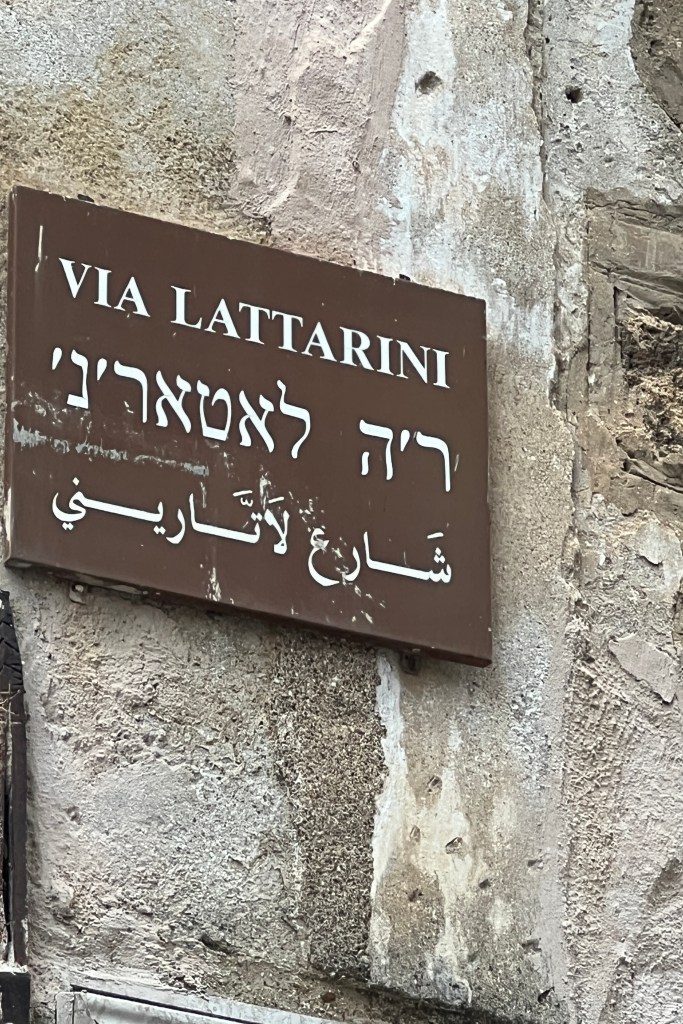
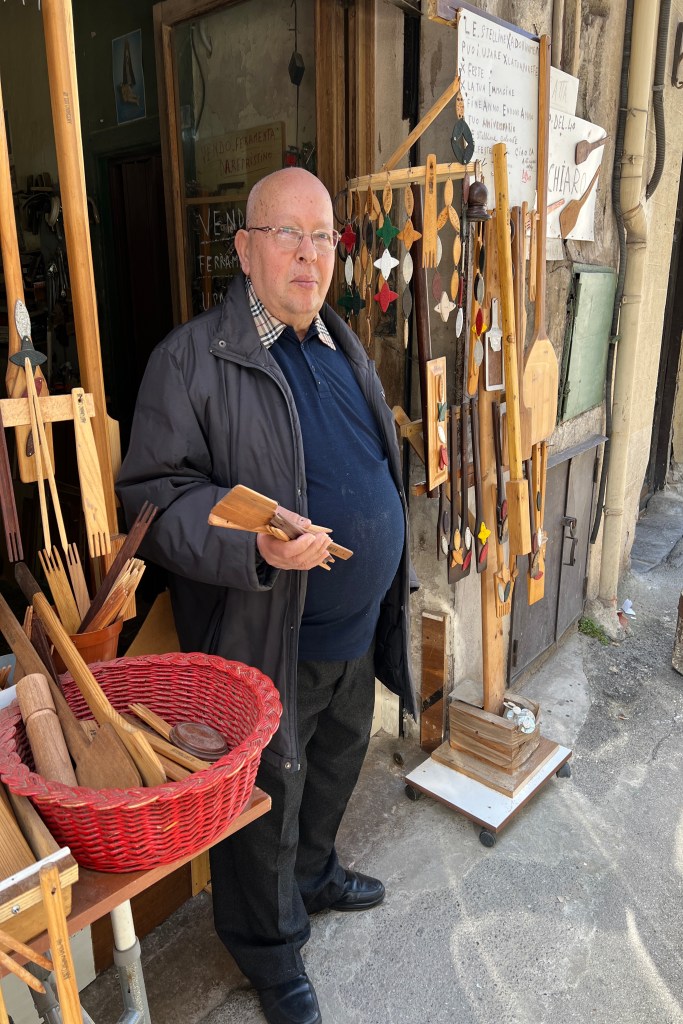
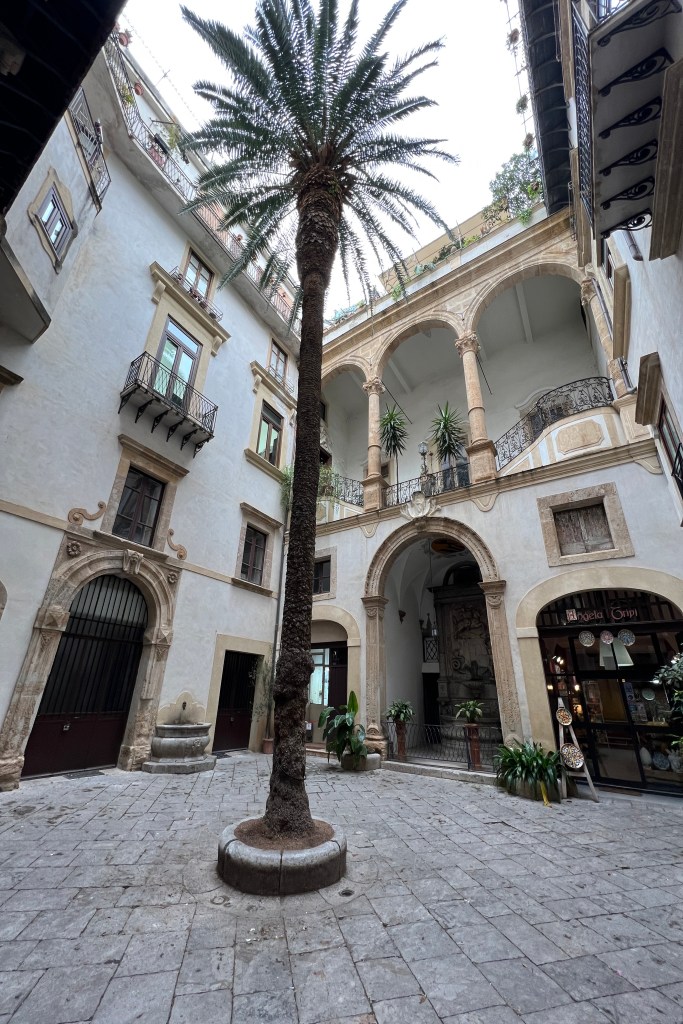
Finally, here is a little slide show with images from our walks around the city.


 Keeping up with Pat and Maurice
Wonderful juxtaposition of very old and new art, from the mosaics to the painted walls and scooters! What fun to explore and make these discoveries.
Sent from my iPad
>
LikeLike