
A note to subscribers: If you are reading this on email, note that slide shows embedded in web versions of these posts do not function, but the email extracts images from the slide show. It’s better to view these on the web.
Having grown up outside of Syracuse (New York), I was especially interested in visiting the mother city. After a one night stay in Ragusa, Siracusa was next on our agenda.
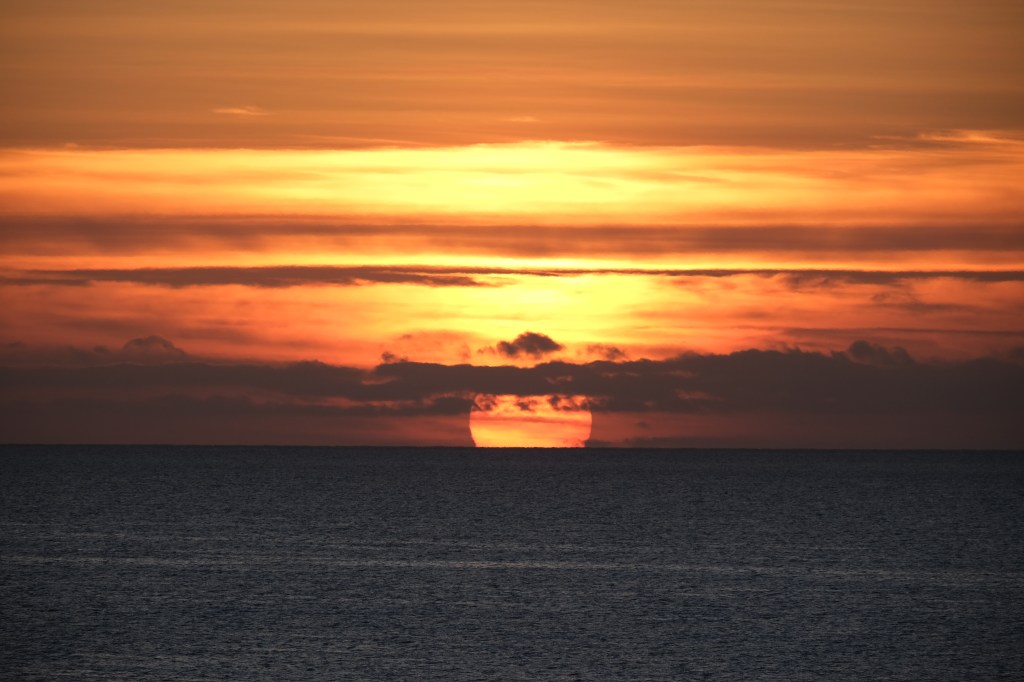
We checked in to our convent/hotel, Domus Mariae Benessere, on the island of Ortigia (the original center of Siracusa). David, who helped us up the several flights of stairs with our luggage, was excited to open the shutters and show us the view. From our 3rd-floor balcony, there was only the street below separating us from the water. David suggested I get up early to catch the sunrise. On our second morning in the room, I was ready with the telephoto and watched the sun lift off from the Ionian Sea.
What I hadn’t noticed on the first day was that, looming behind the city of Siracusa is Etna, Sicily’s 11,000-foot active volcano, 50 miles distant. According to the guidebook, Etna spews up to several hundred tons of vapor every day, and occasionally oozes lava out of one of its many craters, but the danger of a violent eruption is low. With the telephoto in early morning light, I could see vapor rising from one of the top craters.


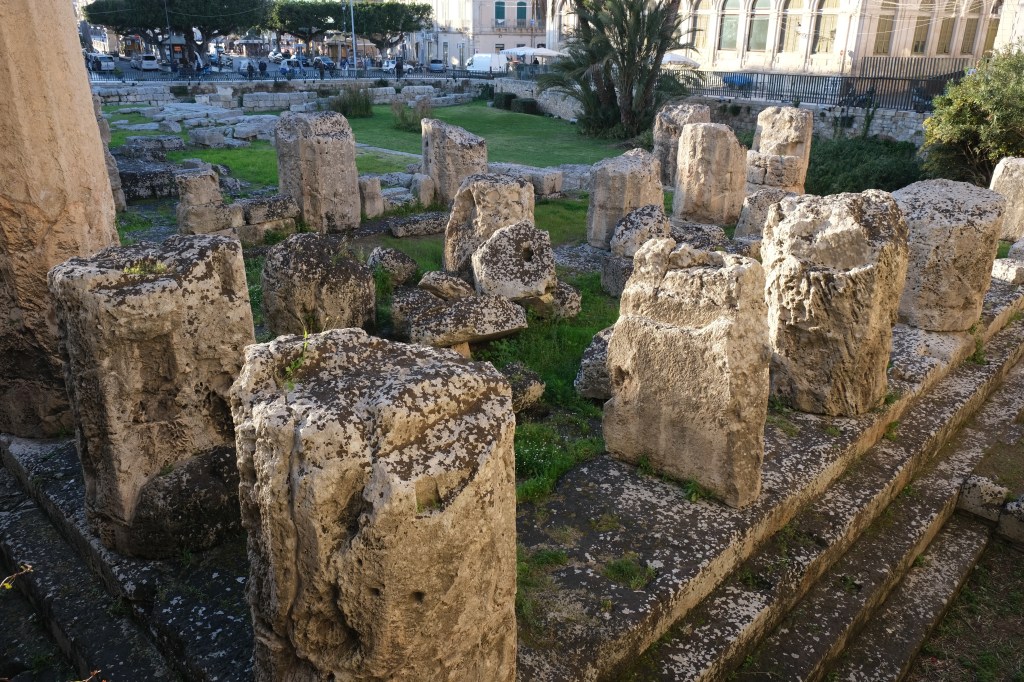
Siracusa was settled by the Greeks in 732 BC, and it grew to be a power that briefly eclipsed Athens after an Athenian fleet sent to invade Sicily was destroyed in the harbor of Siracusa at the end of the Second Peloponnesian War (413 BC). The island of Ortigia was the site of the original settlement, and today not far from the bridges that connect the island to the mainland you can find the ruins of the first stone temple in Sicily, dating back to about 580 BC.

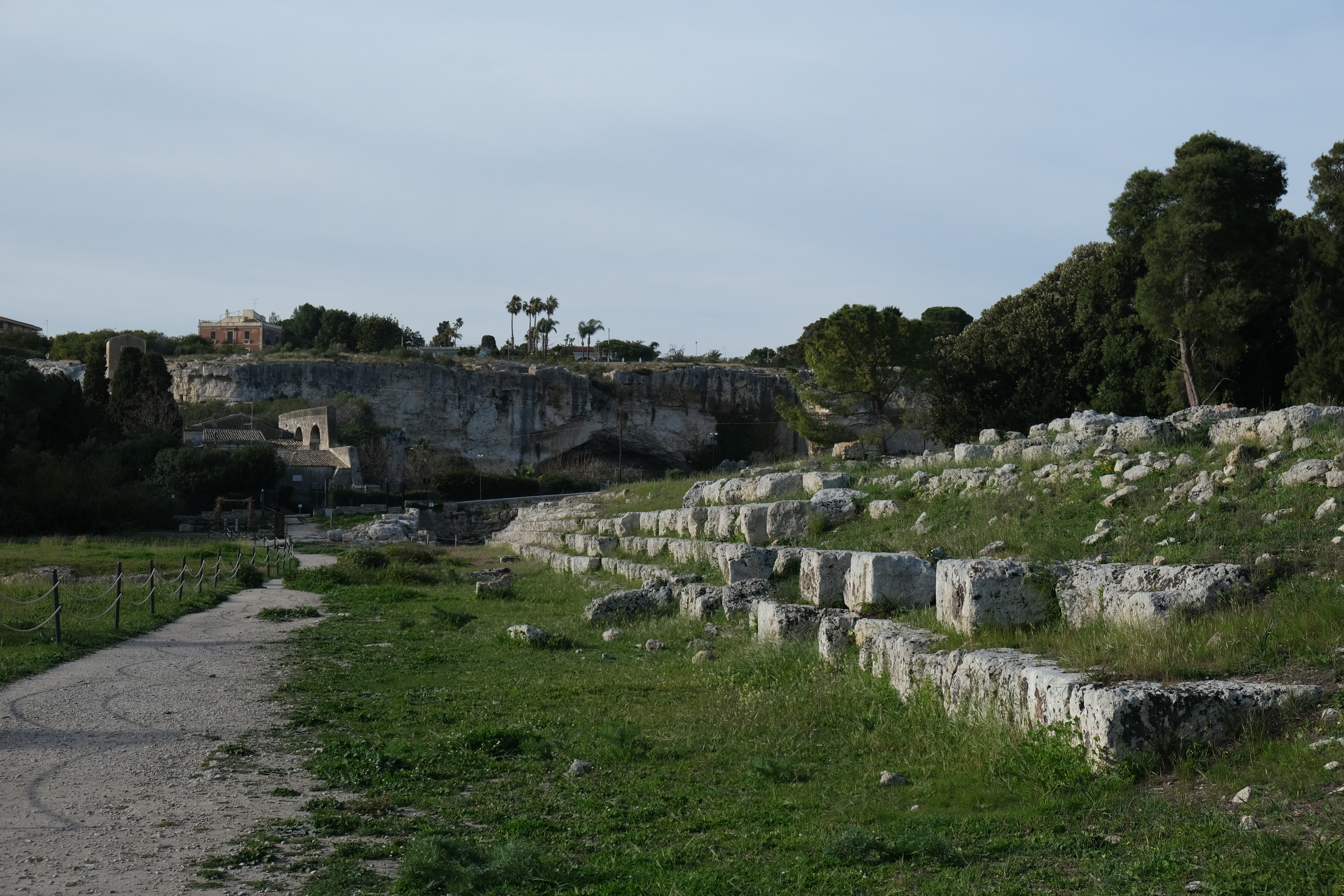
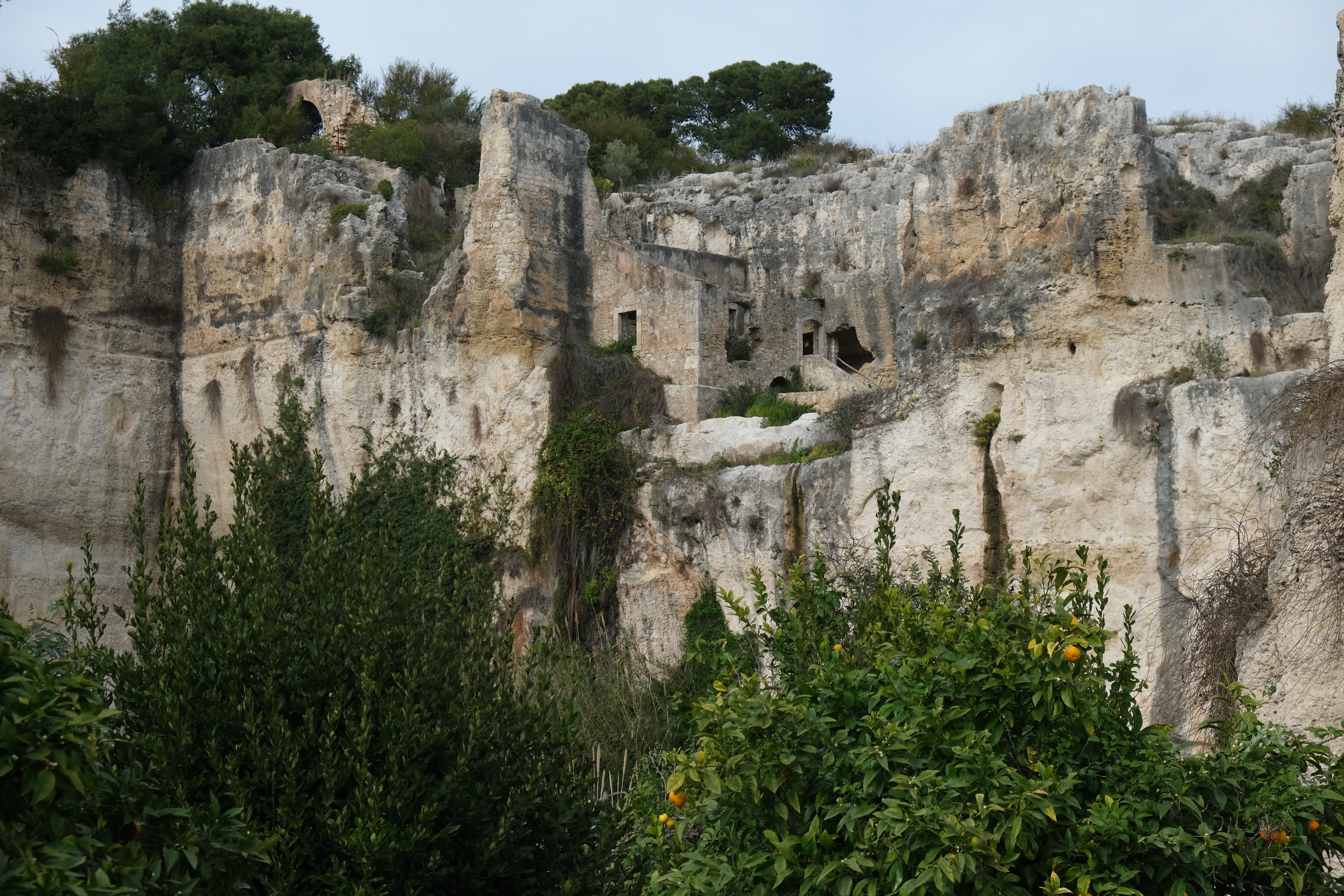
The bulk of Siracusa’s Greek and Roman ruins are on the mainland, in the Neapolitan Archeological Park. A Greek theater that once had seating for 15,000 is still in use, and workers were getting ready for the summer performance season, constructing platforms for wooden seats that will protect the original seats carved into the rock. The archeological park also includes the quarry where thousands of Athenians, enslaved after their defeat in the Second Peloponnesian War, cut the rock used to make the theaters and temples of the city. Showing off their power, Siracusan Greeks also built the longest alter in the Greek world — the Altar of Hieron II, with the length of a stadium and dedicated to Zeus. The Romans conquered Siracusa in 212 BC, and the park also included the ruins of a Roman amphitheater, built in the first century AD.


While Greek and Roman ruins are a top attraction of Siracusa, Ortigia was a delight just to walk around, especially in early morning light.
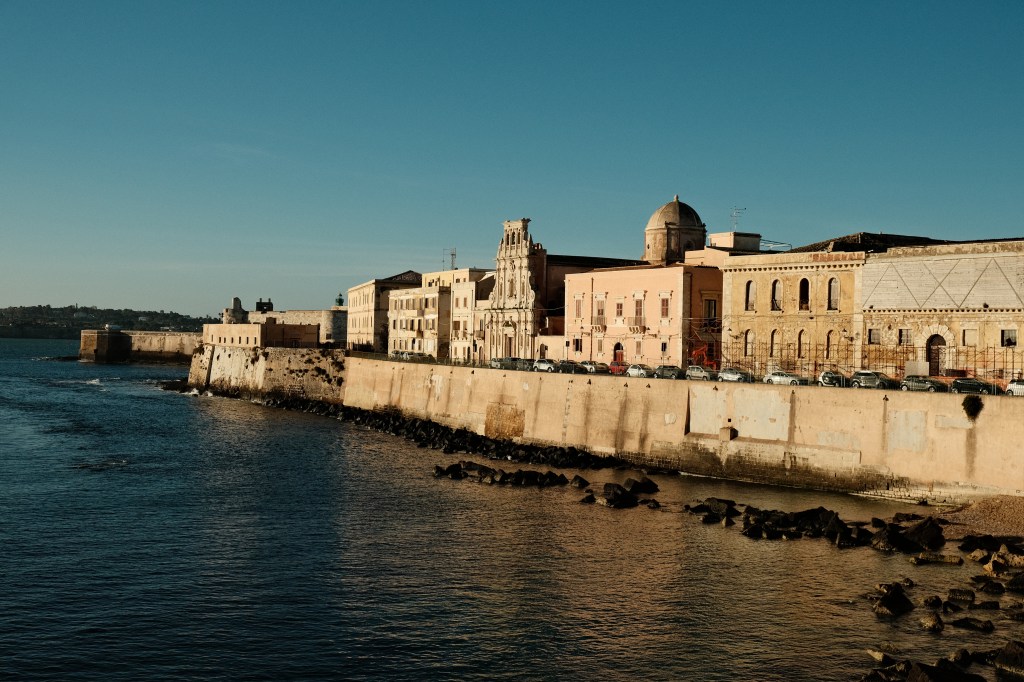


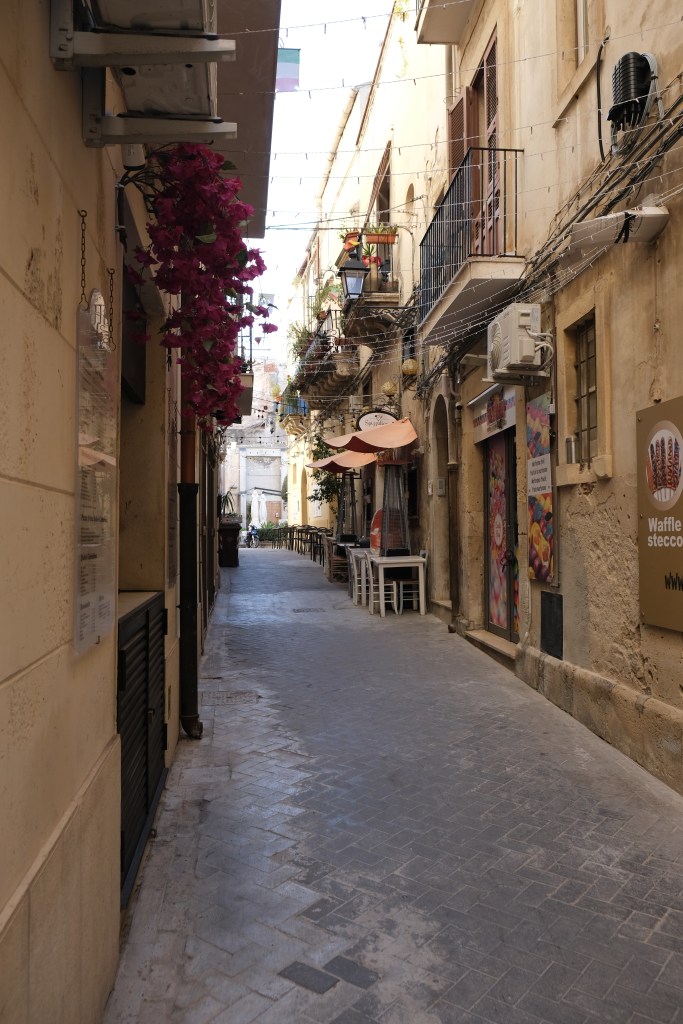
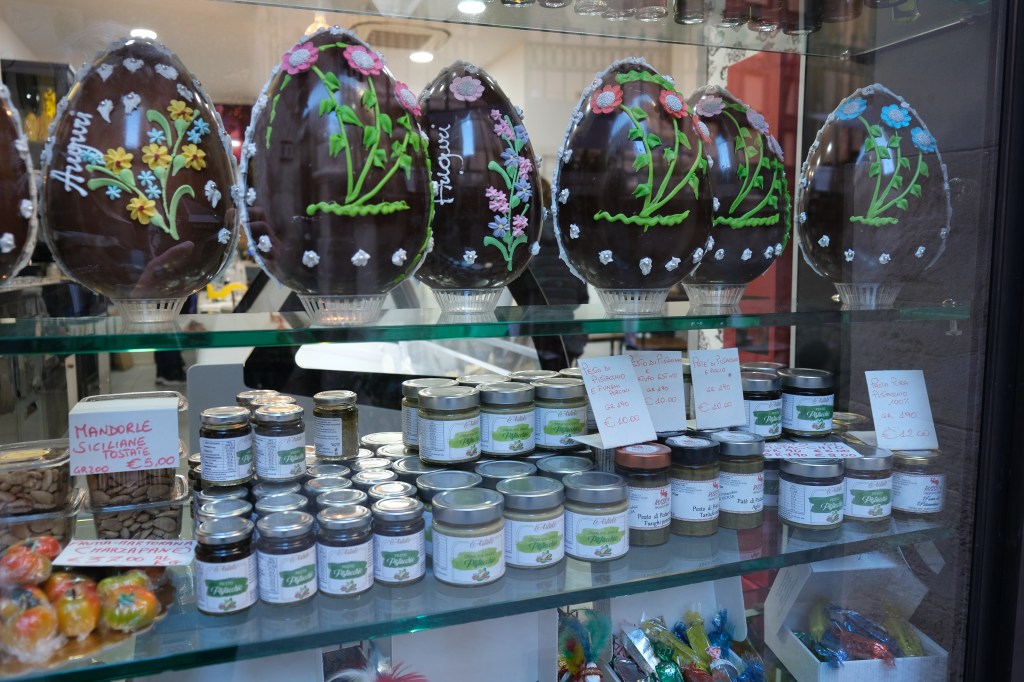

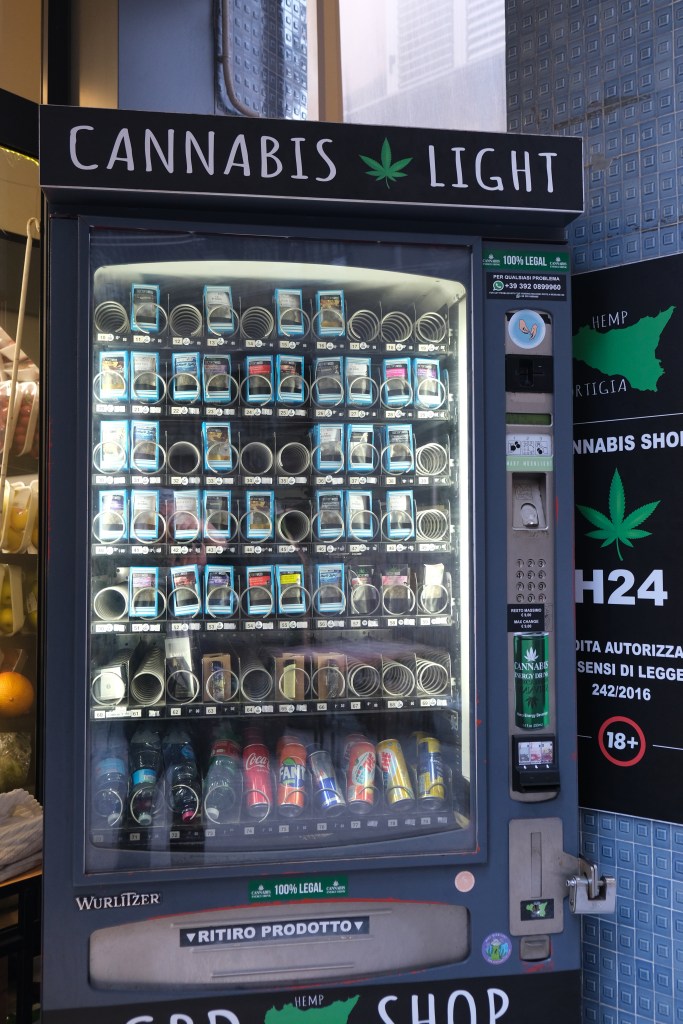
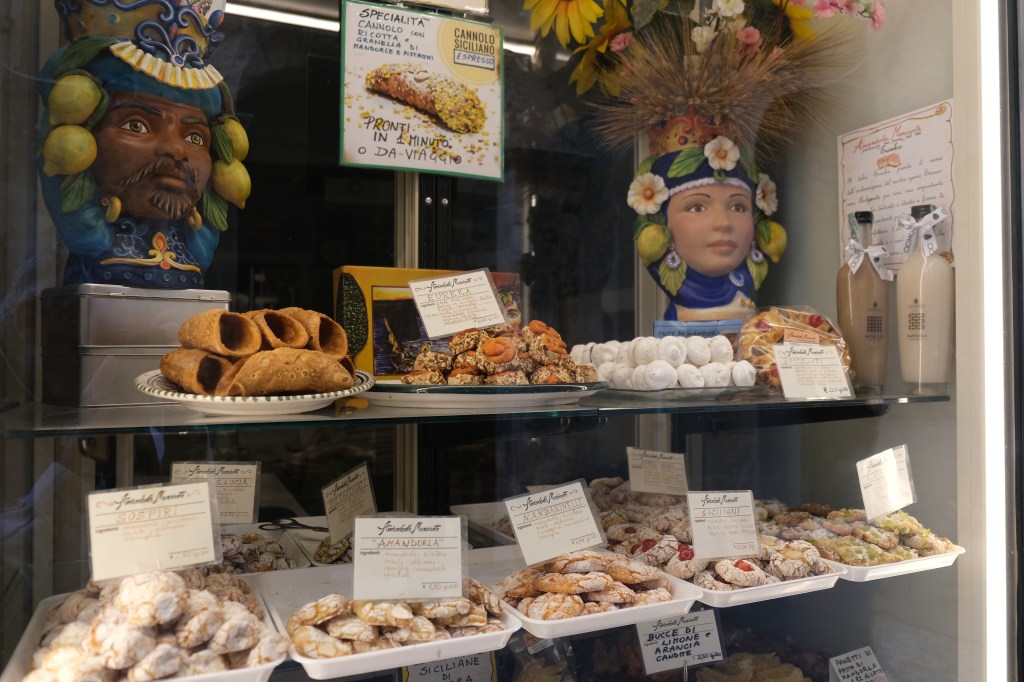
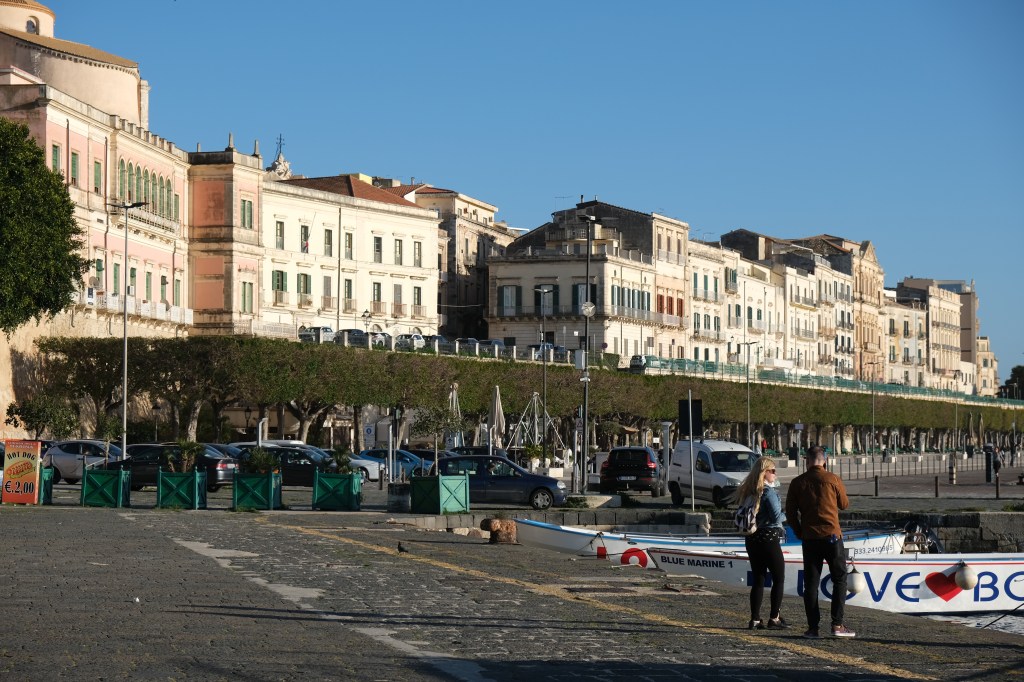


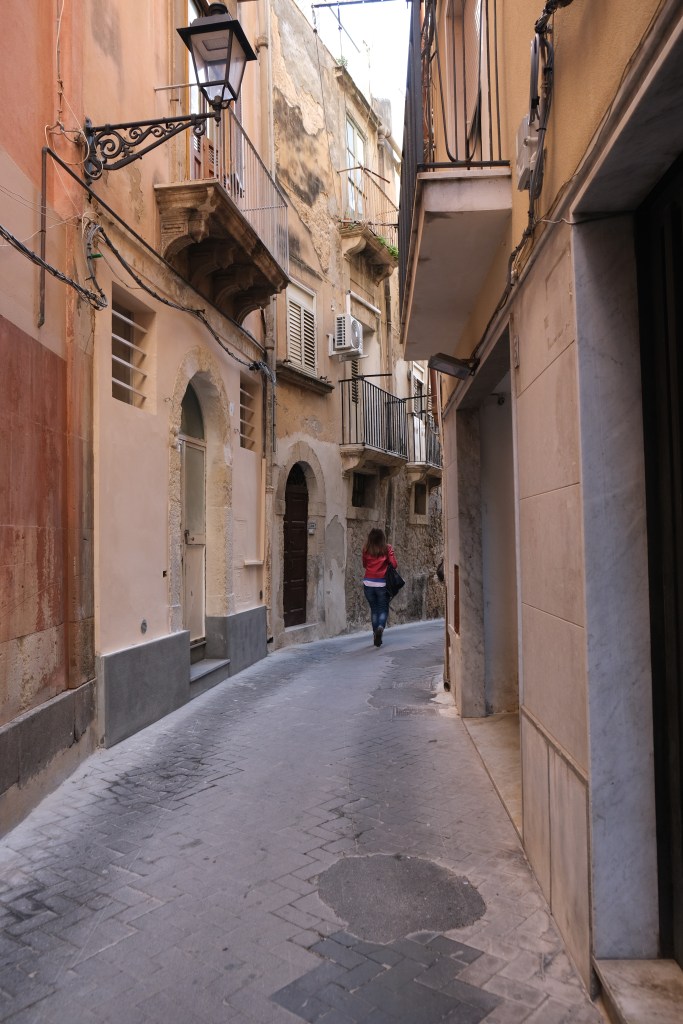
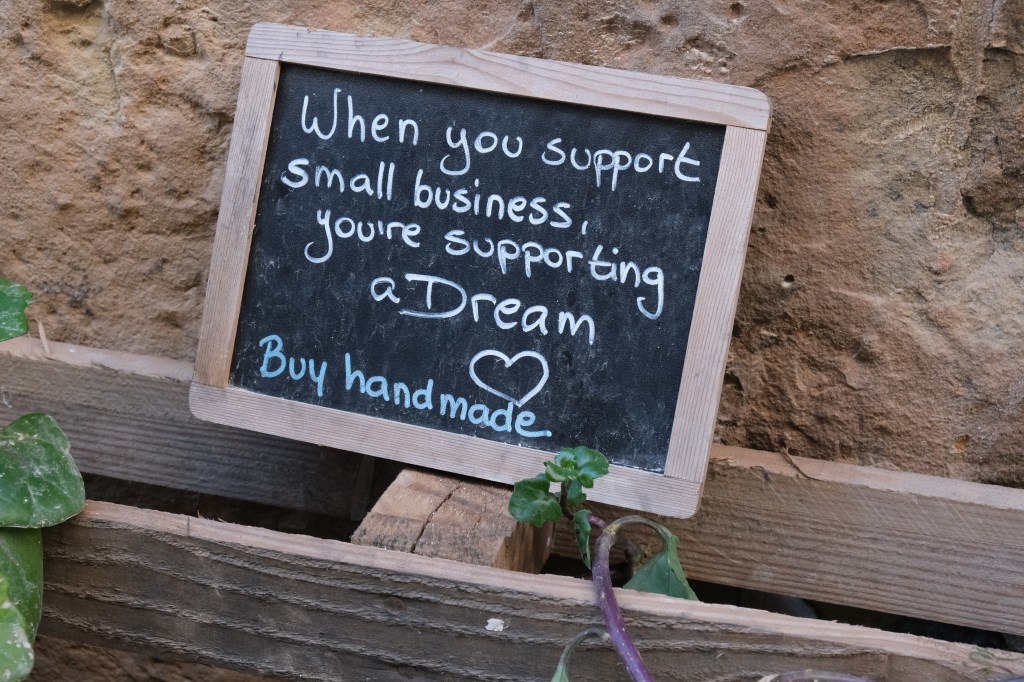
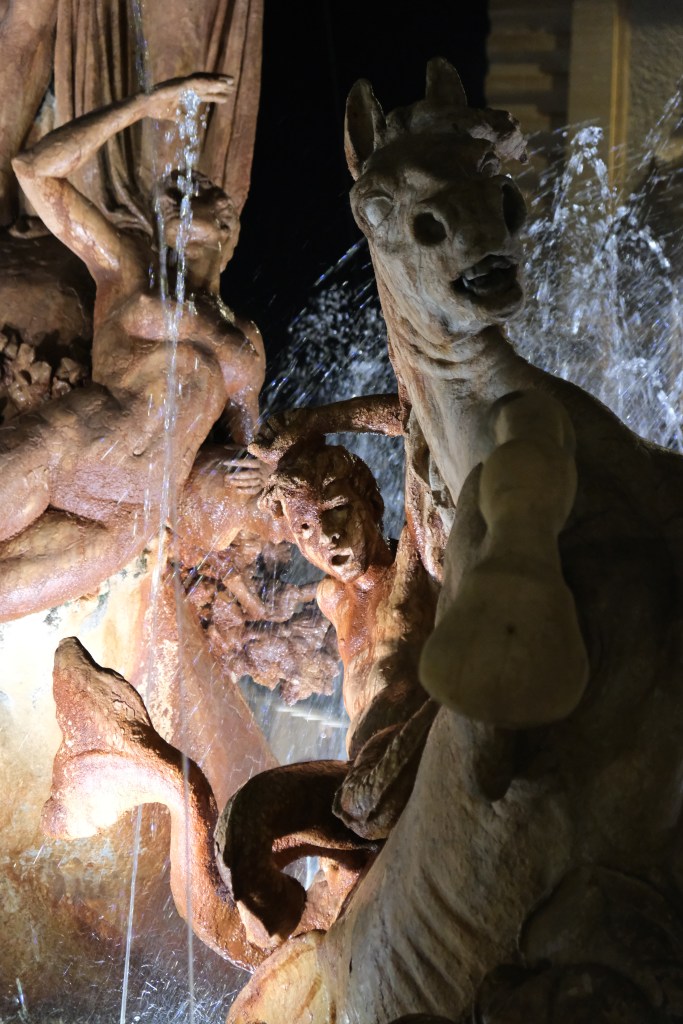

Freshwater springs made Ortigia attractive to the first Greek settlers, and these springs served as the source for the Mikveh (ritual Jewish baths) in the old Jewish quarter of town. We visited these baths, reached by a stone stairway descending 60 feet below ground to the rooms with a total of 5 immersion pools. This Mikveh, dating from the sixth century and the oldest known to survive in Europe, was filled in to hide it from Spanish rulers who expelled the Jews from Sicily in the 1490s. It was discovered by accident during construction of a hotel in the late 1980s. (No photos allowed.)
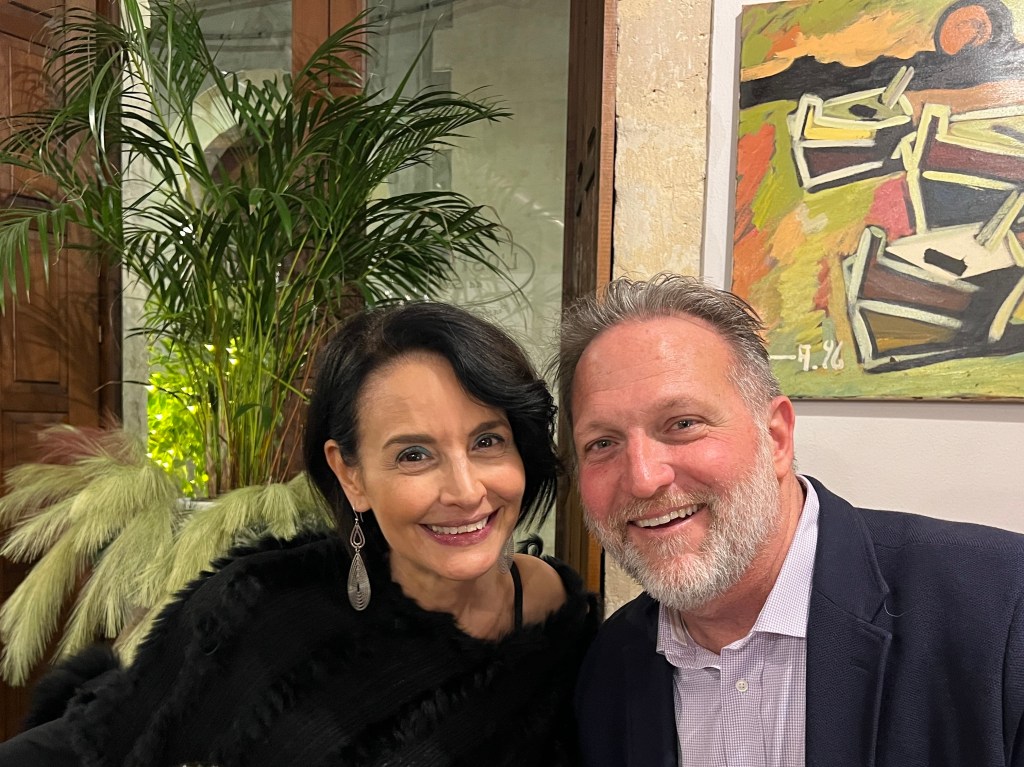
On our last night in Ortigia, we had dinner at L’Osteria da Seby with Shaun and Gessica, a couple we met in Ragusa. Shaun is from California; Gessica is from Siracusa. Gessica ordered for us. There was a lot of discussion with the waiter in Italian. I don’t know what we had, exactly, but it was good.

 Keeping up with Pat and Maurice
What a great couple and experience either in Ragusa or in Siracusa! Thank you so much for your description and beautiful pictures! Hope to reach you soon😉
Shaun and Gessica❤️
P.s. thank you for not mentioning the broken chair😂
LikeLike
Making me think a lot more about Sicily, Maurice.
LikeLike