
Saturday was family day. We drove to Little Bray to visit St. Peter’s Church and the family cemetery so we could pay our respects to the Mulligan forebears and chat in the churchyard with cousins and cousins of cousins of cousins. The church goes back to 1750 and the “penal times” when the practice of Roman Catholicism was a felony.
The current church was one of the first built in County Wicklow after the Catholic Emancipation (freedom from legal discrimination and civil disabilities granted to Irish Catholics in the late 18th and early 19th centuries). It is situated off the main road and behind a public house, which is still there. One of Maurice’s happy memories from earlier Dublin visits is a family gathering in that pub immediately after Mass, said of course by Father Ben Mulligan.
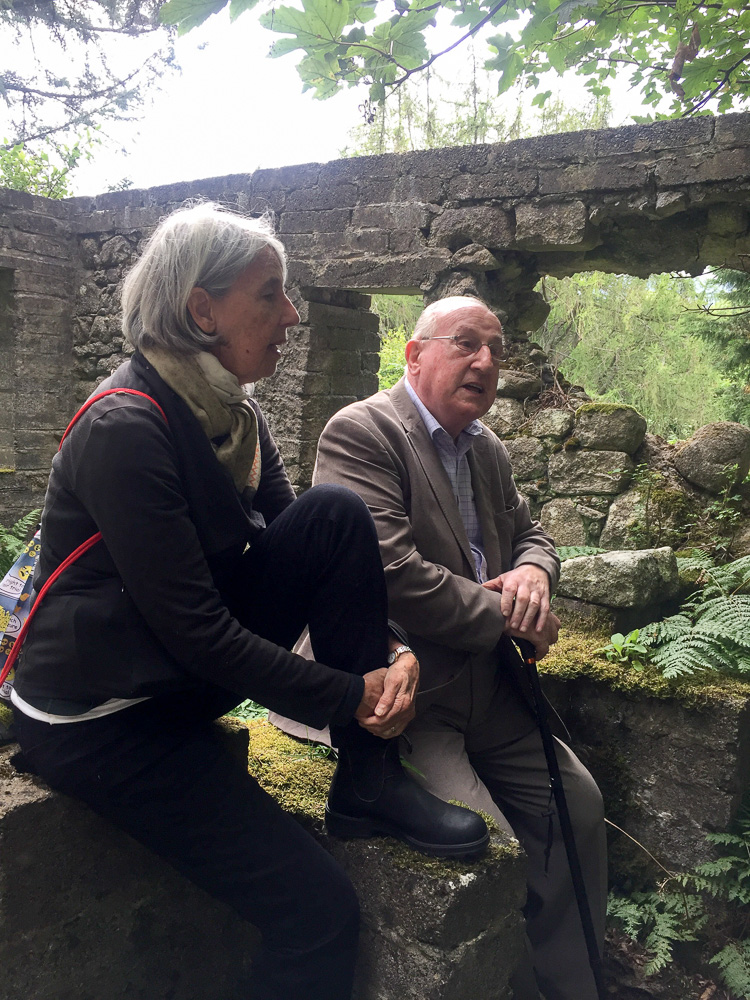
Toneygarrow, Glencree was next and a walk to the Mulligan ancestral home, a falling down stone cottage. Glencree (translation: Valley of the Shaking Bog) lies in the Wicklow Mountains through which the Dargle River flows. The entire valley was owned by the Powerscourt family. Well over two hundred years ago, one of Pat’s ancestors purchased a plot from Lord Powerscourt. Toneygarrow situates the plot adjacent to a nearby quarry of that name where Mulligan men were stonemasons. The granite quarry is long gone as is Mulligan possession of this chunk of the Emerald Isle, but we did bring back a couple of stones from the house.


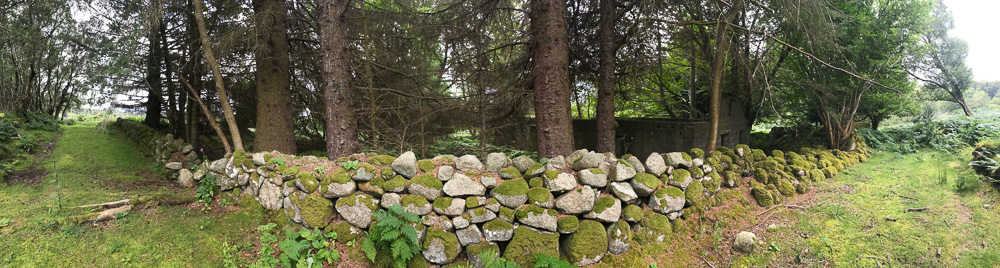
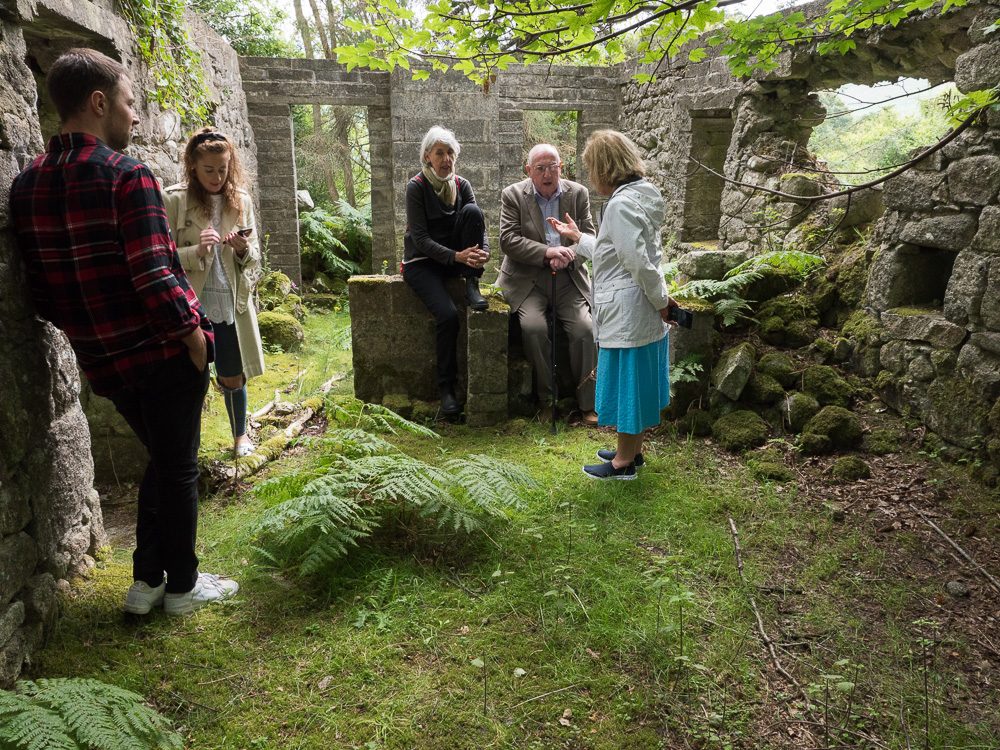
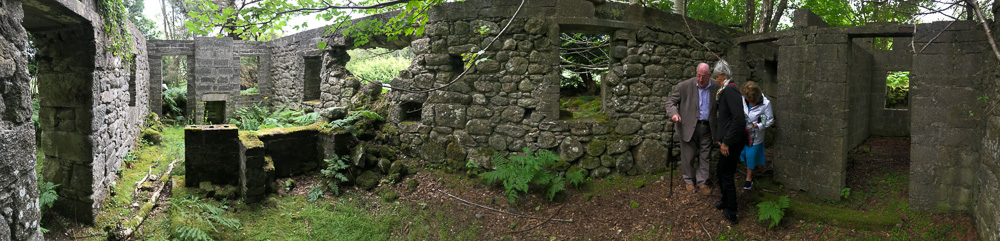


The granite used for the little cottage comes from the Wicklow Mountains, where it formed thousands of years ago. (The mountains themselves are 450 million years old.). The mountains and the Mulligans are well known in Irish literature. This from “The Joyce Project,”
Buck Mulligan turns toward these ‘awaking mountains’ at the beginning of ‘Telemachus,’ and Leopold and Molly Bloom both remember a night when they returned in a jaunting car from a dinner at the ‘Glencree reformatory,’ passing over the ‘featherbed mountain’ that is part of the (Wicklow) range.
Read “Ulysses” for details…
After leaving the house, we had tea and scones at the nearby Glencree Peace and Reconciliation Center, located on the ruins of British barracks, which in the late 1700s, housed troops sent to put down an Irish rebellion. We visited the nearby German Cemetery, in a quiet glen, with its graves of German airmen, sailors, prisoners of war from both world wars, and a number of captured German civilians sailing to Canada when their ship was torpedoed by a German U-boat.


(Thanks to Emer for some of the photos from the cottage.)
 Keeping up with Pat and Maurice
Excellent, very pleasent memories of a very happy day shared with our American Cousins.
Seamus.
LikeLike
Thank you Seamus! Yes, it was a very pleasant day and happy memories.
LikeLike