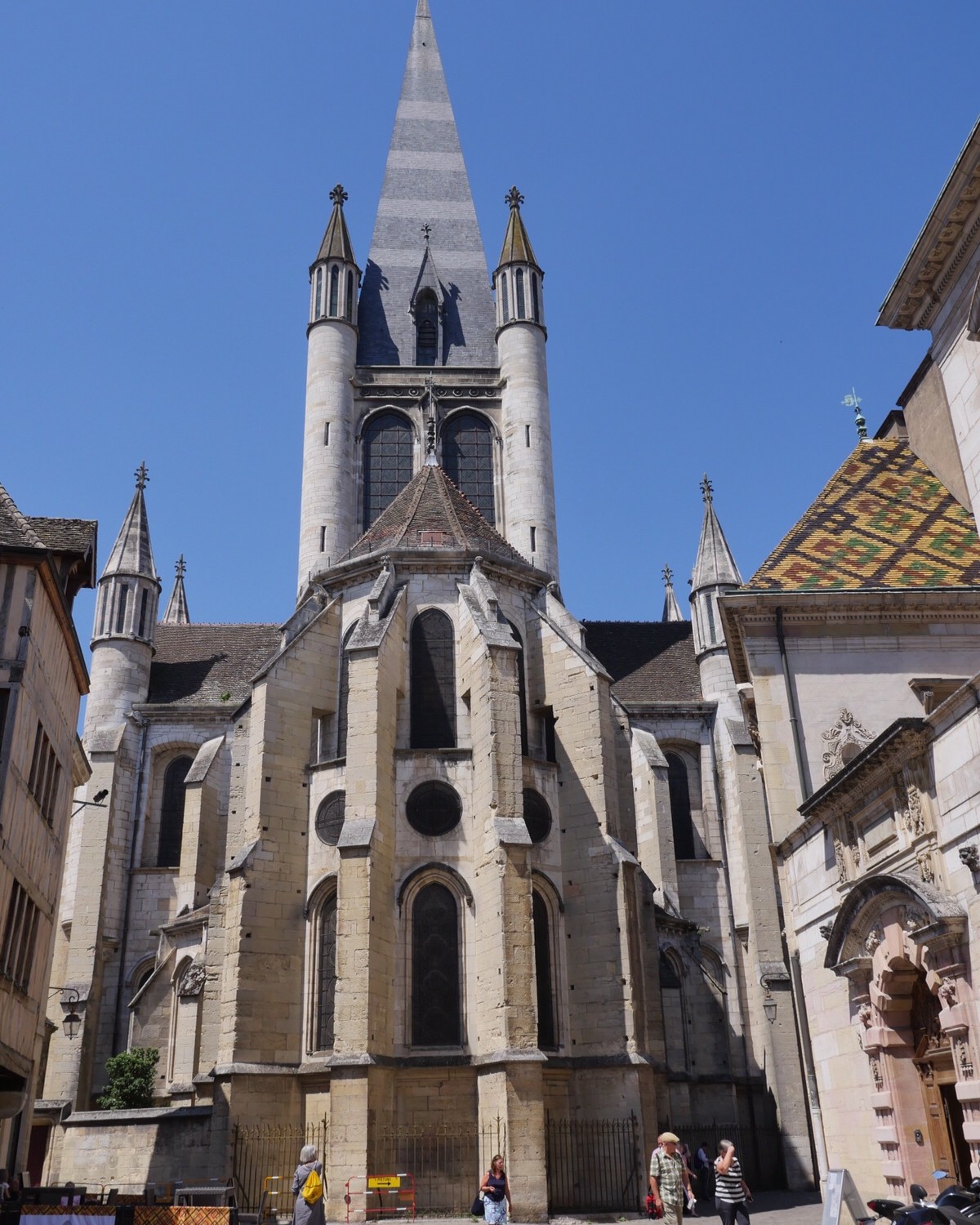
The church has been used by the Dijonais for 10 centuries as a city parish. Its first iteration was a chapel, Our Lady of the Market, founded in the mid-11th century. Dimensions of the church today are modest, but its height is imposing and makes the building feel like a large cathedral.
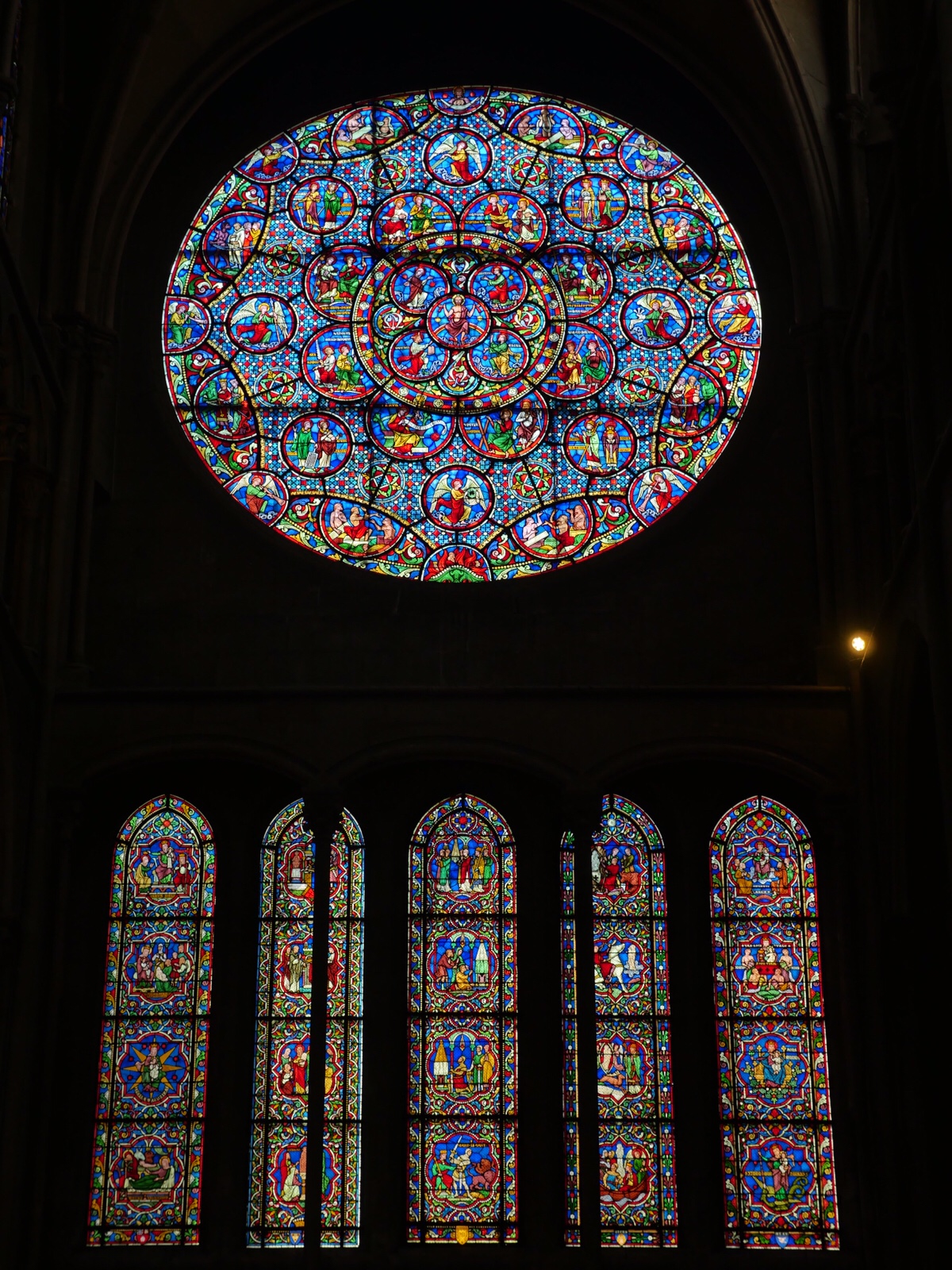

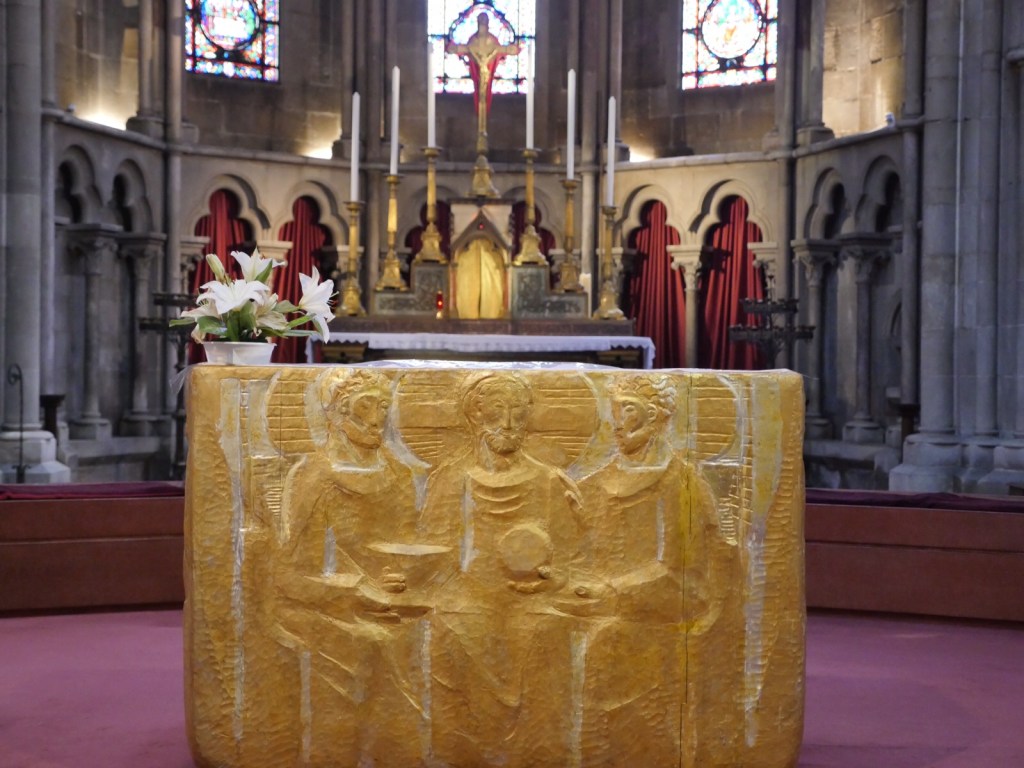
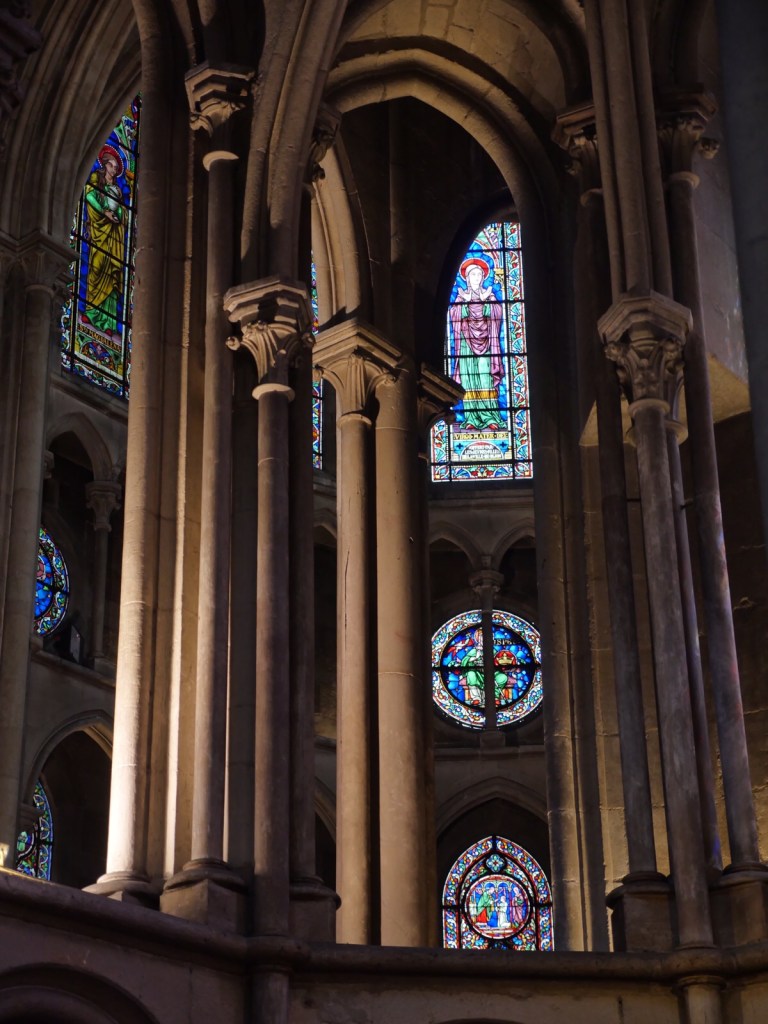
Two tapestries tell of the church’s importance in Dijon history. In the ducal palace hangs an ornate tapestry showing the rout of the Swiss on September 11, 1513, after city residents held a procession honoring the Virgin Mary of Dijon, and carried her statue from the church and through the streets.

On the same date, in 1944, the Germans quIt Dijon, leaving it unscathed. The tapestry in the church commemorates the 20th century event.
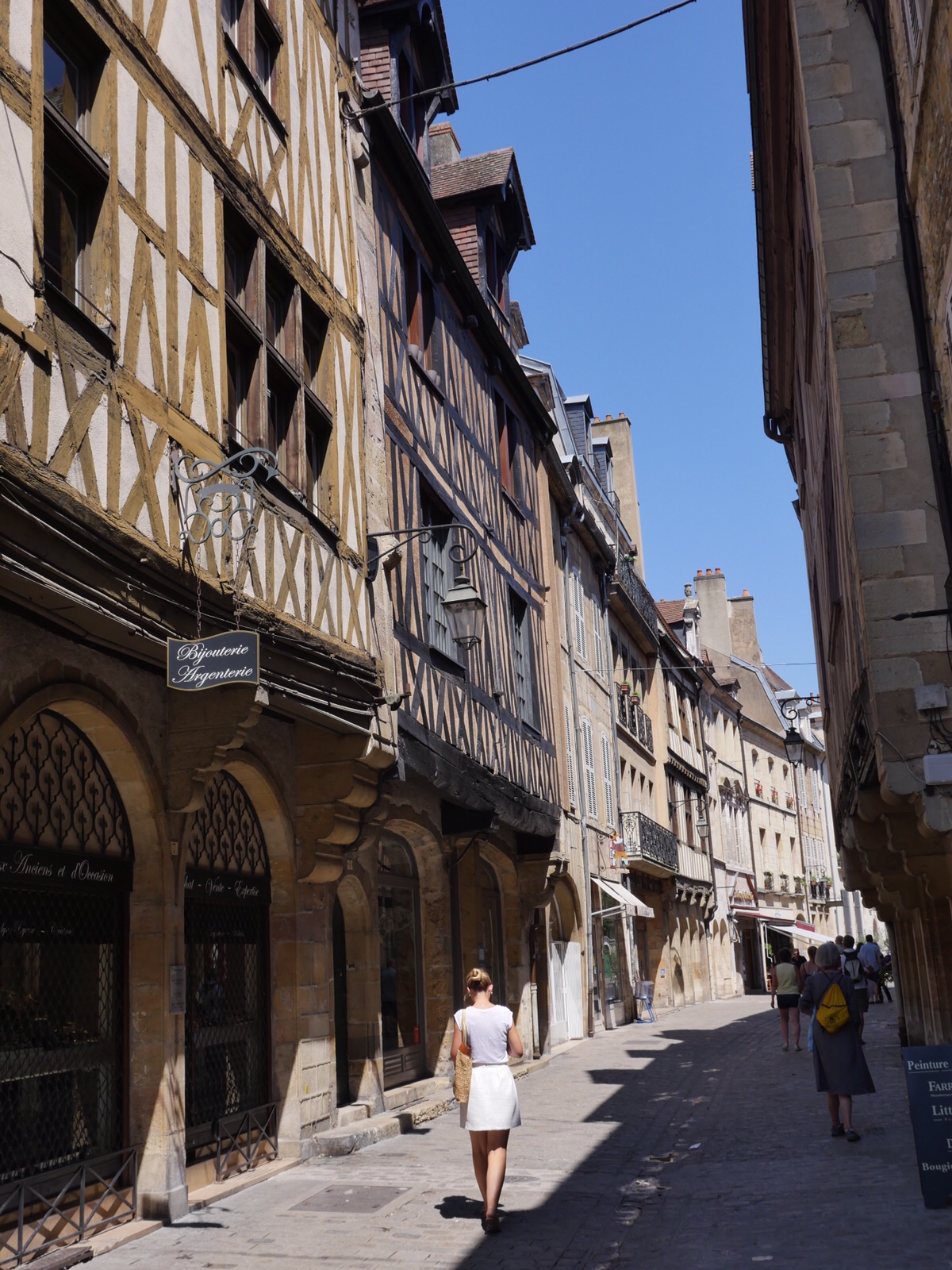
On the streets surrounding Notre Dame of Dijon are former homes of 14th and 15th century wealthy merchants.
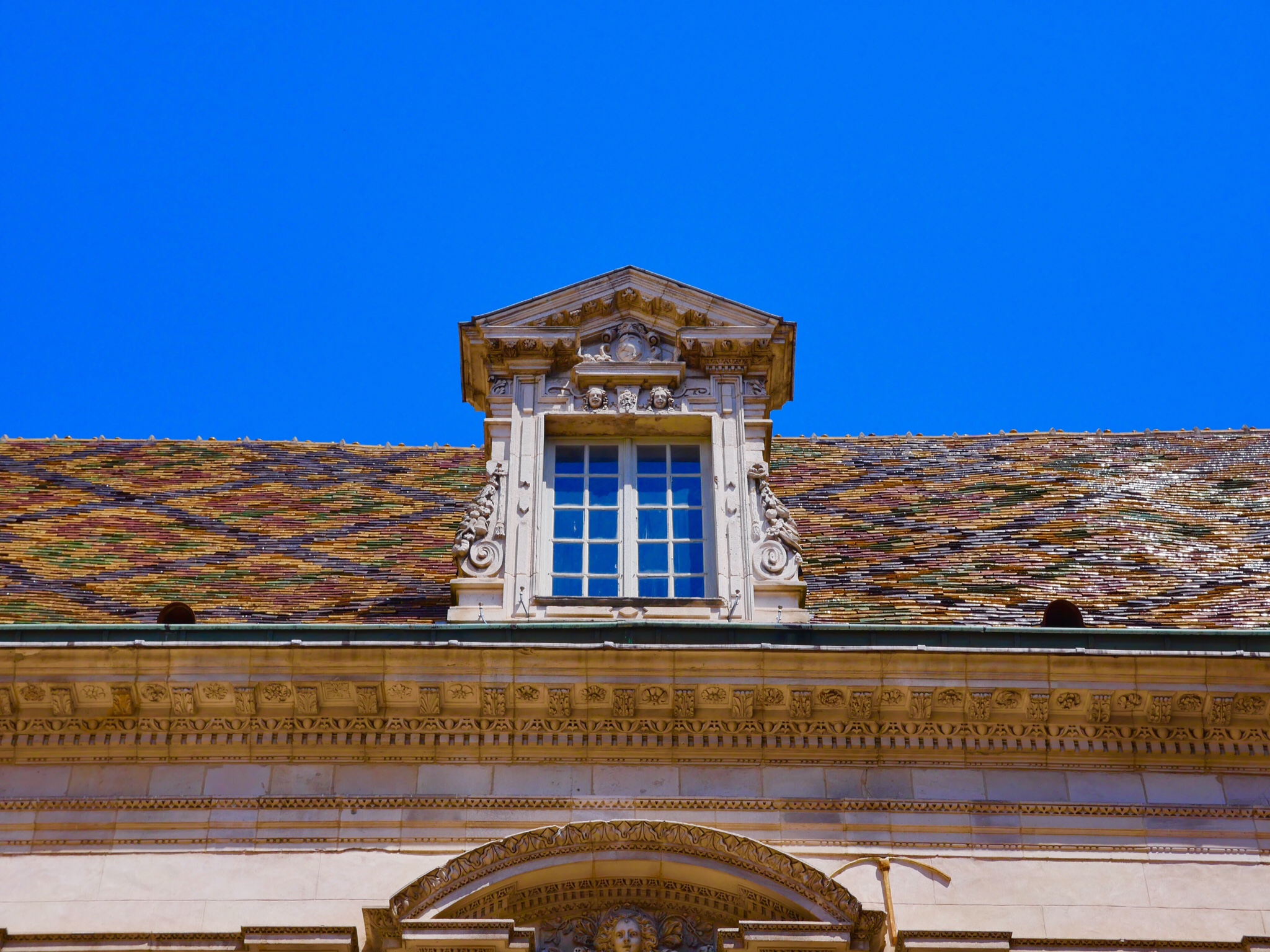
When the sun is shining, their beautiful glazed tile roofs dazzle. These polychrome roofs are found throughout Burgundy and are unique to this area of France.
After spending the afternoon in the apartment avoiding the heat, we ventured out in the evening, spent a couple of hours in an air-conditioned wine bar, and walked home in the light of the nearly full moon.

 Keeping up with Pat and Maurice
I LOVE, LOVE, LOVE this pictorial history of your time in France! Really love that your walk home by the light of the moon is black and white. It really adds to the romance of the moment!
LikeLike