
Yesterday we visited the dukes of Burgundy in their Dijon home. Unfortunately portions of the place were off-limits to us, including the kitchens, because of reconstruction of the wings that house most of the city’s fine arts museum. It was especially disappointing to miss the kitchen (built in 1433) which has six fireplaces, all of which are large enough to roast an entire ox.
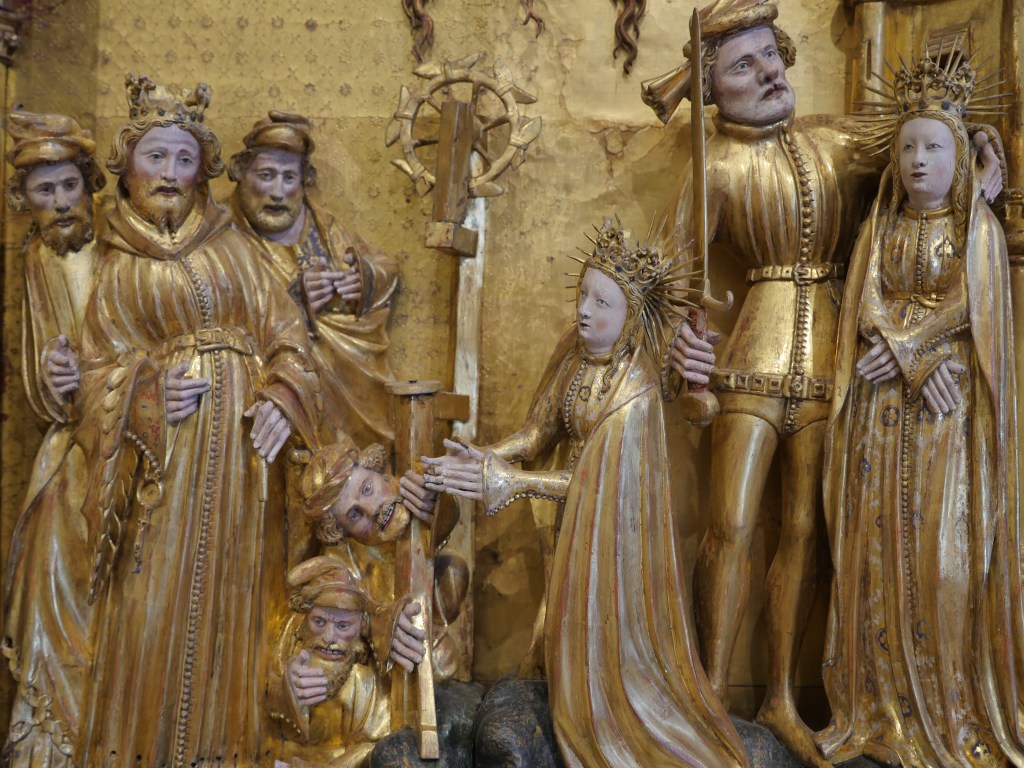
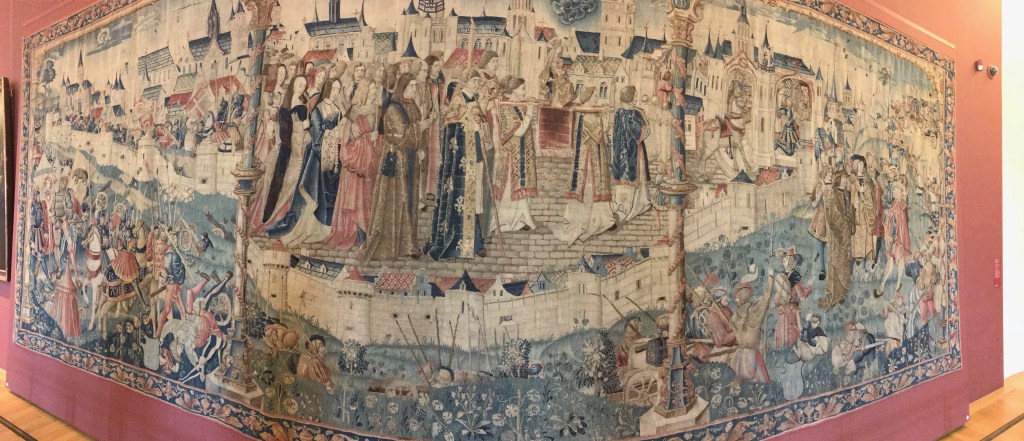
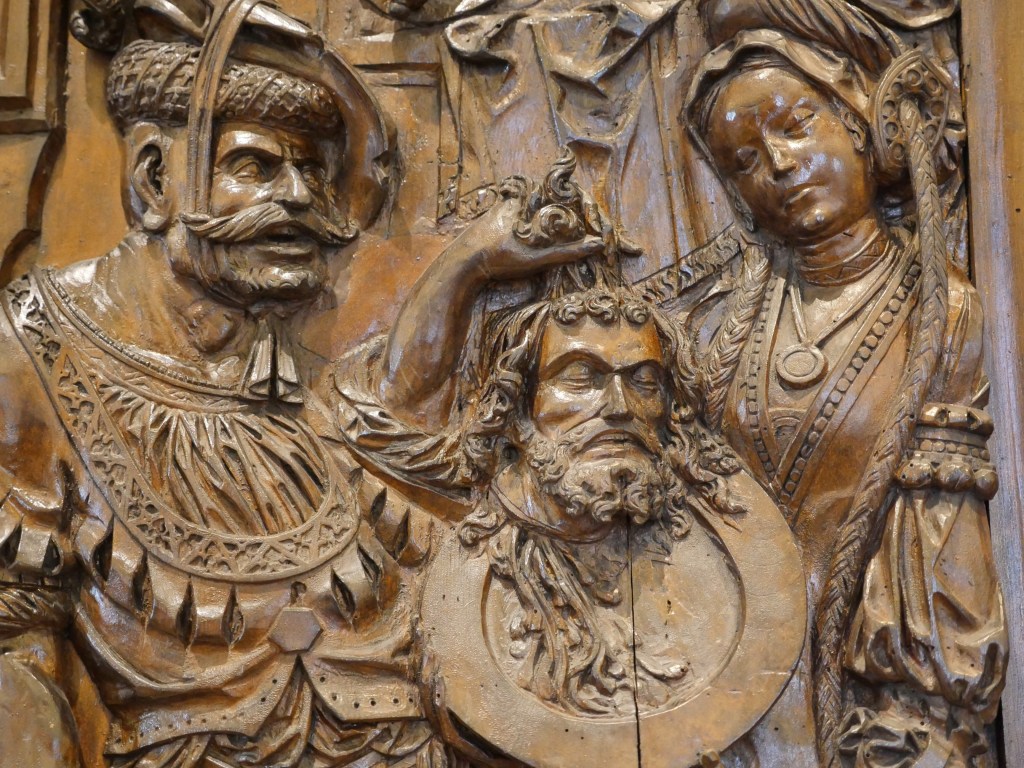
The ducal palace is a combination of 14th century Gothic architecture with 17th and 18th centuries classical styles. Because of the current construction scaffolding and barriers, it was difficult to get a sense of the size of the place. In the portions of the three floors we were allowed to visit, we saw a variety of mostly religious art primarily from from early and late medieval periods in France and nearby countries (Flanders, Switzerland, Germany).


We did visit the tombs with full-life replica stone carvings of Margaret, Duchess of Bavaria and her spouse, John the Fearless, Duke of Burgundy (at that time, a very large domain rivaling that of the king of France).

Philip the Bold’s tomb is above. He was born in 1342 and died in 1404, and was the grandfather of Philip the Good who captured Joan of Arc in 1430 and sold her to the English, after which she was tried for heresy, found guilty, and burned to death. Joan supported the king of France, Charles VII. The Armagnacs and the Burgundians were waging civil war at the time, and the country was divided between waring factions, including the English. Crowning Charles king of France would begin to unite the population and country. Because of Joan, Charles was anointed king in the Rheims cathedral as was traditional for kings of France. This was the first time Charles was able to enter Rheims, a city that was loyal to the English during the 100 Years War. The populace came together over their love for the heroic Joan, but sadly after her death.
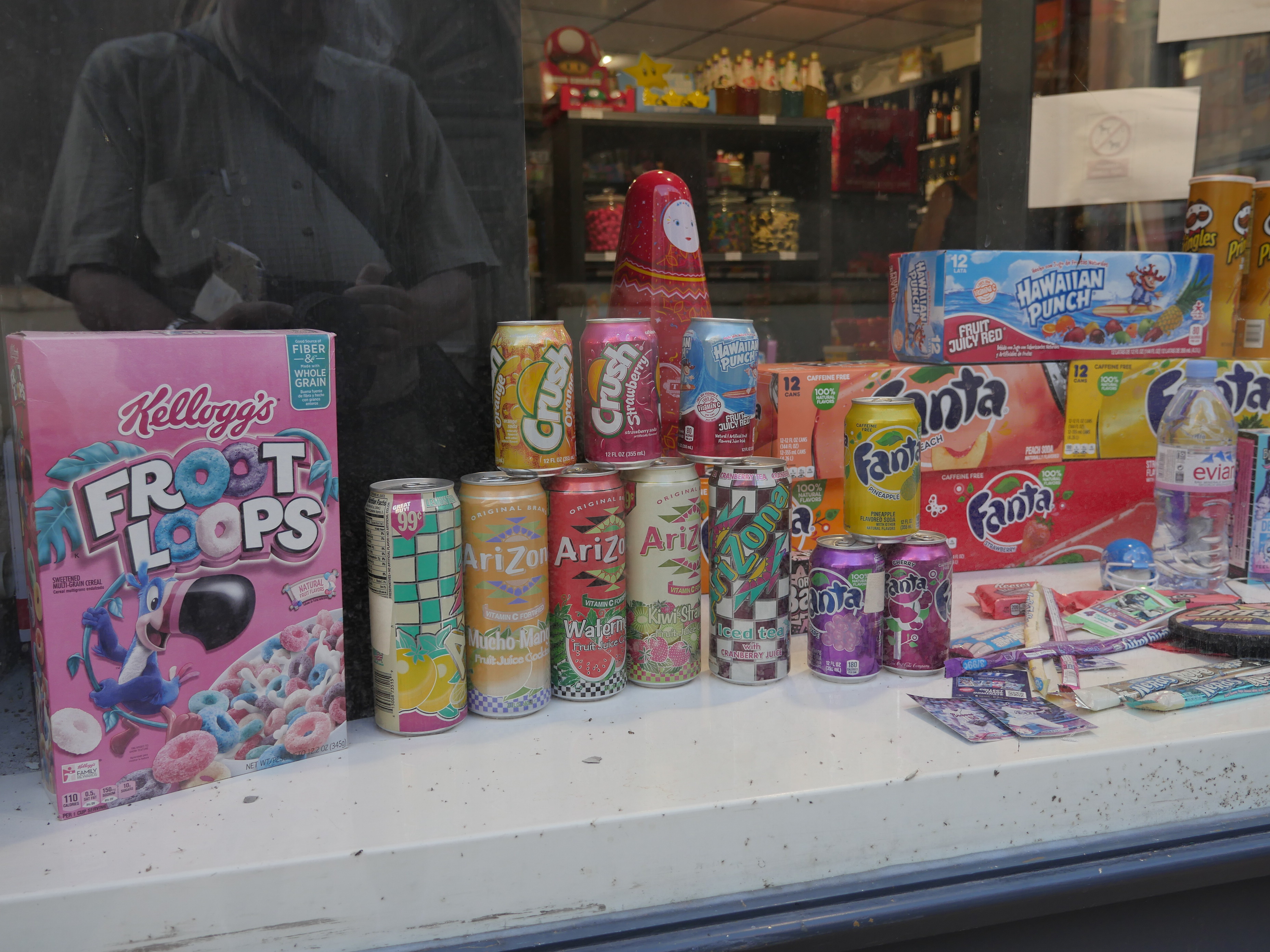
It was been quite warm in Dijon, high 80’s and 90’s. There is no air conditioning, nor do people use fans. Consequently our touring occurs in the morning and late afternoon. We walked around Dijon one evening and found a lively street, Monge, with stores selling cheese, wine, and spice bread for which Dijon is known, along with its most famous product, mustard. There was even a store featuring American “delicacies,” all of which represent the absolute nadir of US cuisine. As you can see.
 Keeping up with Pat and Maurice
I’m so sorry you didn’t get to see the kitchens. It probably would have been the highlight of your tour. It gives you motivation to return to Dijon!
LikeLike
Thanks for the updates and photos, Maurice. Its always enjoyable!
LikeLike