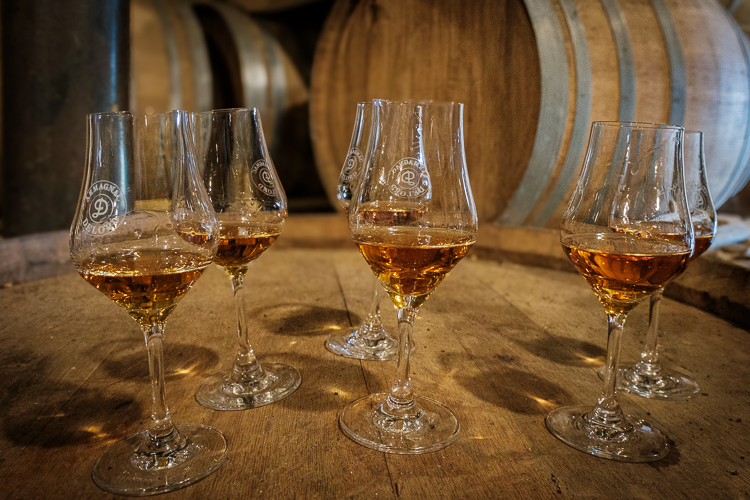
What better way to start the day than with an Armagnac tasting? Today’s first stop was at Armagnac Delord, a distillery in Lannepax. Prosper Delord started distilling Armagnac in 1883, and the distillery in Lannepax was started by his sons in 1932. The business is now being run by Prosper’s great-grandsons.
Armagnac, we were told, is the oldest French spirit. Evidence of its use dates back to 1310; its history is linked with that of Gascony.
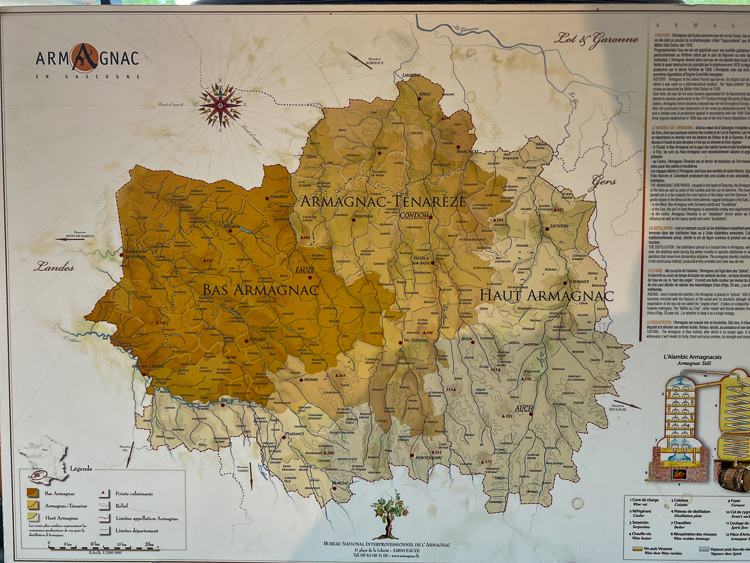
There are three Armagnac regions. The Delord distillery borders Ténerèze in Bas Armagnac. The soil of this region produces light, fruity, delicate and highly reputed eau de vie — the product of the distillation before aging in barrels.
Ugni Blanc is the chief grape in Armagnac. Delord’s Armagnac includes the varieties Colombard, Folle-Blanche, and Baco (none of which I was familiar with). (Folle-Blanche the traditional grape in Armagnac, was destroyed in the phylloxera epidemic in the second half of the 19th century.)
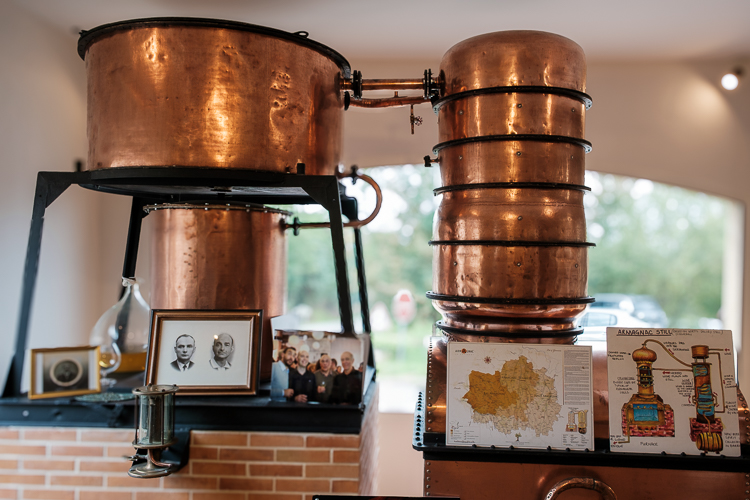
Armagnac is distilled in a continuous process, first established under the reign of King Louis XVIII in 1818. If you want to get into the Armagnac weeds, you can read about its distillation at this link, which includes a helpful video explaining the distillation process.
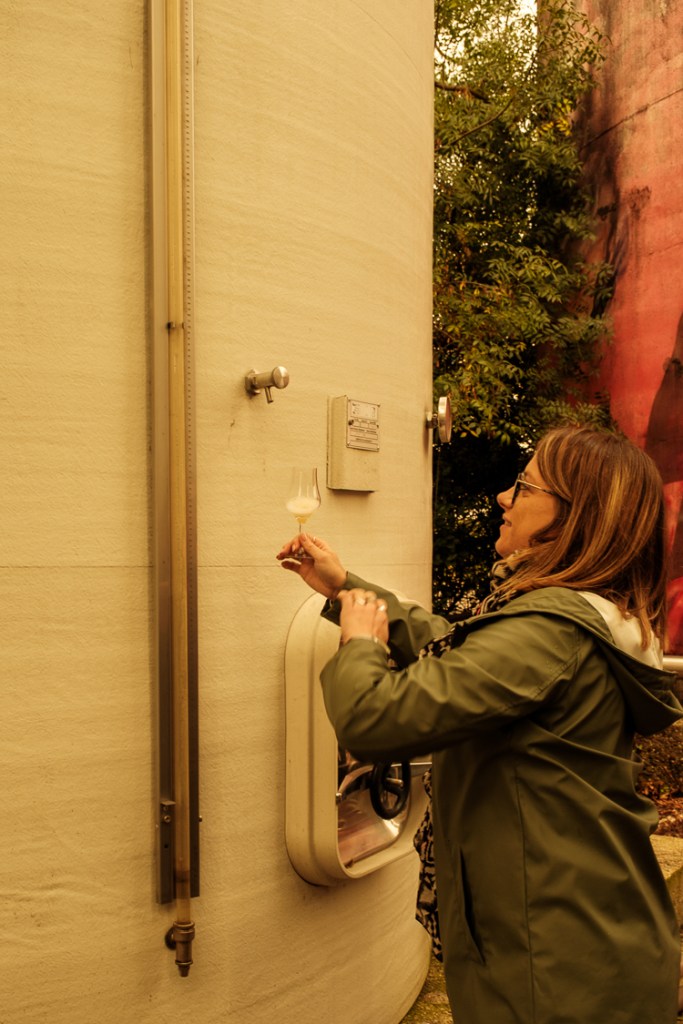
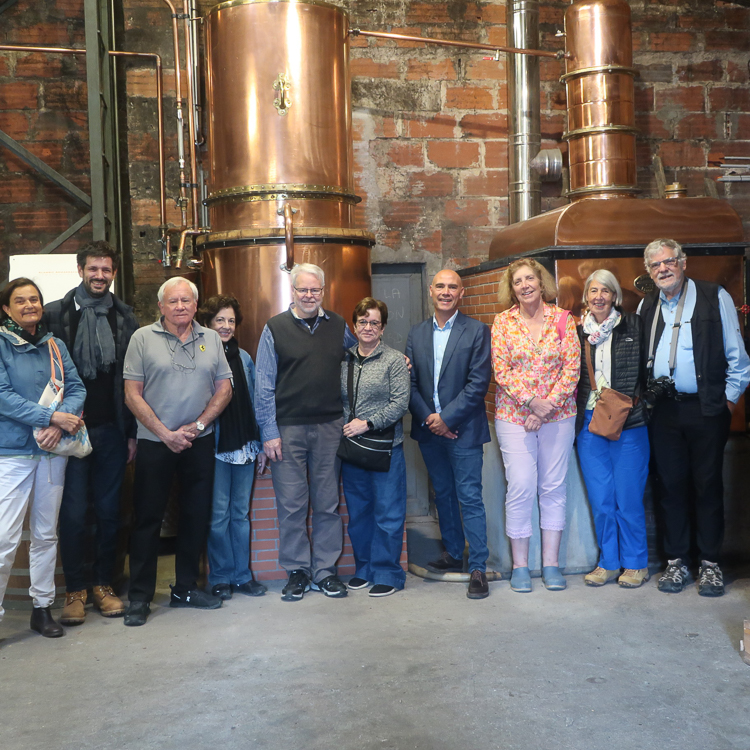
At Delord, we were told, the grapes are first fermented to six to eight percent alcohol in these giant casks. Frankly, having one of these at home would eliminate a lot of trips to our liquor store, or to Costco, but we would probably not get approval from the county’s Historic Preservation Commission.
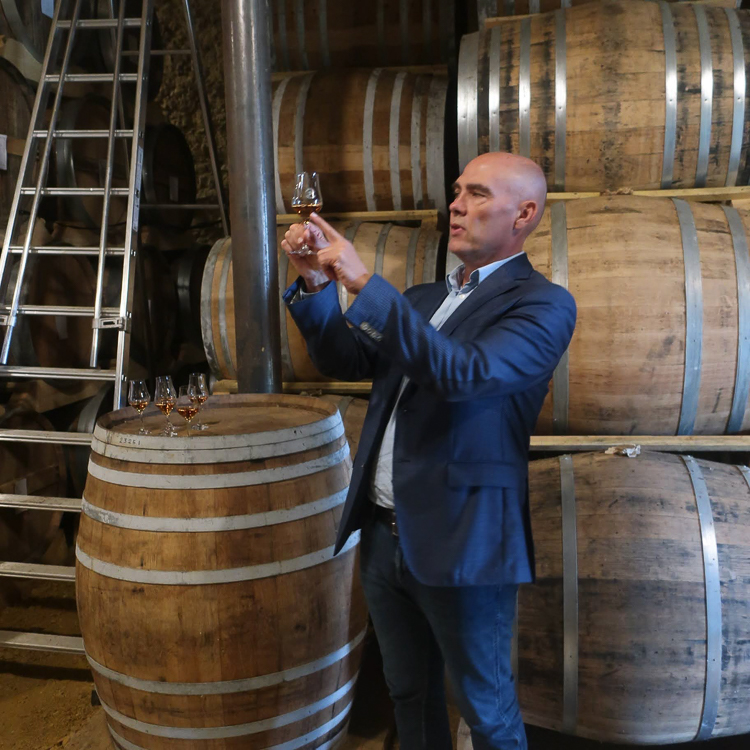
After distilling, the wine is aged in barrels. Age, for Armagnac, is the length of time it is stored in a barrel. Once bottled, the aging process stops. So, an Armagnac from 1960, bottled in 1970, is a 10-year-old Armagnac in 1970 — and in 2025.
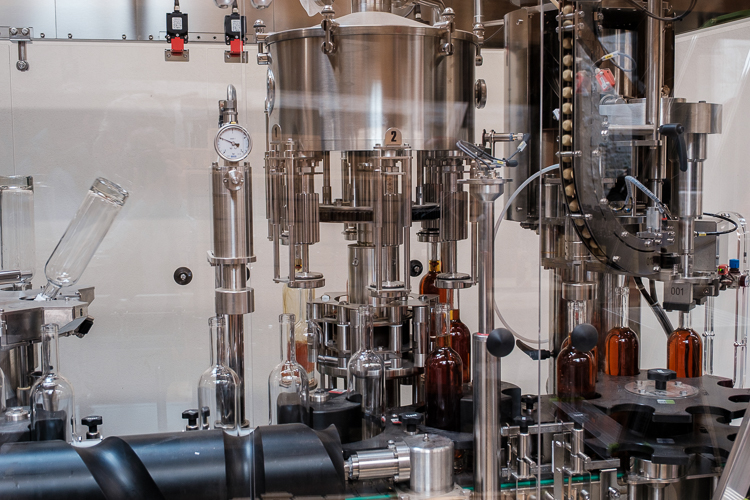
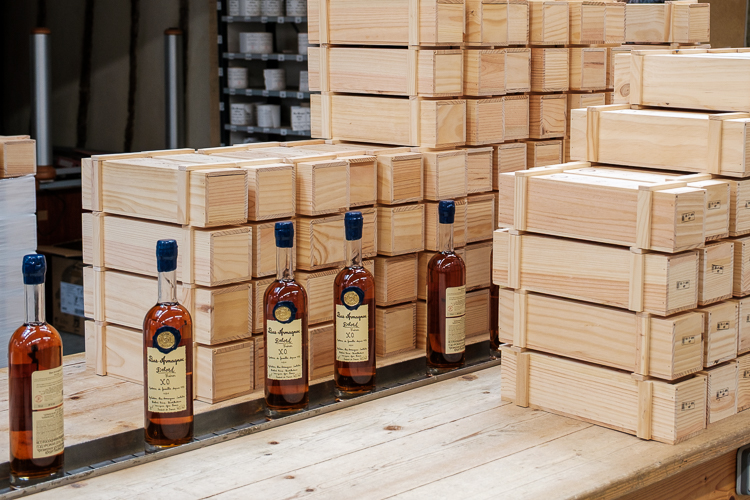
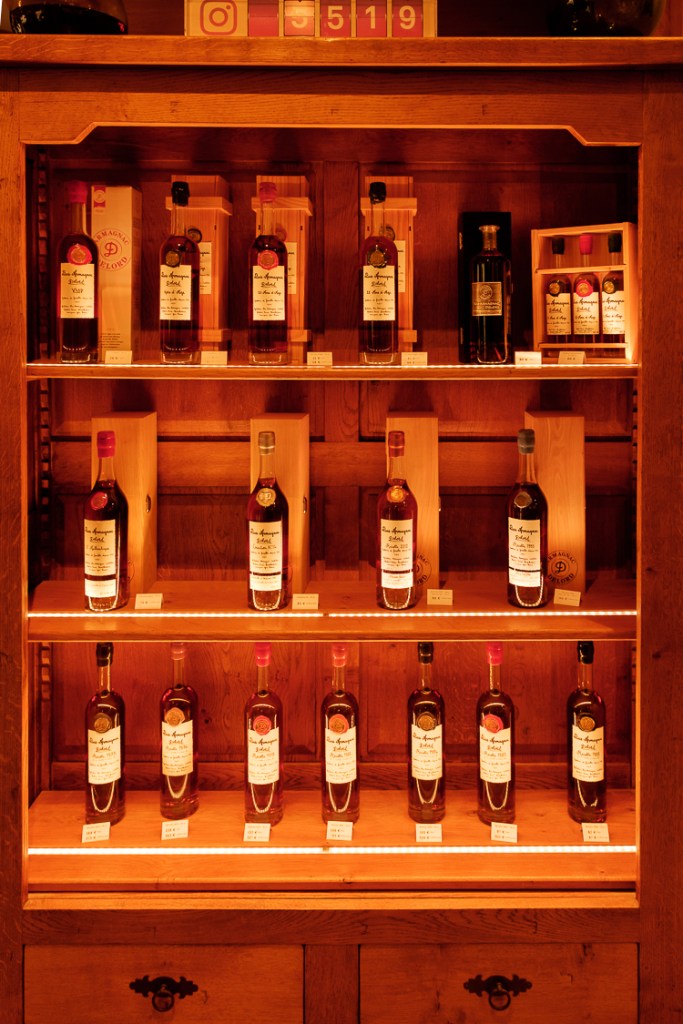
In the bottling plant, we were in for a little treat. The last step in the process is dipping the neck of the bottle in wax, to seal it, and dropping a spoonful of wax just above the label, where the Armagnac Delord stamp is placed. We were each allowed to execute those finishing steps. Our bottles were labeled with our names; a gift to us!
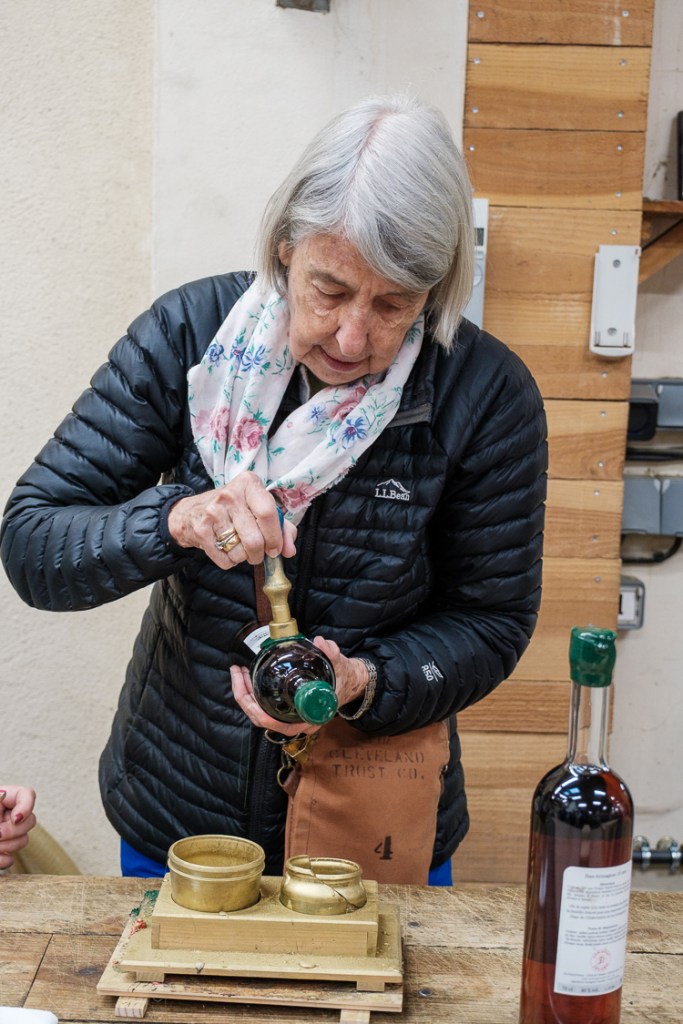
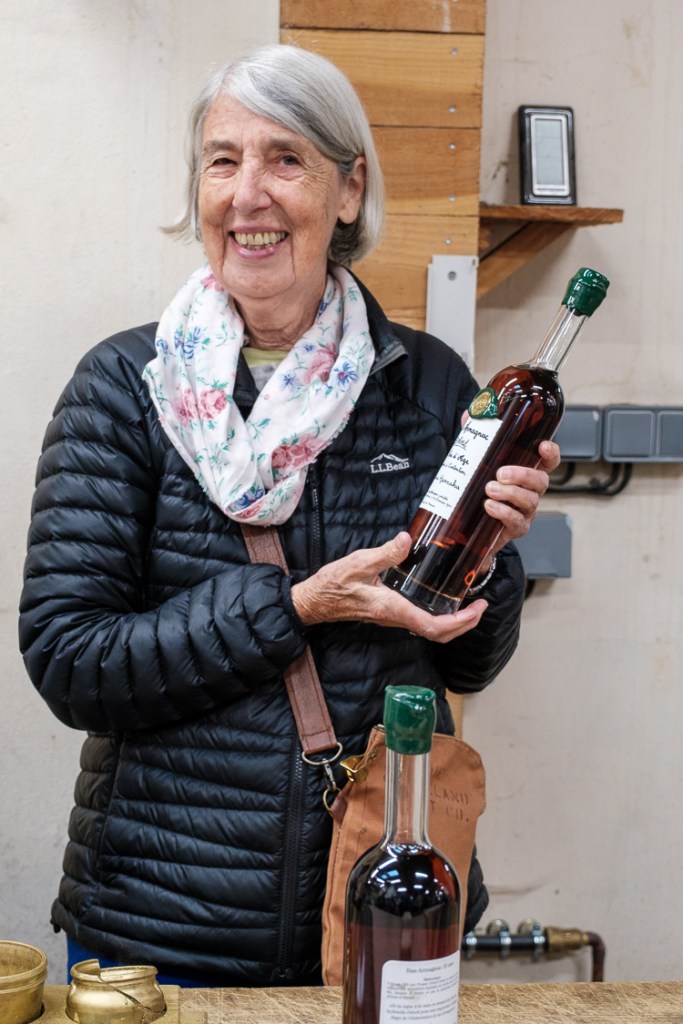
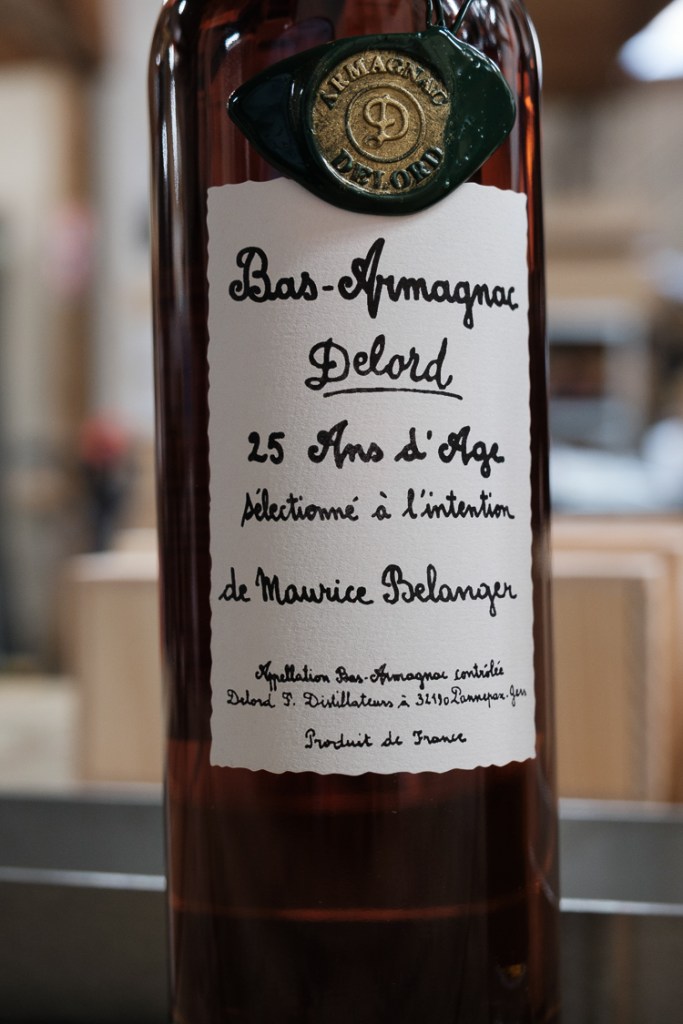
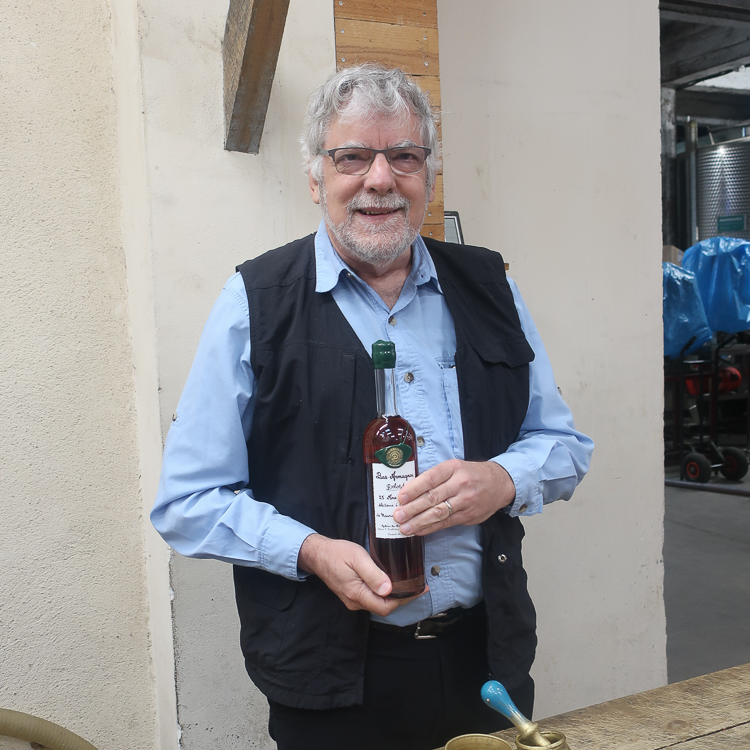
If you zoom in on Pat’s bottle, you will notice that Delord was using Pat’s nom de liqueur, “Patricia Hanraha.”
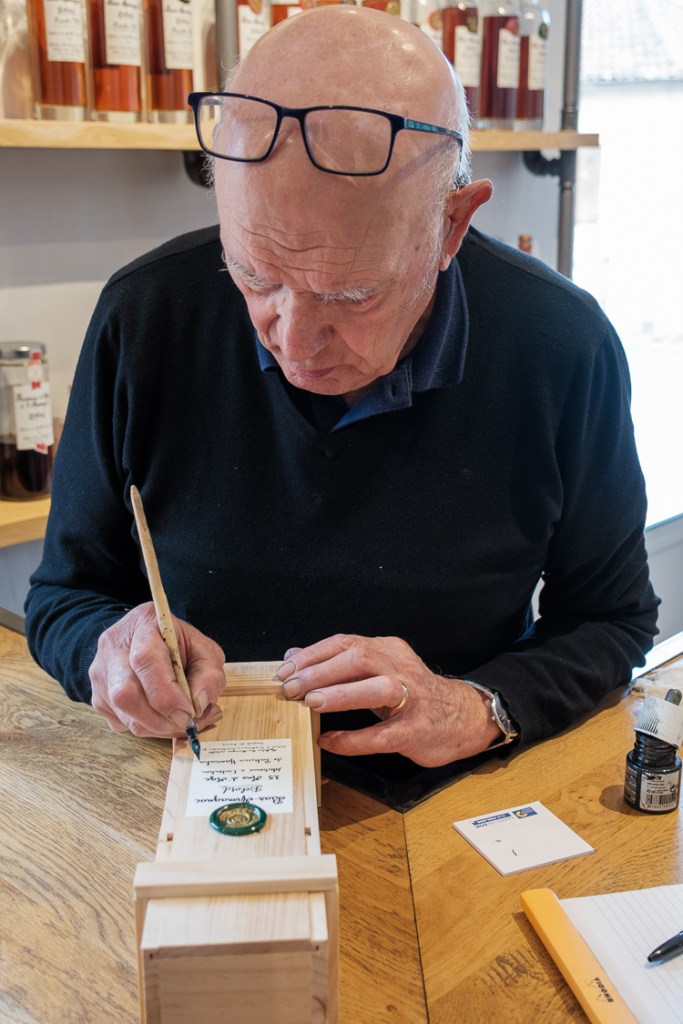
Actually, they just mis-spelled her name, so they had to bring out the company calligrapher, (who happens to also be the President, Papa Delord).
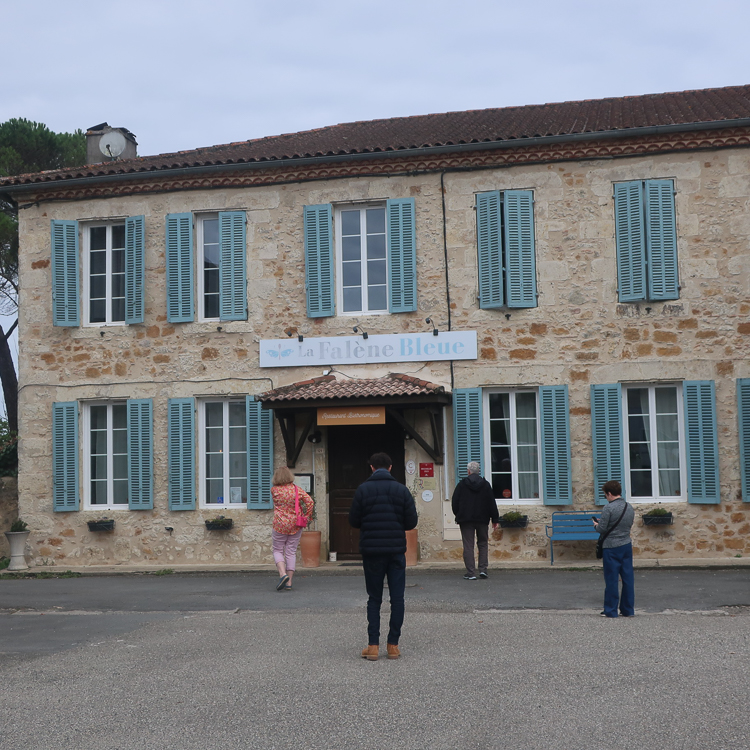
After our liquid breakfast, it was time for lunch, also in Lannepax, at La Falène Bleue. Another excellent meal, beginning with amuse-bouches: a fish fritter, chèvre mini quiches, fried Compté, cucumber gazpacho on a bed of ricotta. The main course was beef meatball with shiitake mushroom and celery root sauce, accompanied by a raw beet salad with beet fritter.
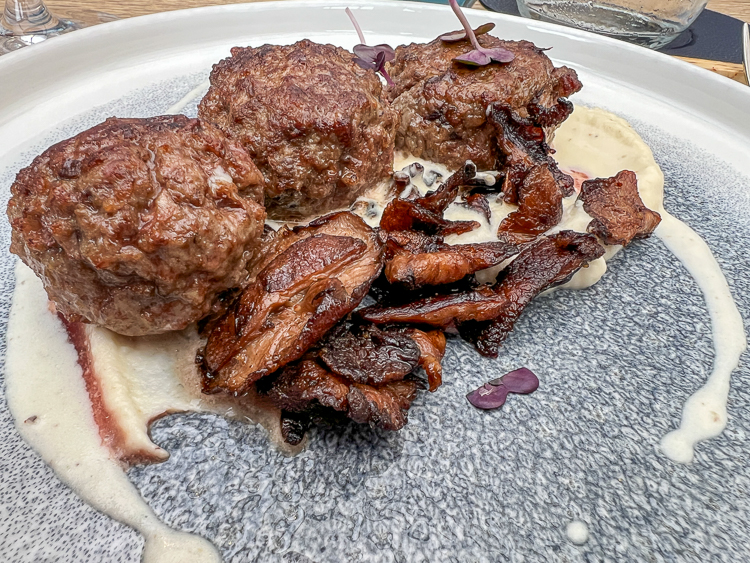
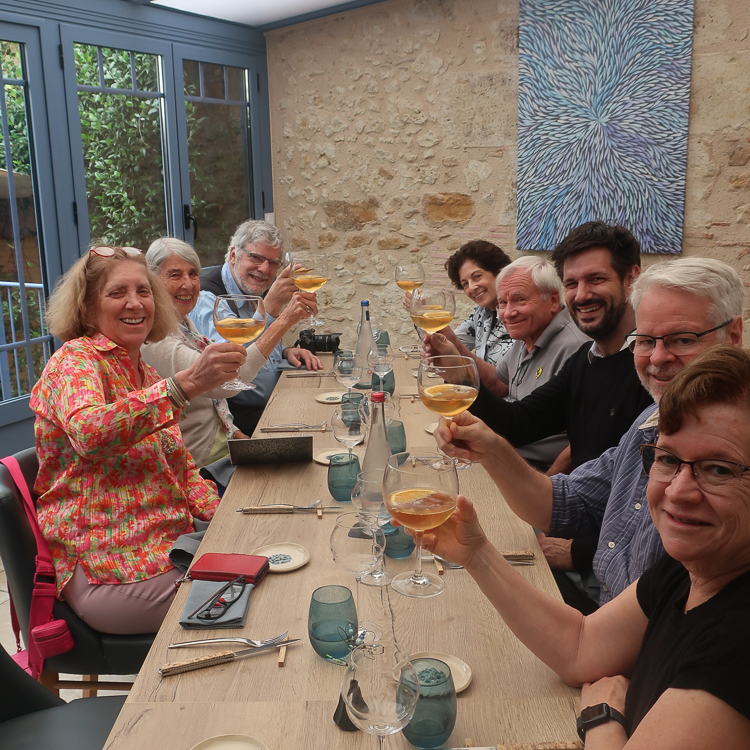
Dessert: Ile Flottante with berries. And there were post-dessert dessert cookies.
After lunch, we visited the medieval town of Larressingle, the “Little Carcassonne of the Gers.” We first visited another merchant of Armagnac, where we had another tasting — our first of the afternoon.
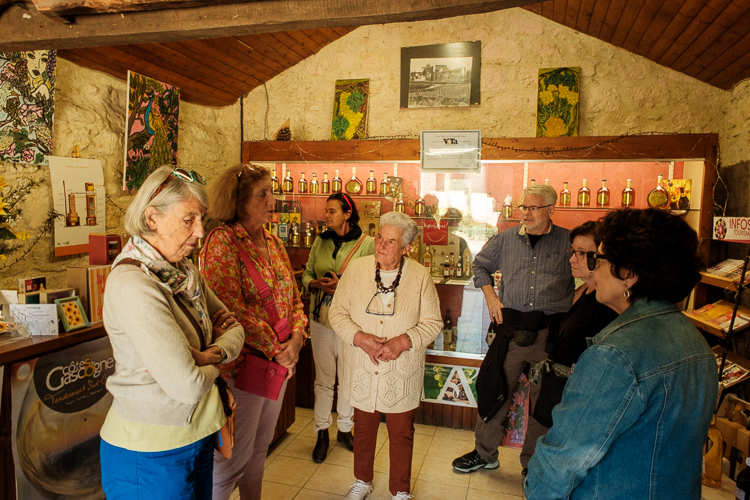
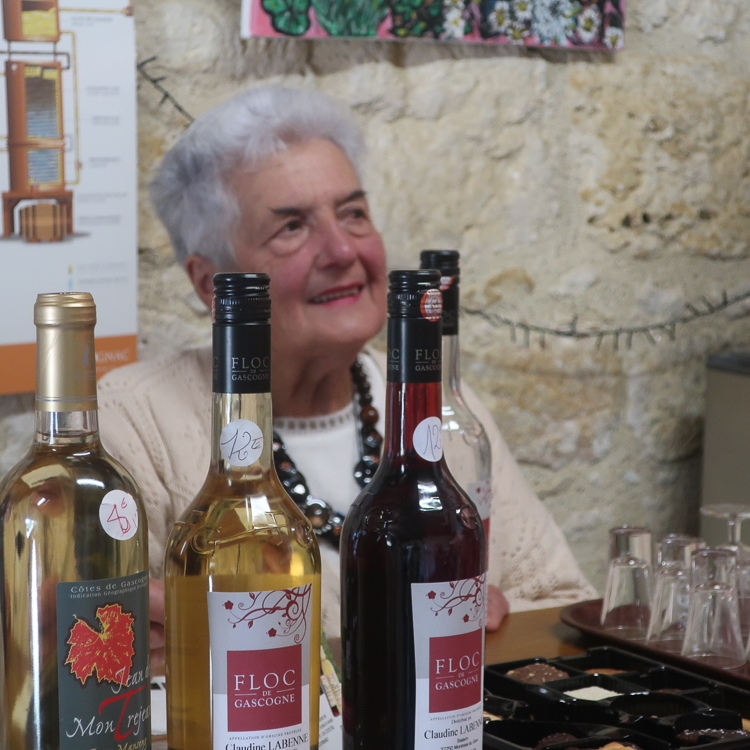
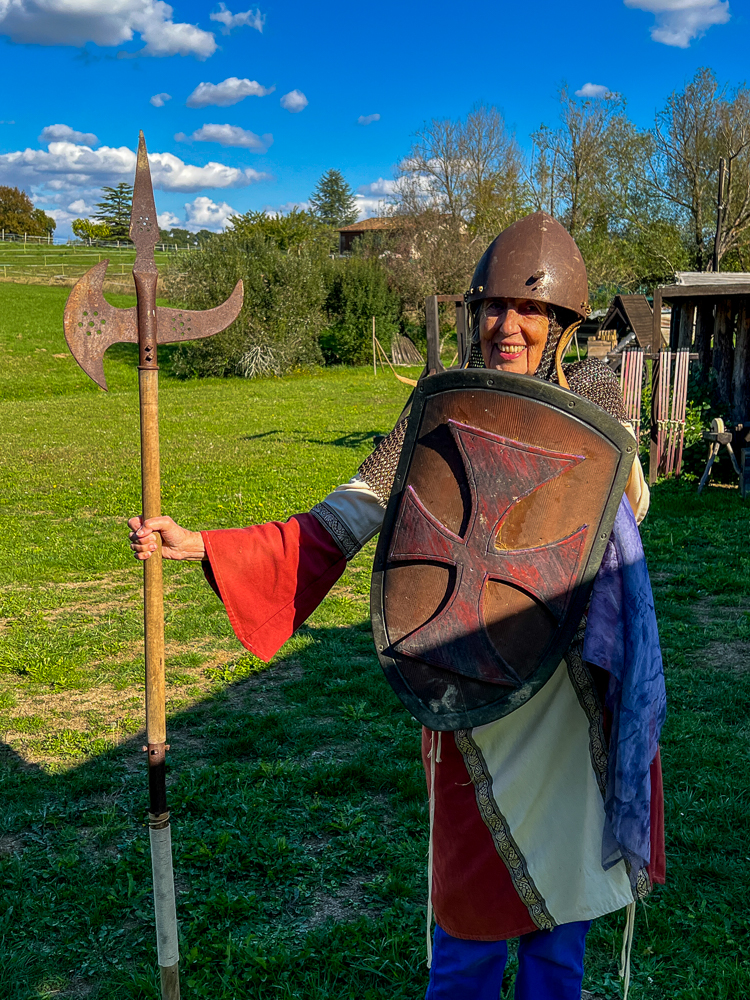
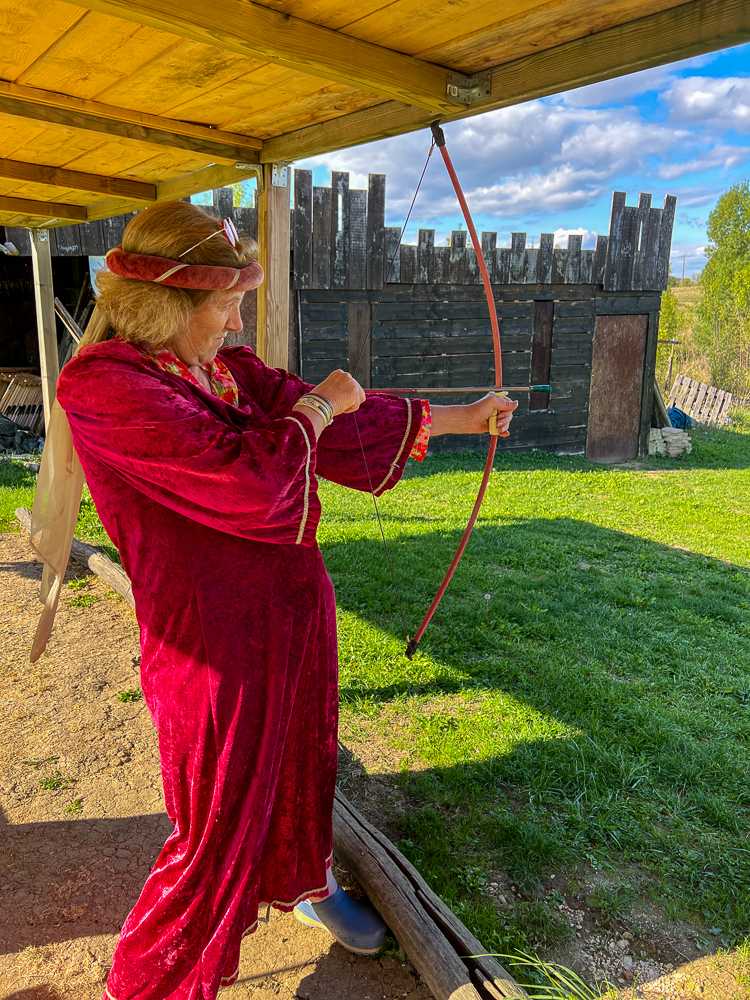
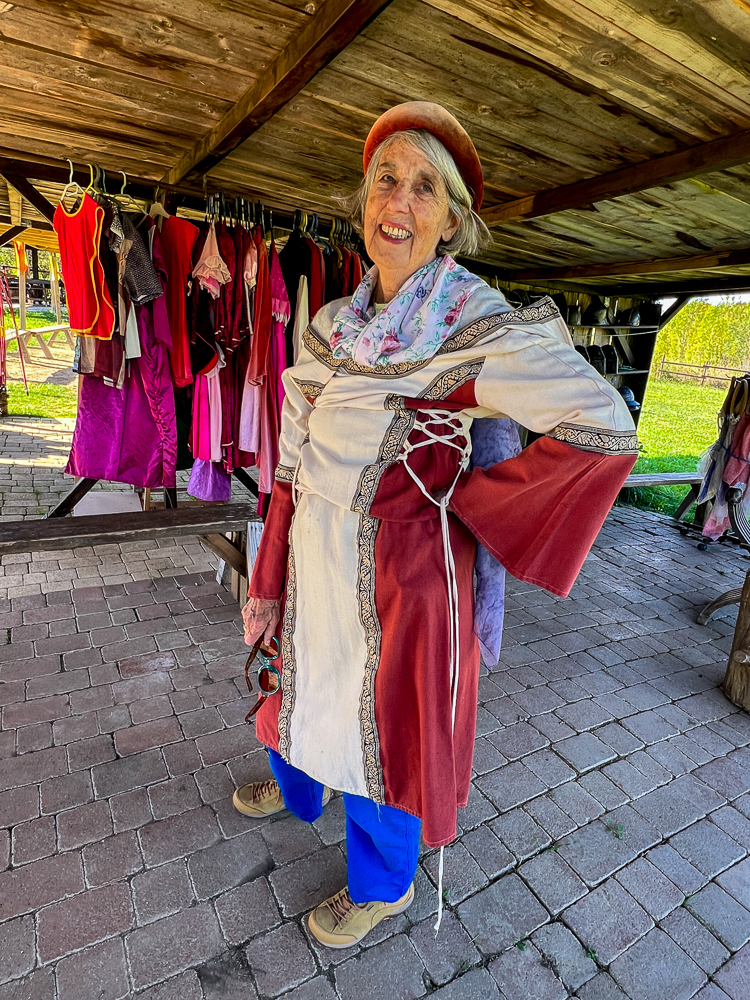
After we left the shop of Claudine Labene, we strolled through the small town, before stumbling upon something that wasn’t on our schedule. At the Medieval Siege Camp, we learned about weapons of siege warfare and, after we failed to catapult Pat over the fortified walls of the city (thanks to Véronique Banzet for the video), we tried our hand with various weapons of the 15th and 14th centuries — swords, bows and arrows, etc. Pat looked very formidable with her shield, helmet, and poleaxe.
We departed Larressingle for the spa town of Castéra-Verduzan and its thermal baths, in operation since Roman times. The baths are said have healing properties. Since we arrived just before closing, our group left the spa and walked to the nearby restaurant Le Florida, seeking the healing properties of another fabulous meal. We were early for dinner, so Ariane and I killed some time by playing a couple rounds of pool.
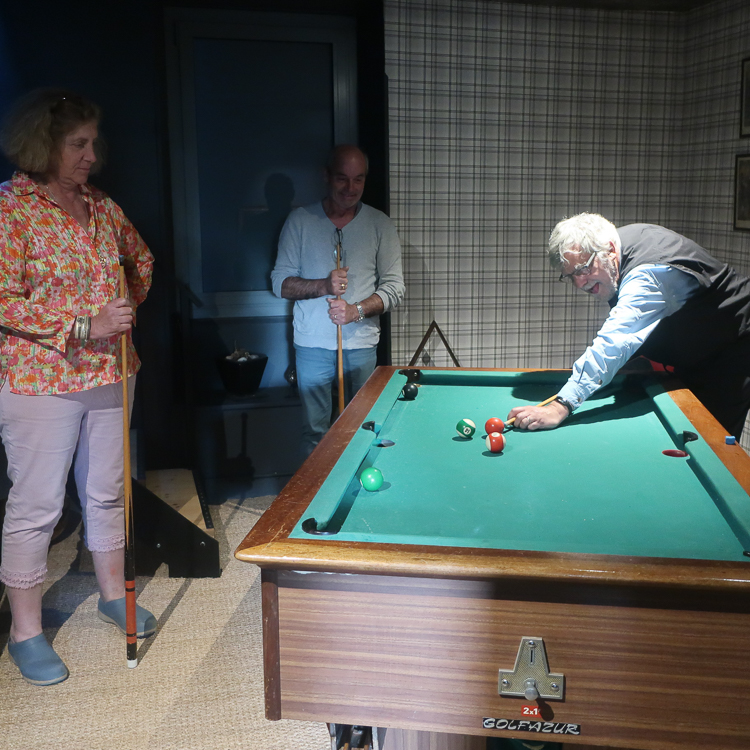
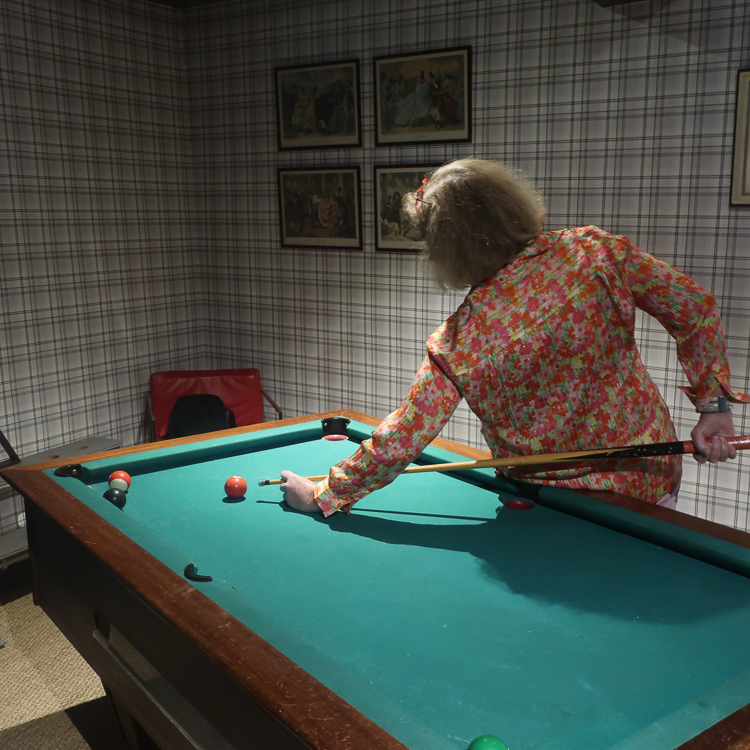
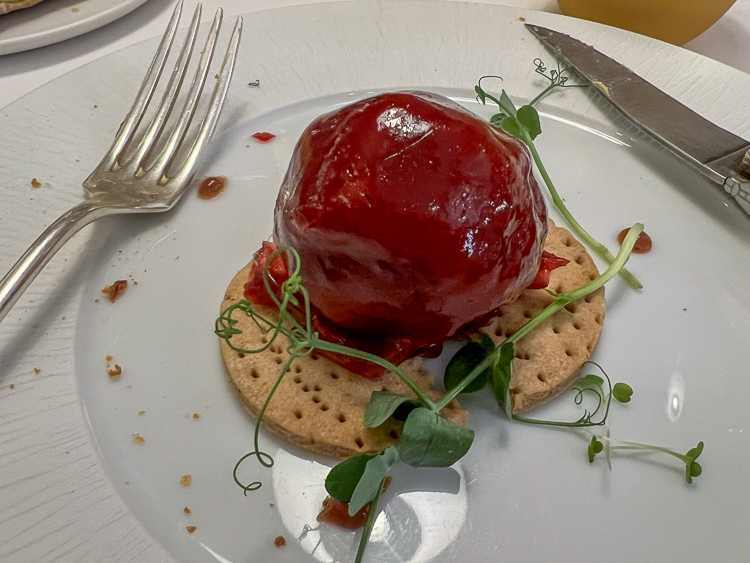
Our efforts were rewarded: Dinner consisted of fried seasonal vegetables, butternut squash soup, foie gras covered by jam of floc, slow-cooked chicken with cardamon sauce, with cèpe and potatoes.
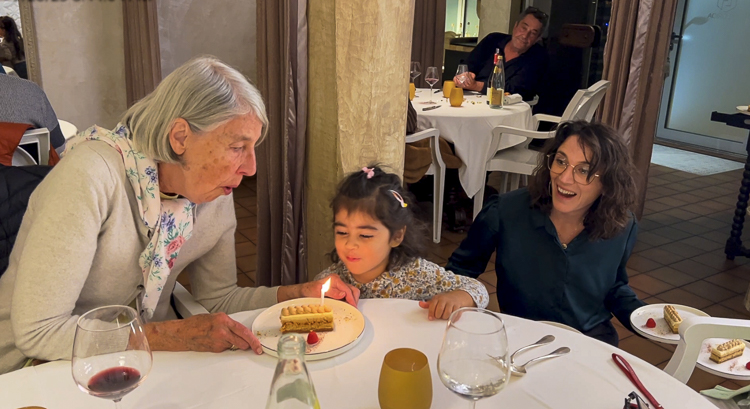
For dessert: Speculoos cake with vanilla cream. It was Pat’s birthday, and I had arranged with Véronique to have the restaurant surprise her. The restaurant’s owners, a Mexican/French couple, had a charming 3-year old daughter who kept us entertained during the meal by showing off her artwork. She serve Pat’s cake. It was perfect.
 Keeping up with Pat and Maurice
that’s one hell of a lunch!
LikeLike
Would you need an extra permit for the giant Armagnac cask behind the apartment? Please put Pat’s nom de liqueur on the giant cask 🍷🍷🍷
LikeLike