
Note to subscribers: If you are reading this by email, please note that the first series of pictures are displayed in a slideshow on the web. The email sent by WordPress strips the photos out of the slideshow and stacks them on top of or next to each other. View the web version for the proper display.
Contratto Cellars
On our third day, the bus brought us to the other side of the Tanaro River, where our first stop was the Contratto Cellars and Winery. Here they specialize in Alta Langa sparkling wines, made from Pinot Noir and Chardonnay grapes. First, we toured the extensive cellars (5,000 square meters), which are now a UNESCO World Heritage site. The winery produces about 200,000 bottles a year, and there are 1.5 million bottles in the cellars. Their wines are the driest of sparkling wines — Brut Nature (defined as having just 0 to 3 grams/liter of residual sugar). They produce their wine with the traditional method (a.k.a., “Méthode Champenoise,” but of course you can’t call it Champagne outside of Champagne). The first fermentation is in steel tanks; the second is in bottles. To get rid of the sediment byproduct of fermentation, the bottles are stored upside down, as you can see from the pictures here. To ensure that the sediment collects in the neck at the cork, the bottles are rotated 1/8 turn by hand once each day for 18 days. I forget what we were told about how many bottles are turned in an hour by the guys doing the turning, but there are a lot of bottles to turn. When the 18 days are up, the neck is frozen, the bottle is opened, the ice with sediment in it shoots out, and the bottle is re-corked. (We didn’t get to see that process.)


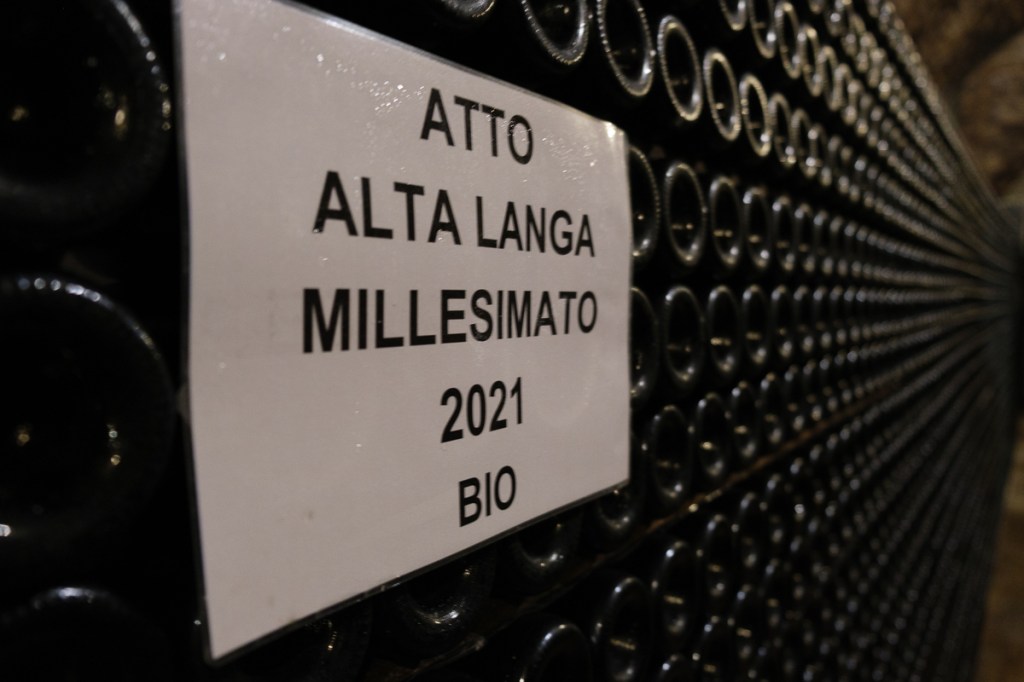
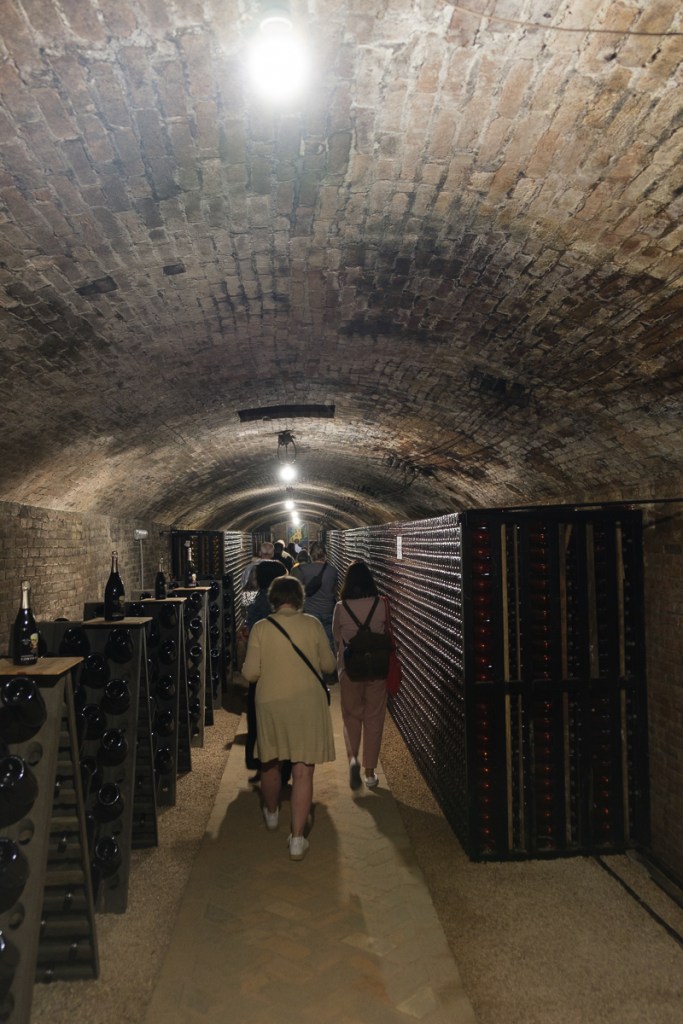
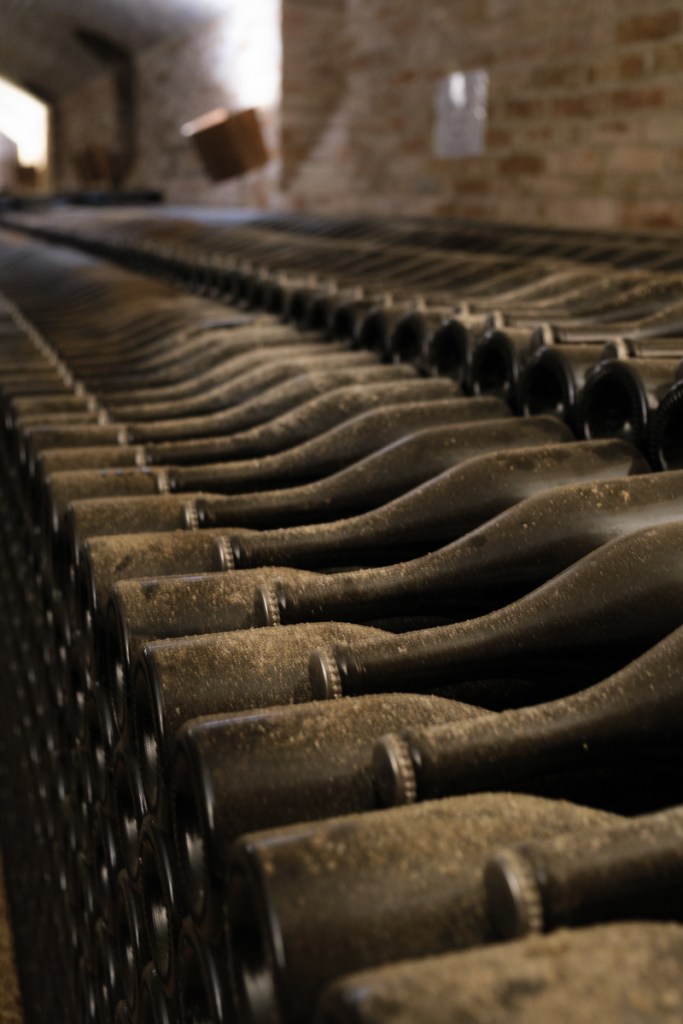


After the tour, we sat down for a tasting of four sparkling wines. (And, like most other places we visited, we were served a snack that included cheese, salami or similar charcuterie, and bread sticks.) Since this was a big producer and we can find their wines in the U.S. (they have been exporting their wines since 1910), we did not buy wine to bring back. (But we did buy one of their vermouths.)

Erede Di Chiappone Armano Vineyard and Winery
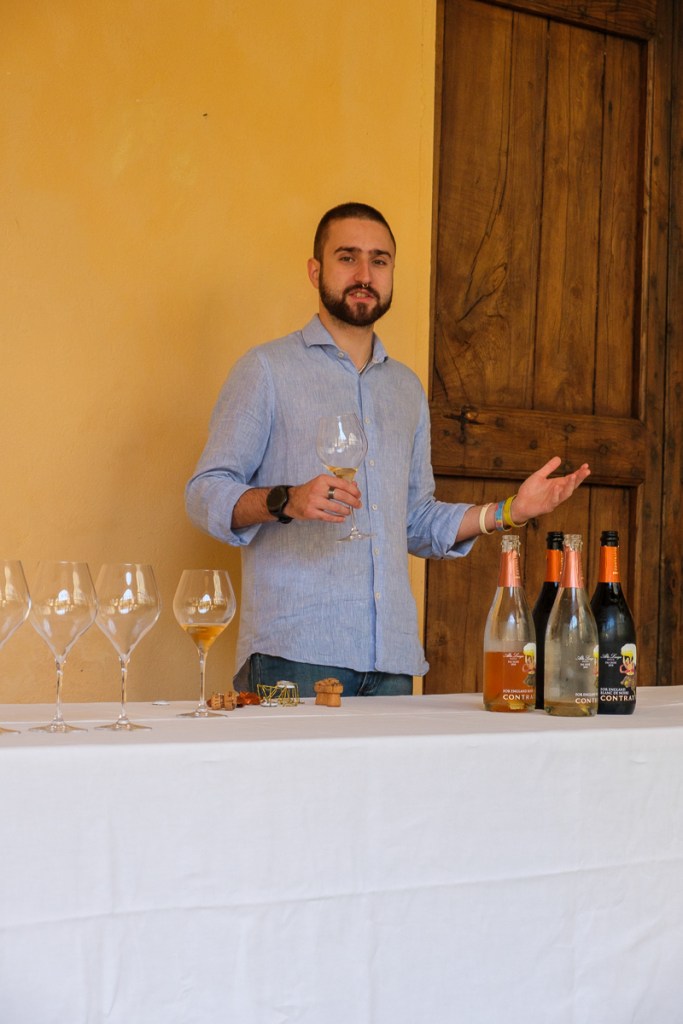
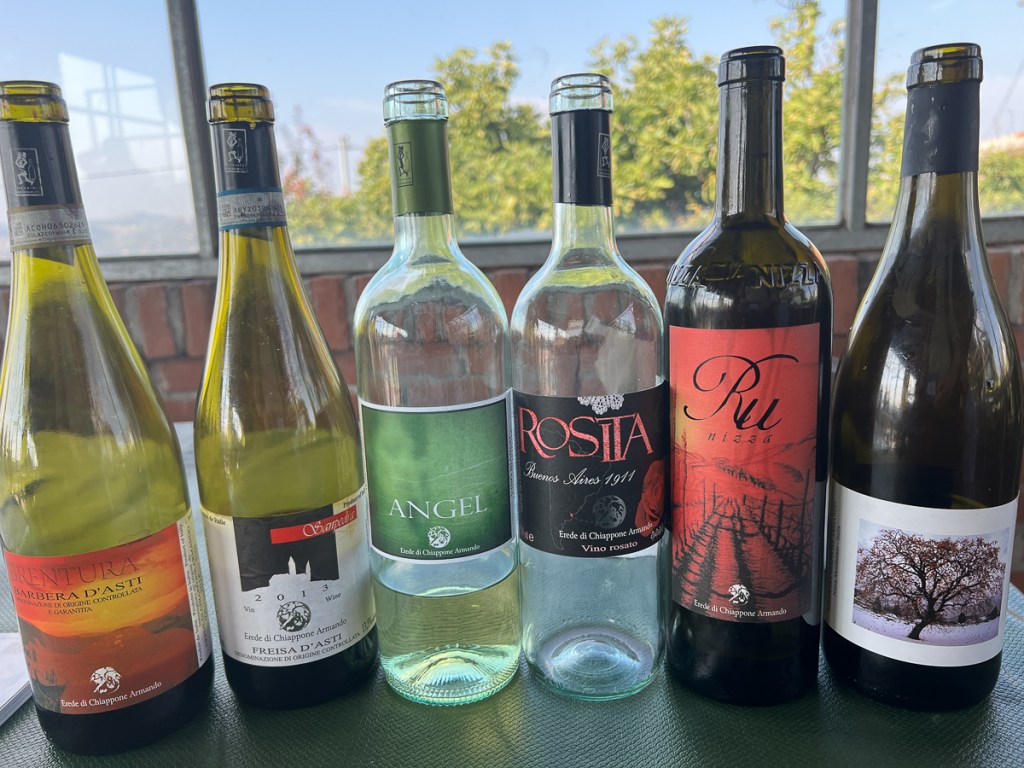
Our afternoon was very pleasantly spent outside of the town of Nizza Monferrato, with a tour of Erede Di Chiappone Armando vineyard and winery. Daniele, our host, guided our walk through the vineyard. This vineyard has been in his family for three generations and produces a variety of wines including Nizza, the Grand Cru of Barbera wines.
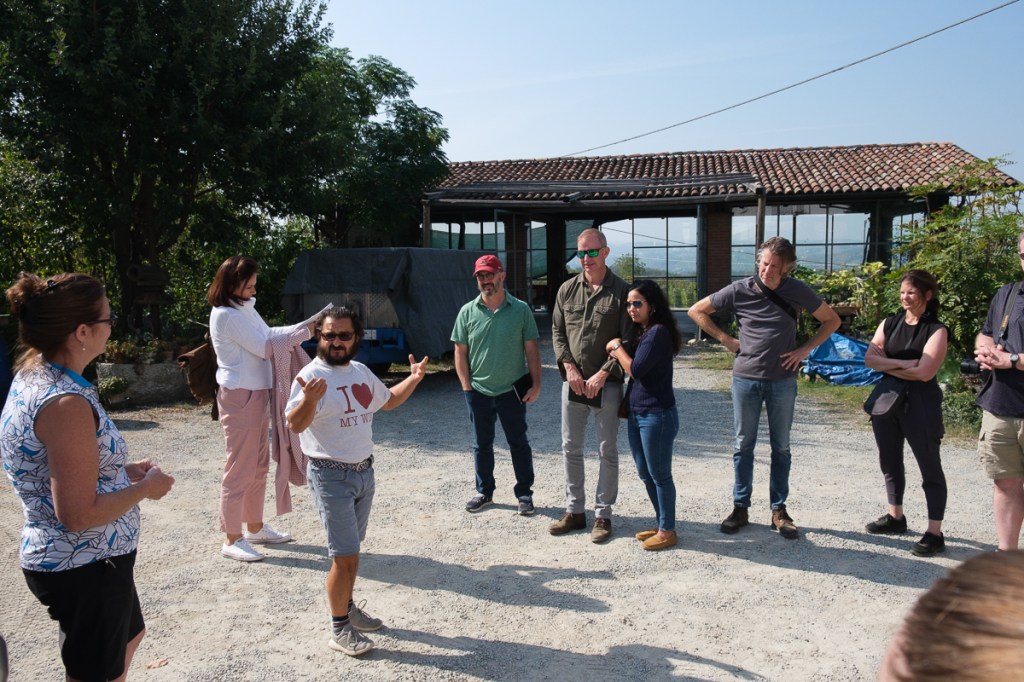

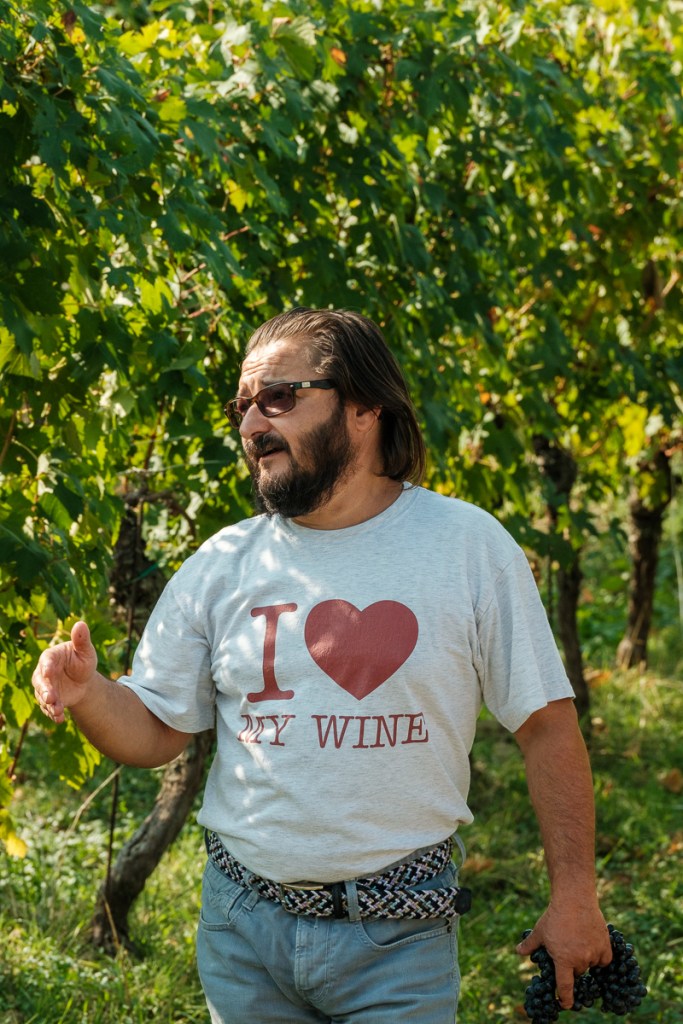
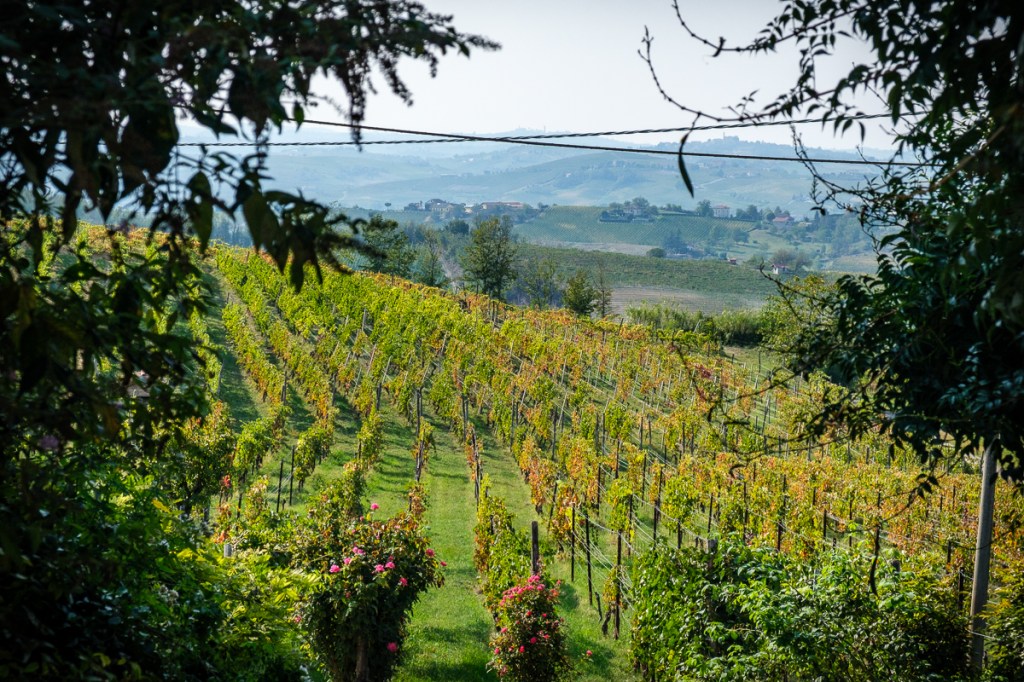
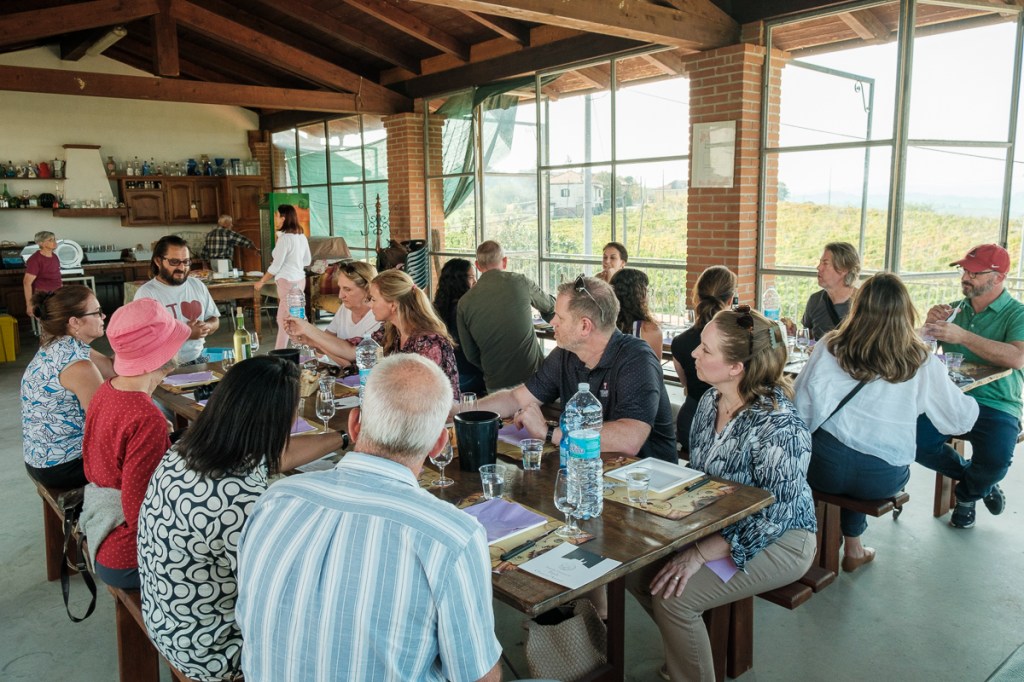
After our tour of the vineyard, we were treated to lunch made by Daniele’s mother (who spent the day before our visit cooking for us). What a treat! We also tasted five wines:
- “Angel,” a white, made from a hybrid of Cortese and Favorita grapes;
- Rosita “Bueno Aires 1911, a rosé made from Barbera and Dolcetto grapes;
- Barbera d’Asti DOCG “Brentura” (Barbera grape)
- Barbera d’Asti Superiore Nizza DOCG “RU” (Barbera grape)
- Freisa d’Asti DOC “Sanpedra” (Freisa grape)
We bought a bottle of the Nizza.
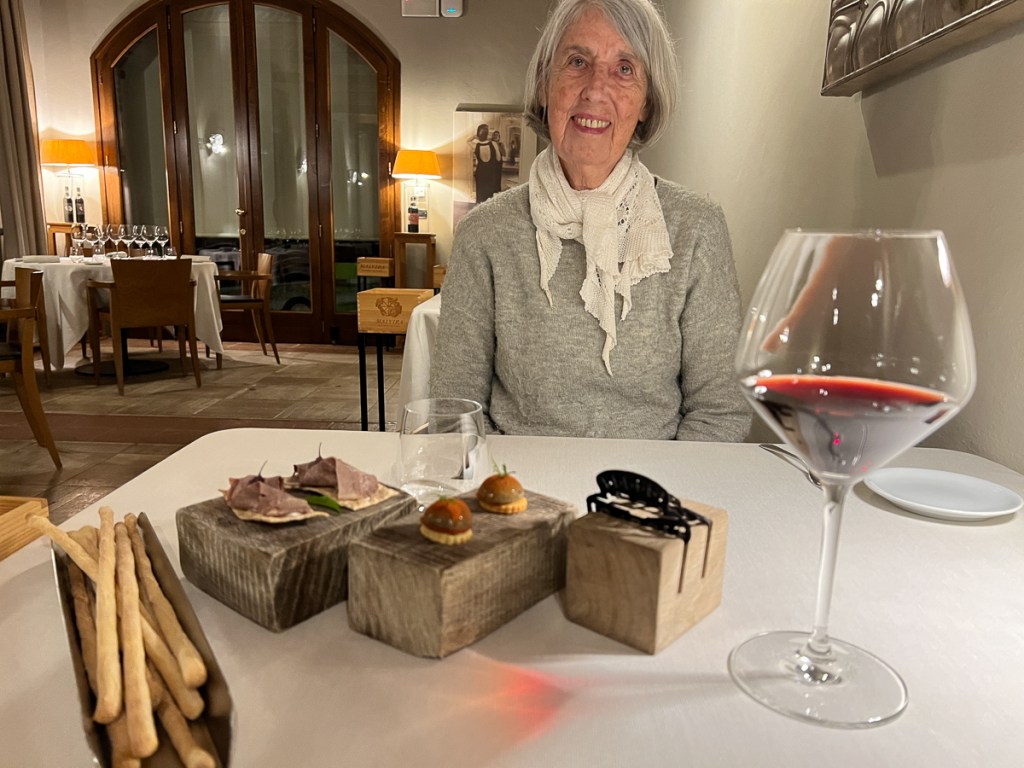
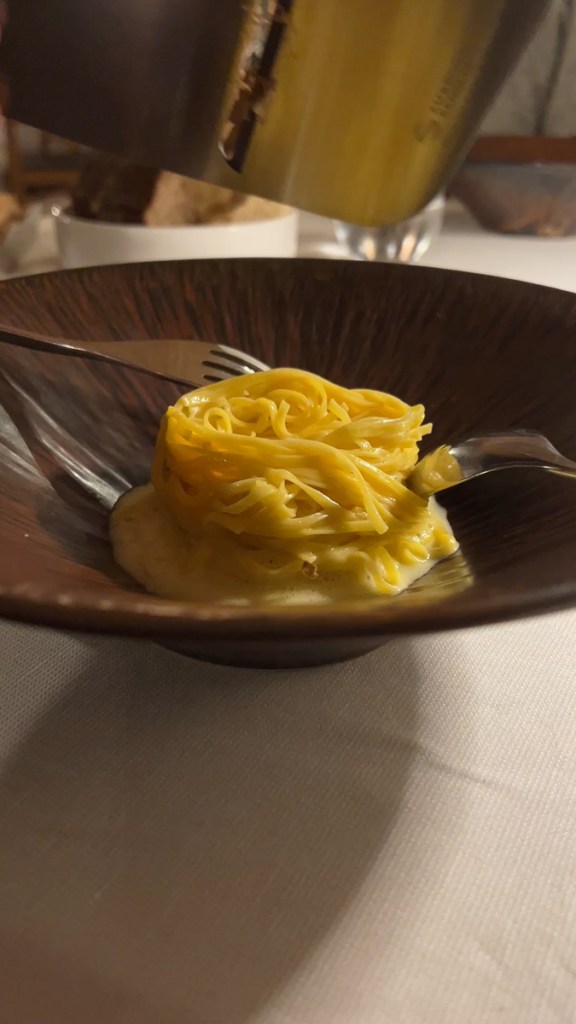
After the tour and the tasting, it was back to Villa Tiboldi for a night off. Most of the group decided to order pizza to eat together on the hotel’s patio, but the two of us decided to have our dinner at the hotel’s restaurant. It was another fabulous meal. Our appetizer was a delicious watermelon, tomato and ricotta salad (The ricotta was dried and shaved on to the salad.) The highlight was pasta with white truffle from nearby Alba. We were served and the waitress came over with a grater and shaved the truffle onto the hot pasta. For me, the truffle grating went on for a full 18 seconds. At some point during the meal, Silvia, our trip leader, stopped by our table to check on us. I asked her how much these white truffles cost. She held her thumb and finger in a shape the size of a large marble, or a super ball, and said that, in 2019, she bought one that size for 800 Euros. Our pasta dish was 20 Euros. A bargain, and very yummy! Oh, and of course there was wine with dinner.

 Keeping up with Pat and Maurice
One thought on “Day 3: Canelli and Nizza Monferrato”