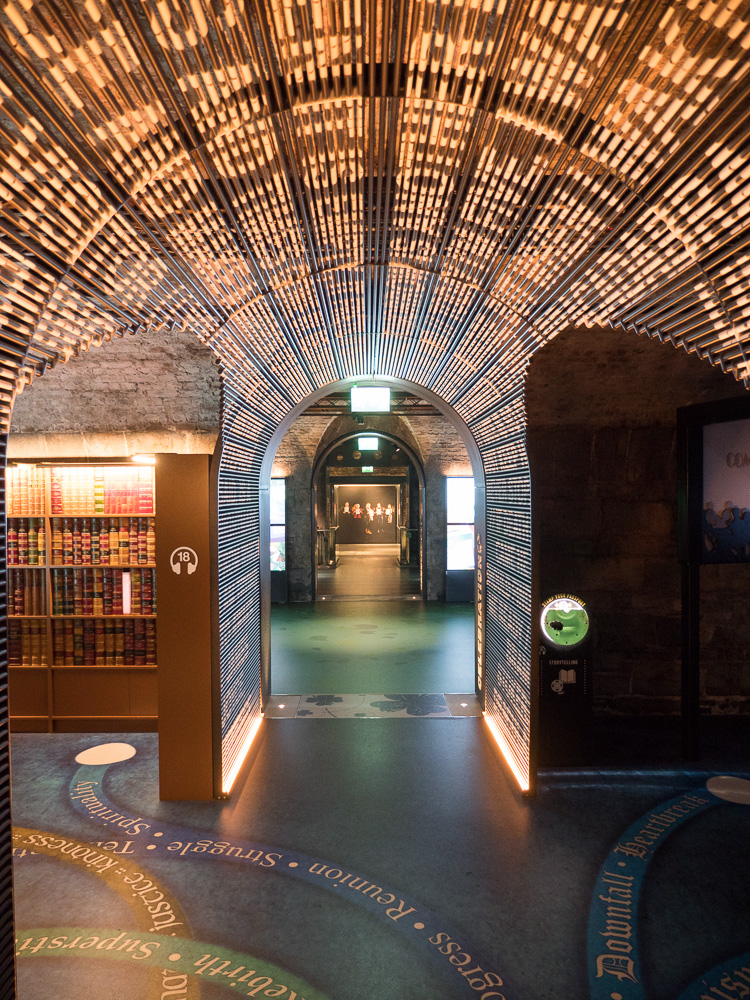
Some of our time in Dublin was spent at traditional tourist sites. On Sunday, we visited the Irish Emigration Museum and the Irish Family History Center, where Pat spent an hour with a genealogist researching the Hanrahan side of the family.
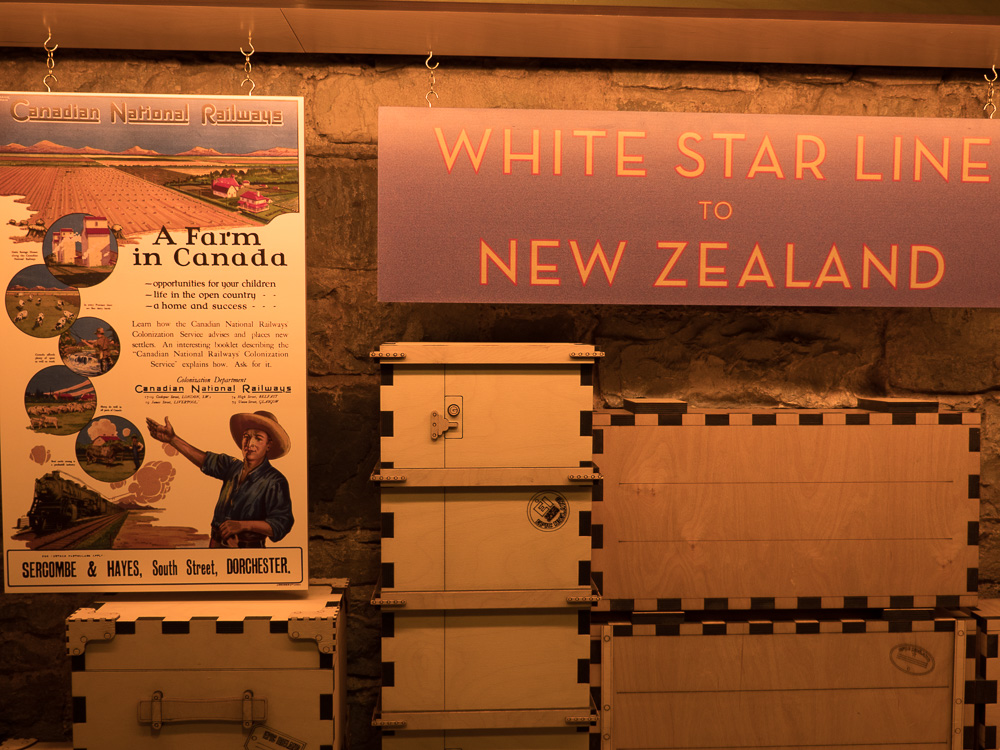
Seeing these old ads promising rosy futures for Irish emigrants in Canada, New Zealand, Argentina, and the U.S., Maurice was reminded of today’s smuggling enterprises in Central America and Africa, where unsavory companies and individuals compete in luring customers to put money down on a brighter tomorrow …elsewhere.
On our last day, we visited the National Gallery, where most of the Irish art was inaccessible due to renovation work. So we saw a temporary exhibit on the Bauhaus movement, honoring the 100th anniversary of its founding. After lunch, we walked to Trinity College to look at the Book of Kells, but opted not to wait in a long ticket line.
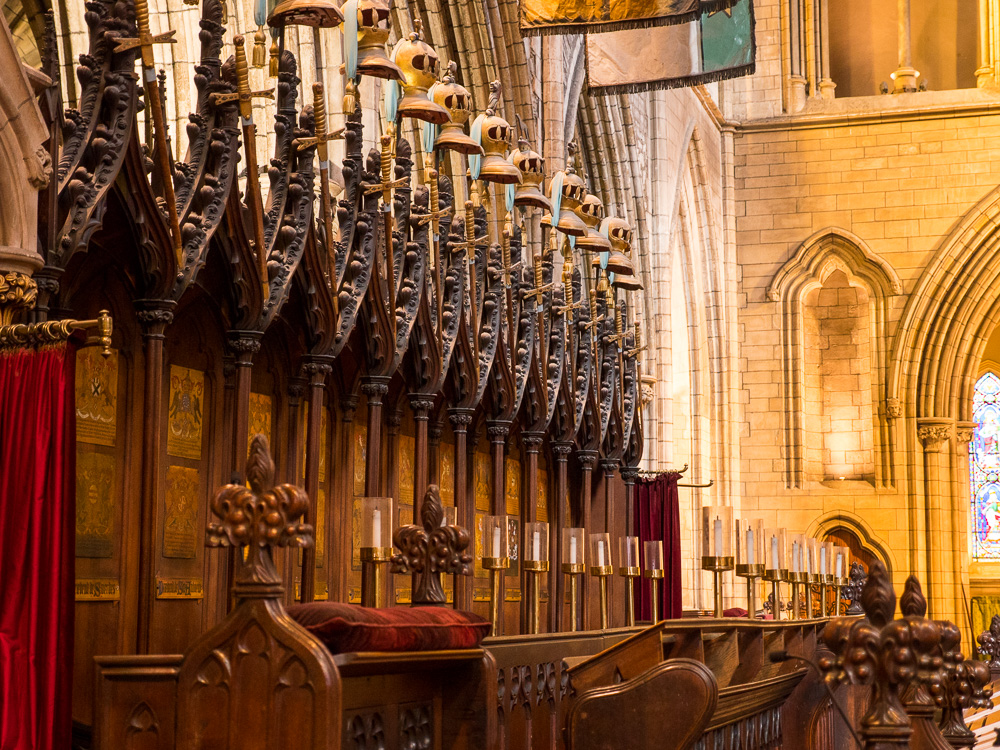
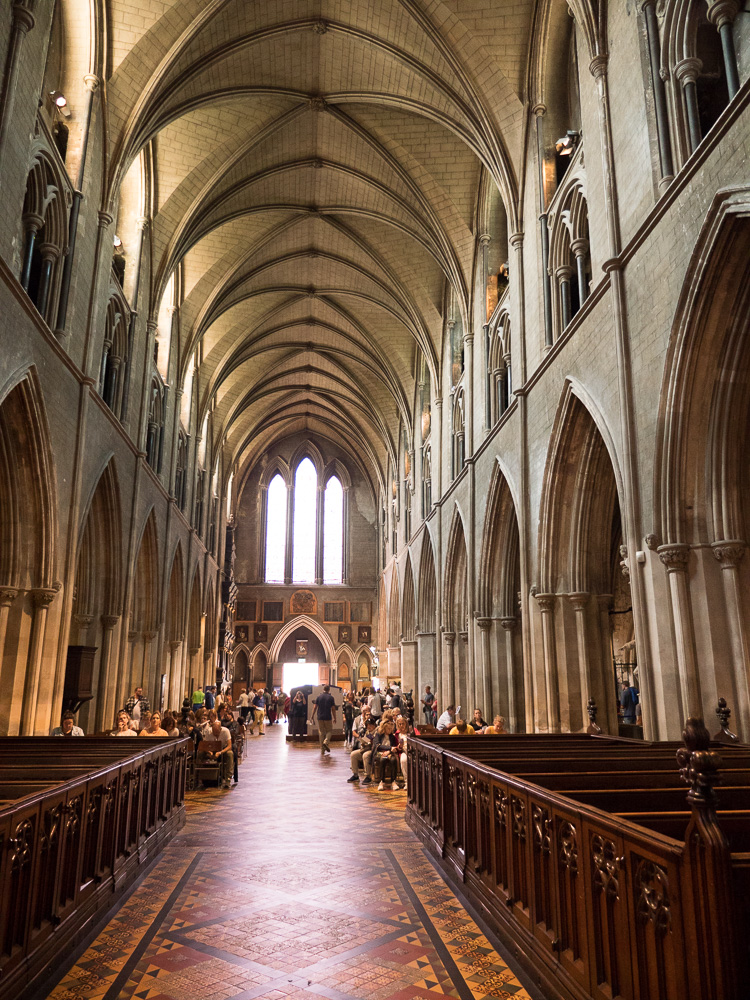
That turned out to be a fortuitous decision, because Anne texted us to say she would meet us at St. Patrick’s Cathedral. When not shepherding visiting family, Anne is a tour guide, and the guides working at the church were happy to see her, telling us she was “the best” guide of the Cathedral. They waived us in without an admission fee.
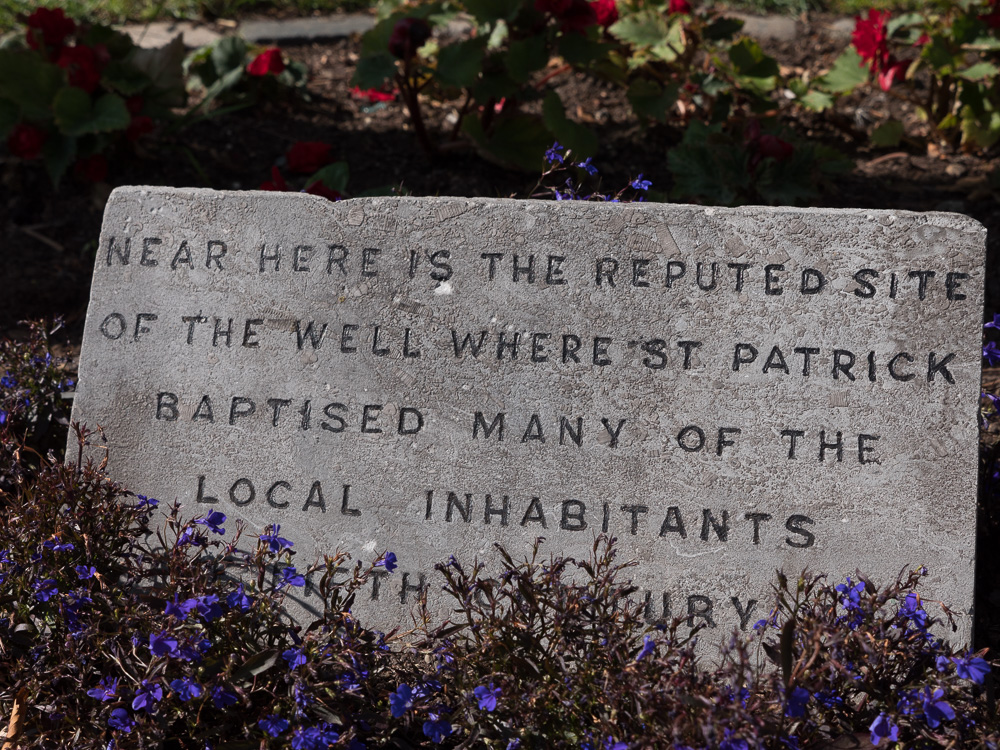
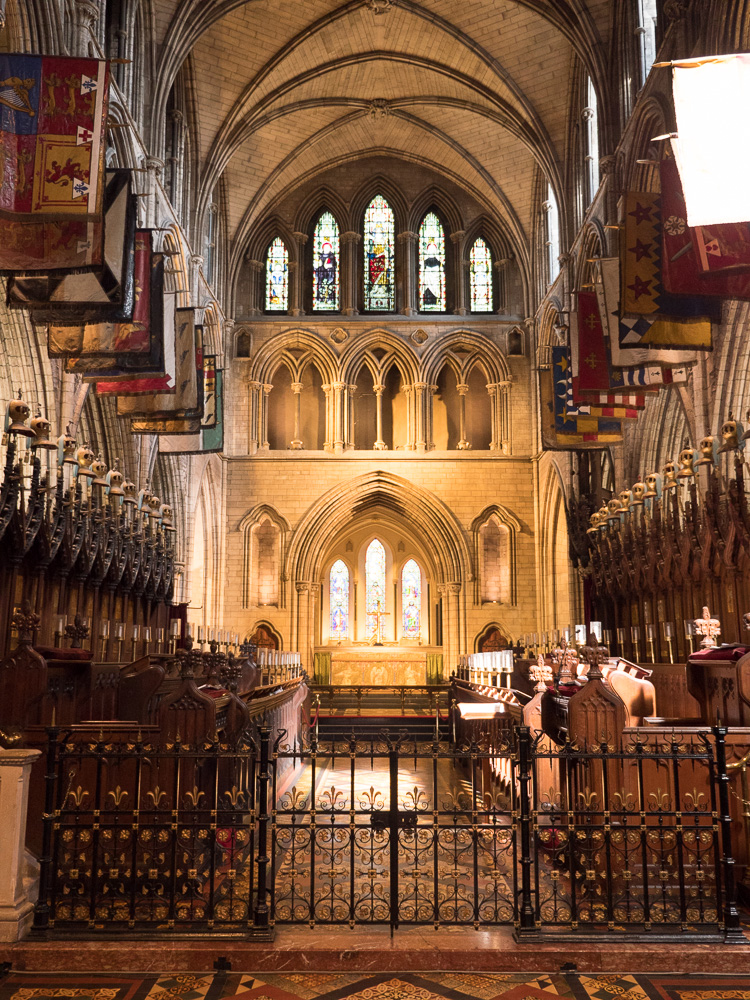
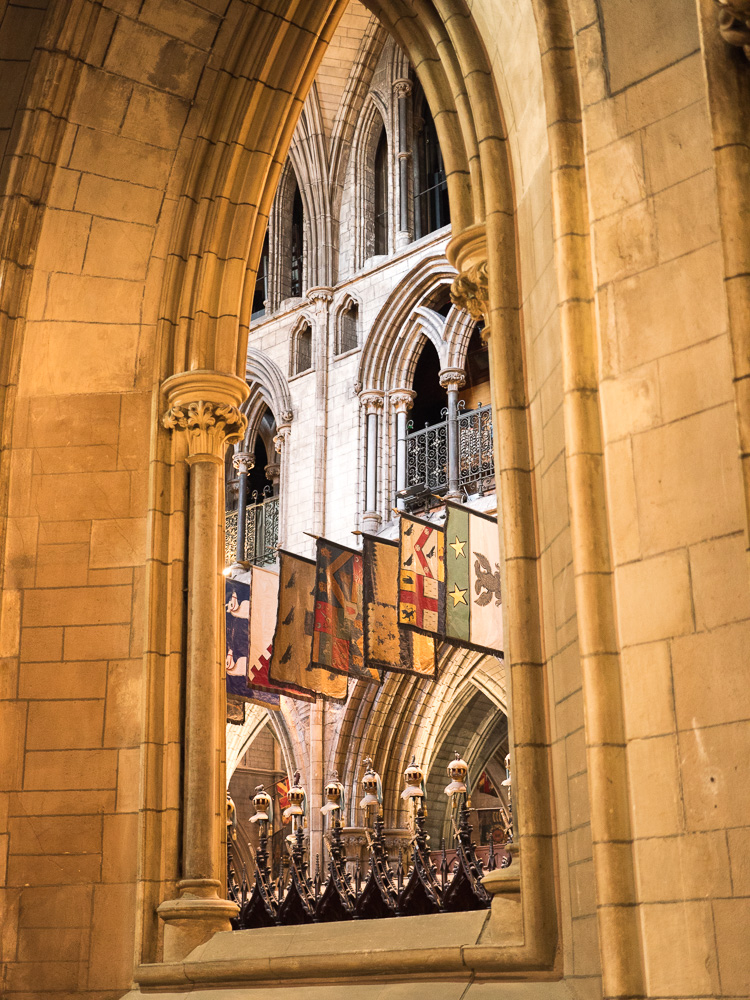
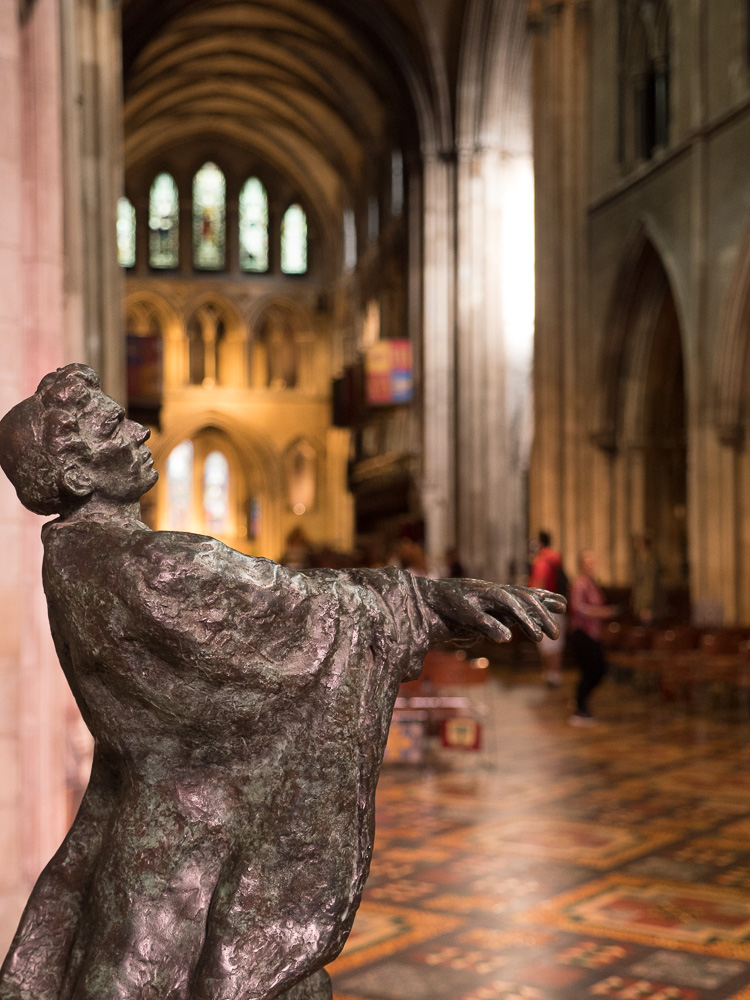
The church sits adjacent to an old well where St. Patrick reputedly baptized converts to Christianity in the mid-5th century. The present building was constructed between 1220 and 1259 and, over the years, it has been rebuilt or repaired after destruction caused by storms, fire, and sectarian strife. The last major renovation was in the mid-19th century, when the cathedral was closed for five years to replace the ceiling, install stained glass windows, and make other major changes—all funded by Benjamin Lee Guinness (grandson of the founder of the Guinness brewery).
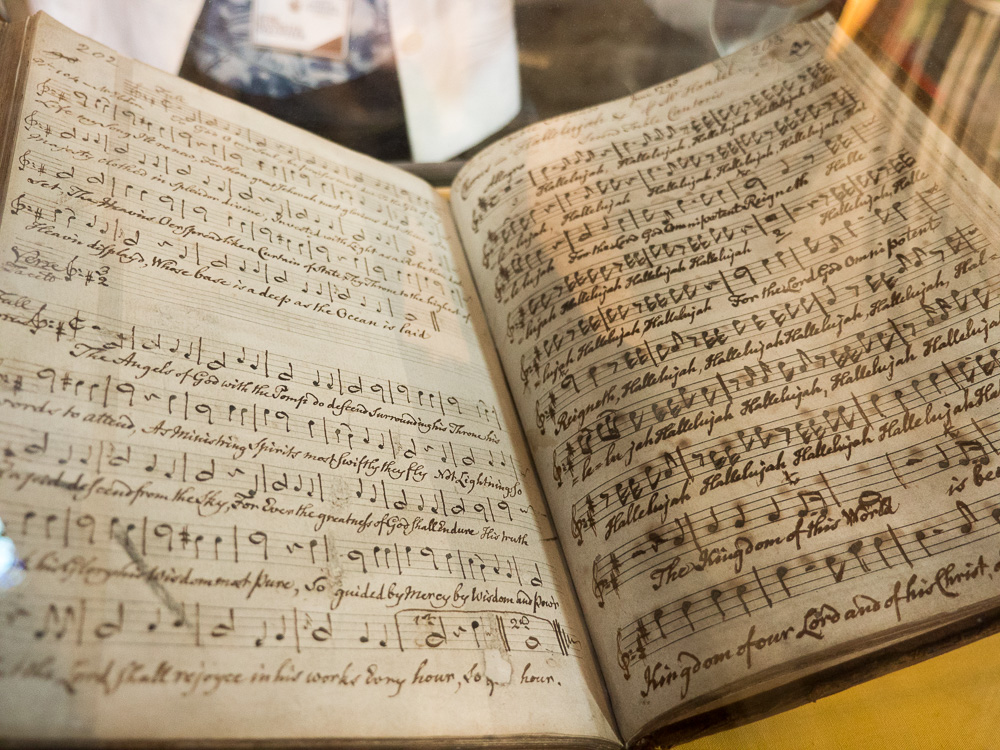
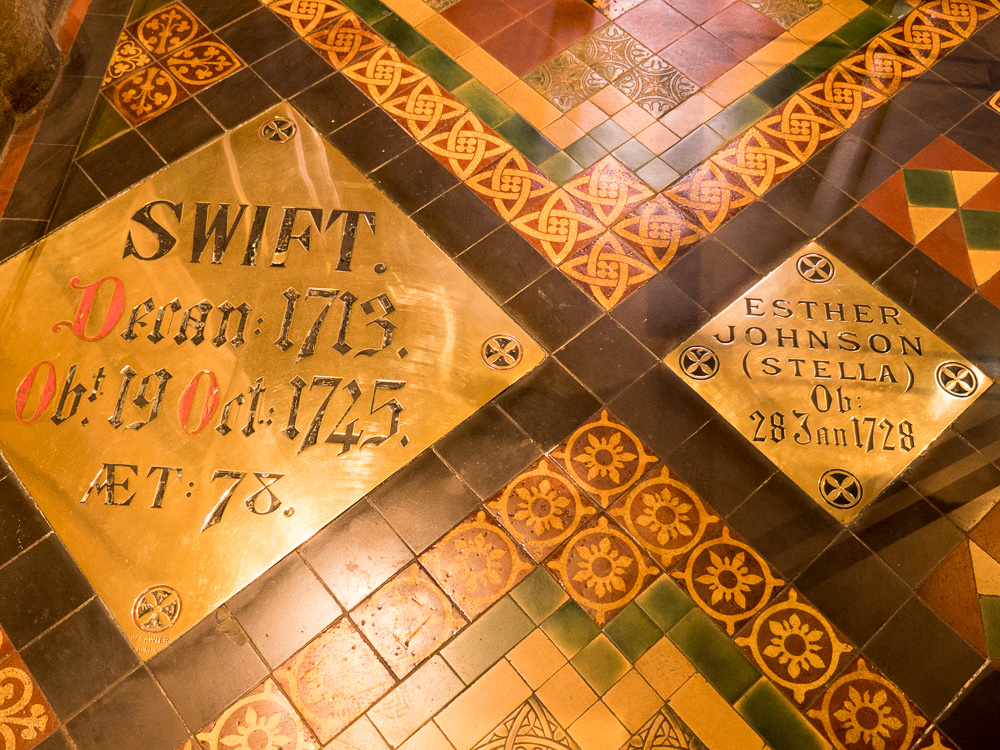
The church became an Anglican cathedral in 1537, and very briefly fell under Catholic leadership in the late 17th century. It was restored to the Anglicans in 1690 and has been National Cathedral of the Church of Ireland (Anglican) since. Jonathan Swift was dean of the cathedral from 1713 until 1745, and during his tenure, the combined choruses of St. Patrick’s and Christ Church cathedrals performed Handel’s Messiah for the first time. (A copy of the score can be viewed in the church.)



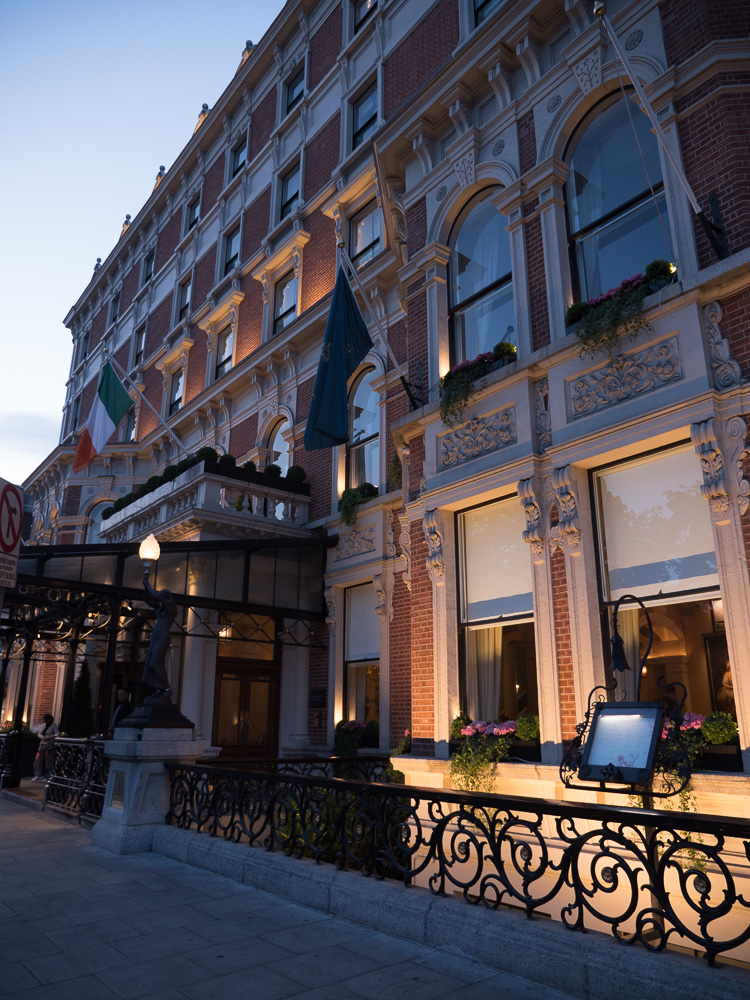
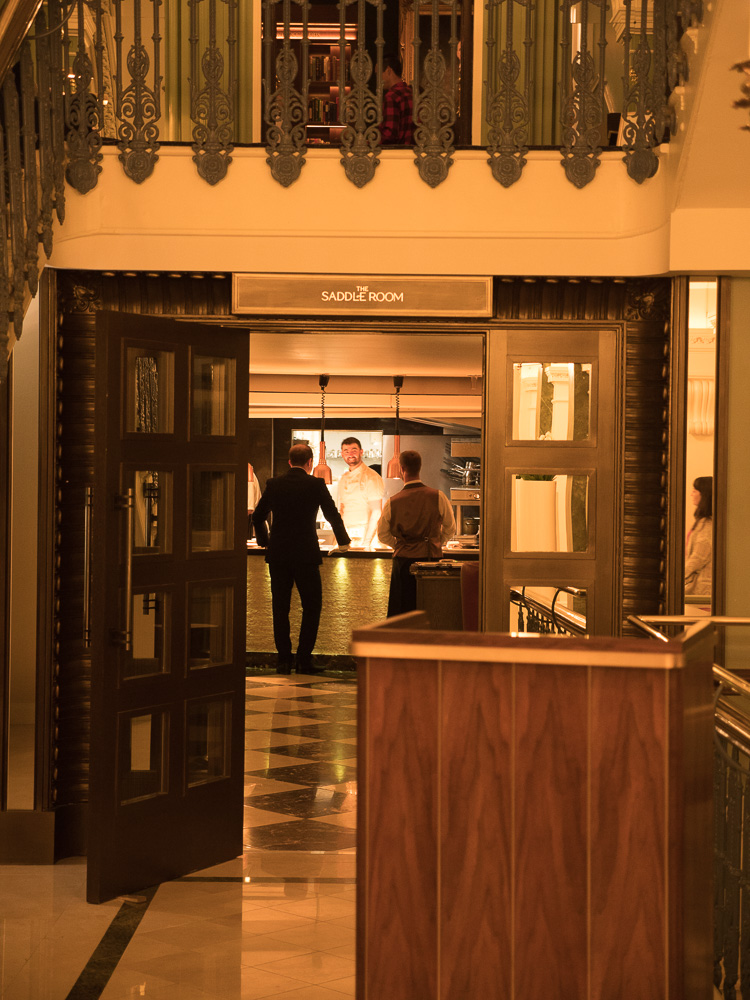
We tipped our guide by taking her out to dinner. Anne recommended the Saddle Room in the elegant Shelbourne Hotel, where Pat’s grandparents had stayed during a 1930’s trip to see family. On the fixed price menu was delicious and very tender lamb, one of the trip’s better meals.

After dinner, we said good-bye to Anne, and let her know that though we had plenty left to explore in Dublin, for us, it was time to return to a very troubled US.
 Keeping up with Pat and Maurice