
Dear Reader, we are happy you are reading this blog. If you opted to “follow” it, and receive emails when we publish updates, remember that you won’t see slide shows or photo collages with the text unless you go to the site itself.
We spent our last two days in Arles (Tuesday and Wednesday) seeing Roman and medieval sites, and visiting exhibits at “Les Rencontres d’Arles,” the citywide summer-long photography exhibit.
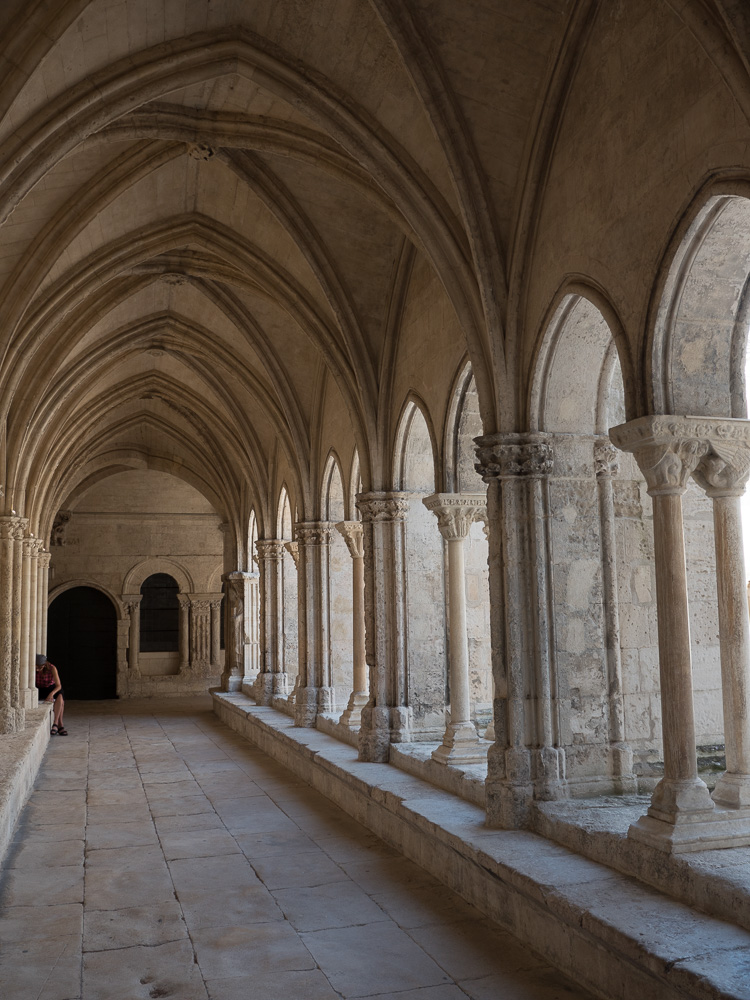
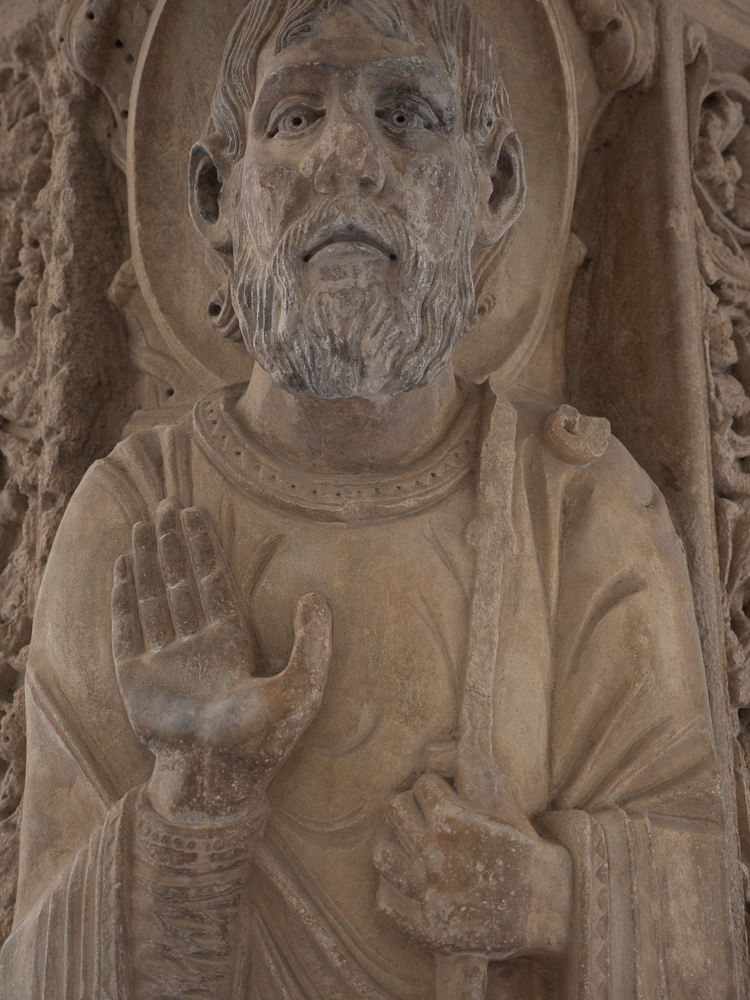
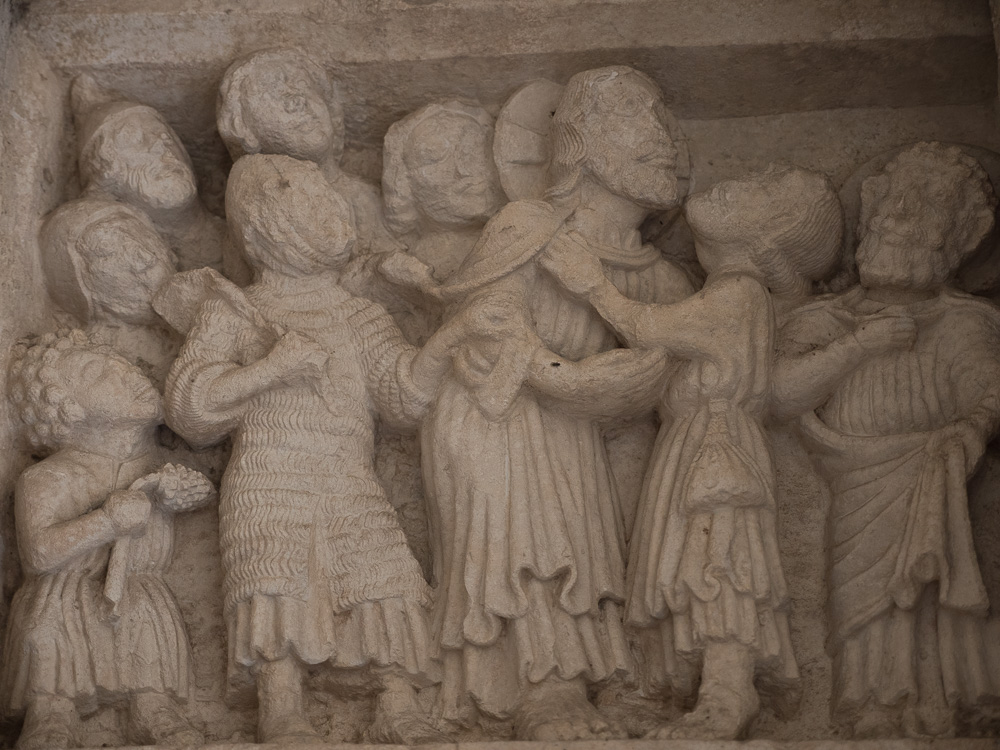
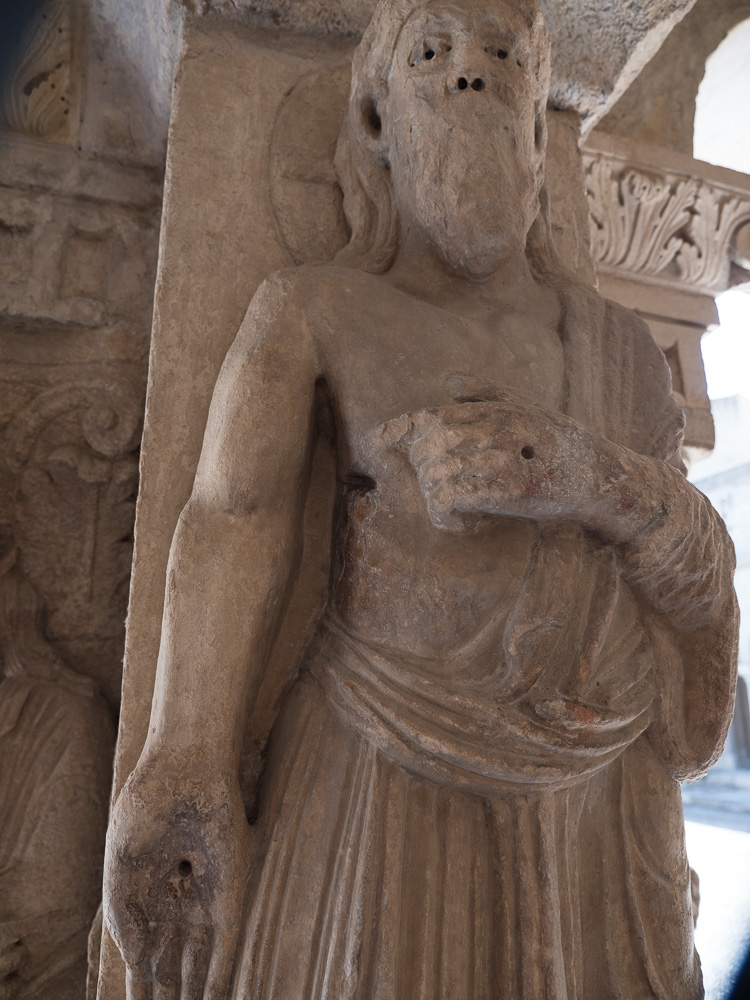
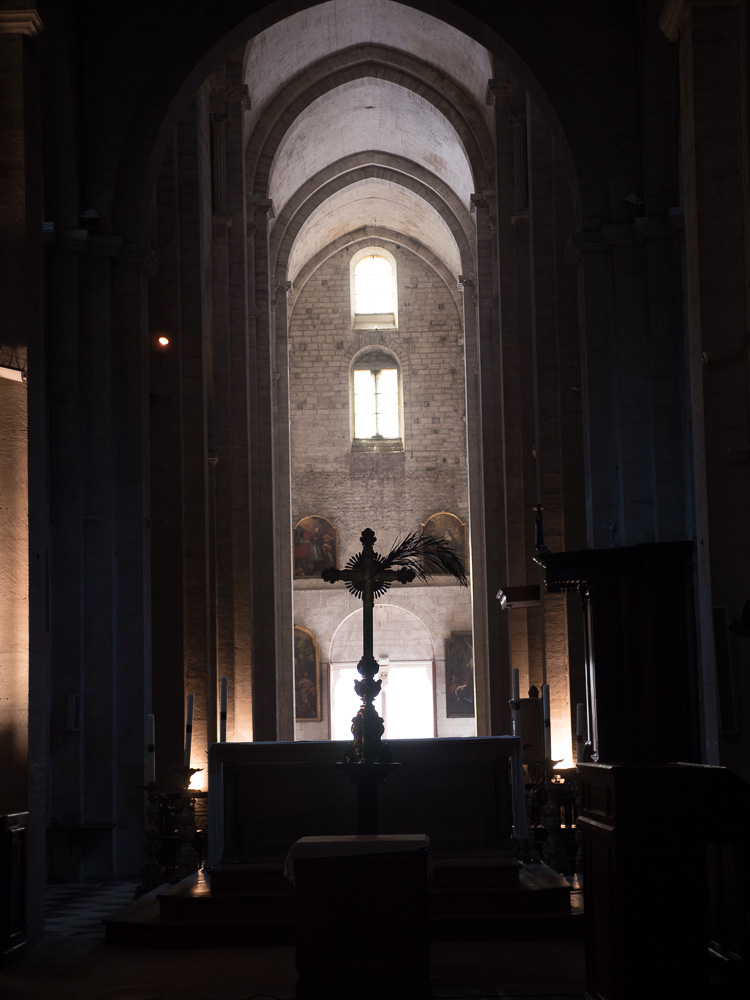
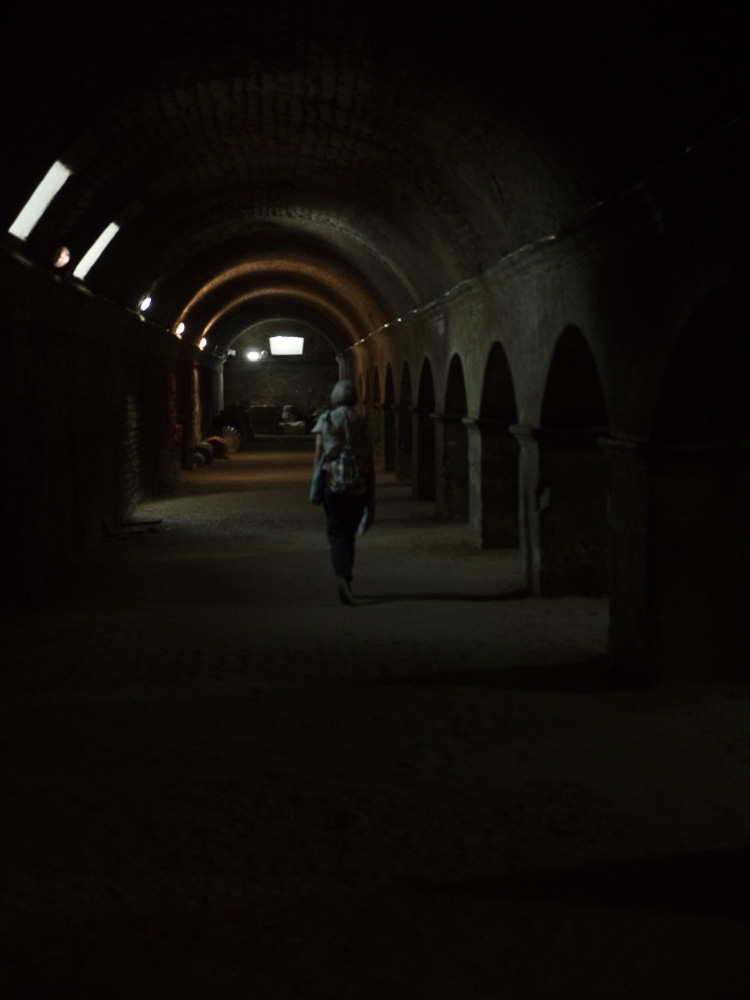
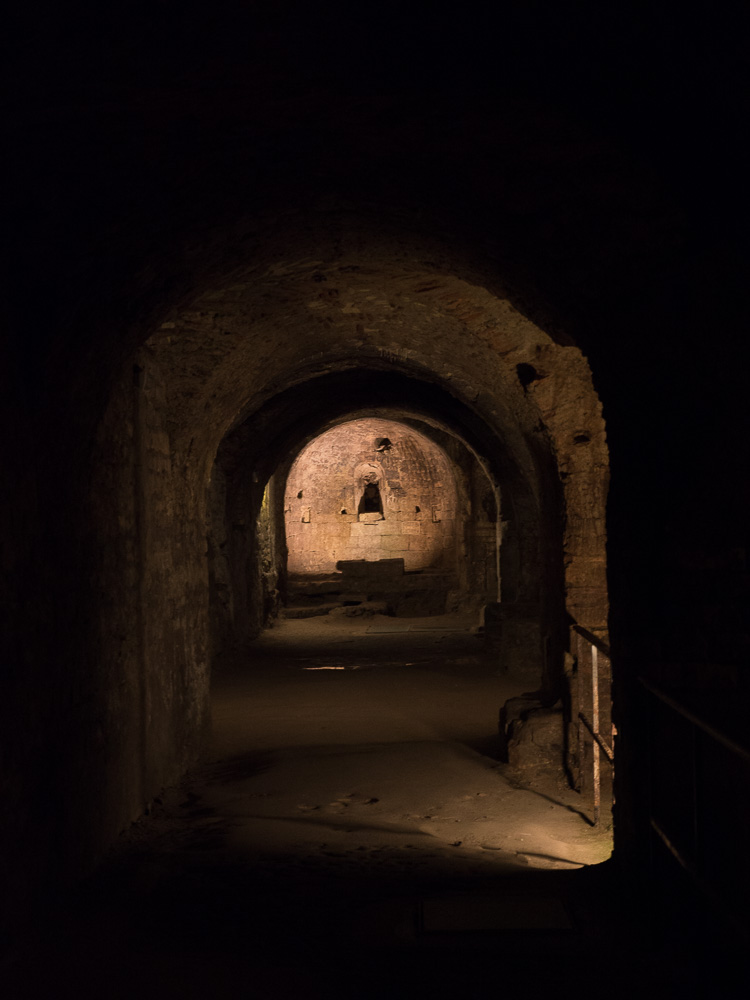
At the Roman sites, a fee is charged, something neither of us recall from our visit 30 years ago. We bought a pass to see four sites, but only got in to three. The first was the Cloister of St. Trophime, a 12th and 15th century Romanesque style church, build over a 5th century church of St. Stephen. It is now a UNESCO world heritage site. St. Trophimus was the first bishop of Arles (around 250 AD). We next explored the crypt of the Roman forum. The crypt is essentially a basement for the forum (which no longer exists) but beautifully constructed with brick arches built to last. As we do with our basements, the Romans used the crypt to store junk—in this case, sculpted columns with elaborately carved capitals.
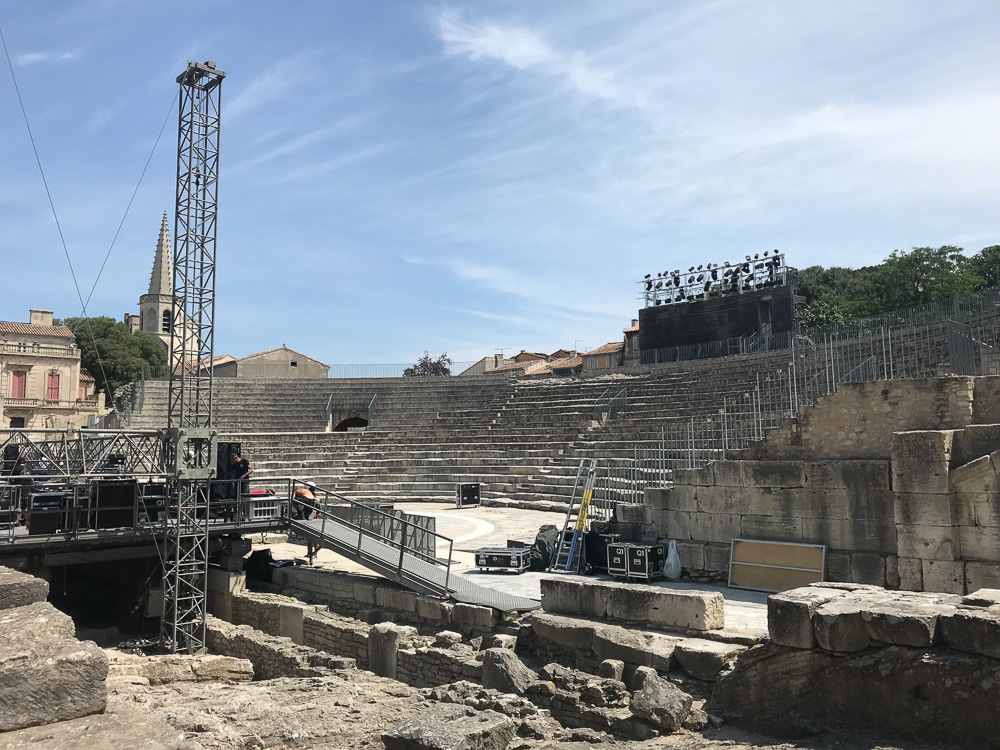
On Wednesday, as the day was heated, we walked to the Roman theater. The theater was built to hold 8,000 people, but rocks were quarried from it in the Middle Ages, and it is now much diminished. It is still in use, however, and workers were setting up for an evening concert.
We had a day pass to view photographs in the Rencontres d’Arles, which are displayed in Arles’ oldest buildings, sometimes beautiful, always atmospheric. The festival began in 1969 and has grown in size and popularity. In 2018, for example, 140,000 visitors enjoyed the event from July 1 to late September.
This year’s themes reflected contemporary issues of the climate crises, immigration, home. La Maison des Peintres, a moody derelict building renovated enough for the 2017 exhibit but not enough to destroy the shabby chic artistic look, devoted its space to a delightful and thoughtful exhibit series on the topic of home and family. One group of photos, The Anonymous Project, compiled the photographs of amateurs to document home life in the 1950s and 1960s. The photos were found in flea markets and similar sites.
Photographs displayed at the Cloister of St. Trophime, recently found and some never exhibited, documented the flight of a group of Jews, gypsies, communists, homosexuals, and others from Vichy France to Rio de Janeiro in the 1940s. They were made by Germaine Krull and Jacques Rémy, she a German/Polish political activist and he a Jewish screenwriter born in Turkey as Raymond Assayas.
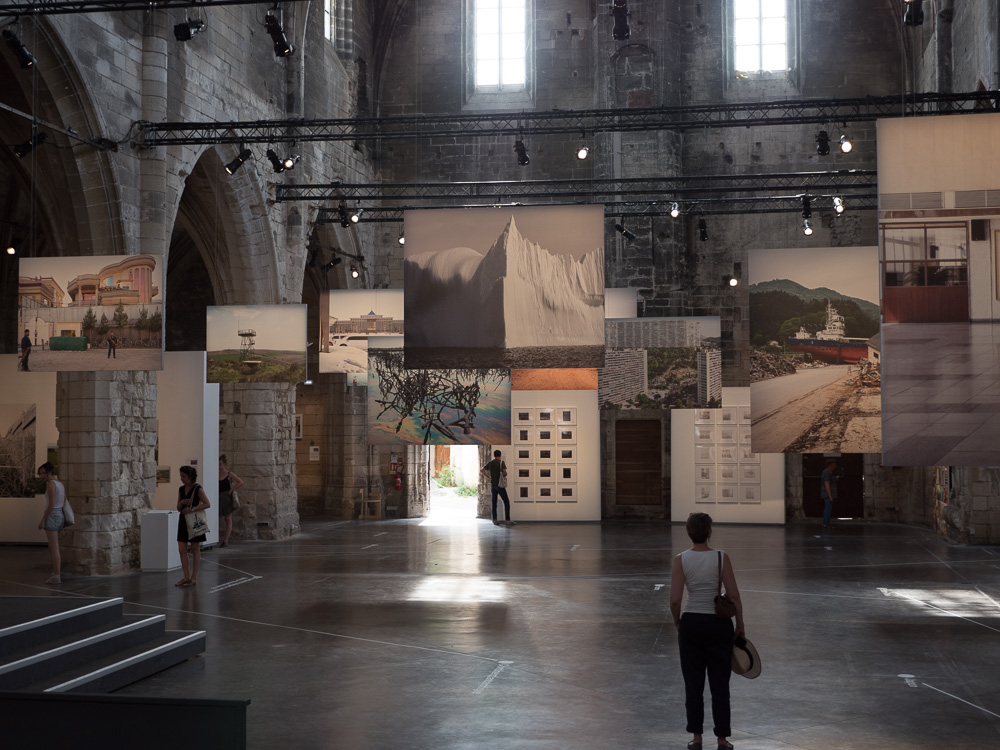
We wandered through a display of the enormous photos of Phillipe Chancel, who documents a world falling apart—from climate change, war, pollution, disruption of culture through modernization and globalization. These photographs were exhibited at the church of the Dominican preachers, a large Gothic structure that was damaged in the French Revolution, rebuilt, then damaged in WWII, and again restored in the 1950s. It is now a public building, and was a perfect location for very large photos on climate and other catastrophes from Flint Michigan to the rape of oil resources in Africa.
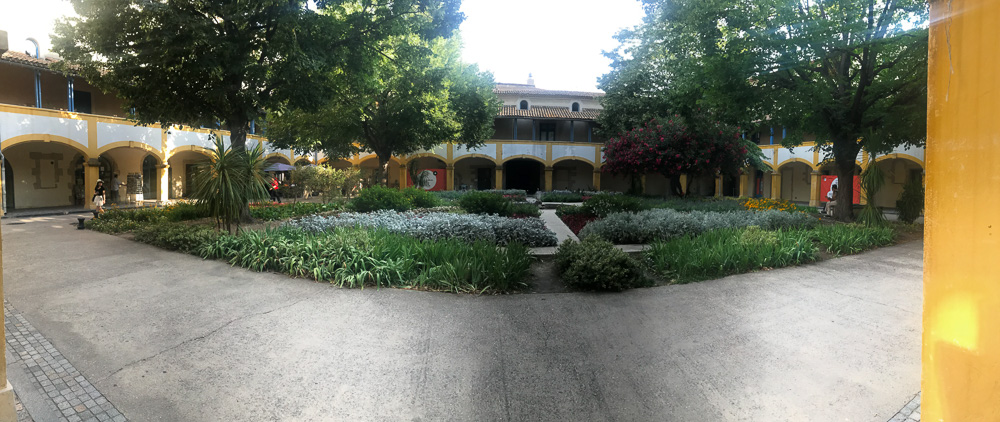
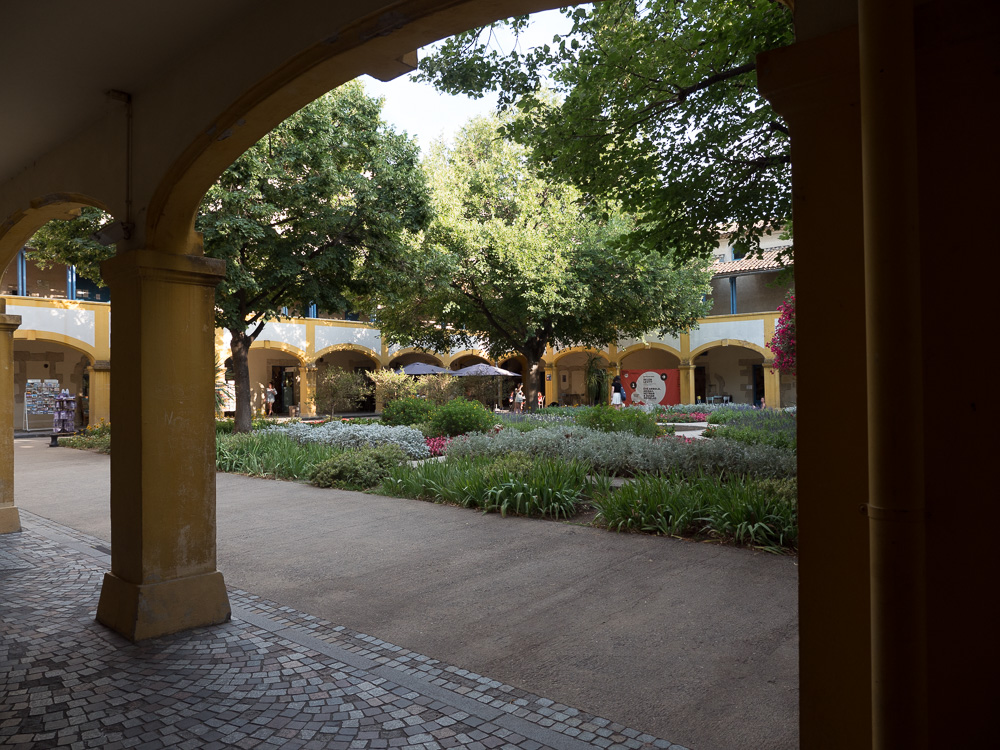
We were charmed as always by Helen Levitt in the Espace van Gogh, the Arles hospital built in the 16th century, where van Gogh was committed in 1888 after severing his left ear. Now it’s far more cheery, and Levitt’s photos of mostly joyous New York City children around the 1940s made us happy.
There were so many wonderfully tempting exhibits, from a selection by Edward Weston to those of recent French national school of photography graduates, but we just did not have enough time. We always leave something to come back to see, and this will be one.
Below is a little slide show with images of the above, plus a few other random scenes from our last days in Arles.






 Keeping up with Pat and Maurice
Would have loved to have toured this with you! Old stone buildings stay cool, right?
LikeLike