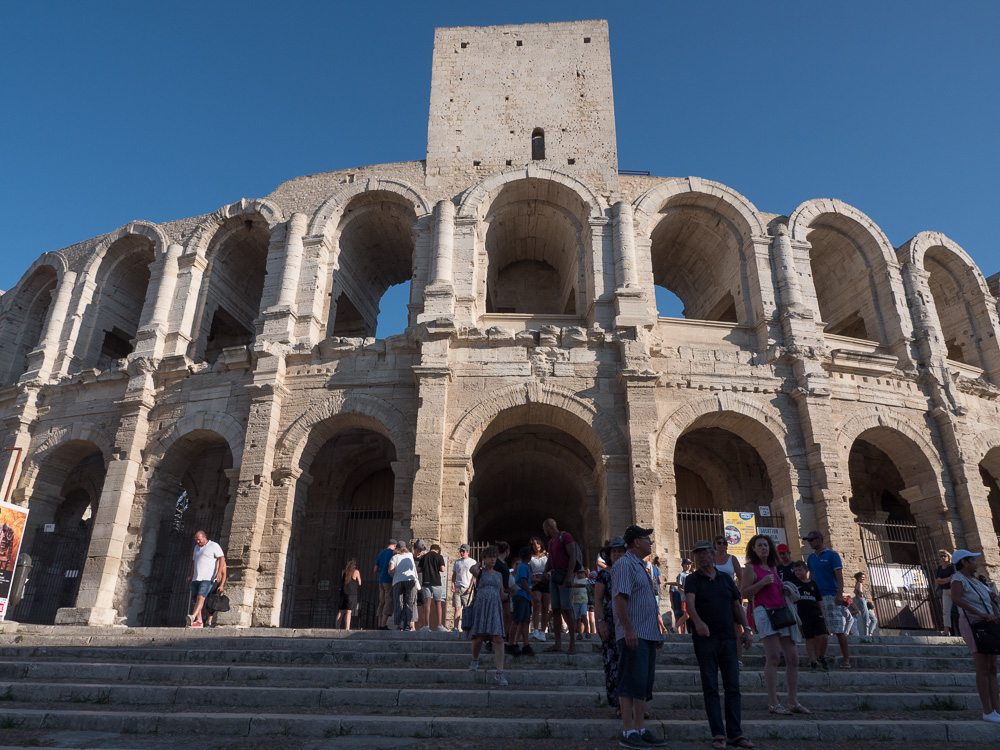
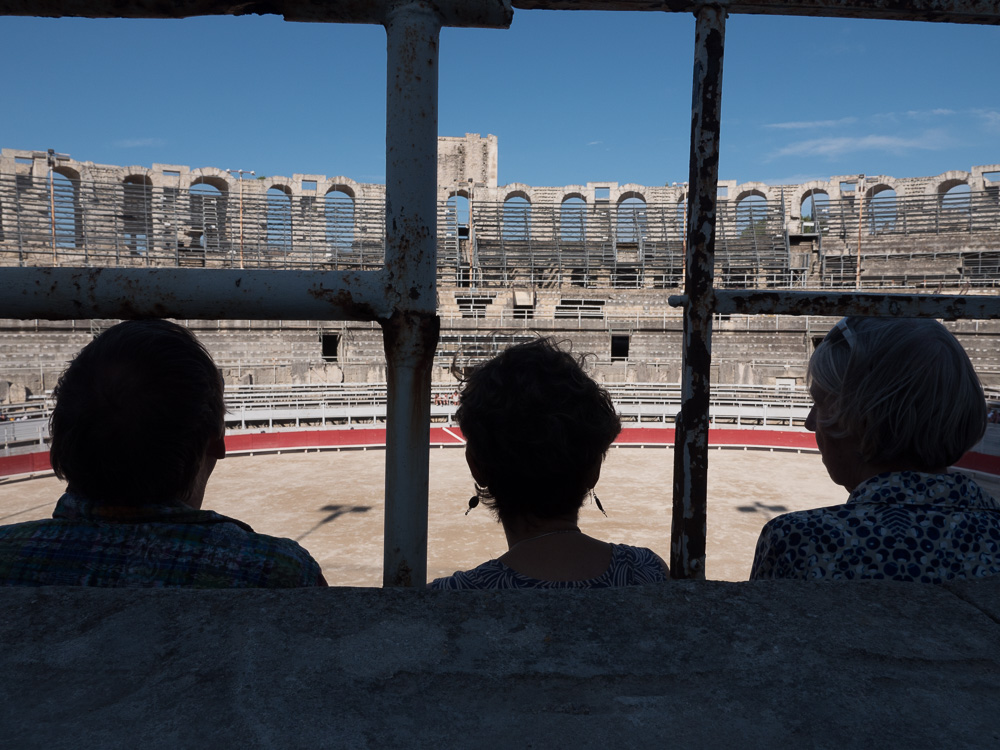
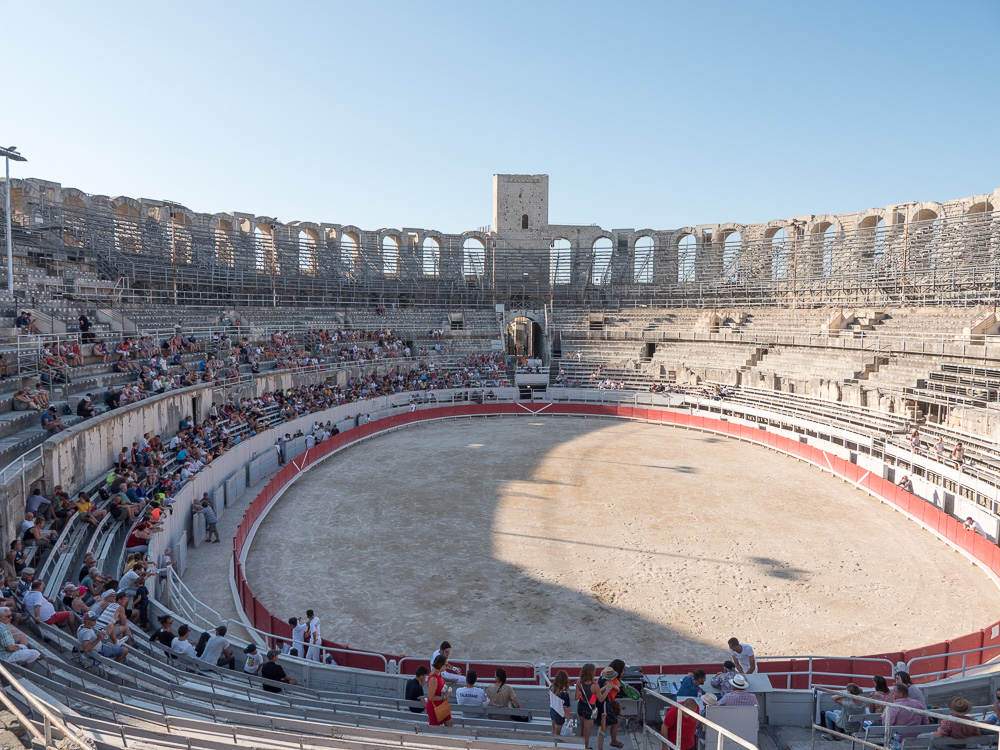
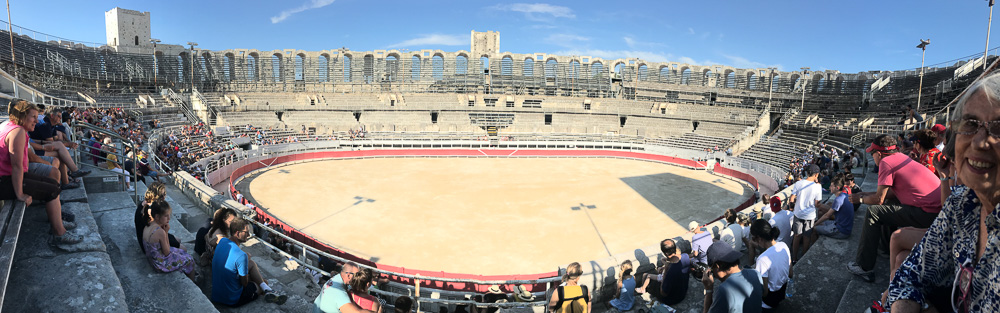
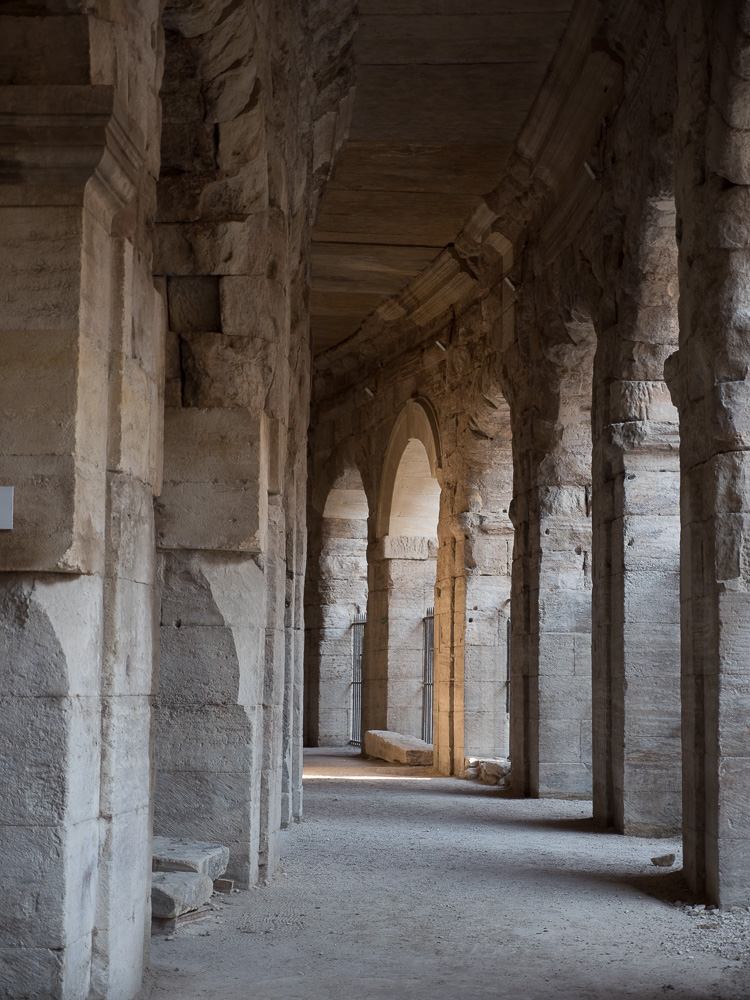
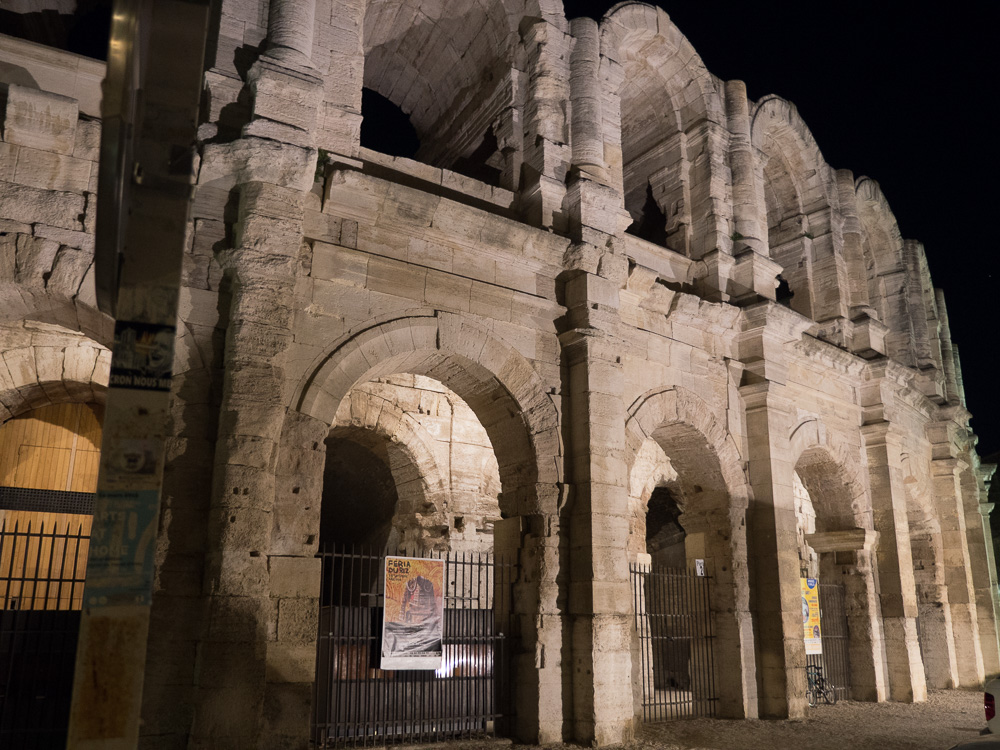
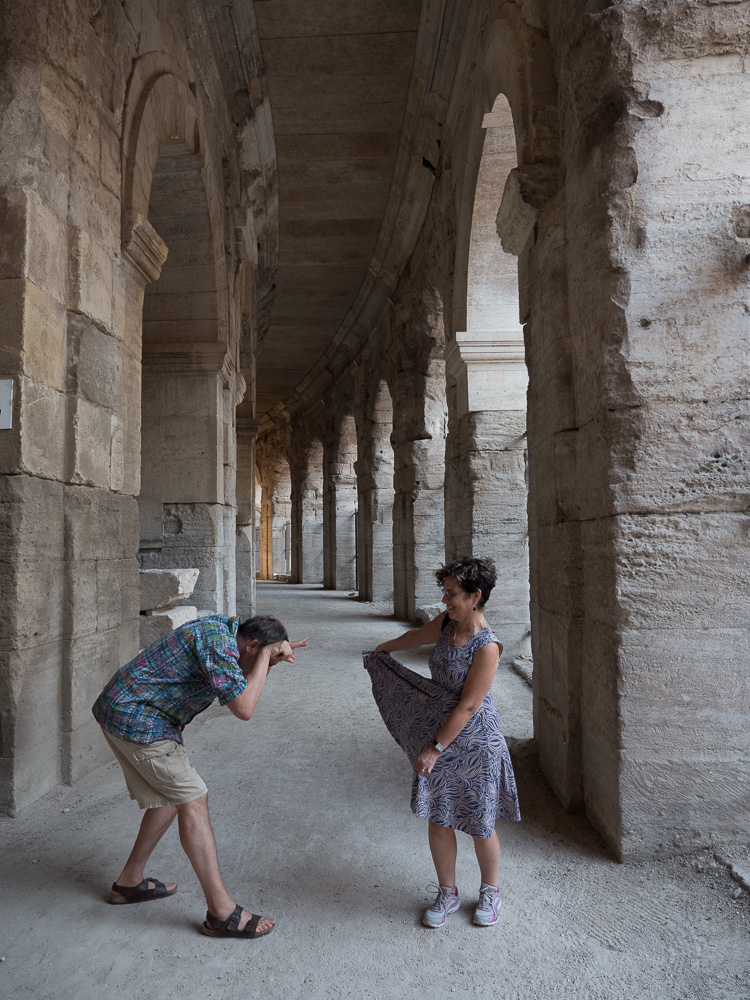
Arles is famous for its bullfights, its Roman ruins, as a temporary home of Vincent van Gogh, and for photography—both its school and its annual summer-long photo exhibit. In the evening of our first day in Arles we combined two icons, a bullfight in the ancient Roman arena. Spoiler alert: no blood, no deaths.
According to Avignon and Provence.com, throughout the summer months in Arles and elsewhere in Provence,
razeteurs (bullfighters) come head-to-head with local bulls in a chivalrous game that requires such values as loyalty and valor from both man and beast. Skill, agility and mutual respect, are key.
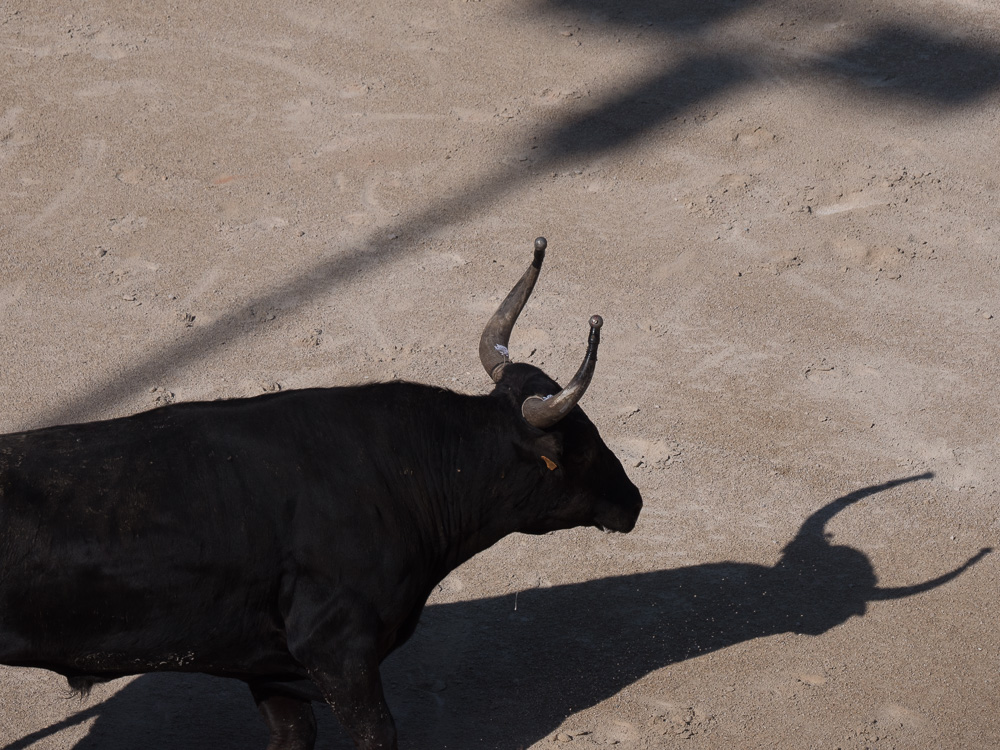
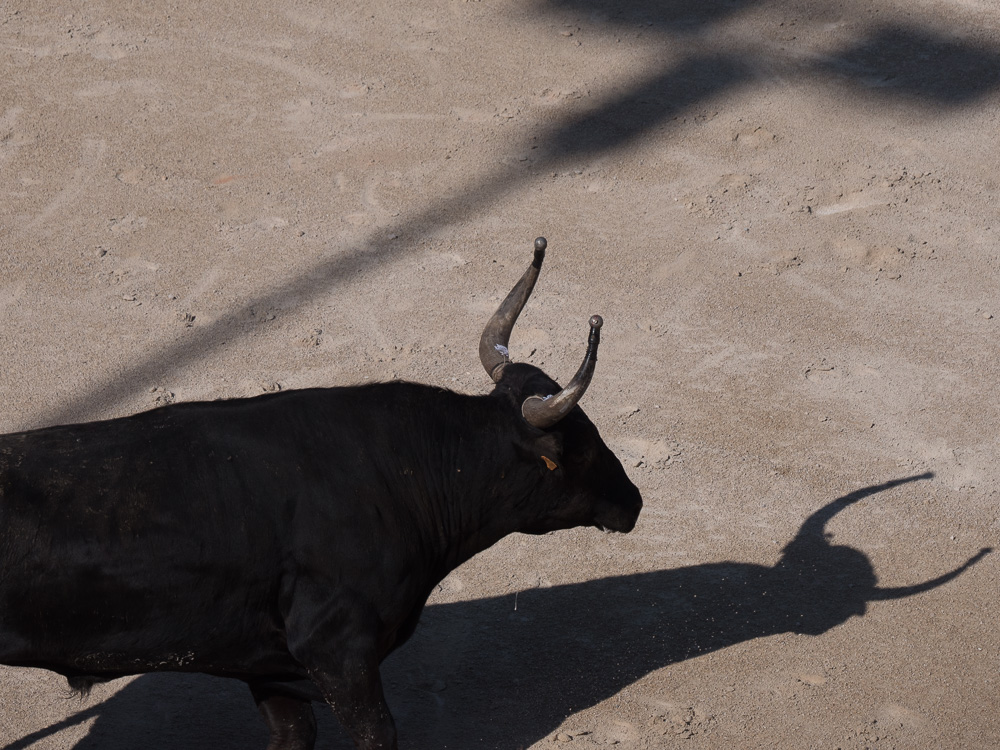
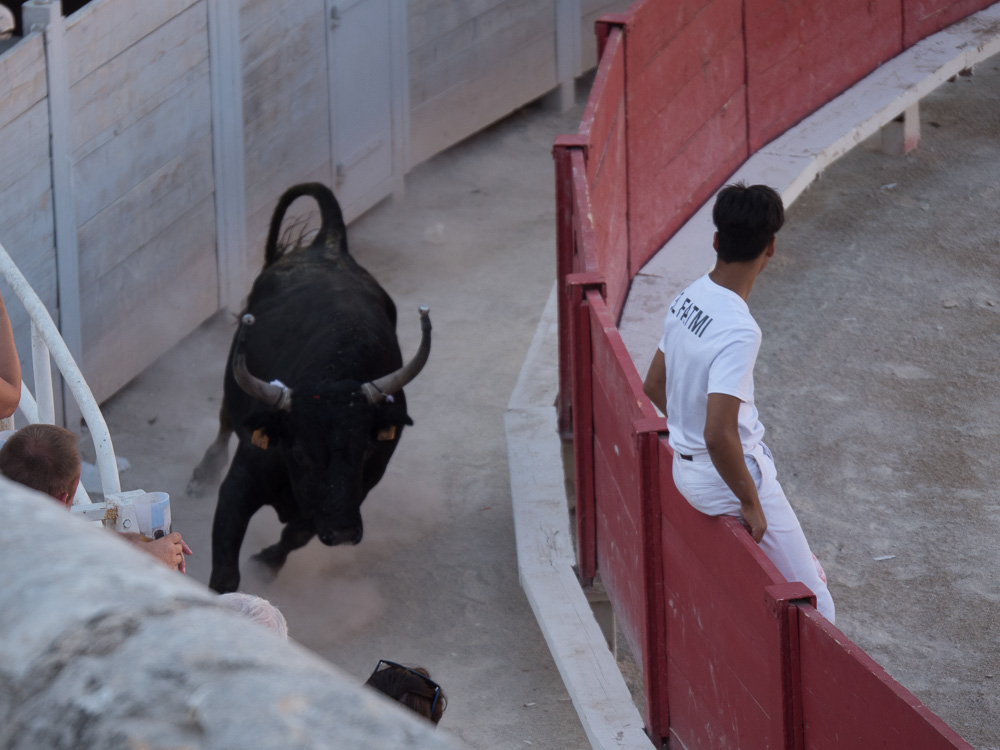
The bull is the star of the show. His name is first on the billboards and the audience cheers and claps for him.
Younger and less experienced bulls arrive first to hone their skills. We saw one Ferdinand-like bull who only wanted to return to his pen, and stood in front of the ring door until it opened. Another did not want to leave the ring and twice cows were sent to lead him back to his pen. A full performance usually involves six bulls, about 10 minutes each in the ring. There is a seventh-inning stretch, too.
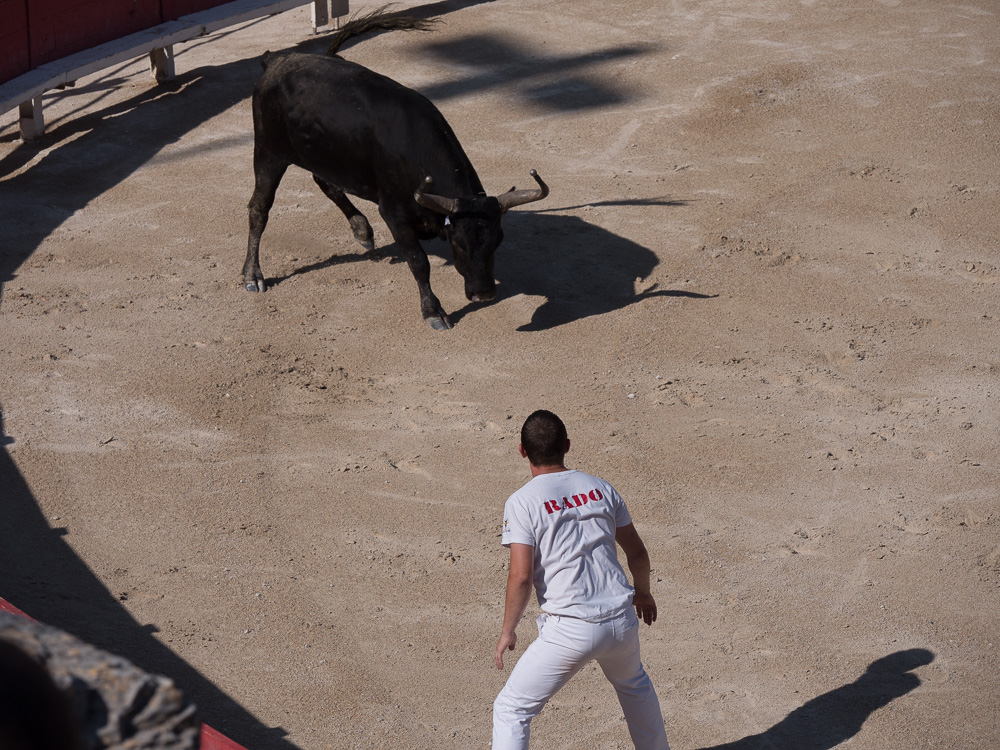
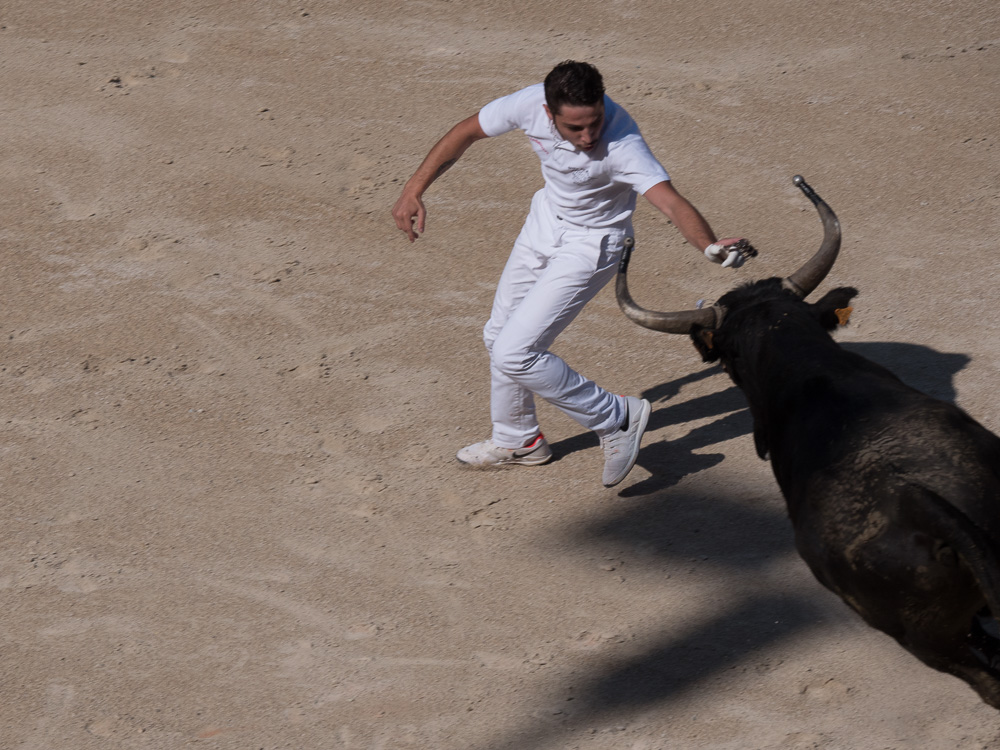
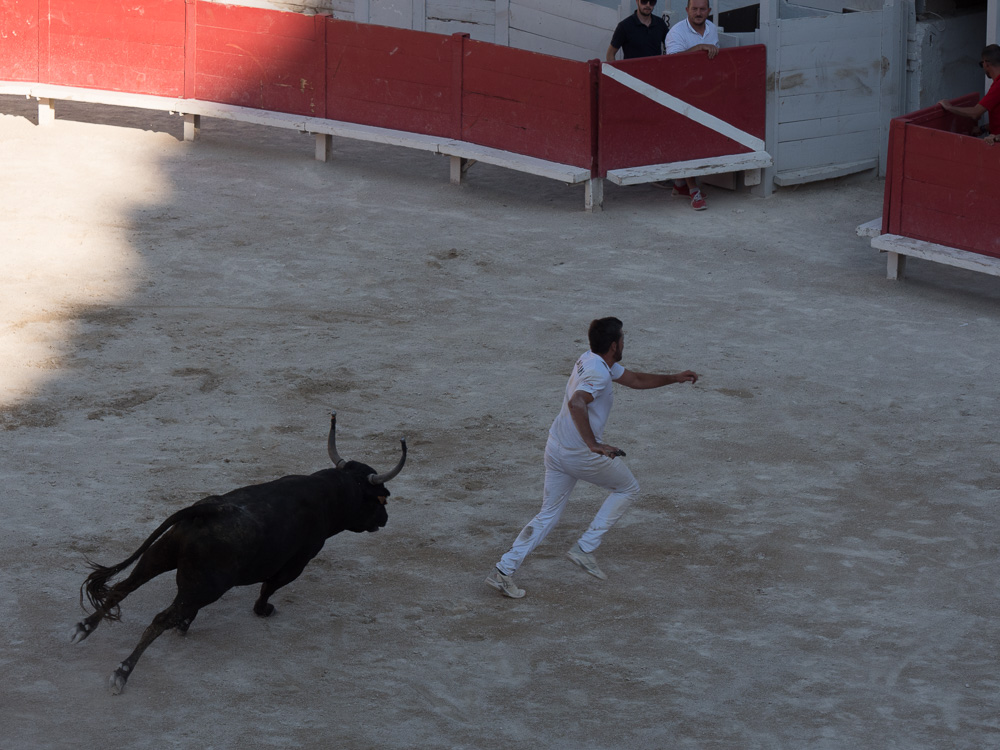
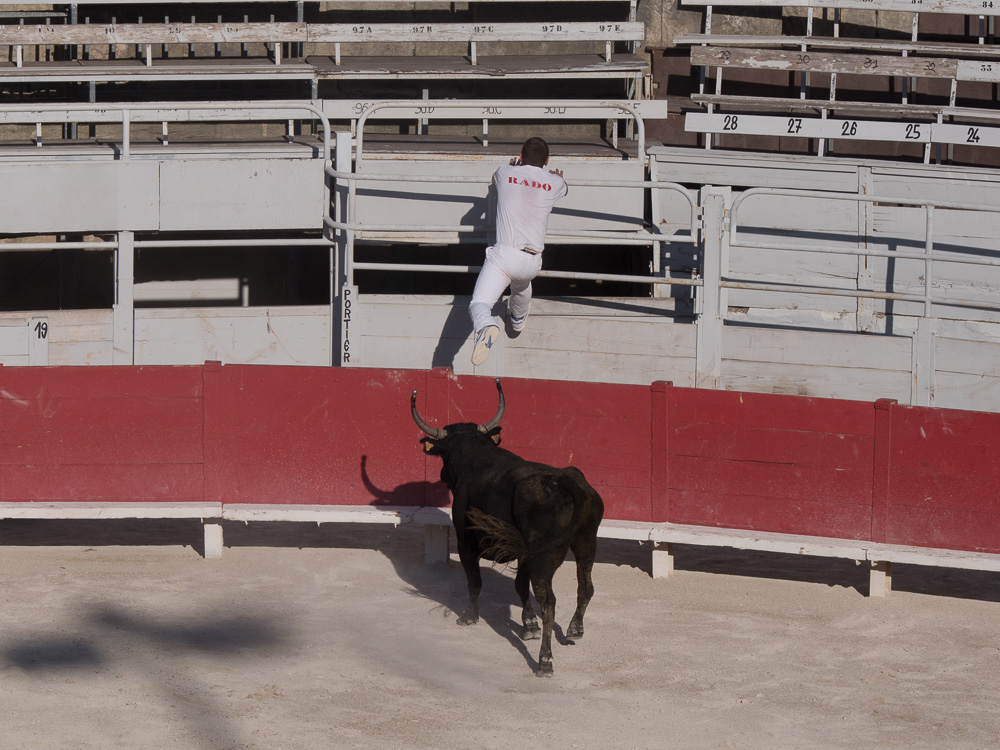
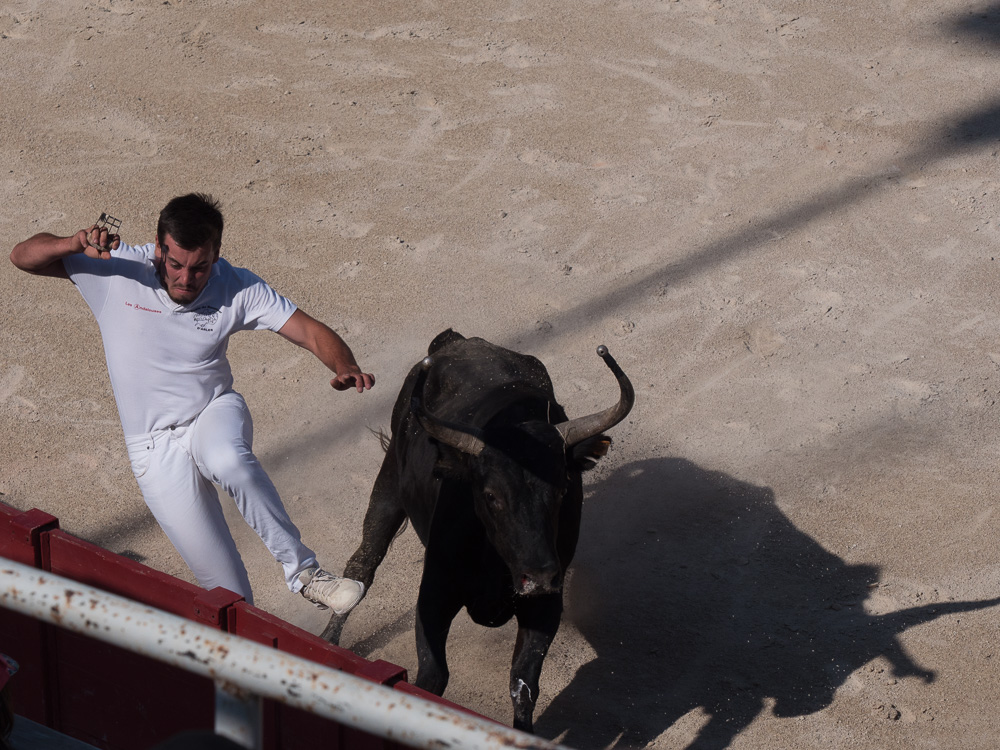
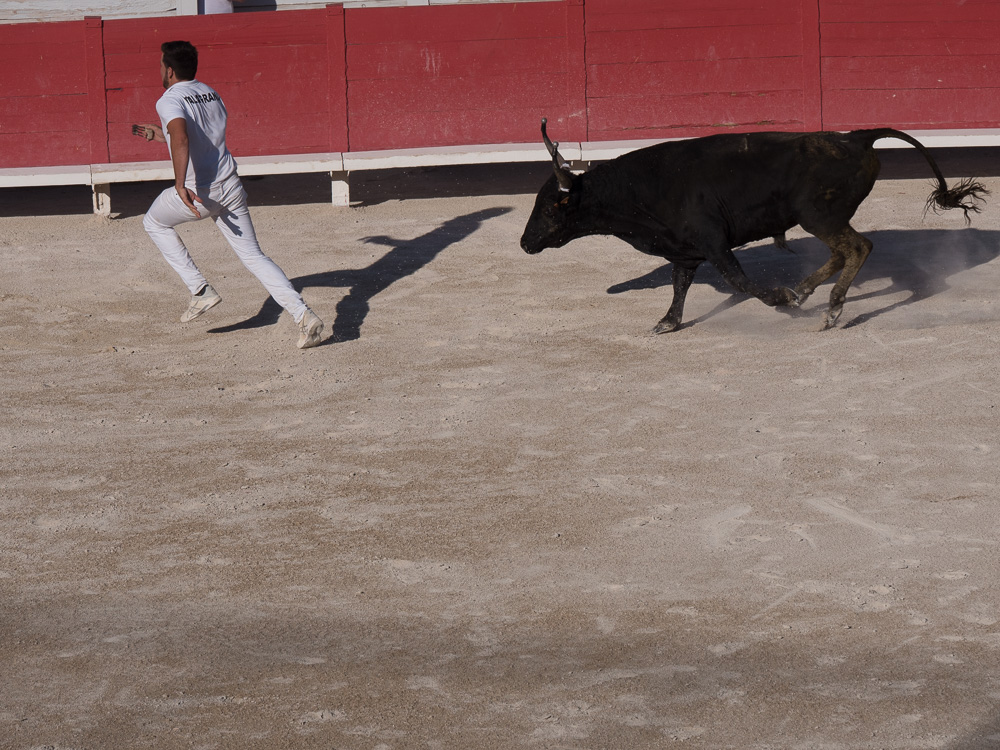
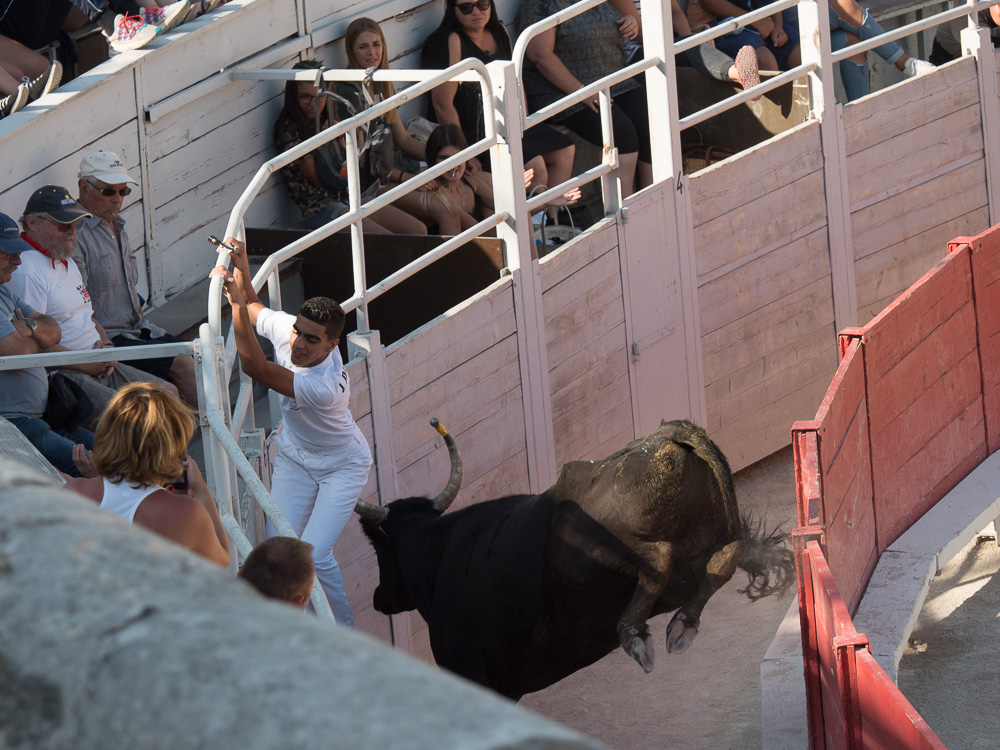
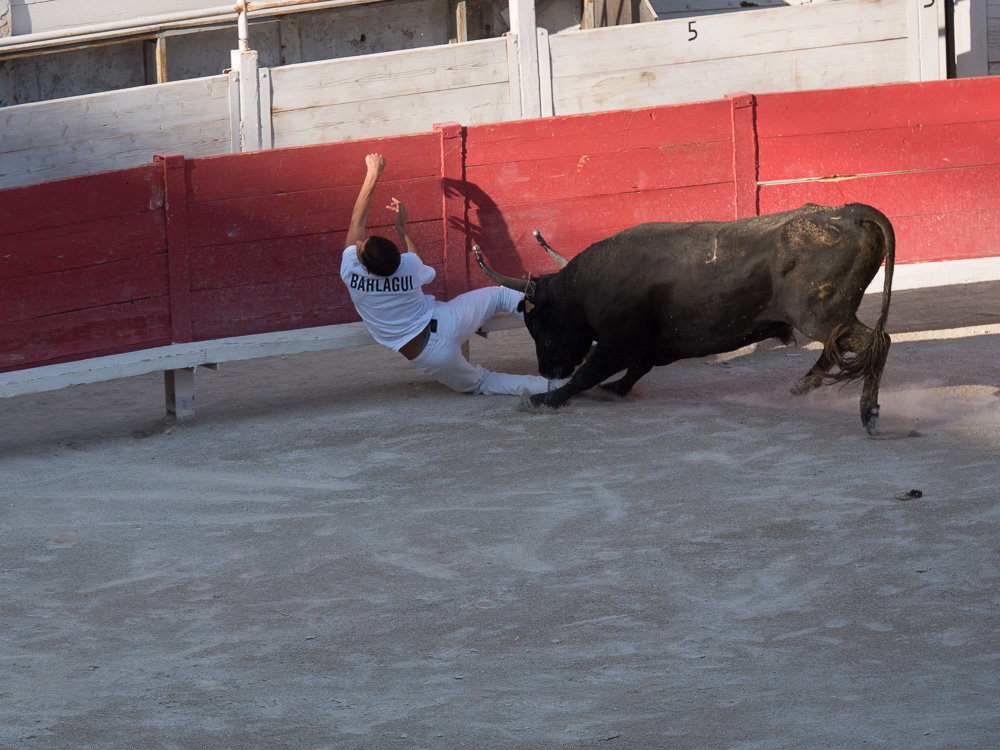
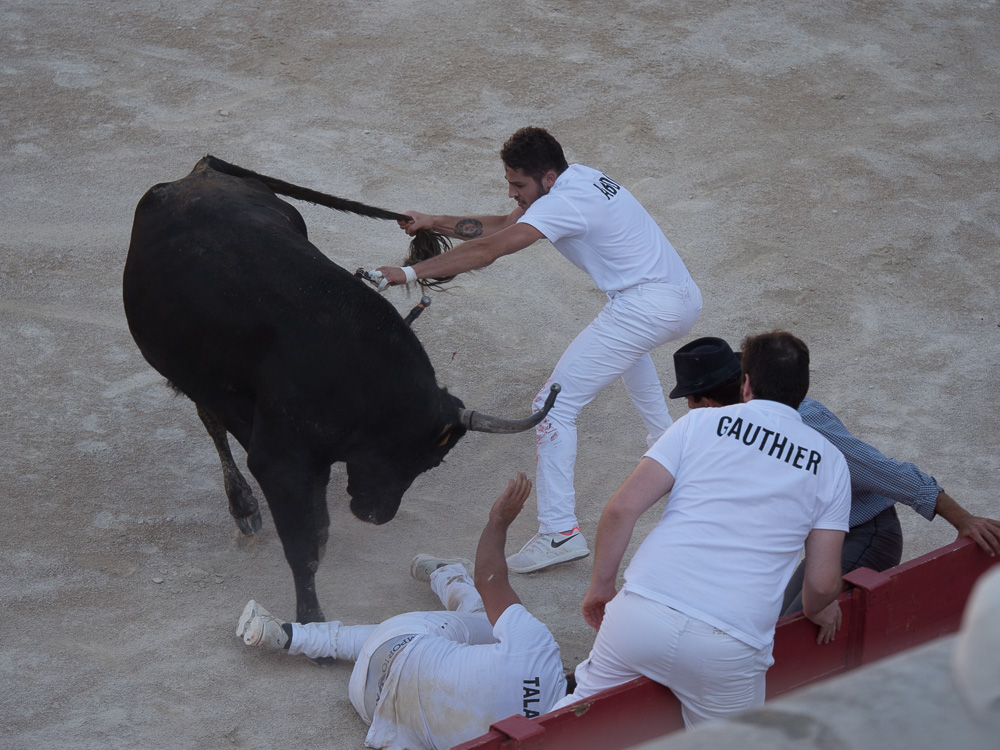
The razeteurs compete with one another to touch the bull’s horns. Two tease the bull into running. Once the bull begins moving, the teasers leap the fence and the remaining razeteurs run at the bull from the side, in hopes of touching the bull between the horns before the bull can turn and run at him.
In 1989, the Rado family started a school for razeteurs. Girls and boys as young as ten years old train here, though 15 is considered an ideal starting age. The school is making a special effort to attract young women students. Students must be in good shape, able to sprint quickly and leap a five foot wall with enough force to both clear it and grab another fence three feet beyond. Of course they learn how to tease the bull.
There is no shame in jumping out of the ring to avoid the bull though some of the bulls appear to understand the dance so well they stop charging the minute their horn is tapped. Razeteurs wear jeans and t-shirts unlike their Spanish counterparts, and arena seats are reserved for their families.
 Keeping up with Pat and Maurice