Before we finish the posts for this trip, a word about Orléans, the small city on the banks of the Loire river, about 70 miles southwest of Paris, where we stayed in our second home exchange of the summer. The Louisiana city of New Orleans received its name from the French Duke of Orléans at the time of the city’s founding.


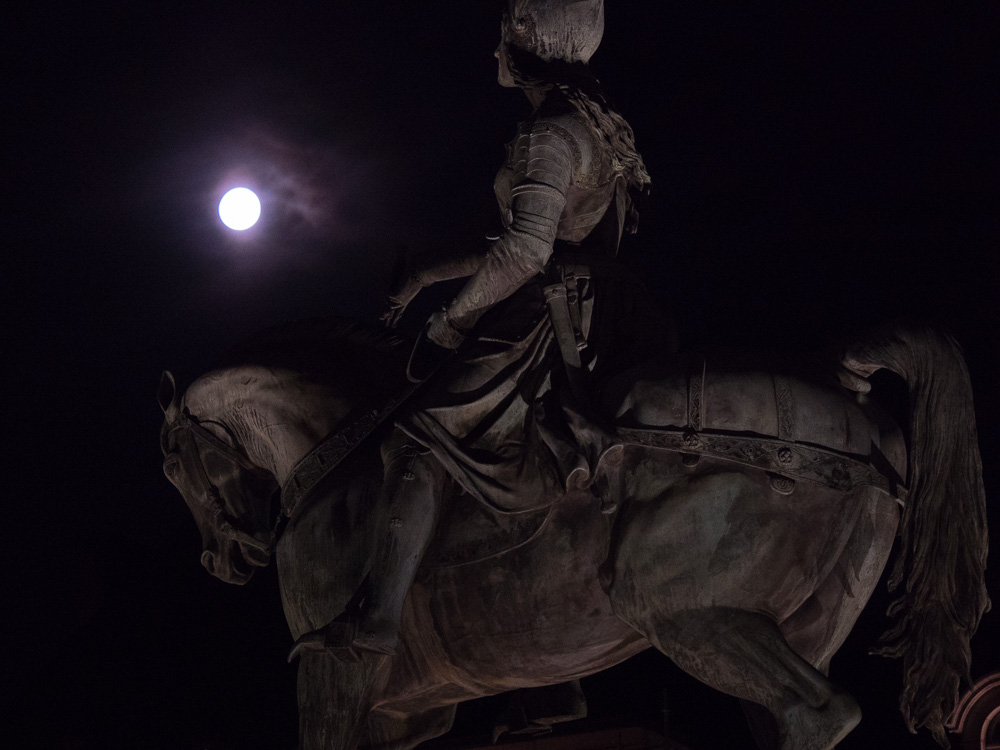
Orléans has given itself wholeheartedly to Joan of Arc (Jeanne d’Arc). During the 100 Years War, she broke the English siege against the city, rescuing the populace. She was only getting started.
With Joan’s help, beginning in Orléans, French troops won several significant victories with the result that Charles, the Dauphin, having finally gained control (thanks to Joan) of what was then considered France, was crowned King Charles VII in Reims. After a long stretch of domination by the English, the French victories (led by Joan) were an important morale-booster and helped unite the population behind the king. It was the first step in creating today’s unified country.
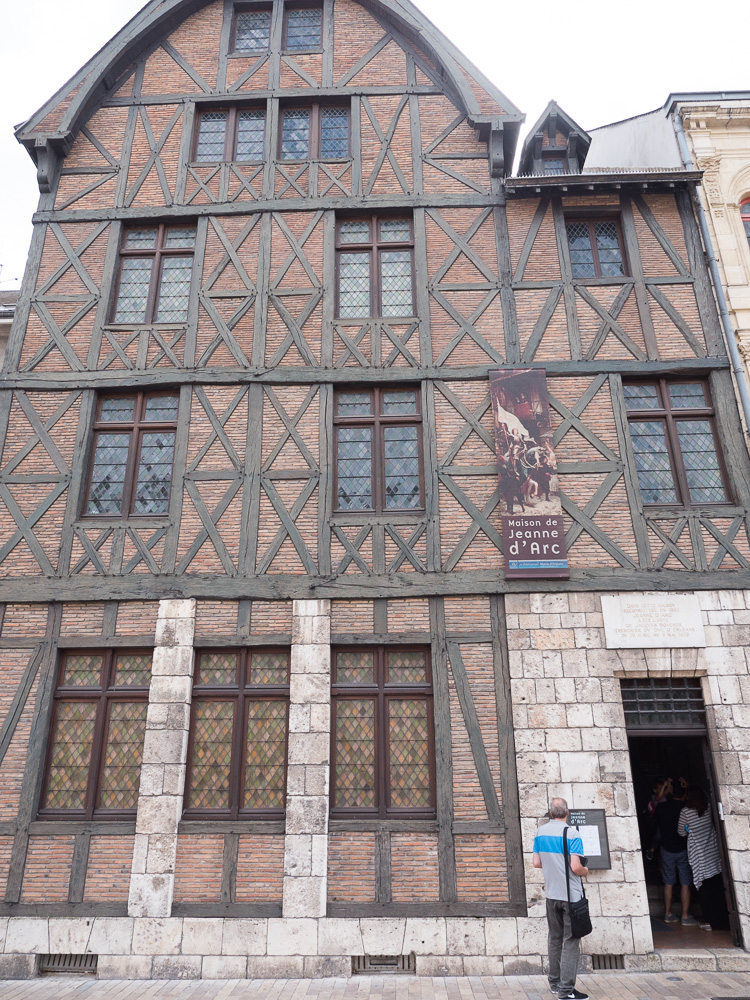
Orléans preserves a faithful replica of the house where Joan stayed during the siege, re-built after being destroyed by bombing during WWII, now showing a film about her and about the battle of Orléans. No one is allowed upstairs, so the visit — file in, see a 10 minute video of illustrations, file out — was underwhelming.

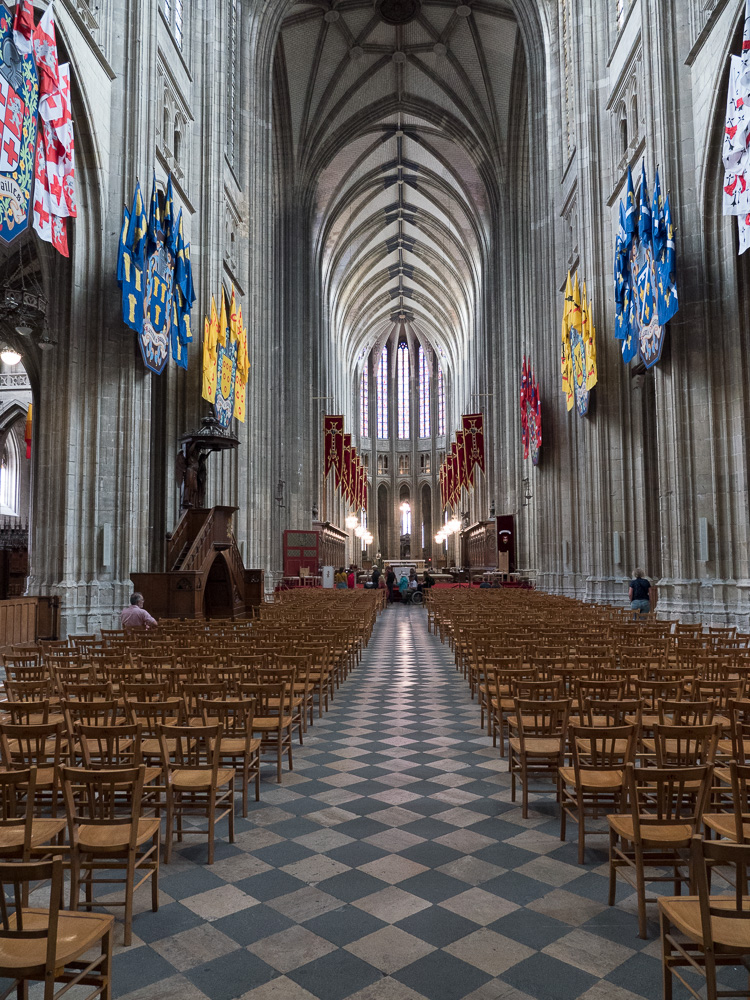

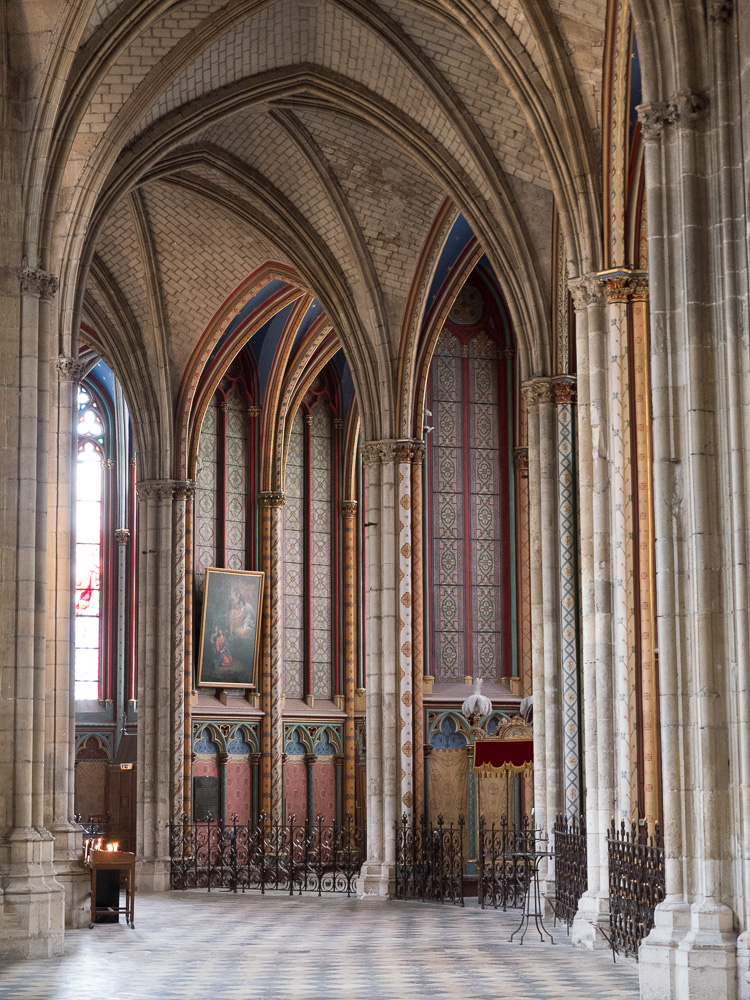
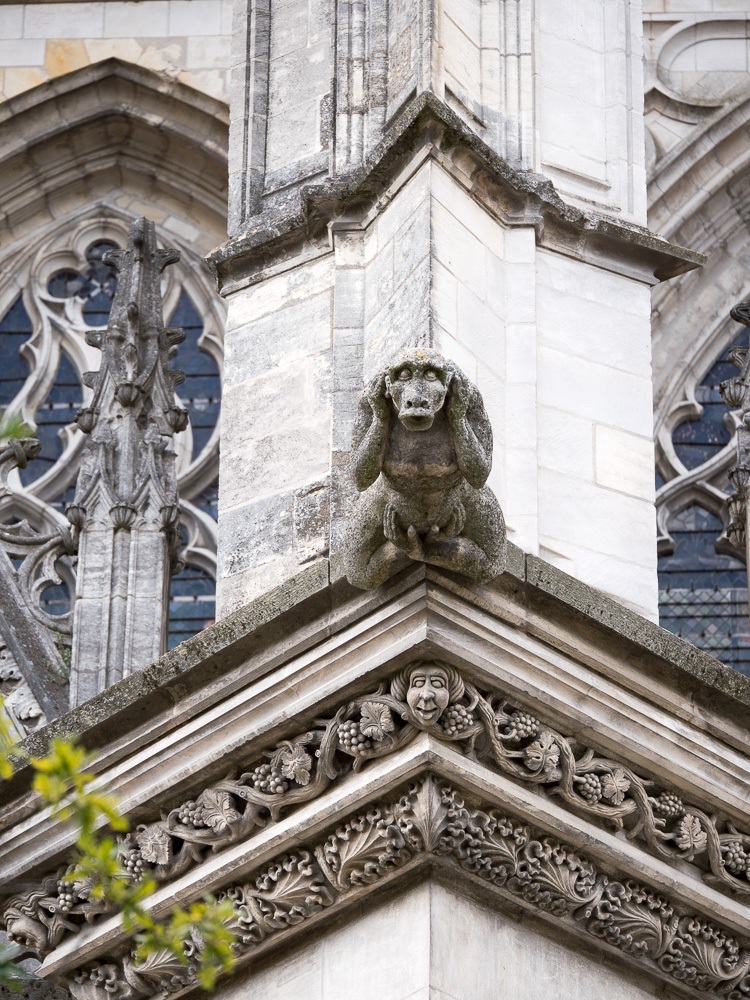
The cathedral of Orléans is Gothic in style. It was begun in the 13th century, restored between the 17th and the 19th. Joan attended mass here on 2 May 1429, during the siege, something the stained glass windows do not let you forget.

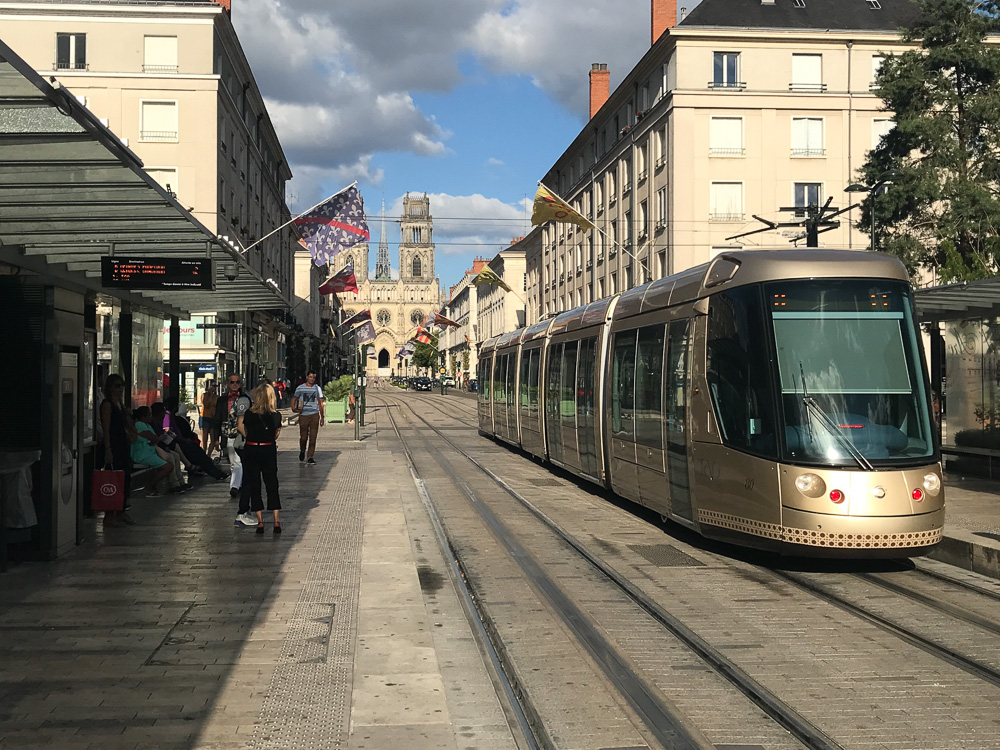
Orléans is flat and easy to walk. Our house was a mile from city center; a quick tram ride and an easy, though optically unattractive, walk. In town are a nice farmers market, pedestrian-only streets, and some pretty buildings erected post-war in the pre-war style. Outside the city center, the town is not terribly attractive. Bombed by the allies during World War II (the city was controlled by the Vichy government), much of the rebuilding has been done in the grim 1950s concrete we saw in Brest. The river is the city’s best feature.
Regional wine and cheese are delicious. Cheese is primarily from goats, a favorite in our house. We tried many, from creamy to dry and from different pastures and microclimates. Much Loire Valley wine is white and of course goes well with the cheese. We can certainly recommend one we tried, Quincy. According to loirevalleywine.com:
As testimony to the high quality of wines from Quincy, it was the second appellation created in France, after Chateauneuf-du-Pape in the Rhône. Quincy produces exceptionally racy, dry wine exclusively from Sauvignon Blanc.
One of the pleasures of living here is food shopping and cooking. One day for lunch I sautéed a “bavette” steak of beef, translated either as skirt or flank steak. Rarely do I cook or order beef in the US, but here it is quite special, raised in grass pastures in northern France, with a complex, fresh taste. Eggs are also excellent, each individually stamped with the date it was lifted from the nest; vegetables are classified by quality and the category is displayed on the sign with the price; every bin is marked with the region, province or country of origin of the vegetable it contains.
Our house had a large yard where herbs, sorrel, and tomatoes grew. While we were there, figs were ripening, but we missed the kiwi season. At night we could see the Big Dipper from the window. There were no mosquitoes and only an occasional fly, so we could keep windows open. And we had the requisite chat, Api, who is an outdoor feline so no litter box duty. Perfect arrangement.
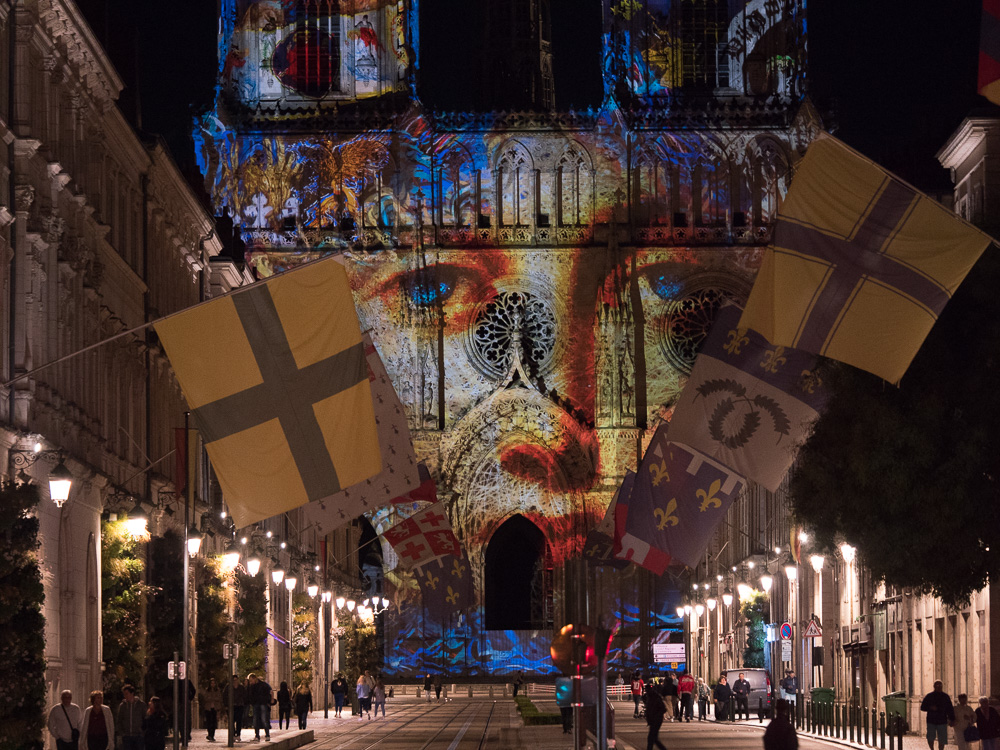
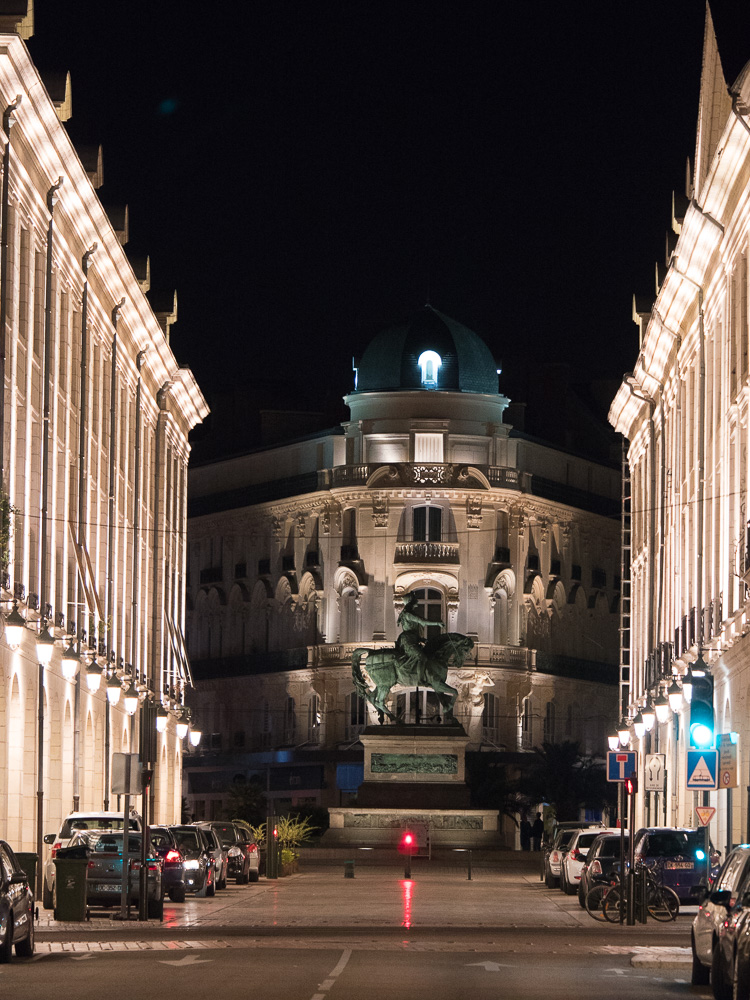
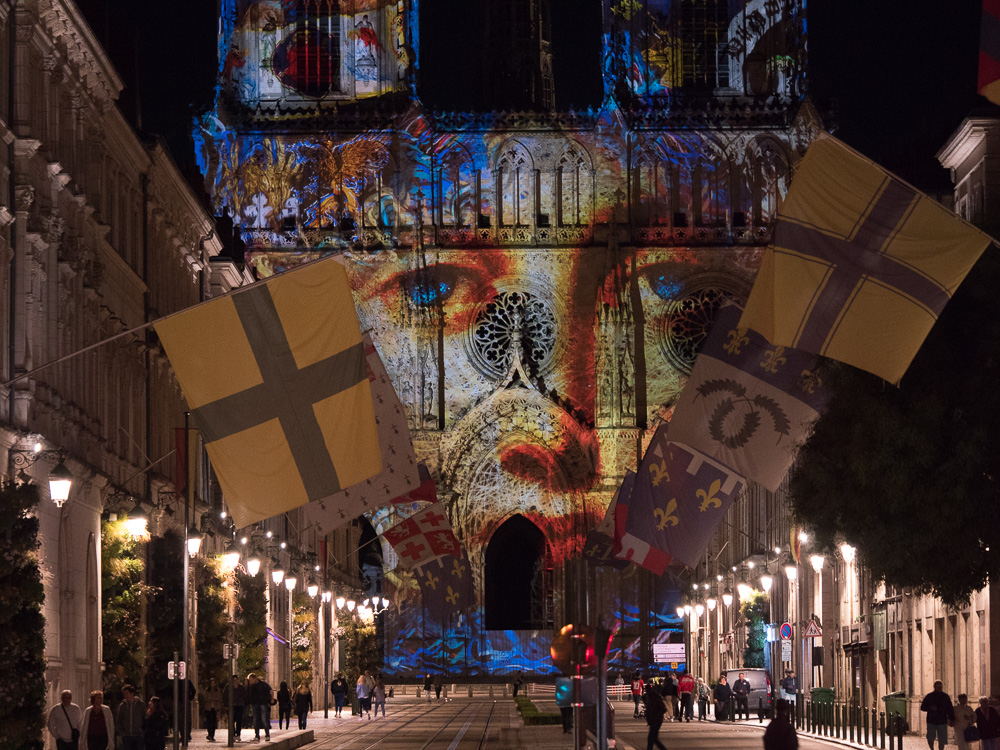
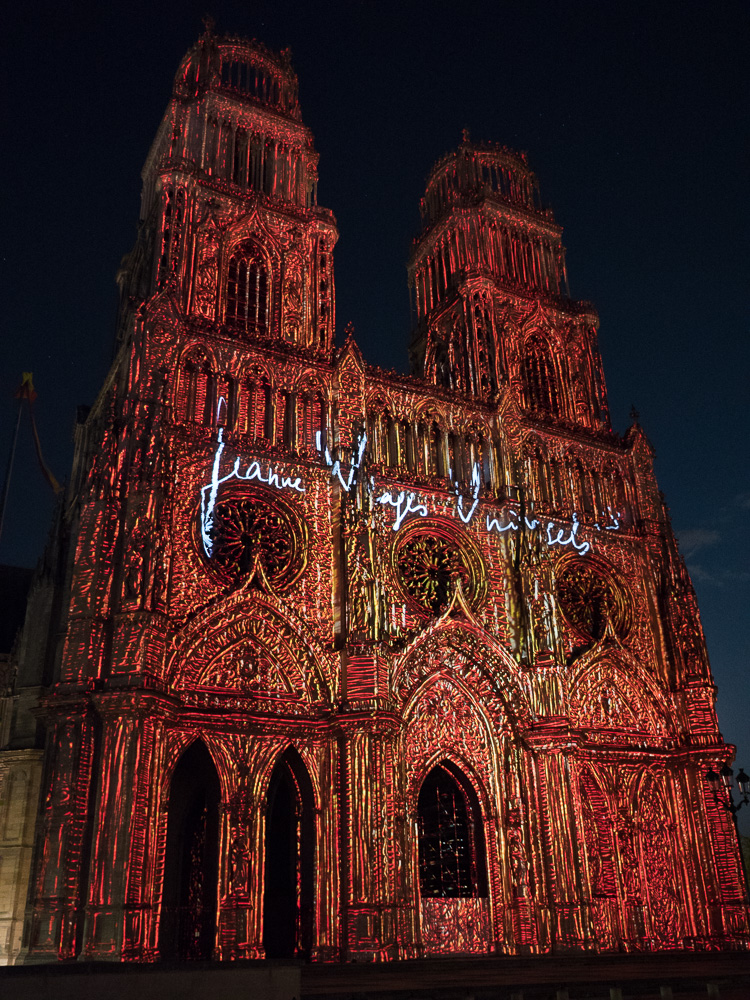
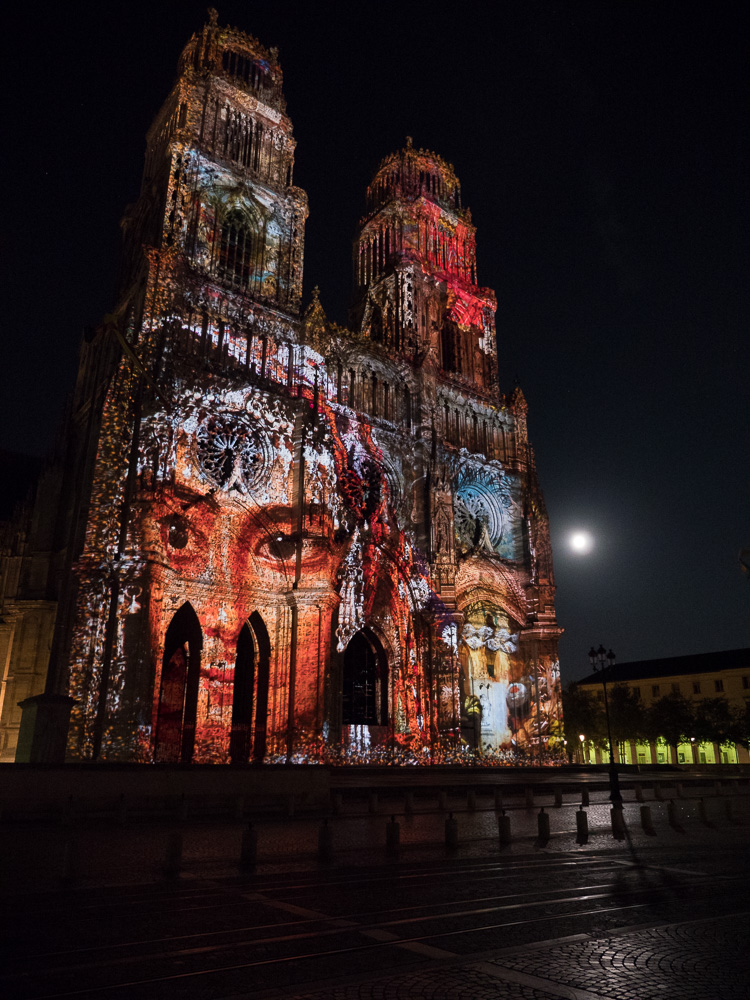
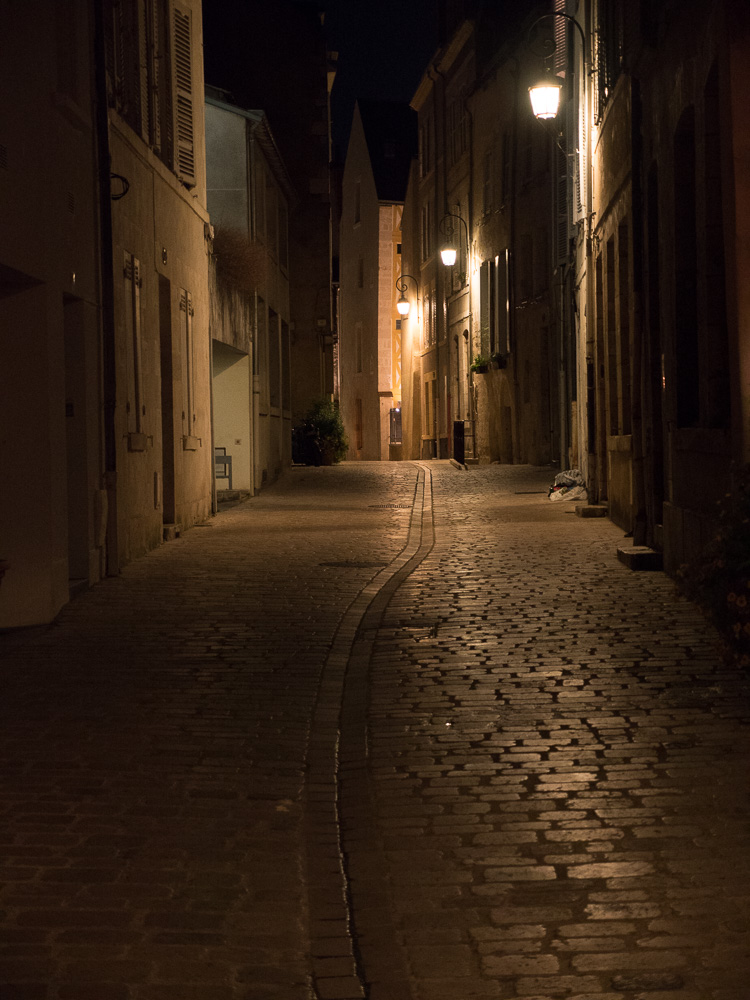
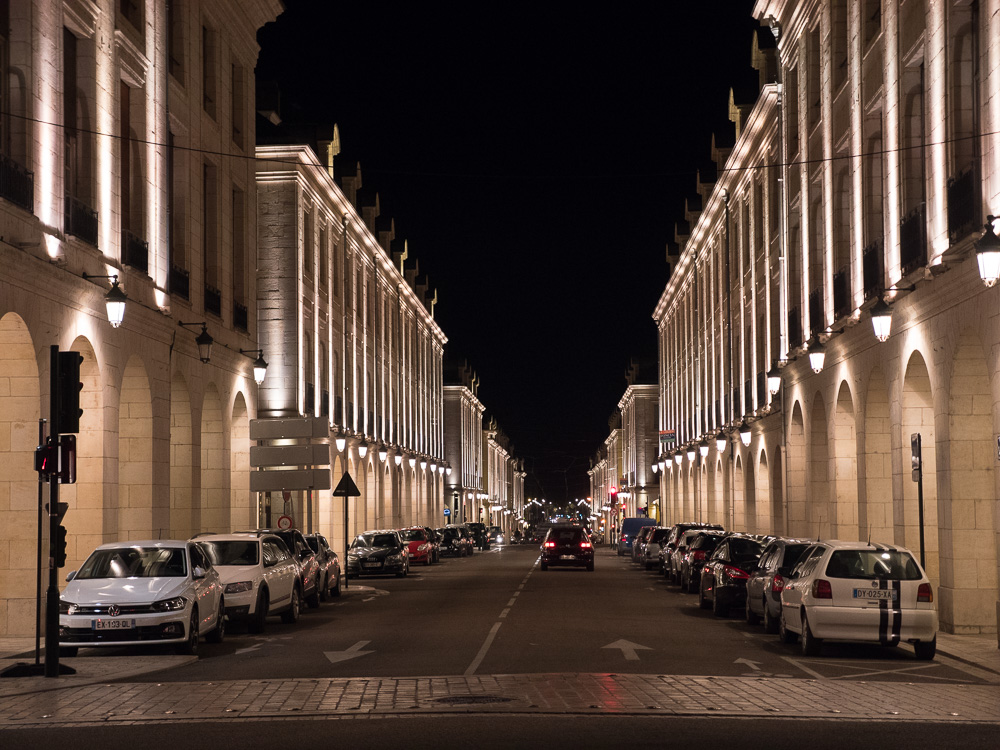
Maurice took a stroll one evening to catch the three-nights-a-week “Son et Lumière,” a laser light show projected on the cathedral and a popular feature of the summer in many towns in the Loire Valley. In Oléans, there were three shows each evening, separated by a short break during which the tram was escorted through this part of its route. The first show flashed figures important in defending the territory of France since the time of Joan of Arc, a 15 minute run through 700 years of French history. The second presentation included the projection of the faces of seven women important in fighting for the rights of their fellow citizens, again starting with Joan of Arc. The slide show below includes some scenes from Son et Lumière, mixed with other Orléans night scenes.


 Keeping up with Pat and Maurice
Son et lumiere!!! my favorite! Pat, how could you resist? no fountains though (as per The Dancing Waters?)
LikeLike