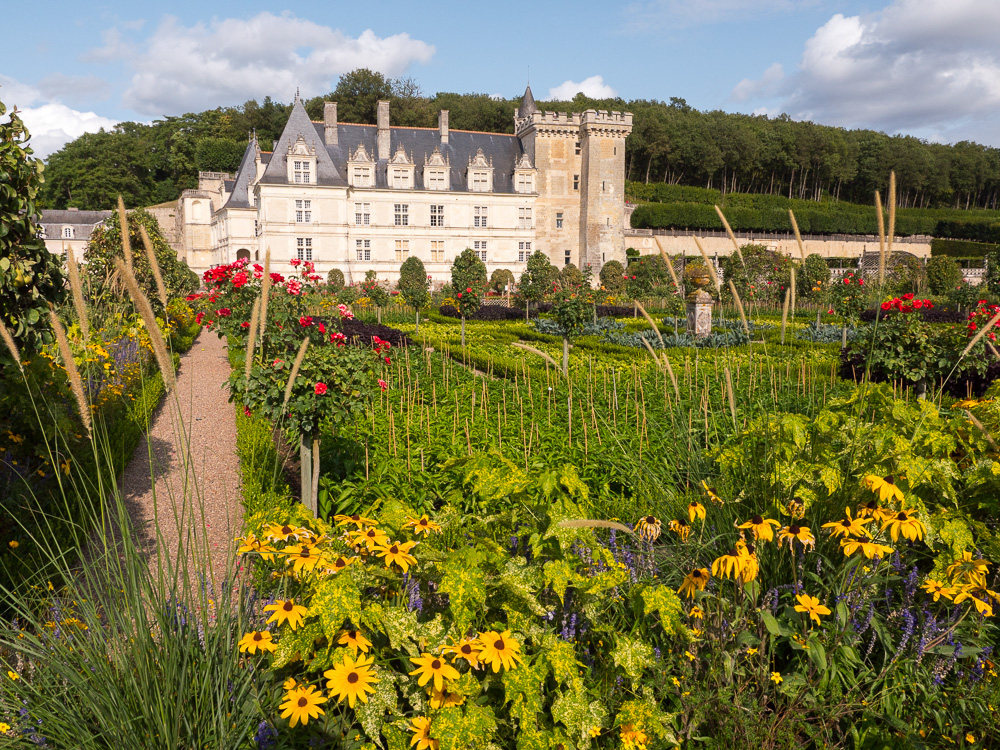
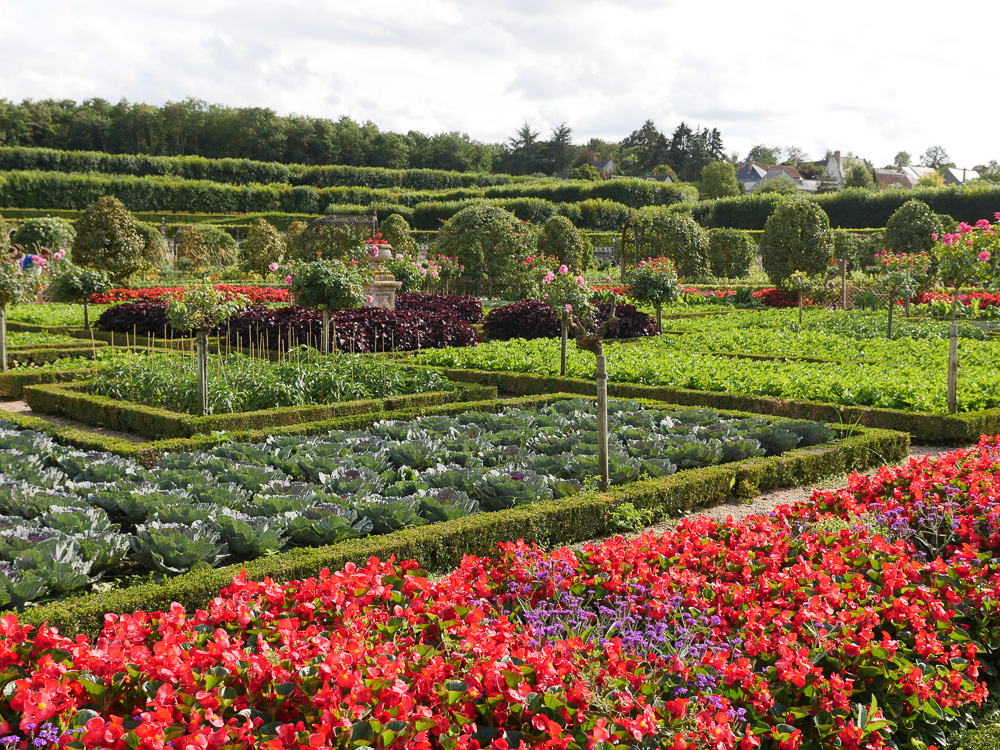
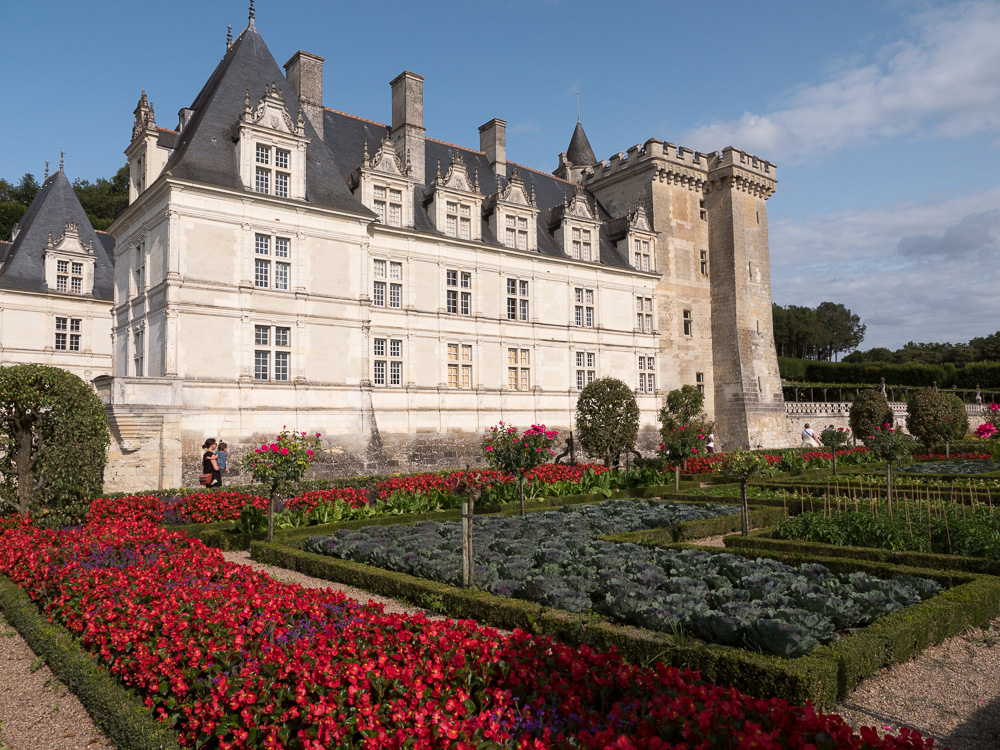
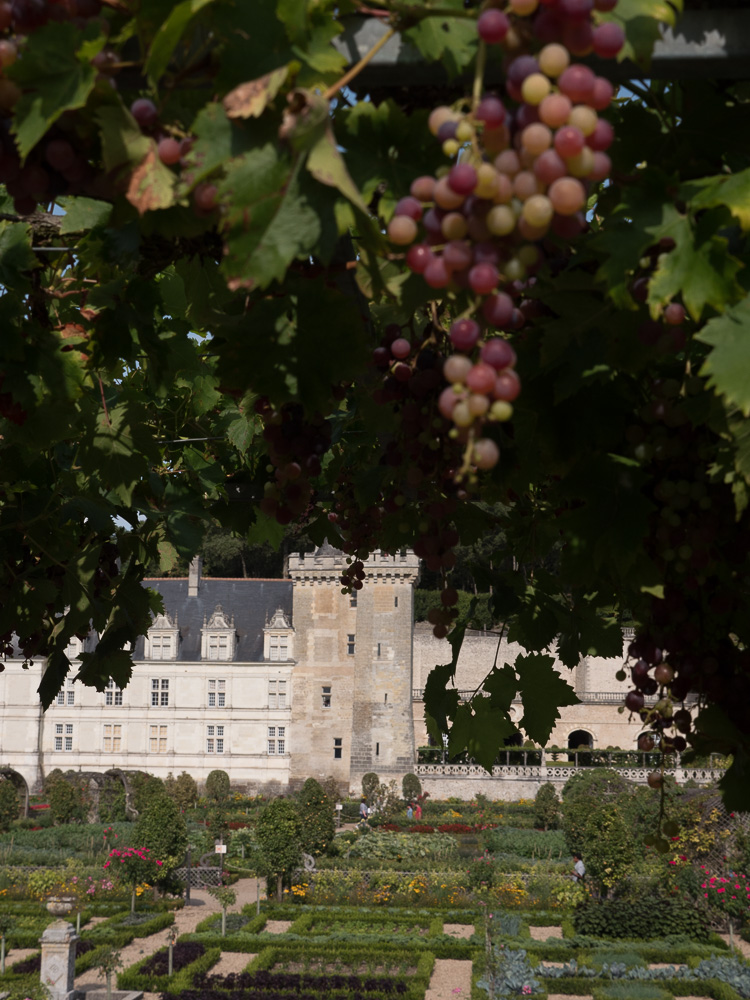
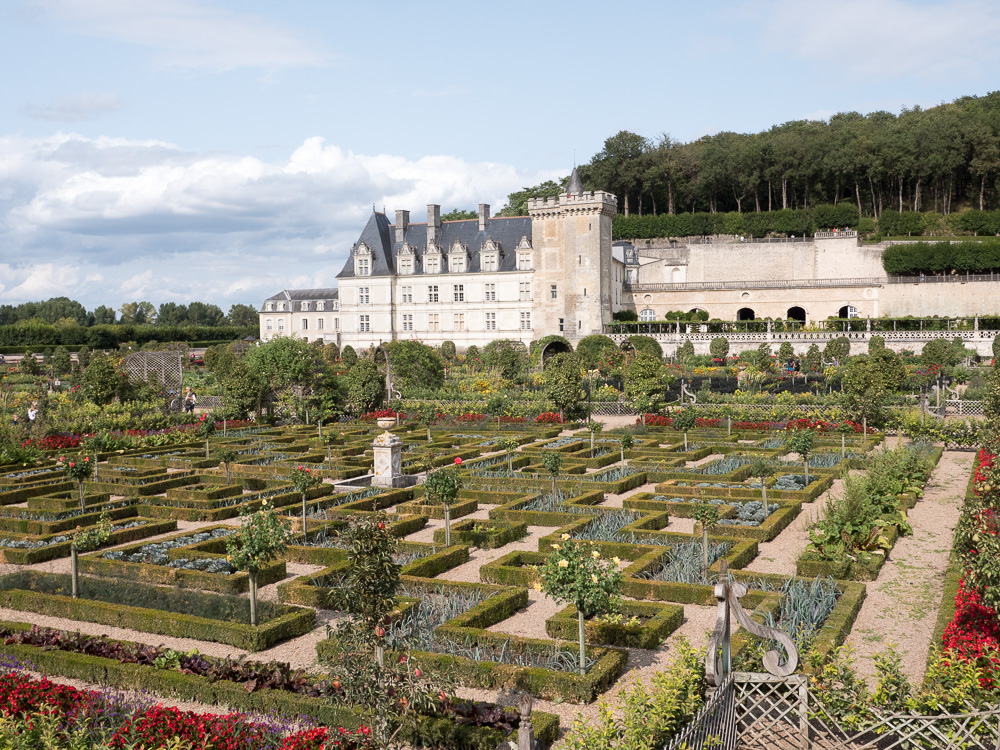
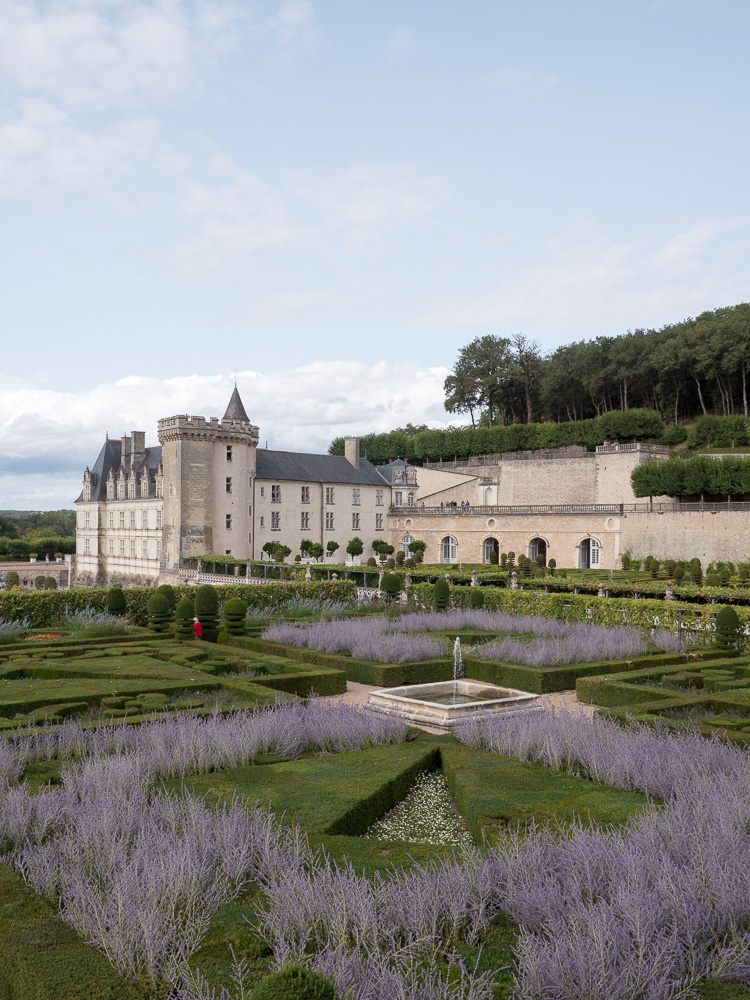
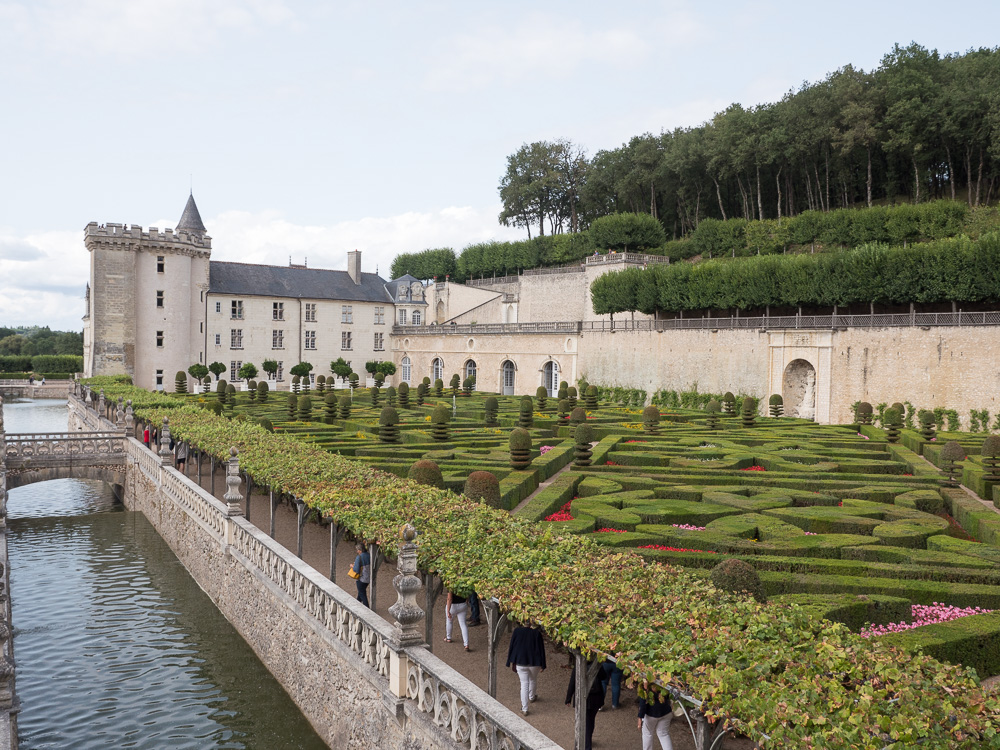
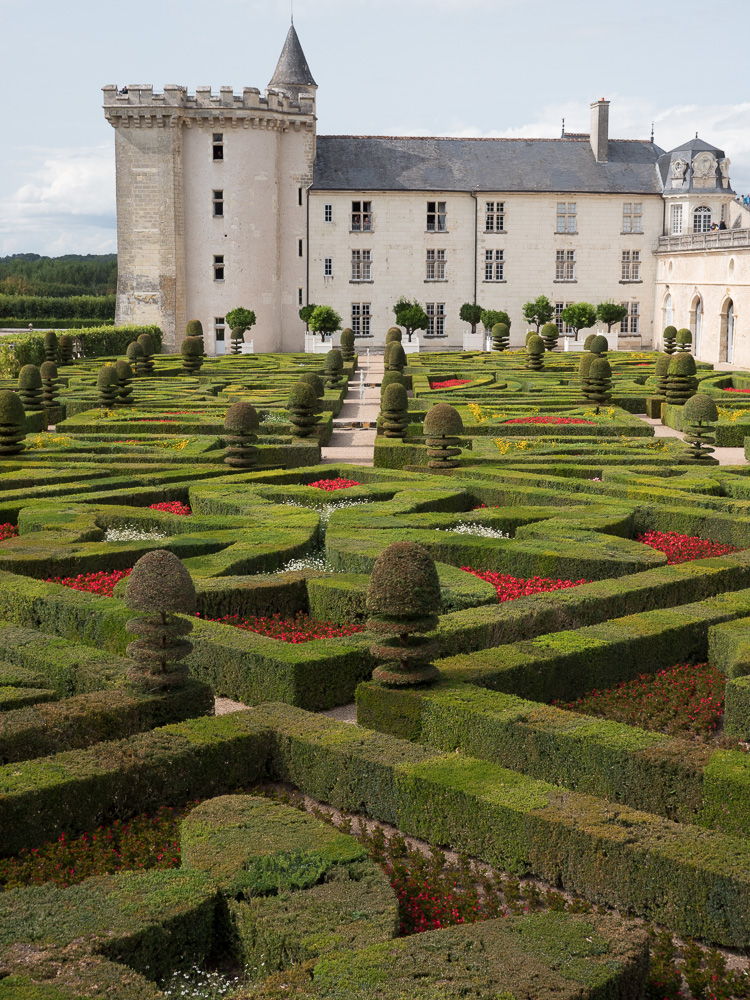
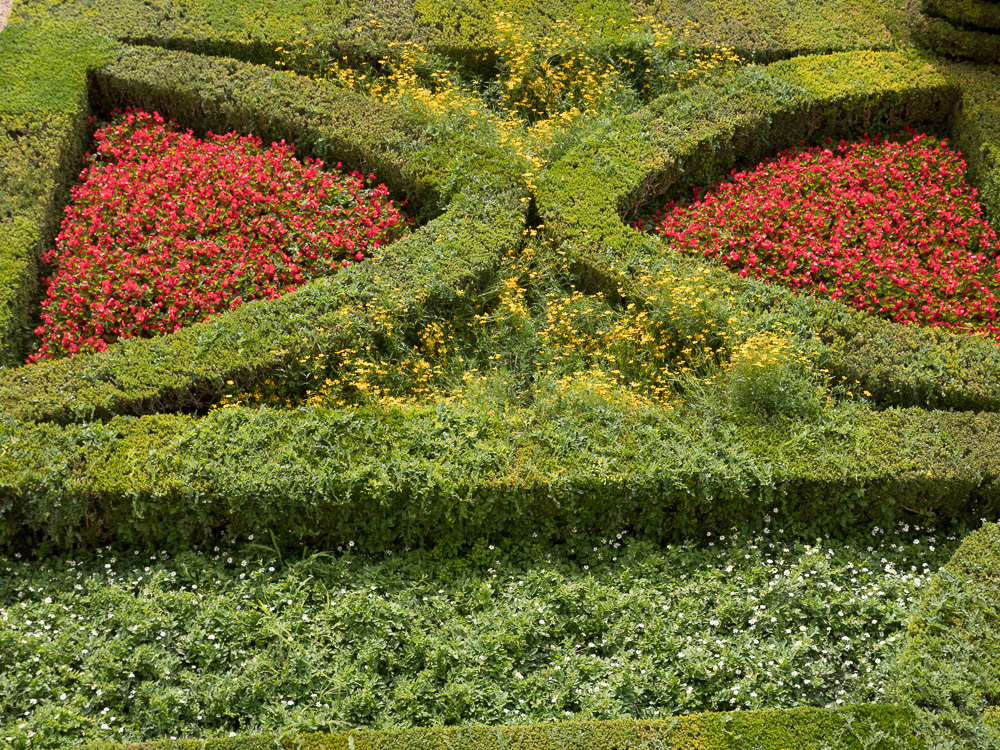
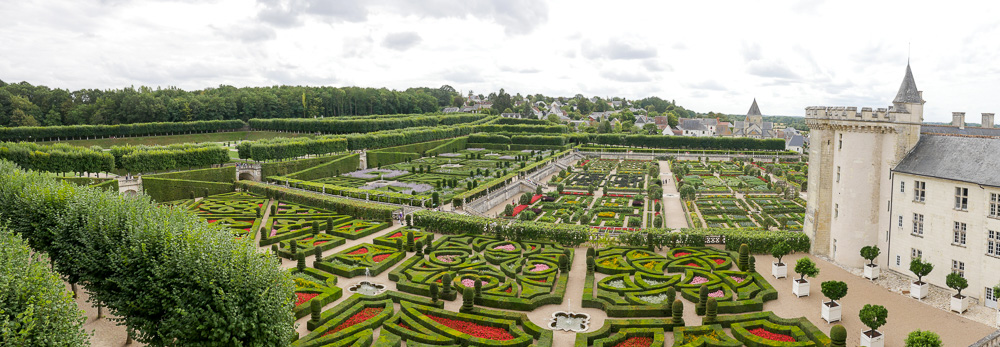
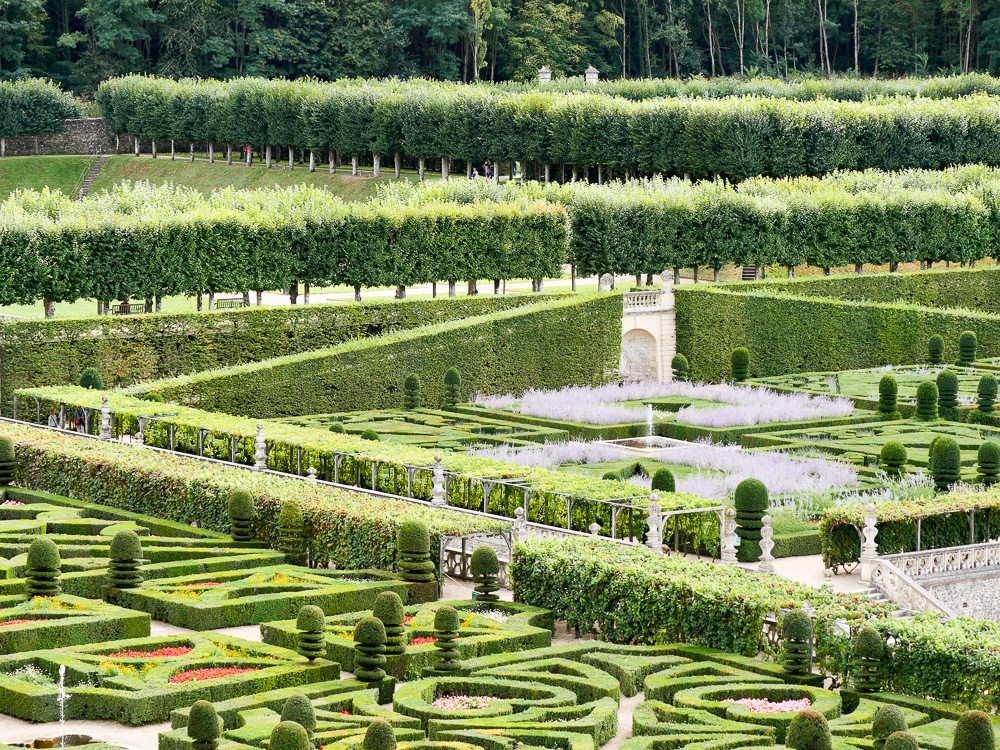
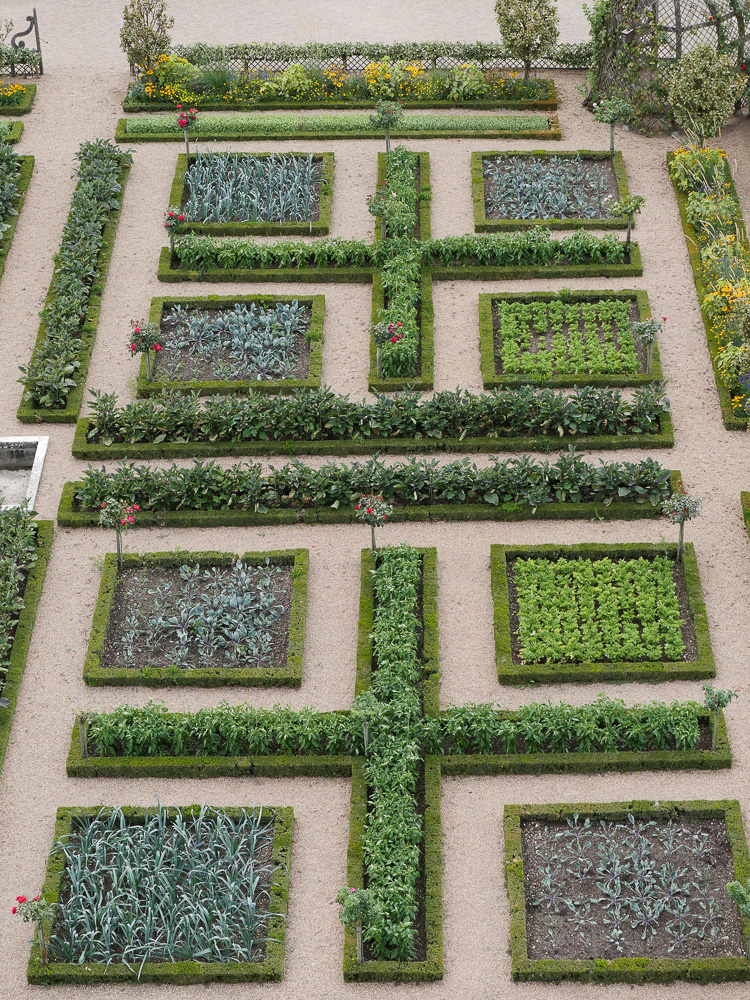
The chateau of Villandry is best known for its gardens, and that is appropriate. They are magnificent whether seen from above or at eye-level. Even the potager or vegetable garden is a work of art.
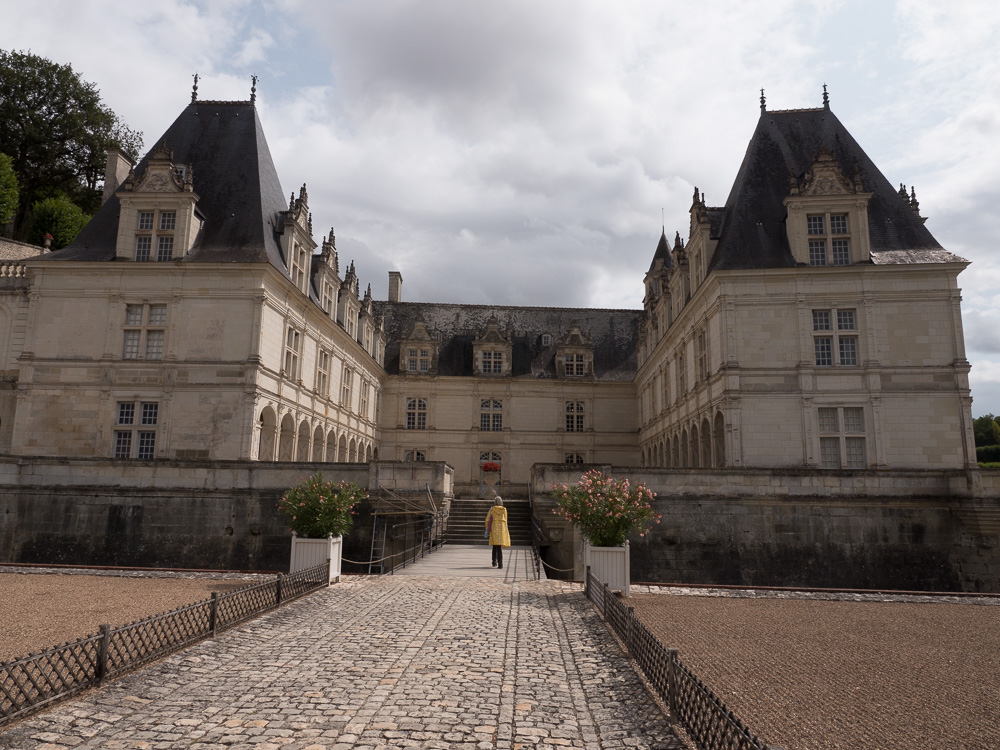
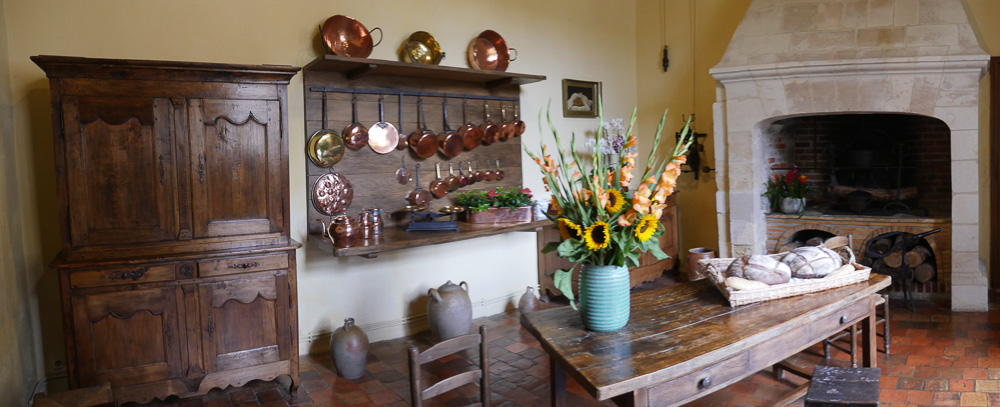
The castle, which is quite small, began life in 1536, the last of the Renaissance châteaux in the Loire Valley. Built by the finance minister of François I, it is constructed on an old fort, whose tower still stand as part of the current structure. It remained in this family until ownership passed to the Marquis of Castellane in the mid-18th century.
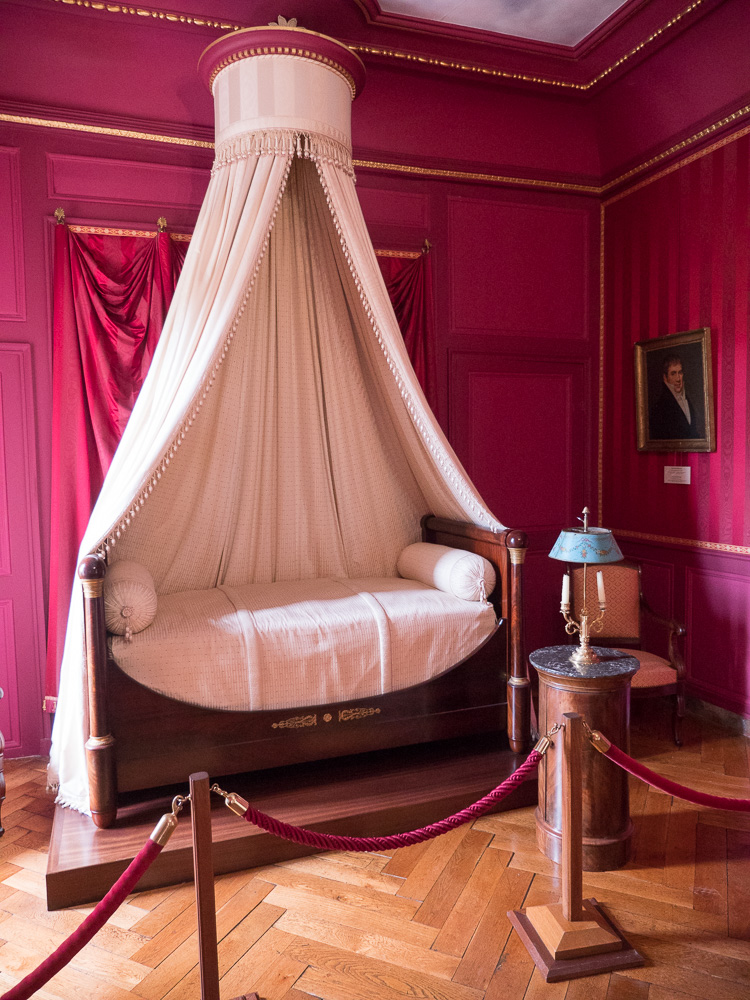
Came the Revolution, and after that the castle was given to Jerome Bonaparte, brother of you-know-who. His bedroom was decorated in the style of the Empire period.
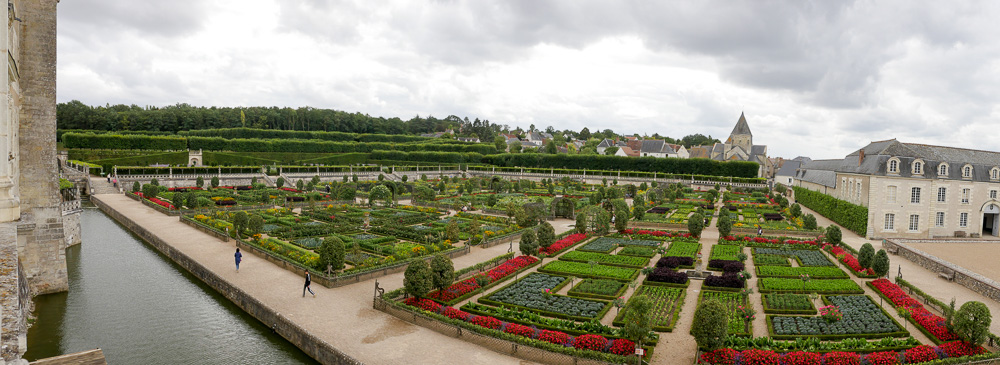
In 1906, a Parisian couple — he a Spanish scientist and she a wealthy American — bought the house for their growing family (eventually six children) and their scientific research projects. They determined to return Villandry to its Renaissance glory. Anne Coleman and Joachim Carvallo became engrossed by the project, and he, in particular, undertook extensive research using old land registers and architectural documents to recreate Castellane’s Renaissance gardens and potager.

There are six formal gardens and the large potager, which is really nine plots united by borders and color schemes. The flower gardens have themes such as music and love. There is a maze for children and a play area, as befits a castle that became a beloved family home. The Carvallo family still owns the property and manages the garden their grandparents, and now great grandparents, created.




 Keeping up with Pat and Maurice