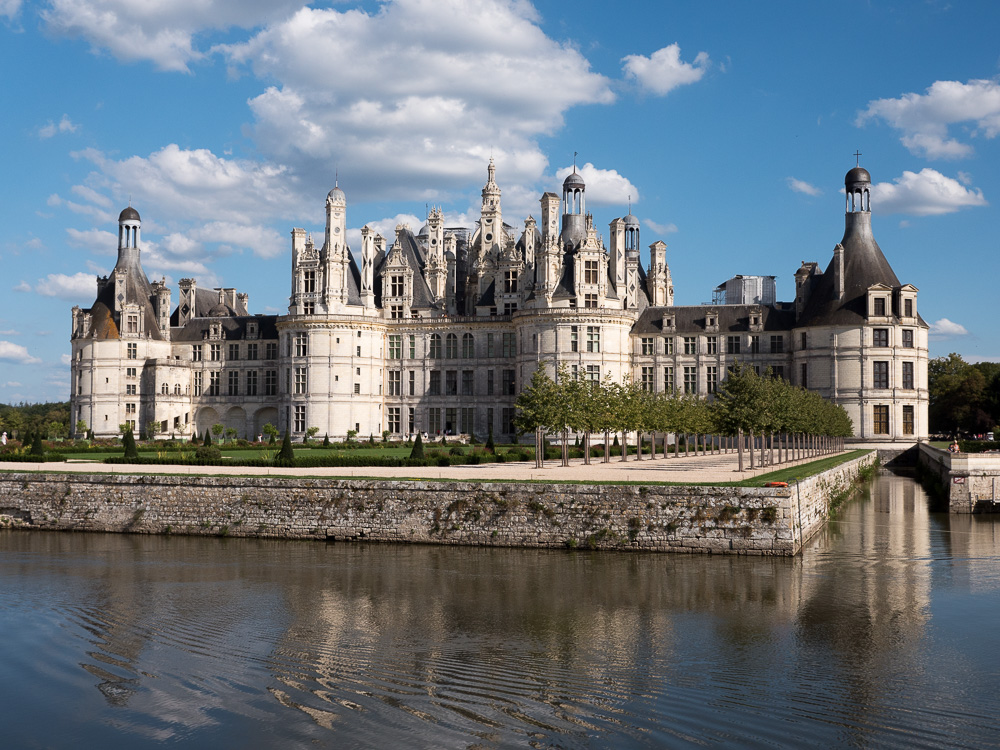
We most enjoyed the chateau Chambord from the outside. True, the day was very hot, the tourists were numerous, and 25-year old Francis I did not think to have air conditioning, or even ceiling fans, installed in his “hunting lodge,” when the project launched in 1519. Even while standing still to gaze at wall tapestries, we were quite warm.
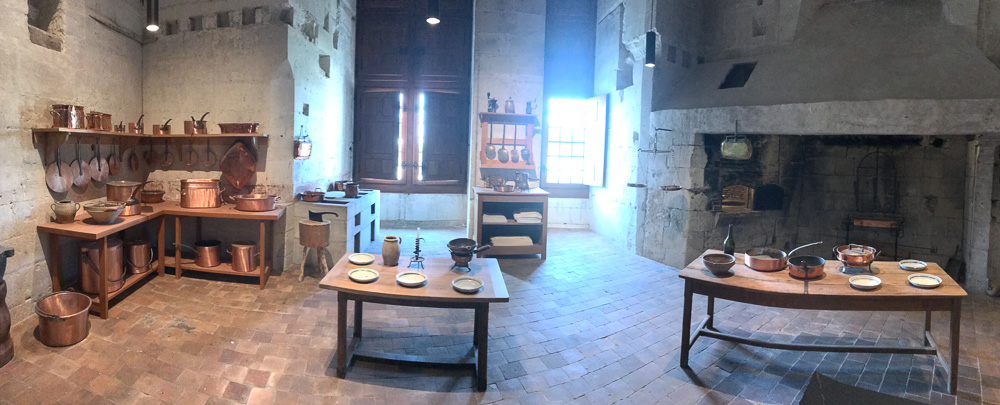
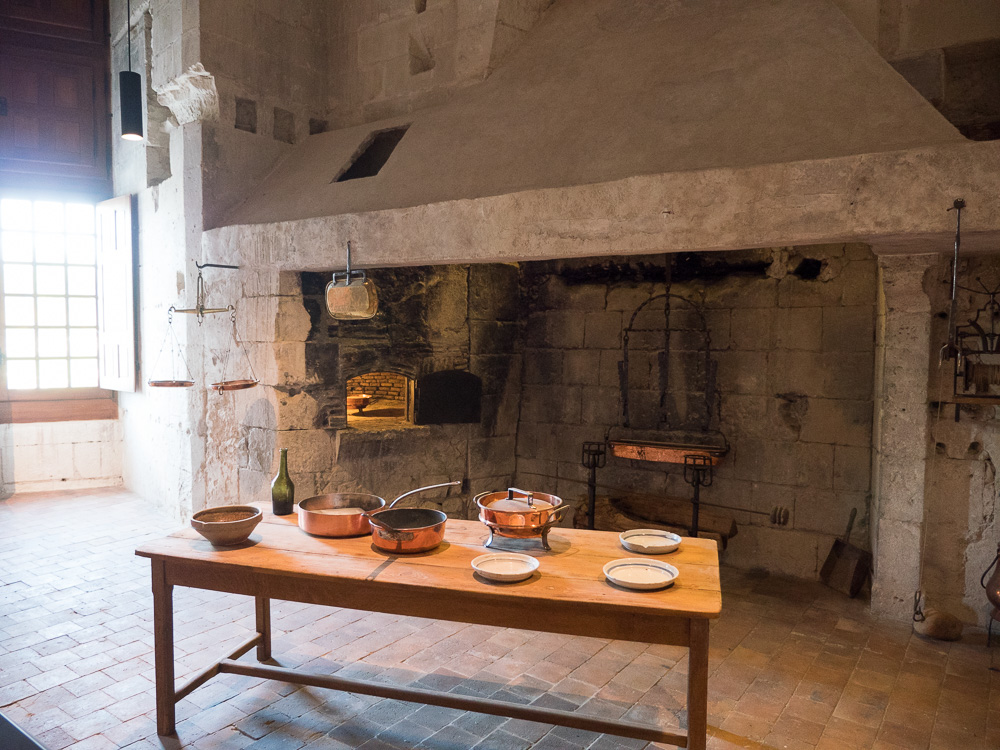
The kitchen location, down a few steps from the ground floor, and its window cross ventilation made it one of the more comfortable rooms in the castle. The utensils made it one of the more interesting.
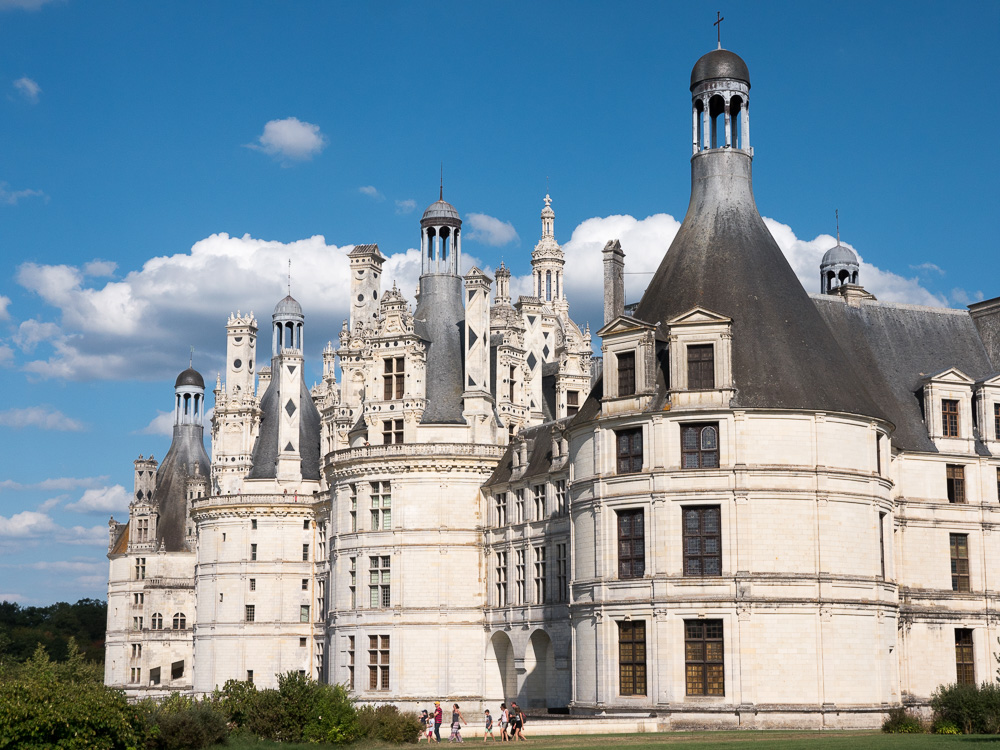
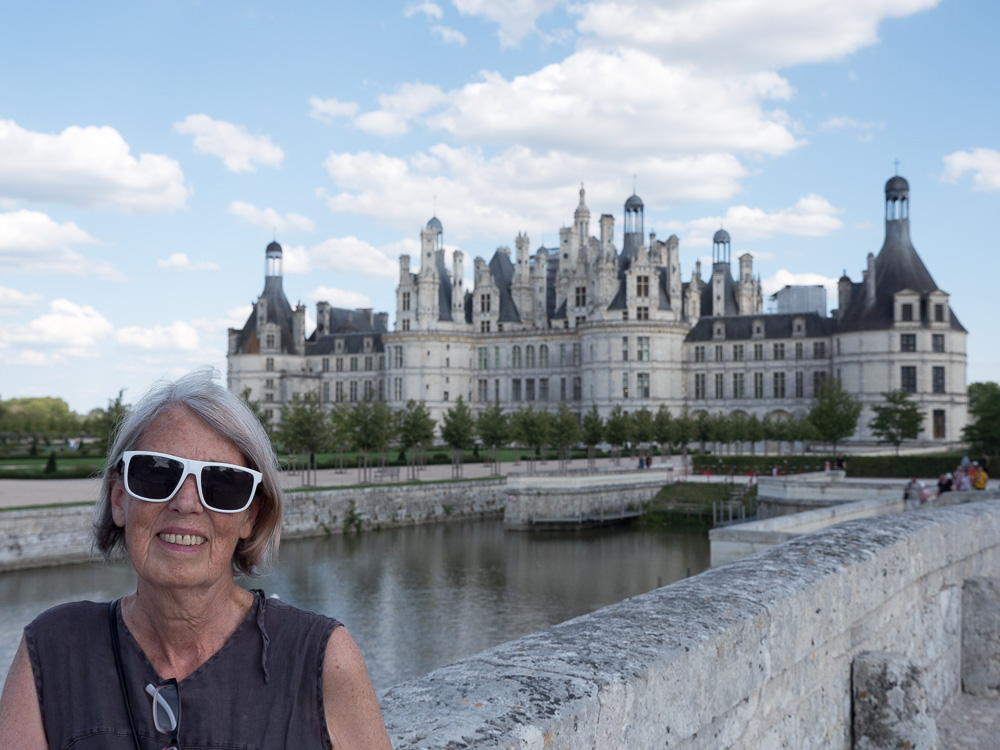
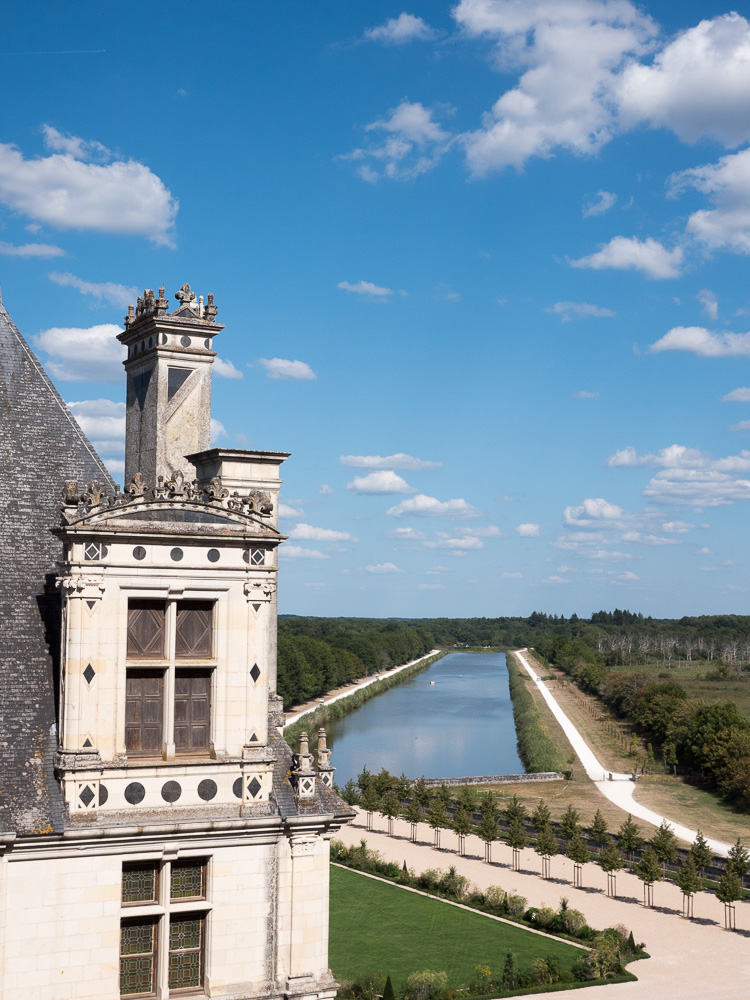
With its blend of medieval and Renaissance architecture, Chambord is a stunning chateau, placed amid pretty gardens on the Loire’s banks. It is the largest of the more than 300 chateaux in this valley of castles, and very popular, with 700,000+ visitors annually.
Francis used the vast structure only as a place from which to hunt and never as a royal residence. In fact it has almost never been lived in during its 500 years. Abandoned after the French Revolution, Chambord was not used again until WWII when art from the Louvre was hidden there for safe keeping.
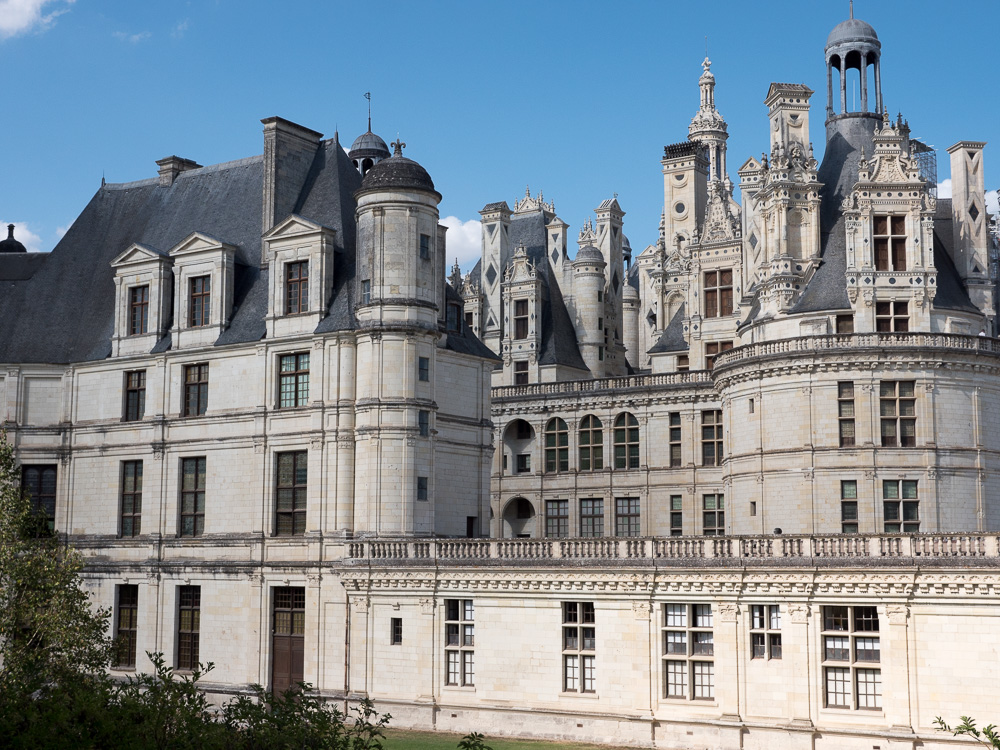
Medieval touches are the castle’s moat and corner towers, though neither served a defensive purpose. Renaissance architectural aspects are the turrets, which some historians think reflect Leonardo da Vinci’s influence if not design in their similarity to minarets. Other renaissance aspects are the carved columns, balconies, and large windows.
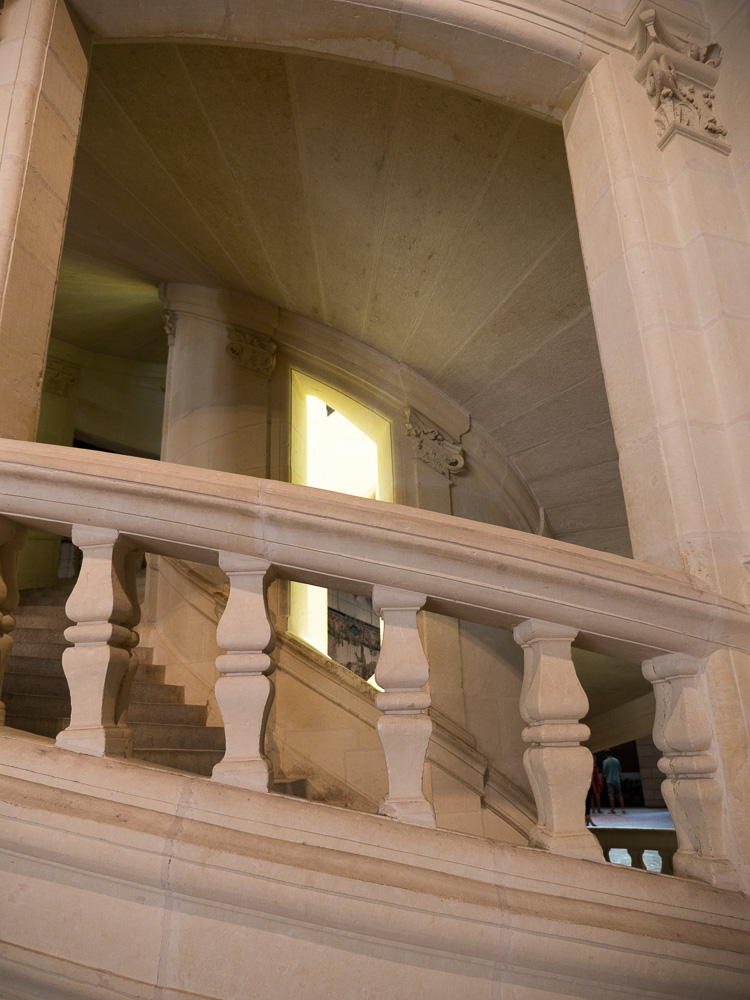
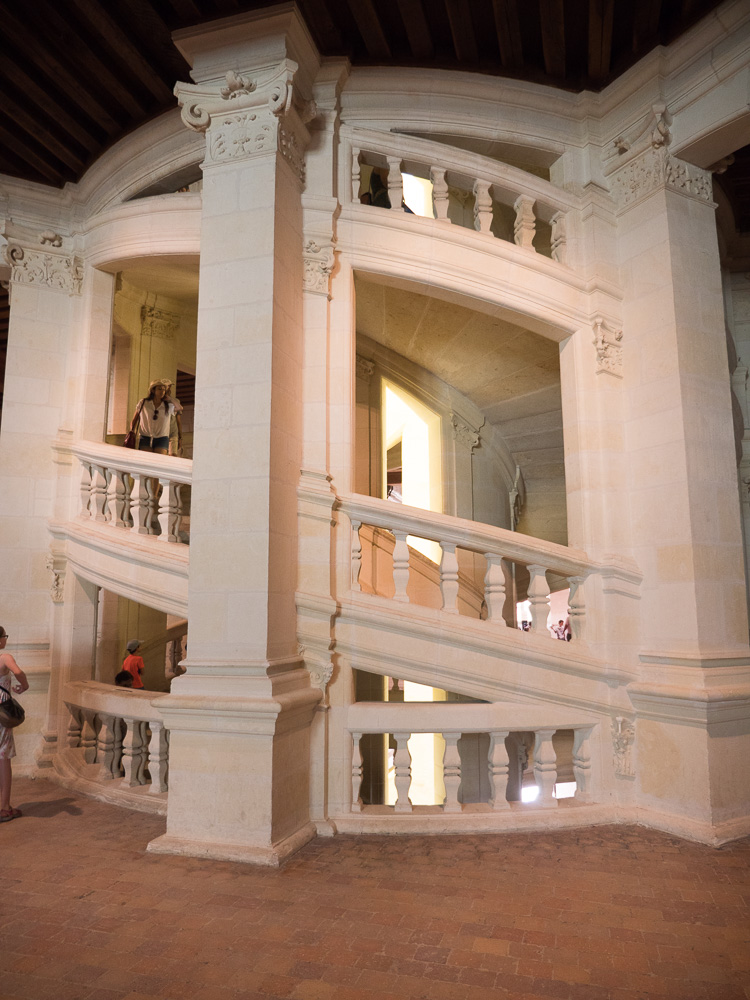
Most experts see da Vinci’s hand in the staircase, a signature piece in this chateau. Its double spirals rise three stories without ever meeting, and are illuminated by a window at the very top. There are four entries. Those climbing the 156 steps may glimpse one another, but will never meet.
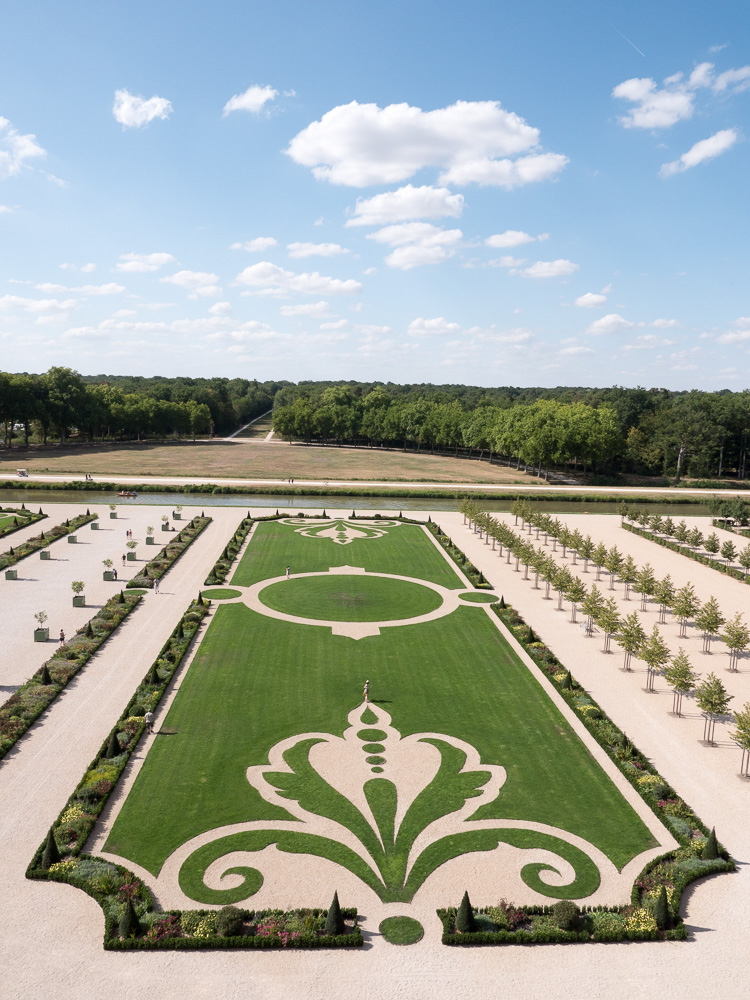
The chateau is surrounded by a 13,000 acre walled-in park (a fenced terrain the size of Paris inside its “beltway” — eat your heart out, Trump) and is still used for hunting, with 36 hunters invited per day during the season, and 900 wild boar, 200 wild sheep (mouflons), and 200 deer taken annually. Chambord is the nearest chateau to Orleans and, when we picked up our rental car for the drive, the agent told us of school trips to see the chateau and of his mates’ excitement about spotting wild animals in the park.
After Francis’s death, ownership of the chateau passed among kings and aristocrats, but the place had never been designed as a dwelling. In cold weather, it was draftier than most castles, and very hard to keep minimally warm even with 282 fireplaces. There was no village nearby so feeding and supporting a royal entourage was difficult. A few proprietors tried to maintain it, but the size and impracticality of the project defeated their budgets. Since 1930, the chateau has belonged to the state and to us, for the few hours of the visit.
 Keeping up with Pat and Maurice